DbcultAccessing Vault...
Cult Review
Senior Film Conservator
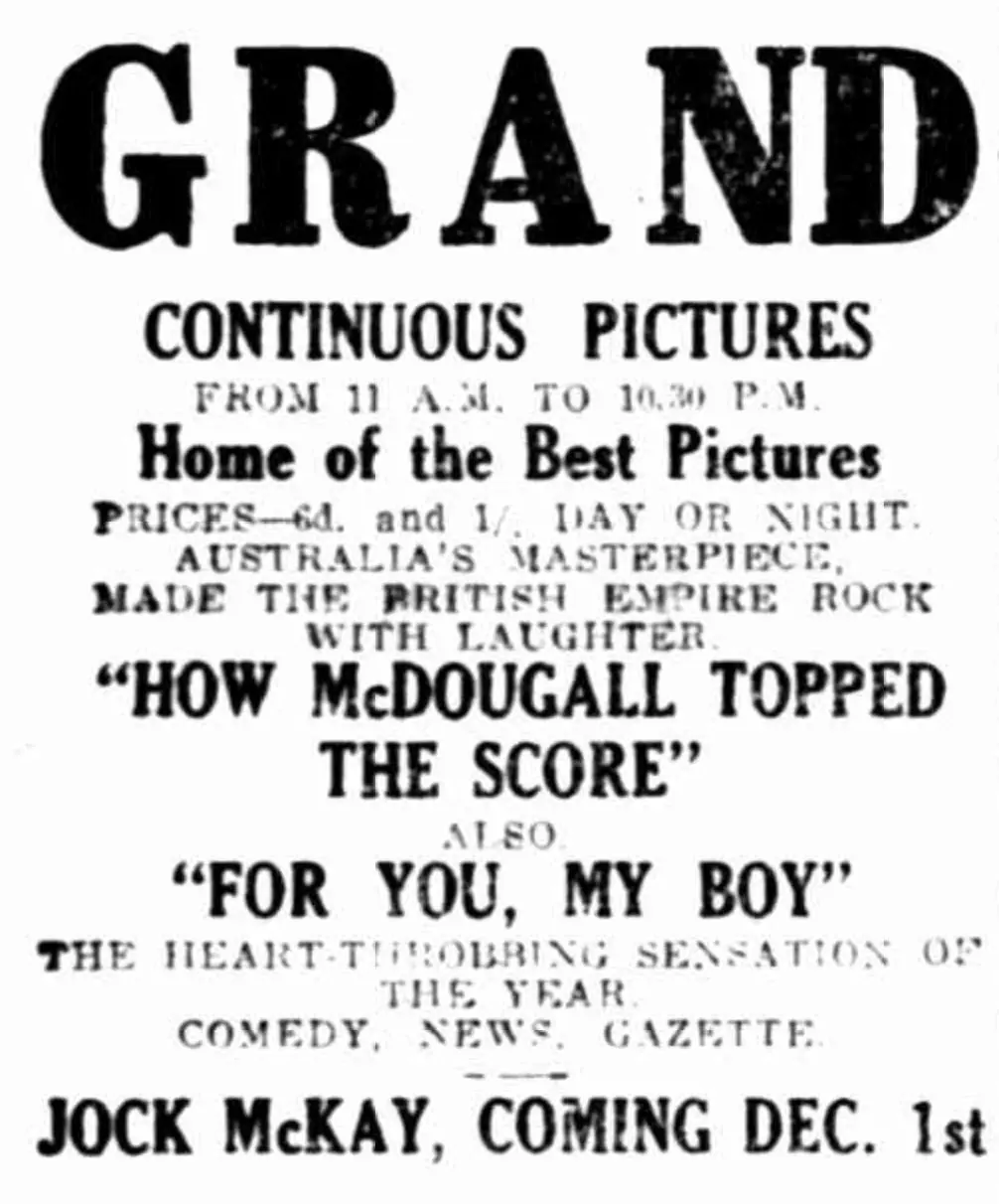
The year 1924 remains a fascinating epoch in the annals of Antipodean cinema, a time when the flickering shadows of the silver screen were beginning to carve out a distinct cultural vernacular. How McDougall Topped the Score stands as a testament to this era, a film that eschews the heavy-handed moralism often found in contemporary American imports like The Black Stork in favor of a boisterous, localized levity. Directed by V. Upton Brown and based on the beloved verses of Thomas E. Spencer, the film is more than a mere sporting comedy; it is a celluloid time capsule capturing the rugged charm and the idiosyncratic 'larrikin' spirit of a young nation finding its voice through the lens of a camera.
The visual language of the film is deeply rooted in the Australian bush, a setting that is treated not merely as a backdrop but as a sentient participant in the unfolding drama. Unlike the stylized, almost theatrical sets of The Courtship of Myles Standish, Brown’s production thrives on the authenticity of its locations. The dust of the cricket pitch is real, the glare of the midday sun is palpable, and the sweat on the brows of the Molongo bowlers feels uncomfortably genuine. This commitment to a raw, unvarnished aesthetic provides a stark contrast to the polished melodramas of the time, such as On the Night Stage, which relied heavily on staged intensity rather than environmental immersion.
Wesley Barry, portraying the central figure, brings a transatlantic energy to the production. Having already established himself as a juvenile star in Hollywood, Barry’s presence in an Australian production was a significant coup for the local industry. His performance is a masterclass in silent-era physicality, bridging the gap between the earnestness of dramatic actors and the rubber-faced antics of slapstick comedians. While films like The Price They Pay delved into the darker recesses of human consequence, McDougall’s journey is one of exuberant resilience, a narrative arc that mirrors the collective optimism of the 1920s.
At its core, the film is a meditation on the sanctity of sport. In the rural communities of the early 20th century, cricket was the social glue that bound disparate bush-dwellers together. The match between Piper’s Flat and Molongo is depicted with the gravity of a Homeric epic, yet it is consistently undercut by a quintessentially Australian sense of the absurd. This duality is what separates the film from more conventional sports dramas like The Winning Stroke. Where the latter focuses on the technical precision and the inherent nobility of the athlete, Brown’s work celebrates the chaotic intervention of fate—and a very determined dog.
The sequence involving Pincher, the dog who inadvertently aids McDougall in his record-breaking score, is a marvel of editing and timing. The ball becomes lodged in the canine's mouth, and as the fielders chase the animal across the scrubland, McDougall continues to run between the wickets. This scene predates the sophisticated visual gags of the later talkies, yet it possesses a kinetic energy that rivals the high-speed pursuits in The Speed Maniac. The sheer audacity of the premise—that a match could be won through such a loophole—speaks to the 'fair go' mentality that permeates the script by V. Upton Brown.
When analyzing the comedic structure of *How McDougall Topped the Score*, one must consider its contemporaries. It lacks the sophisticated, urban wit of Cupid Camouflaged, yet it compensates with a rugged, populist charm. There is a lack of the satirical bite found in The Girl and the Judge, as Brown is less interested in social critique and more focused on the celebration of communal eccentricity. The film operates on a frequency of pure entertainment, much like the escapist narratives of The Auction Block, though it remains firmly tethered to its Australian roots.
The supporting cast, including Frank Blandford and William Ralston, provides a sturdy framework for Barry’s lead. Their performances are characterized by a broadness that was necessary for the silent medium, where nuances of emotion had to be telegraphed to the back of the cinema hall. This style of acting, while occasionally jarring to modern sensibilities accustomed to naturalism, is perfectly suited to the film’s rhythmic pacing. It shares a certain theatrical DNA with The Loves of Letty, though it avoids that film's penchant for heavy-handed romanticism.
Technically, the film is a fascinating study in resourcefulness. The use of natural light is both a necessity and an artistic choice. The harsh Australian sun creates deep shadows and high-contrast imagery that gives the film a proto-noir quality in certain frames, despite its comedic intent. This visual grit is absent from the more polished European imports of the era, such as Fasching, which utilized the soft, diffused light of the studio to create a dreamlike atmosphere. Brown, conversely, forces the viewer to confront the heat and the dust, making the eventual triumph of McDougall feel like a hard-won victory against both the opposing team and the elements themselves.
The editing, while rudimentary by today's standards, shows a sophisticated understanding of cross-cutting. The tension of the cricket match is built through alternating shots of the bowler’s delivery, the batsman’s reaction, and the increasingly frantic spectators. This editorial rhythm is reminiscent of the suspenseful sequences in The Law Decides, demonstrating that even in a comedic context, the mechanics of suspense are universal. Furthermore, the film avoids the static, tableau-like shots that characterized earlier silent efforts like Die Gespensterstunde, opting instead for a more dynamic camera that follows the action across the field.
Ultimately, *How McDougall Topped the Score* is a celebration of the 'bush legend.' It reinforces the archetype of the resourceful, resilient Australian who can overcome any obstacle through a combination of luck and low-cunning. This theme is a recurring motif in the nation's early cinema, providing a counterbalance to the more somber explorations of domestic strife found in Turning the Tables or the cynical social climbing of Scratch My Back. McDougall is not a hero of the elite; he is a man of the people, and his victory is shared by every resident of Piper’s Flat.
The film’s endurance, despite its status as a piece of 'lost' or fragmented history in many archives, lies in its unapologetic joy. It does not seek to educate or to pontificate; it seeks to delight. In an age where cinema was still grappling with its identity as an art form, V. Upton Brown understood that the most powerful connection a filmmaker could make with an audience was through the shared experience of laughter. The image of a dog running toward the horizon with a cricket ball, while a frantic batsman circles the wickets, remains one of the most enduringly charming images of the silent era.
In the broader context of global cinema, this film serves as a reminder that the language of comedy is universal, yet its dialects are profoundly local. While the slapstick might mirror the work of Keaton or Chaplin, the soul of the film is undeniably Australian. It is a work that captures the essence of a specific time and place, yet its themes of rivalry, community, and the occasional necessity of a well-timed canine intervention continue to resonate. As we look back through the century-old lens of *How McDougall Topped the Score*, we see not just a game of cricket, but the birth of a cinematic identity that would go on to define the Australian screen for decades to come.
IMDb 6.2
1935
Community
Log in to comment.