DbcultAccessing Vault...
Cult Review
Senior Film Conservator
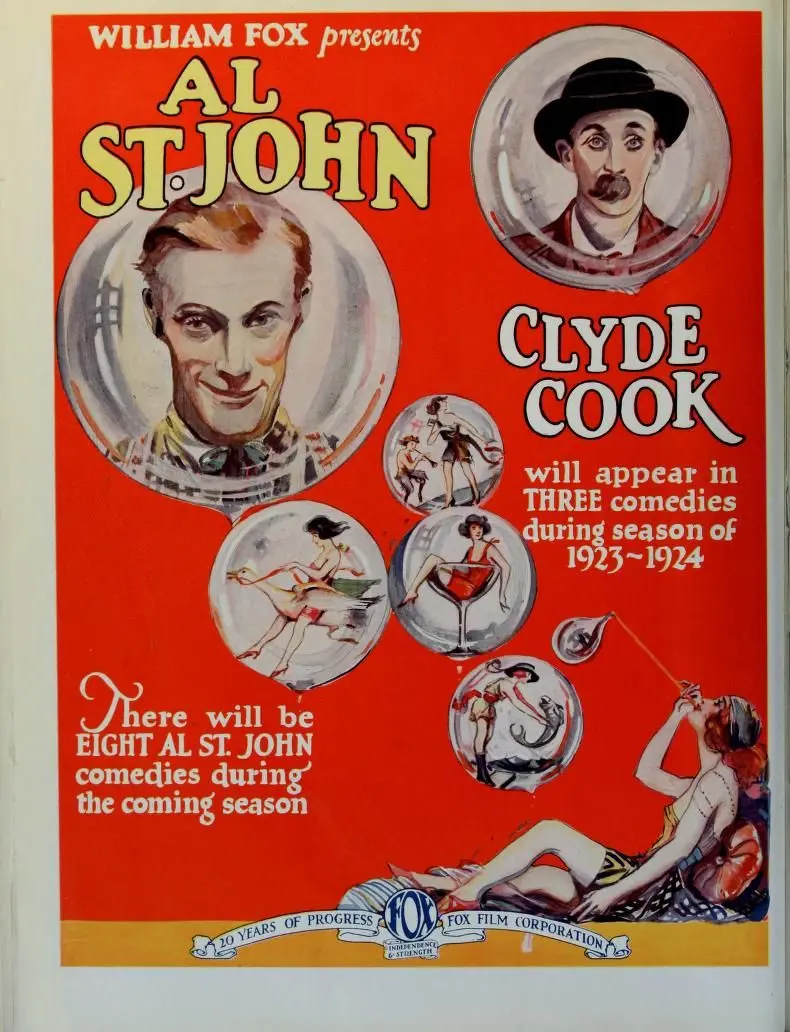
The year 1924 stood at a fascinating crossroads for the cinematic medium. While the industry began gravitating toward the grandiose narrative structures found in epics like The Courtship of Myles Standish, a parallel universe of frenetic, short-form comedy continued to push the boundaries of what the human body could endure on celluloid. At the heart of this physical revolution was Al St. John, a performer whose legacy is often unfairly tethered to his uncle, Roscoe 'Fatty' Arbuckle. In Highly Recommended, St. John asserts his sovereign identity as a master of the 'acrobatic grotesque,' delivering a performance that is as much a feat of athleticism as it is a triumph of comedic timing.
Benjamin Stoloff, a director who would later find his footing in the B-movie trenches, displays an early, uncanny grasp of spatial geometry here. In Highly Recommended, the frame isn't merely a window; it’s a cage, a playground, and a trap. Unlike the somber, moralistic weight found in contemporary dramas like The Law Decides, Stoloff’s work is unburdened by didacticism. Instead, he focuses on the purity of the sequence. The film opens with a deceptively simple premise: a recommendation letter that promises success but delivers only calamity. This MacGuffin serves as the engine for a series of set pieces that rival the best of Keaton or Lloyd in their technical execution.
St. John’s physicality is the film’s most potent weapon. His movements possess a mercurial quality; one moment he is rigid with social anxiety, the next he is fluid, spilling over furniture like a waterfall of silk. This elasticity is what separates him from the more grounded protagonists of the era, such as those in The Winning Stroke. While that film relied on the traditional heroics of sport, Highly Recommended finds its heroism in the survival of the clumsy. Every pratfall is choreographed with the precision of a Swiss watch, yet St. John makes it look like a spontaneous collapse of cosmic order.
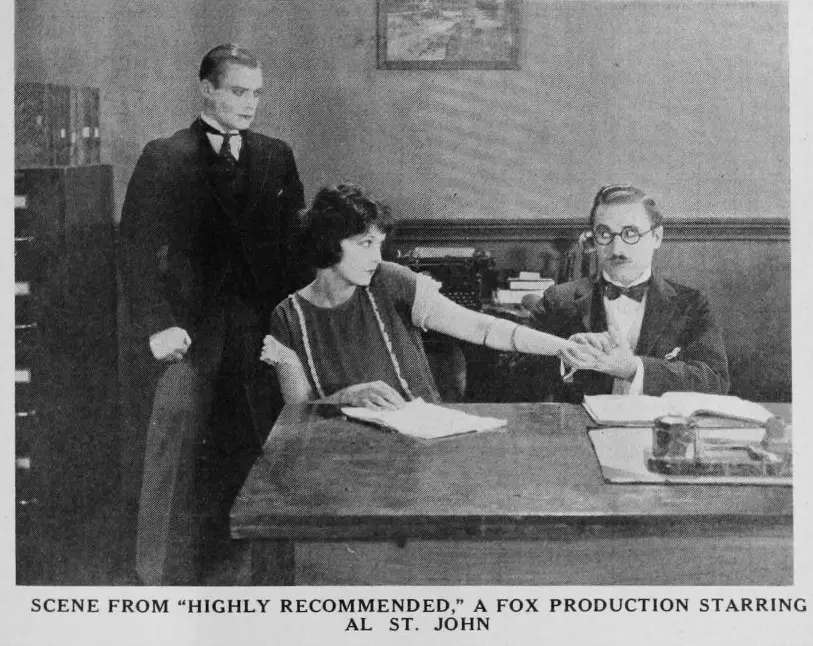
While slapstick is often dismissed as low-brow, Highly Recommended functions as a sharp, albeit silent, critique of class aspirations. The protagonist’s attempts to belong to a higher social stratum—facilitated by his 'highly recommended' status—expose the absurdity of the very structures he seeks to join. We see echoes of this social friction in The Auction Block, though that film approaches the commodification of human beings with a much heavier hand. In Stoloff’s hands, the critique is baked into the slapstick. When St. John destroys a high-society dinner or fumbles through a formal greeting, he isn't just being funny; he is dismantling the artifice of the 1920s elite.
The film’s pacing is relentless, a characteristic it shares with the high-octane thrills of The Speed Maniac. However, where the latter uses speed for suspense, Highly Recommended uses it to induce a state of delirious exhaustion in the viewer. There is no room for the slow-burn romance or the pensive character studies found in The Loves of Letty. Here, character is revealed through reaction. How does a man react when a ceiling collapses? How does he maintain his dignity when his trousers are caught in a revolving door? St. John answers these questions through a lexicon of winces, shrugs, and sudden bursts of frantic energy.
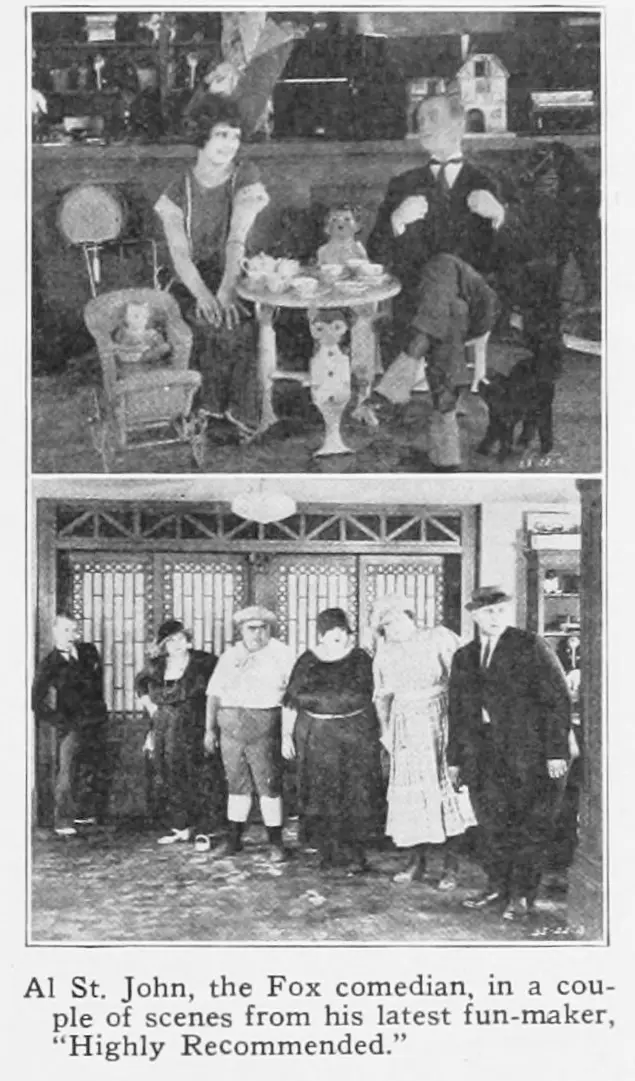
From a technical standpoint, the cinematography in Highly Recommended is remarkably sophisticated for a comedy short. The use of depth of field allows for 'background gags' that occur simultaneously with the primary action, a technique that requires immense planning and rehearsal. This layered approach to comedy was a hallmark of the era’s best work, contrasting with the more singular, focused narratives of films like On the Night Stage. The lighting, too, serves the comedy; high-contrast shadows emphasize St. John’s expressive face, ensuring that not a single eyebrow twitch is lost to the grain of the film stock.
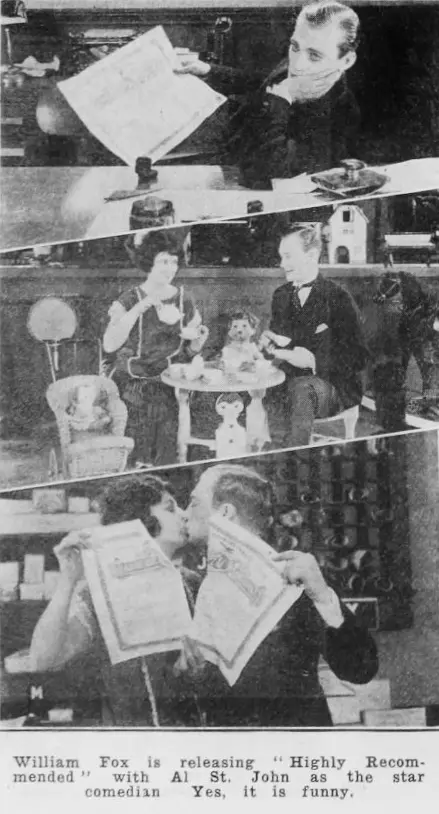
The writing, credited to both St. John and Stoloff, displays a mastery of the 'gag-cluster.' This is the art of taking a single prop or situation and squeezing every possible comedic drop from it before moving on. It’s a rhythmic approach to storytelling that feels remarkably modern. If one were to compare it to the thematic density of The Black Stork, the difference is jarring. While The Black Stork grapples with the grim realities of eugenics, Highly Recommended celebrates the chaotic unpredictability of life. It’s an antidote to the era’s darker impulses, a reminder that in a world of rigid moralizing and social engineering, there is still room for a man to trip over his own feet and bring the house down.
To understand Highly Recommended is to understand the specific genius of Al St. John. He was a performer who understood that comedy is a physical manifestation of internal panic. His character isn't a trickster; he is a victim of circumstances who refuses to stay down. This resilience is a recurring theme in silent cinema, yet St. John imbues it with a unique, almost frantic desperation. He lacks the stoicism of Keaton or the pathos of Chaplin; instead, he offers a raw, unadulterated energy that feels dangerous. You never quite know if he’s going to survive the next stunt, and that tension is the secret ingredient that makes the film so compelling.
The film also serves as a fascinating companion piece to Cupid Camouflaged, where the mechanics of romance are similarly dissected through humor. However, Highly Recommended is less interested in the heart and more interested in the nervous system. It is a film of jolts, shocks, and sudden movements. Even in its quieter moments, there is a sense of impending doom, a comedic tension that only breaks when the next disaster strikes. This is the essence of slapstick: the suspension of catastrophe until the exact moment it becomes funniest.
In the broader context of 1924, Highly Recommended represents the peak of the independent comedy short before the eventual consolidation of the studio system. It possesses a wild, untamed quality that would soon be polished away by the advent of sound and more rigid production codes. When compared to the melodramatic stylings of The Price They Pay or the judicial drama of The Girl and the Judge, St. John’s work feels almost avant-garde. It’s a pure distillation of movement, unencumbered by the need for complex exposition or moral resolution.
Even when looking at international influences, such as the German expressionist echoes in Die Gespensterstunde or the festive chaos of Fasching, Highly Recommended stands out for its distinctly American brand of optimism-through-adversity. It suggests that no matter how many times the world tries to flatten you, you can always bounce back—provided you have the right letter of recommendation and a complete lack of regard for your own skeletal integrity. It’s a philosophy of survival that resonated with audiences of the 1920s and continues to offer a cathartic release today.
The brilliance of Highly Recommended lies in its refusal to be anything other than a delivery system for joy. It doesn't ask the audience to contemplate the human condition like Scratch My Back, nor does it attempt to subvert social norms with the biting wit of Turning the Tables. Instead, it leans into the primary strength of the silent medium: the power of the image. A man, a letter, and a world that won't stop moving—these are the only ingredients Stoloff and St. John need to create a masterpiece of kinetic storytelling.
As we look back nearly a century later, the film remains a testament to the era’s craftsmanship. The stunts are real, the stakes are physical, and the laughter is earned. In an age of digital perfection, there is something deeply refreshing about the 'highly recommended' chaos of Al St. John. It is a reminder that cinema, at its most fundamental level, is the art of capturing the impossible on a strip of plastic. And in 1924, nobody did the impossible quite like Al St. John.
IMDb —
1922
Community
Log in to comment.