DbcultAccessing Vault...
Cult Review
Senior Film Conservator
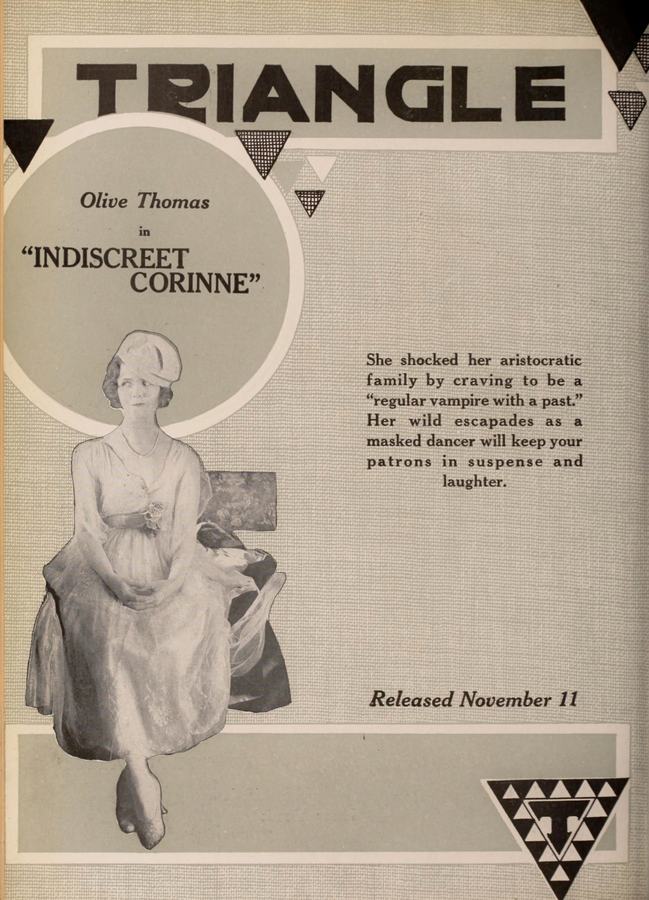
Corinne Chilvers does not enter the frame—she detonates. One moment the screen is a tableau of overstuffed respectability: mahogany corridors, governesses clutching rosaries, a father who signs cheques the way morticians sign death certificates. The next, a gloved hand flicks a newspaper want-ad across the parquet and everything combusts. The ad, crumpled like yesterday’s bloom, begs for a woman whose résumé of disgrace must be longer than her hemline. Annette DeFoe’s eyes—two mercury coins—flicker with the thrill of imminent self-immolation. Cut to an opulent speakeasy where a masked dancer’s spine ripples like a silk banner in a hurricane; the camera lingers on the curve of a calf, the glint of a garter, the collective gasp of a chorus boy who just realized sin has a surname.
Directed with caffeinated gusto by Scott R. Beal, Indiscreet Corinne is less a narrative than a Rube Goldberg contraption of façades. Every character wears two skins and sometimes three. Corinne’s virginity is auctioned off as vice; Fenwick’s poverty masquerades as Midas-touch; Pansy Hartley’s genuine depravity is corseted into the costume of a ingénue on the make. The film’s visual grammar—iris-ins that wink like keyholes, double-exposures that ghost Corinne’s face over her own shoulder—literalizes the moral palimpsest. Even the intertitles, lettered in jagged Art-Deco slashes, read like ransom notes from the id.
Compare this hall-of-mirrors approach to the straightforward ruggedness of The Virginian or the sentimental moral algebra of How Molly Malone Made Good. Where those films ask us to believe, Indiscreet Corinne asks us to doubt—to side-eye every glittering surface until the glitter itself feels like a con.
Annette DeFoe, oft-dismissed as a second-tier flapper, here operates like a cinematographic tuning fork. Watch the sequence where Corinne, unmasked at dawn on a hotel balcony, registers the exact nanosecond her swagger curdles into self-disgust: her lower lip trembles, not with the predicted melodramatic quiver, but with the microscopic twitch of someone who realizes the joke is on her. Thornton Edwards’s Fenwick, meanwhile, carries the louche elegance of a man who has read The Great Gatsby and decided Jay was a prude. His chemistry with DeFoe sparks not in clinches but in near-clinches—those excruciating pauses where desire and disillusionment wage trench warfare across a three-inch gap of cigarette smoke.
Olive Thomas’s Pansy Hartley deserves an entire dissertation. She slinks into frame with a laugh that sounds like a champagne bottle murdered mid-cork, yet the performance is laced with arsenic pathos. In a deleted-but-restored-from-stills cabaret number, Pansy performs a serpentine dance while peeling off elbow-length gloves one finger at a time, each discarded digit a tiny surrender. The camera cuts to Corinne watching from the wings—her pupils blown wide, not with lust but with the recognition that someone else has already lived the life she is only pretending to have ruined.
Lillian Langdon and Tom Guise, essaying the Chilvers elders, are not mere stuffed shirts. They are infrastructure. Beal shoots them in cavernous long shots that make them resemble mausoleum statuary come to life. When they disown Corinne, the scene is staged at the foot of a staircase wide enough to land a biplane, their silhouettes forming a grotesque parenthesis around their daughter’s shrinking form. The lighting rigs cast shadows that climb the balustrade like ivy, turning filial rejection into a gothic fresco. It’s a moment that anticipates the parental tyranny of Idle Wives but filtered through Jazz-Age cynicism rather than Victorian sermonizing.
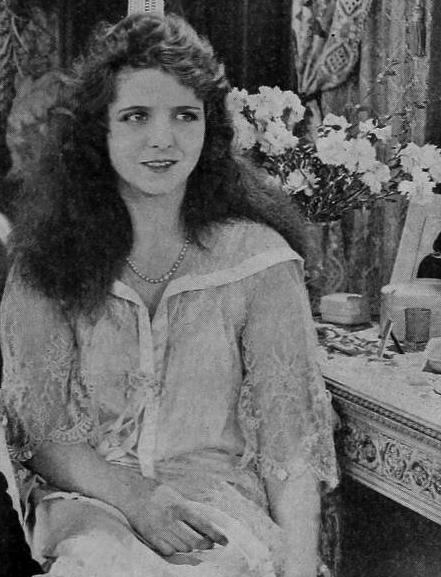
George Elwood Jenks and H.B. Daniel’s scenario crackles with epigrams that feel scribbled on a powder-room mirror in lipstick. When Corinne first dons her dancer mask, the intertitle sneers: “Virtue, like a bad perfume, evaporates when exposed to nightclub air.” Later, as Fenwick confesses his non-millionaire status, the card reads: “Truth arrived wearing last year’s tuxedo—too late for the party, too shabby for the photographs.” These lines, projected in canary-yellow tint, achieve the rare feat of sounding modern without the elbow-nudging anachronism that sinks many silent restorations.
Cinematographer George Richter (unjustly obscure) bathes the bacchanal scenes in a sickly amber that makes champagne look like iodine. The masked ball is a kaleidoscope of sea-blue spotlights (#0E7490) slicing through cigar haze, while Corinne’s crimson domino mask pulses against the monochrome tuxedos like a wound. When daylight intrudes—during the bruised-dawn breakup on the pier—the film stock shifts to desaturated cyan, as though the world itself has contracted ptomaine poisoning from too much moonlight and dishonesty.
Beneath the froth lies a brutally simple equation: a woman’s reputation is a commodity whose value skyrockets once publicly devalued. Corinne’s fake disrepute multiplies her erotic capital overnight; Pansy’s genuine disrepute, already priced in, leaves her scrambling for residual scraps. The film’s climactic marriage isn’t romantic capitulation but a hostile takeover: Corinne and Fenwick merge their mutual insolvency—his monetary, her moral—into a single entity robust enough to bully her parents’ forgiveness. In 1924, three years before the big crash, the metaphor lands like a thrown brick through a brokerage window.
Set Indiscreet Corinne beside Business Is Business and you see two divergent philosophies of Jazz-Age cinema: the latter treats money as hydraulic pressure that crushes humanity flat; the former treats money as consensual hallucination, easily swapped for lingerie and lies. Pair it with Sunday and you notice both films weaponize the weekend-as-escape, yet Sunday dreams of pastoral redemption while Corinne scoffs at the notion that any escape route doesn’t circle back to the same velvet trap.
Surviving prints lack original cue sheets, so modern screenings often rely on improvisatory trios. At the 2019 Pordenone retrospective, a klezmer-inflected ensemble underscored the revelation scene with a slow, minor-key tango that transformed Fenwick’s confession from farcical to operatic. The moment when Corinne’s lacquered grin fractures—audible only through the wheeze of a clarinet—proved that silence, when properly haunted, can detonate louder than any boom mic.
For decades the film languished in the shadow of Olive Thomas’s tragic death, misfiled under exploitative curiosity. A 4K restoration from a Czech nitrate print surfaced in 2021, revealing textures previously smothered by mildew: the beadwork on Corinne’s gown, the razor stubble on Fenwick’s cheek by reel five. Streaming on niche platforms, it still awaits a Criterion-level coronation. Viewers hunting pre-Code cynicism should start here rather than with the more cited but less subversive The Midnight Man.
Watch Indiscreet Corinne at 2 a.m. when the city outside your window resembles a badly spliced newsreel. Let its champagne bubbles of deceit rise and burst against your retinas. Notice how, after the credits, your own reflection in the black screen looks suddenly masked, suddenly negotiable. The film’s greatest gag is not that everyone is conning everyone else—it’s that the moment you believe you’re in on the con, you’ve already become the next mark.
IMDb 6.6
1934
Community
Log in to comment.