DbcultAccessing Vault...
Cult Review
Senior Film Conservator
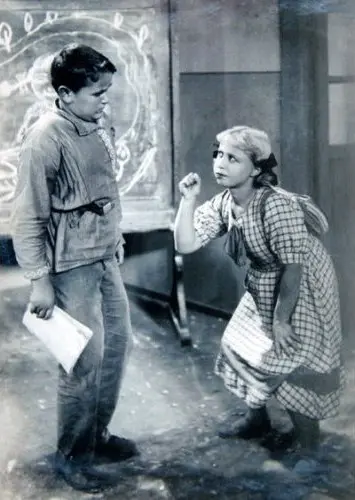
Is Mishki protiv Yudenicha worth your time in the modern era? Short answer: only if you are a dedicated student of the avant-garde or a cinema historian looking for the roots of Soviet montage; for everyone else, it is a bewildering artifact. This film is specifically for those who enjoy the 'eccentric' theatricality of the 1920s and is definitely not for viewers seeking a coherent, emotionally resonant war narrative.
This film works because it rejects the boring conventions of realism in favor of a high-octane, circus-inspired visual language that feels shockingly modern in its pacing.
This film fails because its characters are paper-thin archetypes used as tools for political messaging, leaving no room for genuine human stakes.
You should watch it if you want to see the exact moment where the Russian theater of the absurd collided with the emerging power of the motion picture camera.
Directed by the legendary duo of Grigori Kozintsev and Leonid Trauberg, Mishki protiv Yudenicha (Mishki vs. Yudenich) is less a movie and more a manifesto. The directors were founding members of FEKS, the Factory of the Eccentric Actor, a movement that sought to replace the 'stagnant' psychological acting of the Moscow Art Theatre with the energy of the music hall, the circus, and American slapstick. While Hollywood was producing more traditional narratives like Evangeline, the FEKS group was trying to blow up the screen.
The film’s approach to the Russian Civil War is almost unrecognizable to those accustomed to the gritty realism of later decades. Here, General Yudenich’s forces are not portrayed as a terrifying military threat but as bumbling, mechanical villains. They move with a stiffness that contrasts sharply with the fluid, acrobatic 'Mishki.' This isn't accidental. The directors used the contrast to highlight the 'new world' of the Bolsheviks against the 'old, dying world' of the Tsarist remnants. If you compare this to the sentimentalism found in Sans famille, the difference is jarring. Where the latter seeks to pull at the heartstrings, Mishki protiv Yudenicha seeks to overstimulate the optic nerve.
The standout element of this film is undoubtedly Yanina Zheymo. Though she would later become a Soviet icon, here she is a raw force of nature. In one specific sequence, her character navigates a room full of enemy officers with a series of jerky, stylized movements that suggest a puppet coming to life. It is unsettling and brilliant. She doesn't 'act' in the traditional sense; she performs a physical geometry. This style of performance is a distant cousin to the physical comedy of Asta Nielsen in Das Eskimobaby, yet it carries a much more aggressive, political edge.
The rest of the cast, including Sergey Gerasimov, functions as a cohesive unit of 'eccentrics.' There is no individual psychology here. In a scene where the White Army officers are planning their defense, the camera focuses on their exaggerated facial contortions and stiff postures. It’s a brutal caricature. It works. But it’s flawed. The lack of humanity makes it hard to care about the outcome, even if the visual journey is fascinating. You see similar caricatures in western comedies like A Small Town Idol, but there they are used for laughs; here, they are used for ideological assassination.
The pacing of Mishki protiv Yudenicha is its most radical feature. In 1925, many films were still comfortable with long takes and theatrical staging, such as The Eternal Magdalene. Kozintsev and Trauberg, however, were obsessed with the 'American' style of rapid editing. They took it further, creating a rhythmic montage that feels like a precursor to modern music videos. There is a specific moment during a chase sequence where the cuts happen so rapidly that the screen feels like it’s vibrating. It’s a sensory assault that must have been mind-blowing to audiences in Leningrad.
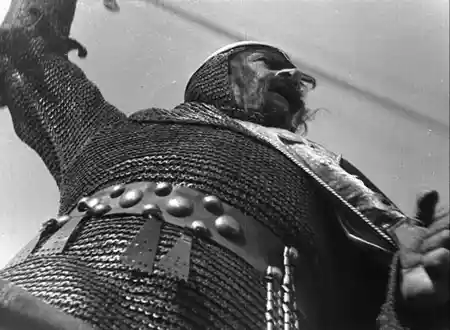
The framing is equally daring. The camera doesn't just sit there; it tilts, it peers from low angles, and it isolates strange details—a boot, a monocle, a spinning wheel. This is the visual language of the future being written in real-time. It lacks the polish of The Dream Cheater, but it possesses a raw, unbridled ambition that makes the latter look pedestrian. The cinematography by Andrei Moskvin, who would go on to be one of the greatest Soviet cameramen, is the film's secret weapon. He turns a low-budget agit-prop film into a canvas for shadow and light.
If you are looking for a story that will make you feel something for the characters, the answer is a resounding no. The 'Mishki' are not children; they are symbols of the proletariat's future. However, if you want to understand how cinema evolved from a recording device into an art form, this is essential viewing. It is a loud, messy, and arrogant piece of filmmaking that refuses to play by the rules. It makes Common Sense Brackett look like a dinosaur by comparison.
Pros:
- Revolutionary editing techniques that predated the mainstream.
- High energy and a short runtime that prevents boredom.
- Fascinating historical context of the FEKS movement.
- Visually inventive use of low-budget sets.
Cons:
- Heavy-handed political messaging that feels dated.
- Slapstick that occasionally feels more annoying than funny.
- Difficult to find a high-quality restoration.
When you look at other films from the same period, like Flashing Steeds or Kindred of the Dust, you see a cinema that is trying to replicate the experience of reading a novel or watching a stage play. Mishki protiv Yudenicha is doing something entirely different. It is trying to create a new language that only exists in the dark of a movie theater. This is both its greatest strength and its greatest weakness. It is a film that is very much of its time, yet it feels like it’s trying to jump into the future.
"Mishki protiv Yudenicha isn't just a movie; it's a 1920s punk rock anthem recorded on celluloid. It's fast, it's ugly, and it doesn't care if you like it."
The film’s portrayal of war as a playground for children is a debatable choice. Some might find it a clever subversion of the horrors of war, while others—myself included—find it a bit cynical. It trivializes the very real suffering of the Civil War to score points for the 'eccentric' style. This makes it a fascinating contrast to something like If the Huns Came to Melbourne, which used fear to drive its narrative. Here, the weapon isn't fear; it's ridicule.
Mishki protiv Yudenicha is a fascinating failure. It fails as a narrative, but it succeeds as a laboratory. It is a film that needed to happen so that later masterpieces of Soviet cinema could exist. It is more interesting to talk about than it is to actually watch, but for the 60 or so minutes it runs, it offers a glimpse into a world where cinema had no rules. It’s a loud, clattering machine of a film. It’s not 'good' in the traditional sense, but it is vital. If you can handle the propaganda and the bizarre acting, it’s a trip worth taking.

IMDb 6
1933
Community
Log in to comment.