DbcultAccessing Vault...
7/10
Senior Film Conservator
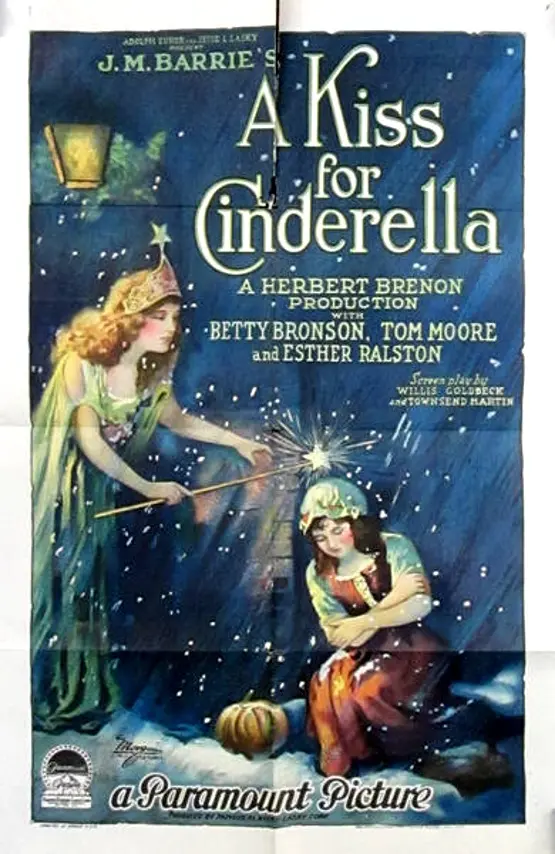
A definitive 7/10 rating for a film that redefined the boundaries of cult cinema. A Kiss for Cinderella remains a cornerstone of transgressive art.
In the pantheon of silent cinema, few films navigate the treacherous waters between grueling social realism and celestial fantasy with the dexterity of A Kiss for Cinderella. Directed by Herbert Brenon and adapted from the stage play by J.M. Barrie, the film serves as a poignant time capsule of 1920s sensibilities, yet it possesses a timelessness rooted in the universal human urge to transcend one's circumstances. Unlike the gothic dread found in The Isle of the Dead, Brenon’s work here is infused with a fragile, almost translucent hope that feels perpetually on the verge of shattering.
Betty Bronson, who had already achieved immortality as Peter Pan, brings a mercurial intensity to the role of Jane. She is not the polished, porcelain Cinderella of later Disney iterations; she is a creature of the shadows, her face smudged with the coal dust of a London in decline. Her performance is a masterclass in physical storytelling, conveying a soul that remains uncrushed by the weight of the British Empire's wartime machinery. While films like The Branded Woman deal with the overt scars of social stigma, Jane’s struggle is internal and imaginative. She treats her poverty as a temporary costume, a chrysalis from which she will eventually emerge.
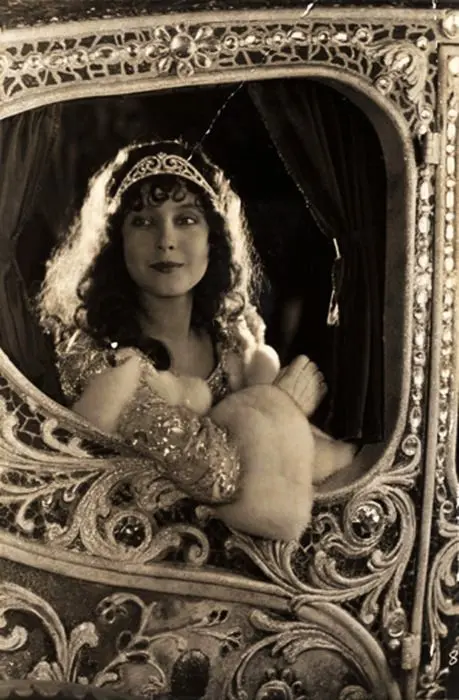
The screenplay, touched by the hands of Julian Johnson and Willis Goldbeck, retains the sharp, idiosyncratic wit of Barrie. There is a subversive edge to the dialogue intertitles that mocks the rigid class structures of the era. Jane’s 'Penny-a-look' business—where she charges neighbors to glimpse her makeshift orphanage—is a brilliant metaphor for the cinema itself. It suggests that even in the direst straits, the act of seeing and being seen is a form of currency. This thematic depth elevates the film far beyond the typical 'rags-to-riches' narrative found in contemporary works like The Shuttle.
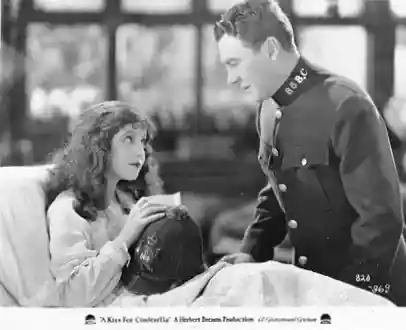
Tom Moore’s portrayal of the Policeman offers a necessary anchor to the film’s more flighty elements. He represents the voice of the state—orderly, unimaginative, and bound by duty. Yet, his gradual seduction by Jane’s worldview mirrors the audience’s own journey. We begin as skeptics, perhaps even pitying this 'simple-minded' girl, but we end as believers. The chemistry between Moore and Bronson is understated, avoiding the histrionics common in the mid-twenties. It is a romance built on the recognition of one another's humanity amidst a world that treats individuals as mere cogs in a military-industrial complex.
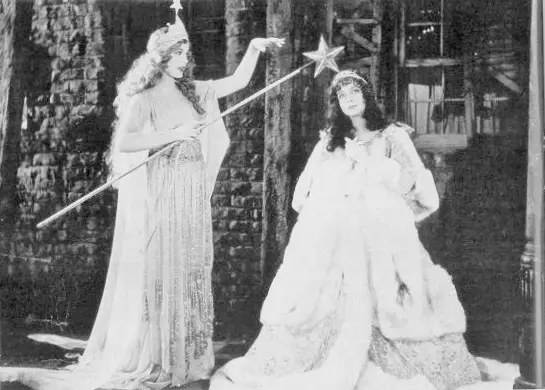
The centerpiece of the film—the dream sequence—remains one of the most visually arresting achievements of the silent era. When Jane collapses in the snow, her mind constructs a royal ball that is both magnificent and hilariously domestic. The King and Queen are modeled after the deck of cards she knows, and the 'Prince' is none other than her Policeman, transformed into a figure of gilded splendor. The use of double exposures and innovative lighting creates a sense of depth that rivals the atmospheric density of Green Eyes.
This sequence is where the film’s color palette—metaphorically speaking—explodes. While the London scenes are shot with a heavy, oppressive tonality, the dream is airy and expansive. It captures the logic of a child’s imagination, where greatness is measured by the height of a throne and the shininess of a crown. It is a stark contrast to the historical rigidity found in Christopher Columbus, opting instead for a surrealist approach that predates the avant-garde movements of the following decade. The production design by the legendary art directors at Paramount ensures that every frame feels like a curated piece of Victorian illustration come to life.
One cannot ignore the specter of World War I that haunts the periphery of the frame. The film was released only seven years after the Armistice, and the wounds were still fresh in the collective consciousness. Jane’s care for the 'war babies'—children of different nationalities, including a German infant—is a radical act of pacifism and empathy. While films like Trapped by the London Sharks focused on the melodramatic villainy of the city, A Kiss for Cinderella looks at the collateral damage of global conflict with a tender, unblinking eye.
The hunger Jane experiences is not just a plot point; it is the catalyst for her transcendence. Her physical frailty is juxtaposed with her spiritual robustness. This duality is a recurring theme in Brenon’s filmography, where characters often find themselves caught between two worlds. The film avoids the simplistic morality of A False Alarm or the low-stakes comedy of The Runt. Instead, it posits that imagination is not a retreat from reality, but a way to process a reality that is too horrific to bear otherwise.
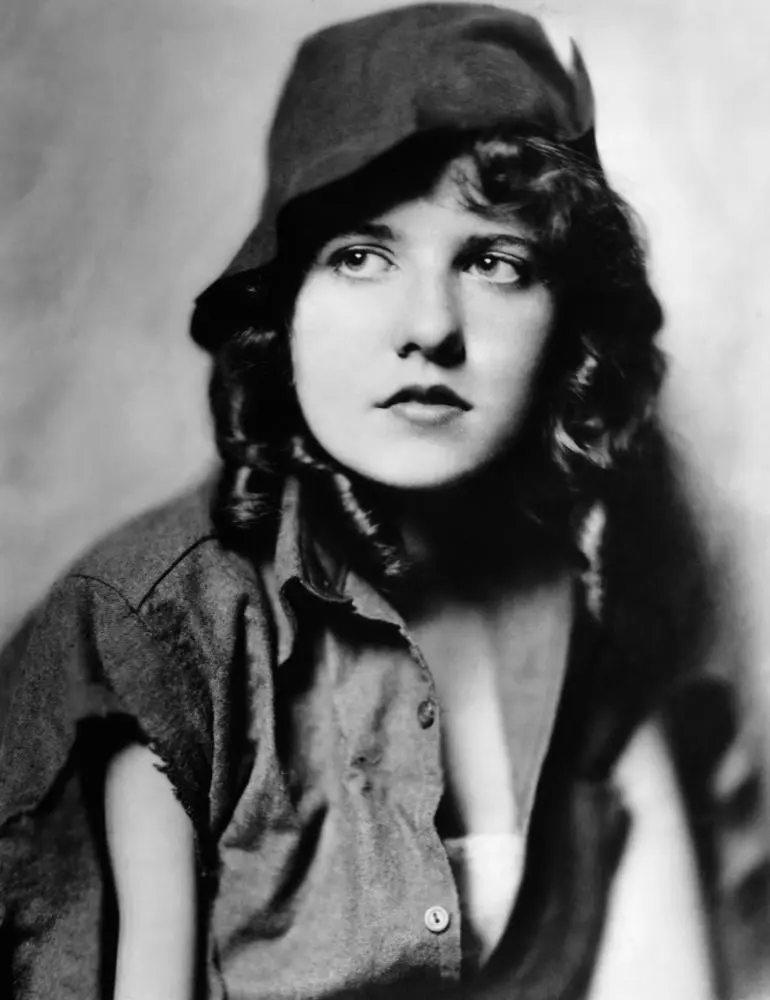
The cinematography by J. Roy Hunt is nothing short of revolutionary for 1925. The way he captures the fog-laden streets of London creates a claustrophobic atmosphere that makes the eventual transition to the dream world feel like a literal breath of fresh air. The lighting on Bronson’s face often gives her an angelic glow, contrasting sharply with the harsh, angular shadows of her basement dwelling. It is this interplay of light and dark that keeps the film grounded even when the plot veers into the fantastical.
The supporting cast, including Esther Ralston and Flora Finch, provide a rich texture to the social fabric of the film. Finch, in particular, brings a touch of the eccentric comedy she was known for, though it is tempered by the film’s overall somber tone. Unlike the disjointed narratives of Sadhu Aur Shaitan or the soap-operatic leanings of Married in Name Only, every character in A Kiss for Cinderella feels essential to the ecosystem of Jane’s world. Even the bit players contribute to the sense of a city that is simultaneously falling apart and holding together through sheer force of will.
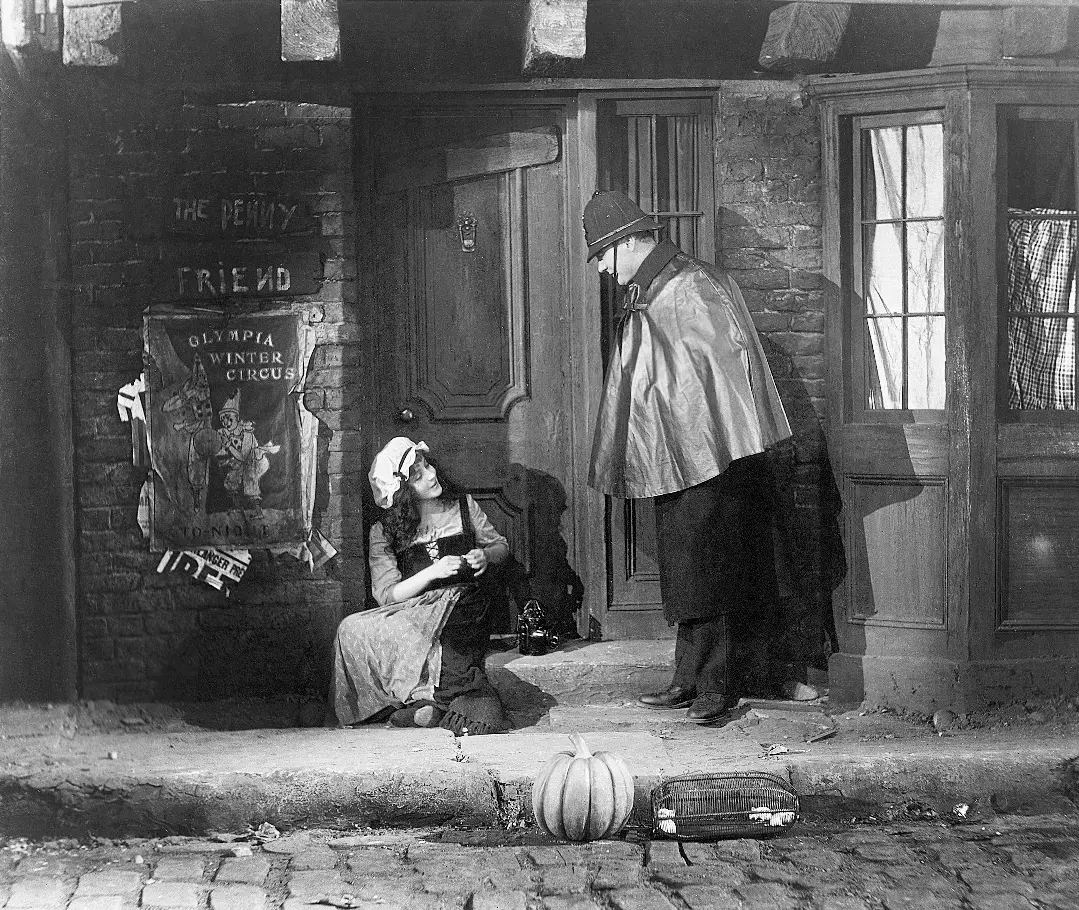
As we look back from the vantage point of the 21st century, the film’s ending remains its most debated element. Is it a happy ending, or a tragic one? Jane’s rescue by the Policeman and their subsequent engagement is presented as a triumph, yet the audience is keenly aware of the fragility of their situation. The 'glass slipper' is replaced by a pair of sturdy boots, a symbol of the practical love that must survive in a post-war world. It lacks the cynical bite of Syndig Kærlighed, but it possesses a groundedness that is rare for the genre.
The film’s influence can be seen in everything from the works of Powell and Pressburger to the modern magical realism of Guillermo del Toro. It understands that the heart of any fairy tale is not the magic itself, but the human need that summons the magic into being. In the quiet moments—like Jane tending to her 'garden' of mismatched pots, a scene that evokes the serenity of In a Naturalist's Garden—the film finds its true power. It is a celebration of the small, the weak, and the overlooked.
To watch A Kiss for Cinderella today is to engage with a form of filmmaking that prioritized poetic truth over literal accuracy. It is a film that breathes, sighs, and occasionally weeps. While it may lack the high-octane thrills of Broadway Gold or the mystery of Seven Bald Pates, it offers something much more substantial: a glimpse into the resilient soul of a woman who refused to let the world dictate the boundaries of her joy. Even when compared to the chaotic energy of Loose Lions, Brenon’s control over tone and pacing is exemplary.
Ultimately, the film stands as a monument to Betty Bronson’s unique screen presence. She was an actress who could inhabit the space between childhood and adulthood, between the earth and the sky. In A Kiss for Cinderella, she found her perfect vehicle—a story about the transformative power of a single kiss, not just as a romantic gesture, but as an act of recognition. It is a film that demands to be seen, not just as a historical curiosity, but as a vibrant, living piece of art that continues to resonate with anyone who has ever looked at a bleak horizon and seen a palace instead.
IMDb 5.6
1933
Community
Log in to comment.