DbcultAccessing Vault...
5.9/10
Senior Film Conservator
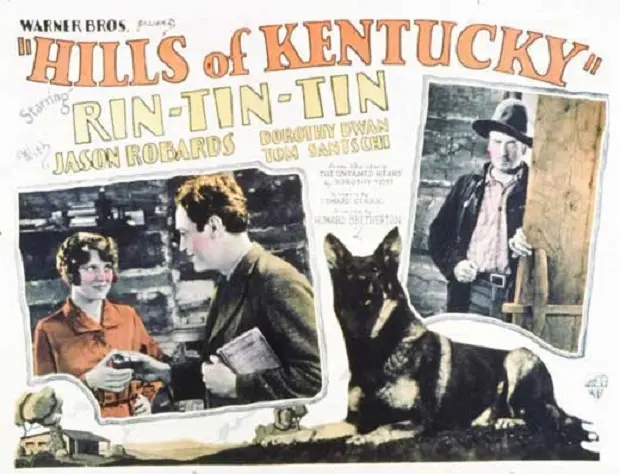
A definitive 5.9/10 rating for a film that redefined the boundaries of cult cinema. Hills of Kentucky remains a cornerstone of transgressive art.
Is Hills of Kentucky worth watching today? Short answer: yes, but with significant caveats that place it firmly in the niche viewing category. This silent era drama, propelled by the legendary Rin Tin Tin, offers a fascinating glimpse into early cinematic storytelling and animal performances, yet its melodramatic human plotlines often strain modern sensibilities.
This film is best for silent film enthusiasts, animal lovers, and those interested in the historical context of early Hollywood's portrayal of rural America and canine heroism. It is decidedly NOT for viewers seeking complex character development, nuanced storytelling, or a fast-paced narrative. If you're accustomed to the intricate plots and sophisticated dialogue of contemporary cinema, Hills of Kentucky will likely feel like a quaint, if occasionally compelling, relic.
This film works because of Rin Tin Tin's undeniable star power and the surprisingly stark depiction of rural hardship.
This film fails because its human melodrama often feels forced and its resolution, overly simplistic.
You should watch it if you appreciate the pioneering spirit of silent cinema and the raw, untamed performance of a true animal legend.
Hills of Kentucky, released in the mid-1920s, arrives as a testament to the enduring appeal of animal protagonists, particularly the incomparable Rin Tin Tin. The film’s narrative is bifurcated, weaving together a tale of human rivalry and a parallel, more compelling, story of canine survival and loyalty. The setting itself, a famine-stricken Kentucky, immediately establishes a tone of bleak desperation, a backdrop against which both man and beast must fight for existence.
The decision to turn out the dogs, a harsh consequence of the famine, sets the stage for Rin Tin Tin's character, The Grey Ghost, to emerge as a symbol of wild, untamed resilience. His transformation into a pack leader, a figure both feared and respected, is conveyed with remarkable clarity, largely through the dog's own expressive movements and the directorial choices that emphasize his strength and cunning. It’s a powerful opening that grounds the film in a raw, almost primal reality.
The human element, however, struggles to reach the same heights of visceral authenticity. The central conflict between Ben, the archetypal bully, and Steve, his shy, gentle half-brother, feels like a stock silent film trope. Their vying for the affections of Janet, the new schoolmistress, while understandable, lacks the emotional depth that would make their struggles truly resonate. Dorothy Dwan, as Janet, brings a certain charm, but her character often feels more like a prize to be won than a fully-realized individual.
Billy Kent Schaefer as Steve attempts to convey a quiet strength, but his character’s perceived cowardice, a recurring point of contention, feels less like a nuanced psychological trait and more like a plot device designed to facilitate future heroic acts. This is where the film’s melodrama occasionally overshadows its potential for genuine human drama. The motivations, particularly Ben's escalating jealousy, are painted in broad strokes, leaving little room for subtlety.
The direction in Hills of Kentucky, while not groundbreaking, effectively uses the natural landscape to its advantage. The establishing shots of the Kentucky hills, even through the lens of early black and white cinematography, convey a sense of rugged beauty and unforgiving wilderness. These wide vistas serve as a constant reminder of the harsh realities faced by both the human and animal inhabitants.
There are moments where the visual storytelling truly shines. The sequence depicting The Grey Ghost's injury and subsequent hiding near the stream is particularly effective. The close-ups of the dog's pained expression, juxtaposed with little Davey's innocent curiosity, create a tender, intimate moment that transcends the limitations of the silent medium. It's a testament to the director's ability to elicit genuine emotion through visual cues, rather than relying solely on intertitles.
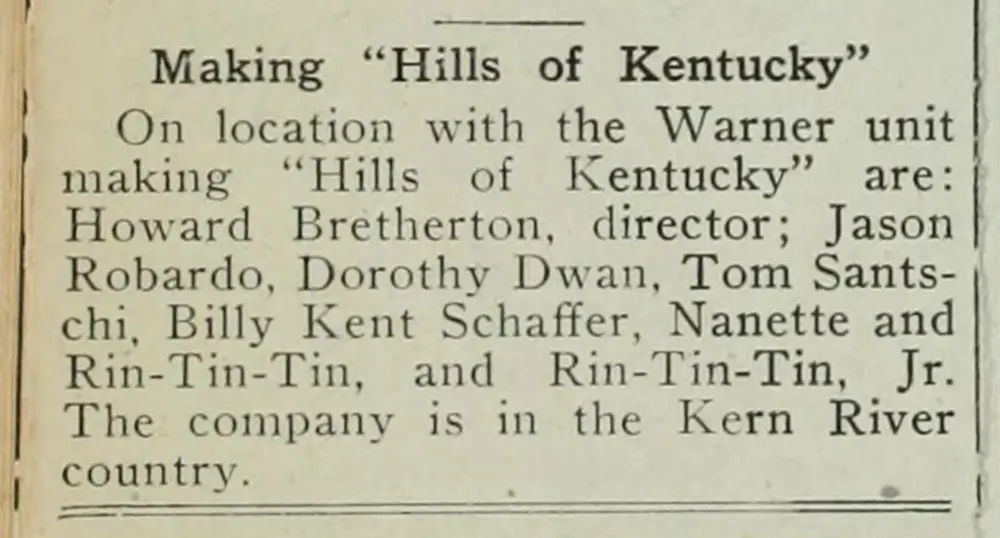
However, the pacing can feel uneven. The film often oscillates between the compelling, almost documentary-style portrayal of the dog pack's struggles and the more theatrical, often drawn-out, human interactions. This creates a slight disconnect, preventing the two storylines from fully coalescing into a seamless whole. One can't help but feel that the filmmakers were more invested in Rin Tin Tin's arc than in the intricacies of the human melodrama, and frankly, who could blame them?
The use of natural light and outdoor locations adds a layer of authenticity that many studio-bound productions of the era lacked. This choice helps to ground the fantastical elements of an animal hero in a believable, if harsh, reality. The rapids scene, for instance, while a clear setup for heroism, benefits immensely from being staged in a real, visually imposing environment, lending it a sense of genuine peril.
No discussion of Hills of Kentucky can ignore the sheer magnetic presence of Rin Tin Tin. He is, without question, the film's undeniable star. His performance as The Grey Ghost is not merely a series of trained tricks; it is a nuanced portrayal of an animal driven by instinct, loyalty, and a surprising capacity for affection. When The Grey Ghost permits Davey to bathe his wound, the moment is imbued with a tenderness that feels remarkably genuine, a silent dialogue between species.
Rin Tin Tin’s ability to convey emotion – fear, protectiveness, defiance – is truly astounding, even by today's standards. In a scene where he confronts the pack to protect Davey, his posture and gaze communicate a fierce resolve that outshines many of his human co-stars. It’s an unconventional observation, perhaps, but one could argue that Rin Tin Tin delivers the most emotionally resonant performance in the entire film. He doesn't just act; he embodies the spirit of the untamed wilderness, yet also the capacity for profound connection.
His heroic acts, from saving Davey to his climactic rescue of Janet, are executed with a natural grace that makes them feel earned, rather than simply orchestrated. This is a dog that understands stakes. The Grey Ghost isn’t just a plot device; he is a character with agency, whose actions drive significant portions of the narrative. This makes the film feel less like a human story with a dog in it, and more like a symbiotic tale where both human and animal destinies are intertwined.
It works. But it’s flawed. The reliance on Rin Tin Tin's star power might have been a commercial boon at the time, but it also highlights the relative flatness of some of the human characters, particularly the one-dimensional portrayal of Ben. Jason Robards Sr. as Ben provides a suitably villainous presence, but there's little beneath the surface of his jealousy and malice.
Hills of Kentucky, despite its melodramatic flourishes, touches upon some surprisingly weighty themes. The overarching struggle against famine highlights the fragility of human existence and the desperate measures people resort to when faced with scarcity. The abandonment of the dogs, while a plot catalyst, also serves as a stark commentary on the human capacity for cruelty when survival is on the line.
Steve's journey from perceived cowardice to heroism is a central human arc. Janet's initial dismissal of him, based on his quiet nature and endurance of taunts, reflects a societal bias towards overt displays of strength. His eventual acts of courage, spurred by the need to protect Janet, are meant to be redemptive, proving that true bravery can manifest in unexpected ways. However, this redemption arc feels somewhat rushed and less impactful than it could have been, given the preceding build-up of his perceived weakness.
The theme of loyalty is powerfully explored through The Grey Ghost's bond with Davey and his ultimate decision to intervene in the human conflicts. His loyalty transcends species, becoming a moral compass in a world where human actions are often driven by base emotions like jealousy and fear. This is where the film finds its most profound moments, suggesting that perhaps true nobility resides not just in humans, but in the animal kingdom as well.
The film also subtly critiques mob mentality, as Ben successfully turns the farmers against Janet. This brief foray into communal paranoia adds a darker, more complex layer to the human conflict, suggesting that even good people can be swayed by manipulation and fear. It’s a nuanced detail that elevates the film beyond a simple good-versus-evil narrative, if only for a fleeting moment.
Hills of Kentucky stands as a fascinating, if imperfect, relic of the silent era. Its enduring appeal lies almost entirely with the magnificent Rin Tin Tin, whose performance as The Grey Ghost elevates the entire production. He embodies a spirit of resilience and loyalty that transcends the limitations of human dialogue, proving that a non-human actor can carry a film with profound emotional weight. The human drama, while serviceable for its time, often feels like a thinly veiled framework designed to showcase its canine star. The simplistic characterizations of Ben and Steve, and the somewhat rushed resolution, prevent the film from achieving true timelessness.
However, for those willing to engage with its historical context and appreciate the pioneering spirit of early cinema, Hills of Kentucky offers a rewarding experience. It's a testament to the power of visual storytelling and the timeless appeal of a heroic animal. It reminds us that sometimes, the most compelling narratives are told not with words, but with actions, expressions, and the sheer, untamed spirit of a dog. While it won't redefine your understanding of cinema, it will certainly solidify your appreciation for one of its earliest and most beloved stars. If you enjoyed the raw animal magnetism of films like The Law of the North, you’ll find something to admire here.
IMDb 6.7
1915
Community
Log in to comment.