DbcultAccessing Vault...
Cult Review
Senior Film Conservator
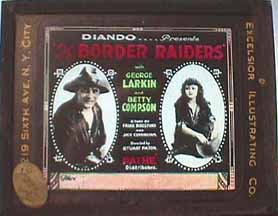
In the pantheon of early American cinema, specifically the transitional period of the late 1910s, Border Raiders (1918) emerges as a fascinating, if somewhat shadowed, exploration of the Western genre’s capacity for noir-inflected storytelling. Directed by Stuart Paton, a filmmaker whose grasp of pacing was often ahead of his contemporaries, this work deviates from the standard 'white hat versus black hat' tropes of its era. Instead, it plunges the viewer into a world where the sanctity of the domestic hearth—the family ranch—is violated not by an external raiding party, but by the insidious penetration of a criminal element through the institution of marriage itself.
The film’s primary strength lies in its atmospheric tension. John Hardy, portrayed with a stoic vulnerability by Howard Crampton, represents the old guard of the frontier—hardworking, perhaps overly trusting, and ultimately susceptible to the machinations of the modern criminal. When he marries Cleo Dade (the formidable Claire Du Brey), the audience is immediately thrust into a state of dramatic irony. We recognize the predator; he sees only a partner. This dynamic creates a palpable sense of dread that permeates the first two acts, distinguishing it from more straightforward action films like The Plow Girl, which often leaned into more traditional romantic resolutions.
Cleo Dade is a character of significant complexity for 1918. She is not merely a 'bad woman' but a strategic operative. Her role as the wife of the gang member "Square Deal" Dixon adds a layer of bigamy and cold-blooded calculation that was daring for the time. As she usurps Rose Hardy’s place (played by the luminous Betty Compson), the film shifts from a Western drama into a psychological thriller. The ranch, once a symbol of agrarian success, is repurposed into a labyrinthine headquarters for Mock Sing’s opium smuggling. This intersection of the pastoral and the illicit provides a rich visual and thematic contrast that Paton exploits through clever framing and shadow play.
One cannot discuss *Border Raiders* without addressing the character of Mock Sing, played by Frank Deshon. While the portrayal undeniably carries the weight of the era’s 'Yellow Peril' anxieties—a trope also visible in contemporary works like The Dummy—the narrative function he serves is critical to the film's noir sensibilities. The introduction of opium trafficking into the narrative elevates the stakes from a local land grab to a federal crisis. It transforms the border into a liminal space where law and lawlessness are in constant, violent flux.
The scenes set in Mock Sing’s cabin are among the film’s most visceral. There is a claustrophobic intensity to these sequences, particularly when Rose Hardy ventures there to find the truth about her father. It is here that the film’s cinematography shines, using limited light sources to emphasize the isolation and danger of the frontier's dark corners. The rescue of John Hardy, who has been held in a state of pathetic captivity, serves as the narrative’s pivot point, moving from the slow burn of deception to the explosive kinetic energy of the finale.
George Larkin, as John Smith, delivers a performance that balances the nonchalance of a card dealer with the lethal precision of a government agent. Larkin was known for his athletic prowess and stunt work, and while *Border Raiders* focuses heavily on plot, his physical presence is undeniable. His attraction to Rose provides the emotional anchor for his intervention, but his true motivation—dismantling the opium ring—provides the structural anchor. This duality of purpose makes him a more compelling protagonist than the simple 'wandering cowboy' found in films like The Eyes of Julia Deep.
The revelation of his identity as a government agent is handled with a level of sophistication that avoids the cloying sentimentality of many silent-era resolutions. Instead, it feels like the logical conclusion of a meticulously planned operation. The marriage between Smith and Rose at the film’s end is not just a romantic trope; it symbolizes the restoration of order and the merging of personal happiness with civil duty.
Stuart Paton’s direction is characterized by a remarkable economy of storytelling. Unlike the sprawling, often unfocused narratives of Korol Parizha or the melodramatic excesses of Az utolsó éjszaka, *Border Raiders* maintains a tight grip on its central conflict. The editing, particularly during the climactic attack on Mock Sing’s operations by the ranch hands, displays a nascent understanding of cross-cutting to build suspense and geographical clarity in action.
The use of the ranch hands as a collective force for justice is a poignant touch. It suggests that while the individual (Hardy) can be deceived, the community—the 'hands' that actually work the land—possesses a collective resilience that cannot be easily subverted. Their intervention is swift and brutal, a reminder that on the border, justice is often a matter of direct action rather than judicial process.
A significant portion of the film’s enduring interest lies in the performance of Betty Compson. In 1918, Compson was on the precipice of major stardom, and her portrayal of Rose Hardy showcases the blend of fragility and steel that would make her a favorite of directors like George Loane Tucker. She avoids the 'damsel in distress' clichés, instead exhibiting a proactive curiosity that drives the plot forward. When she suspects her father is alive, she doesn't wait to be told; she investigates. This agency is a refreshing departure from the passive heroines often found in silent dramas like Bryggerens datter.
Viewing *Border Raiders* today requires a dual perspective: an appreciation for its genre-blending innovations and a critical eye toward its cultural depictions. It stands as a document of a time when the American film industry was experimenting with the boundaries of the Western, incorporating elements of the burgeoning crime thriller and the 'secret service' adventure. It shares a certain thematic DNA with Die Faust des Riesen in its depiction of industrial or organized threats to the individual, yet it remains distinctly American in its obsession with the border as a site of moral testing.
The film’s resolution—the restoration of the ranch and the purging of the 'poison' (both literal opium and figurative betrayal)—is a reaffirmation of frontier values. However, the shadows cast by Cleo and Mock Sing linger long after the credits roll. They represent a realization that the frontier is no longer just a place of physical danger, but a place of sophisticated, organized malice. In this regard, *Border Raiders* is a precursor to the modern neo-Western, where the threat is often an invisible network rather than a visible enemy.
While perhaps not as widely discussed as the epics of Griffith or the comedies of Chaplin, *Border Raiders* is a vital piece of silent cinema history. It offers a gritty, unvarnished look at the intersection of crime and the Western, anchored by strong performances and a director who understood the power of a well-told secret. Its lexical diversity in visual storytelling—using the ranch as both a home and a prison—ensures its place as a subject of study for any serious cinephile. Whether compared to the lighthearted On the Quiet or the more theatrical Carmen (1918), *Border Raiders* carves out its own niche of dark, frontier intrigue.
A masterclass in silent-era suspense and a harrowing look at the corruption of the American dream on the edge of the world.
IMDb —
1934
Community
Log in to comment.