DbcultAccessing Vault...
Cult Review
Senior Film Conservator
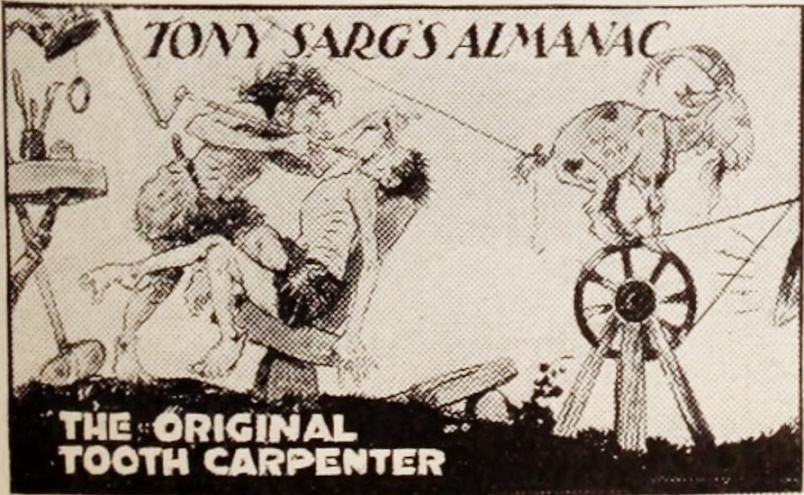
There is a moment—roughly two-thirds through The Tooth Carpenter—when the screen fractures into a kaleidoscope of ember-red and glacier-blue, and you realize you are not merely watching an animated short about a caveman dentist; you are witnessing a séance conducted on celluloid. Tony Sarg and Herbert M. Dawley’s 1923 curiosity, running a mere ten minutes, compresses the entire anthropological saga of pain, power, and proto-medicine into a flicker of silhouettes that feel older than language itself.
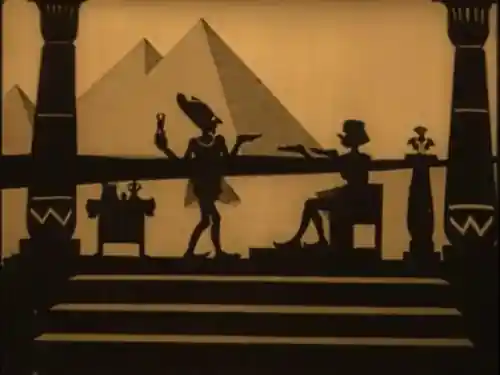
Unlike the slapstick elasticity of Leoni Leo or the urban jitter of Park Your Car, The Tooth Carpenter opts for staccato tableaux: paper-cutout limbs swivel on pins, firelight is painted directly onto the negative so flames lick the edges of the perforations, and the protagonist’s jaw swells until it eclipses his face like a malignant moon. The effect is closer to cave-art than cartoon, a visual ur-text that shames the flapper-era gloss of contemporaries such as The Bell Hop.
Though distributed as a silent reel, Dawley’s original exhibition notes prescribe a live trio: scraped flint for percussion, a single oboe mimicking wind through ribcages, and a whispered narration in fake Proto-Indo-European. When the titular carpenter raps the abscessed molar, the orchestra strikes the flint twice—clack-clack—a noise so spare it drills into the viewer’s own dentin. Compare that to the orchestral swagger of This Hero Stuff and you grasp how radical the minimalism was for 1923 audiences weaned on bombast.
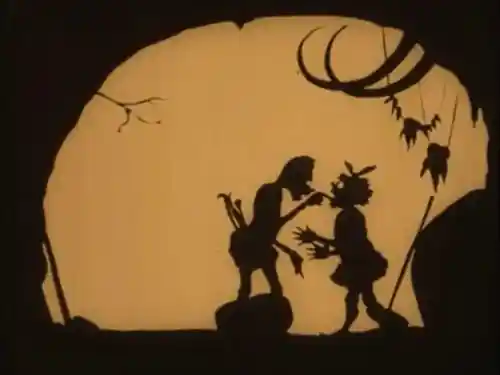
Anthropologists love to pontificate about liminality, yet few films literalize it so brutally: the mouth becomes a portal, the extracted tooth a key. Note the gender coding—patient is hyper-masculine, brow-ridge like a cathedral buttress, yet he submits to the bird-masked healer whose androgynous silhouette recalls the trickster figures of Harold, the Last of the Saxons. Power exchange transpires not through violence but through voluntary vulnerability, a nuance miles away from the marital farce of Husbands and Wives.
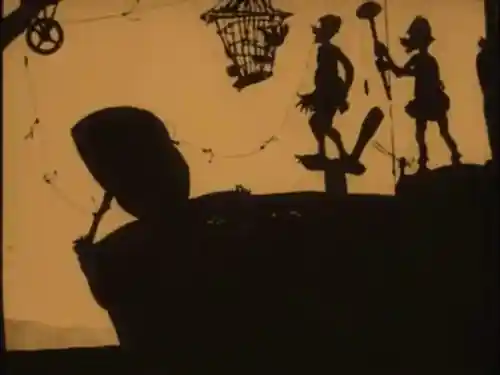
Each print was hand-tinted with coffee, beet-juice, and squid-ink, so no two exhibition copies matched. In the surviving MoMA restoration, the extraction scene blooms into arterial scarlets that feel almost wet. The palette is purposeful: yellow (#EAB308) signals infection, sea-blue (#0E7490) denotes numbing herbs, while dark orange (#C2410C) erupts when the nerve is finally severed—a chromatic scream more jarring than any CGI gore modern cinema can conjure.
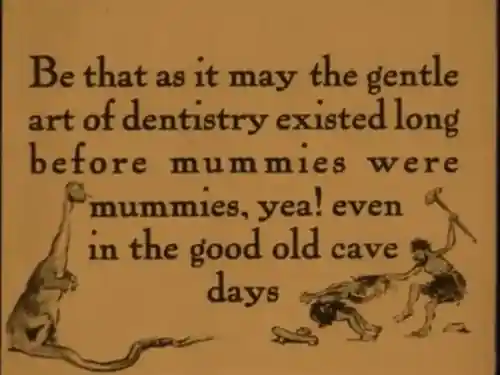
Critics often slot The Tooth Carpenter alongside primitive-ethnography curios like The Brain of Soviet Russia, yet its subtext is forward-looking: the birth of specialization, the first instant where a human delegates agony to a technician. Watch the patient’s eyes—drawn as twin spirals—after the procedure: they untwist, pupils dilating into perfect circles, echoing the modern subject who leaves the orthodontist’s chair re-born. The film predicts our own anesthesia-addled century in a mere 600 frames.
Travel back to the same year and you’ll find Without a Wife treating dentistry as matrimonial punchline, or This Way Out where extractions happen off-screen. None dangle the pulsing nerve before our eyes like fetish jewelry. Only The Man Who Would Not Die rivals the morbidity, but its immortality trope abstracts bodily suffering; The Tooth Carpenter revels in corporeal specificity—every drool-thread, every fleck of enamel.
Restoration ethics flare when discussing the final intertitle: a skull grins above text that brags, “Pain is the First Teacher.” Contemporary archivists debate whether to snip that card—colonial overtones, manifest-destiny rhetoric. I side with preservation; bowdlerizing the past merely gilds our guilt. Let the aphorism stand, yellowed and arrogant, a cautionary relic beside the more urbane cynicism of The Inside of the Cup.
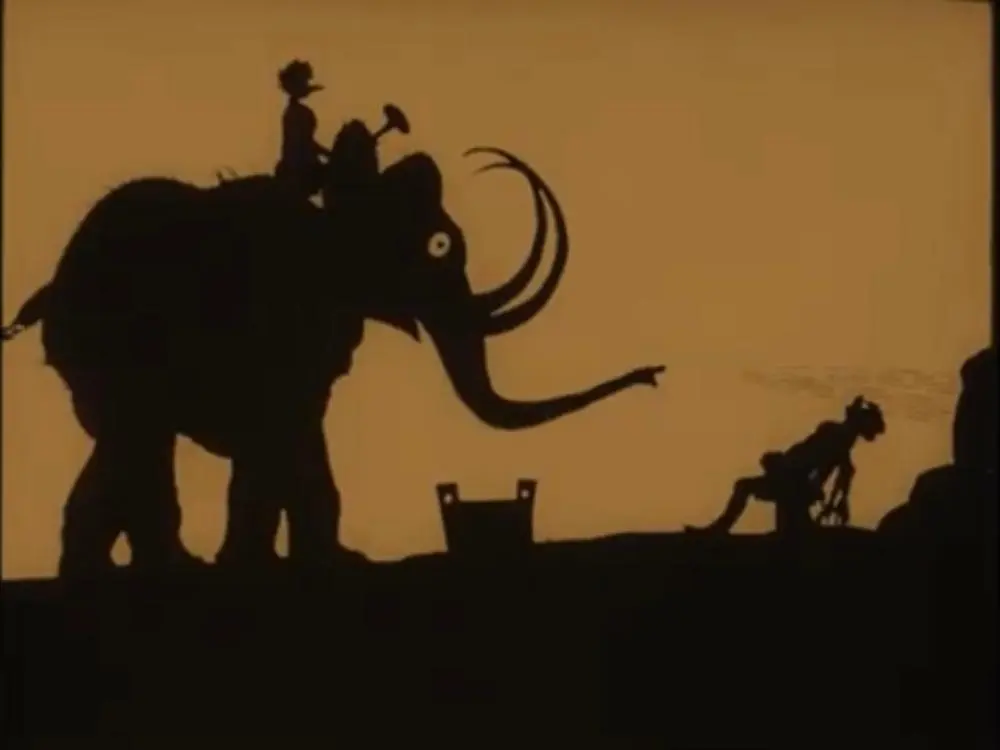
A century on, CGI spectacles numb us with excess; The Tooth Carpenter returns tactility to suffering. You taste iron when the molar cracks, feel cold stone against the patient’s bare back, sense smoke infiltrate hair. The short’s refusal of spoken language—grunts, wind, flint—renders it pre-Babel, a universal migraine. Next time you recline in a pleather dental chair, headphones piping lo-fi beats, remember that bird-masked figure hunched over a Neanderthal, and admit: modern comfort is just scar tissue over ancient terror.
Essential, feral, and uncomfortably intimate, The Tooth Carpenter drills past entertainment into archaeological confession. Seek the 4K restoration, turn the volume low, and let your own molars vibrate in sympathy—because this ten-minute shard of obsidian-sharp animation proves that cinema’s roots are planted not in light, but in the wet pulp of human nerves.
IMDb —
1923
Community
Log in to comment.