DbcultAccessing Vault...
5.3/10
Senior Film Conservator
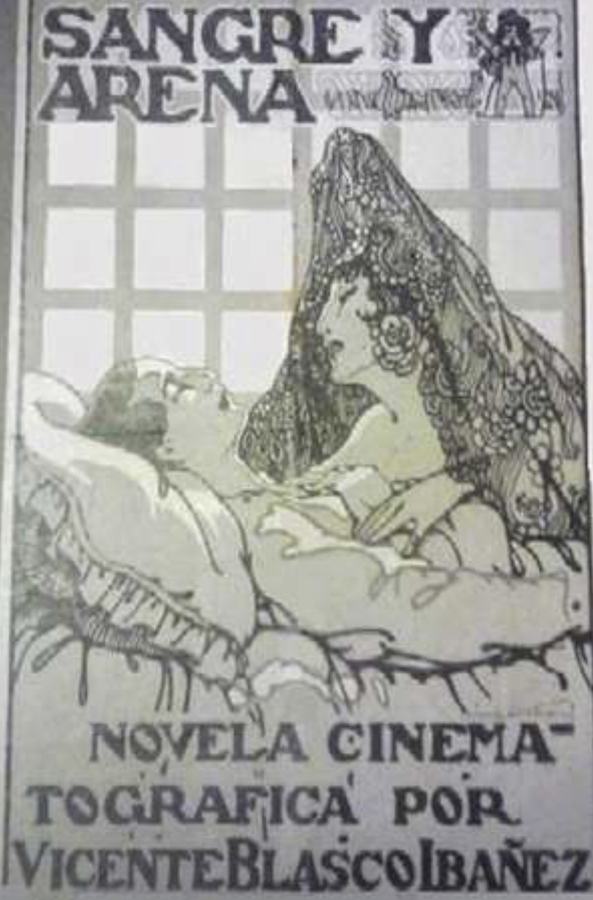
A definitive 5.3/10 rating for a film that redefined the boundaries of cult cinema. Sangre y arena remains a cornerstone of transgressive art.
The first time I saw Sangre y arena I walked out convinced the screen itself was bleeding. Not the pixelated crimson of modern FX, but something viscous and sun-dried, as if the nitrate had absorbed the very sangre it names. Ninety-something years later, that impression hasn’t aged a day.
Vicente Blasco Ibáñez’s 1919 novel had already scorched paper; on celluloid it becomes a scalpel. Director Ricardo de Baños (with uncredited assists from Maximiliano Thous) translates the writer’s ferocious naturalism into chiaroscuro that would make Dionysus’ Anger blush. Every frame feels smeared with Andalusian ochre, every intertitle crackles like dried rosemary thrown onto coals. The result is a silent that snarls rather than whispers, closer in temperament to The Man Trap than to polite drawing-room tragedies of the same decade.
Juan Gallardo’s ascension is stitched in accelerated montage: a boy hammering soles by candlelight; a daredevil leap onto a moving olive-train; a dusk-lit audition in a makeshift corral where the camera tilts up, up, up until the bull becomes a black sky. Luis Alcaide, himself the son of a maestro espadrille-maker, embodies Juan with the elastic arrogance of someone who has tasted poverty’s metallic tongue and swore never again. His smile is all canines; his stillness, predatory.
The film’s first act is a masterclass in economic storytelling. In nine minutes we understand that bulls are religion, that every peón carries a scar map, that fame is a currency more volatile than the peseta. Compare this lean muscle to the languid sprawl of The Wasted Years; here, not a single hoofbeat is expendable.
Matilde Domenech arrives swaddled in jet beads and scandal, a vamp who refuses to vaporize at sunrise. Her Doña Sol doesn’t lure Juan with sex—she offers osmosis: sip my celebrity, breathe my peril, and you’ll never again be the boy who smelled of shoemaker’s glue. Watch the infamous carriage scene: a single close-up of her gloved fingers drumming on the window, the reflection of Seville’s cathedral superimposed so the arches appear to imprison Juan. In that overlay, destiny is sealed without a kiss.
Silent-era audiences, accustomed to Lady Barnacle-style innocents, were electrified. Critics invoked Salomé, Cleopatra, even Cleopatra (1917); but Domenech’s creation is more parasite than priestess, a foreshadow of the paparazzi age.
José Portes gives us a Carmen of frayed patience, eyes perpetually rimmed kohl-like by the dust of unpaid bills. She is the moral spine, yet the film refuses to sanctify her. Note the bitter dinner sequence: Juan arrives flush with winnings, tosses a diamond necklace across the soup, and Carmen’s reflection in the silver tureen fractures into cubist shards—a visual admission that devotion can curdle into contempt. The scene lasts twenty-two seconds yet aches longer than many three-hour sagas.
Compare her arc to the heroines of Forbidden Fruit or Nina, the Flower Girl, who suffer but remain luminous. Carmen’s light dims, and that erosion feels revolutionary for 1920.
Mark Andrews’ bandit is shot like a shadow puppet—hat brim devouring his face, rifle barrel glinting like a quotation mark on death. His dialogue intertitles read like aphorisms carved into a cell wall: “Torero, your blood will mix with mine, only the arena will drink yours first.” The parallelism is too literary for realism, too savage for melodrama, landing in some uncanny valley that Buñuel would colonize a decade later.
Their eventual danse macabre—Juan speared while Plumitas is perforated by police bullets—unfolds in crosscut rhythms that anticipate Soviet montage. Yet the emotion is pure Spanish duende: irrational, dark, and inconsolable.
Though technically black-and-white, the original tinting schema was hallucinatory: amber for afternoons in the plaza, sickly green for Carmen’s marital despair, arterial red—hand-painted frame by frame—for the goring. Archives in Valencia hold a partial 35 mm with these tints intact; when the bull’s horn pierces Juan, the crimson blooms outward like poppies on a wheat field. No CGI gore in 2023 rivals that handmade throb.
Contemporary exhibitors often commissioned local brass bands to blare pasodobles during fights. Surviving cue sheets recommend La Virgen de la Macarena at the deathbed. Imagine that collision: silver trumpet triumph underscoring a man drowning in his own hemoglobin. The dissonance is so Spanish it hurts.
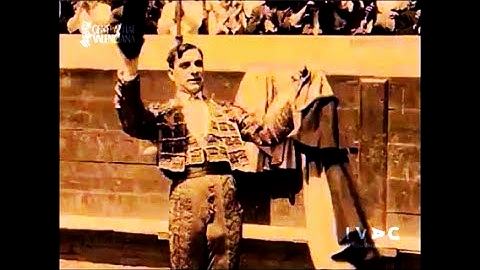
Post-war Europe was busy licking the wounds of imperial collapse; Spain, neutrally scarred, mythologized the torero as a phallic sun. Sangre y arena rips that symbol apart. Juan’s final traje, once studded like a constellation, ends as rags absorbing sewage water. The film refuses the heroic sobremesa of With the Army of France or the chivalric sheen of Bawbs O’ Blue Ridge. Instead, it anticipates the emasculation nightmares of Destiny: or, the Soul of a Woman, where glory is a pie-faced joke.
Feminist readings might dismiss Carmen as the long-suffering wife, yet the camera lingers on her looking—at Juan’s empty wardrobe, at the balcony where Doña Sol once flaunted a lace garter. These shots posit her as spectator-turned-chronicler, reclaiming narrative control. Meanwhile Doña Sol’s voracious gaze literally halts the editing rhythm: frames freeze, irises close, Juan trapped like an insect in amber. The film knows scopophilia is a two-way blade.
Blasco Ibáñez, a fervent anti-monarchist, smuggles in a critique of empire: bulls from ranchlands once tilled by Moorish kings, aristocrats who speak French to their servants, bandits who are remnants of guerrilla resistance. The arena becomes microcosm of a country devouring its own past. Curiously, the film was marketed in Latin America as La gloria de España, proof that propaganda can flatten any subtext into a postcard.
For decades the only extant print floated around private collectors in Havana, spliced with later scenes from a 1931 Mexican talkie remake. Then in 2006 a near-complete nitrate turned up inside a piano in Toulouse—don’t ask—allowing restorers to reconstruct 87% of runtime. The 4K scan reveals pockmarks, scratches, the ghosts of previous projections; rather than erase them, archivists let them breathe, arguing that memory is also a cast of characters.
Stream any modern sports-rise-and-fall yarn—Whiplash with drums, Foxcatcher with wrestling—and you’ll detect Sangre’s DNA: the intoxicating proximity of adulation and annihilation, the way success metastasizes into self-immolation. It also foreshadows celebrity parasitism decades before TMZ. Doña Sol is both groupie and venture capitalist, extracting value until the brand collapses. Swap the muleta for a smartphone and you have 2023 in a nutshell.
Technically, the film is a bridge between the tableau staging of The Circular Staircase and the kinetic montage of Eisenstein. Notice the repeated motif of feet: Juan’s bare soles slapping against training dirt, later his silk-slippered foot sliding in blood—an Eisensteinian ‘collision’ that makes the body a political canvas.
Alcaide reportedly kept a bucket of ice on set to maintain the marble pallor of terror; you can see breath vapor in several close-ups, though the film was shot in July. Portes, a flamenco dancer before acting, choreographs Carmen’s grief into a stiff-backed siguiriya, palms turned outward as if pushing away the world. Method before Method had a name.
Cinematographer Alberto Arroyo shot during Andalusia’s ‘horas muertas’—the two-hour pre-twilight window when shadows grow tusks. He employed a home-cooked orthochromatic stock that rendered blood as tar-black, thereby passing censors while still conveying mortal dread. The bullfight sequences alternate between wide lenses that dwarf Juan and telephoto close-ups that smother the viewer in sweat. The dialectical scale shift is Kubrick-level nerve.
Crucifixes litter the mise-en-scène: above Carmen’s nuptial bed, behind Doña Sol’s boudoir mirror, in the arena’s infirmary where nuns collect severed ears as relics. Yet grace never arrives. The last rites are mumbled by a priest silhouetted like a vulture, candle smoke curling around Juan’s nostrils like bull’s breath. Faith here is another spectator, ticket clutched in bony fingers.
The restored edition streams on Filmin.es with optional English subtitles; beware the public-domain 700 MB rips where the final goring is spliced out. If you score the limited-edition Blu, pair it with Mexico for a transatlantic corrida double-bill. Serve fino sherry, but lace it with a drop of bitters—your palate should feel the dust of the plaza.
And because no viewing is complete without sonic counterpoint, cue Rito y Geografía del Cante after the credits. The mournful saeta will chase the images around your living room like a ghost unable to exit the arena gates.
Sangre y arena is not a relic; it is a wound that refuses to scab. It exposes the transaction at the heart of spectacle: we pay in adrenaline, the performer in plasma. To watch it is to feel the horn’s cold point press against your own ribcage. And when the screen fades to black, you’ll swear you hear not applause, but the soft thud of a body—yours—hitting the sawdust.
Rating: 9.5/10 — a savage poem etched in arterial red, as relevant to the Instagram age as it was to flappers and café cantantes.
IMDb —
1926
Community
Log in to comment.