DbcultAccessing Vault...
7.6/10
Senior Film Conservator
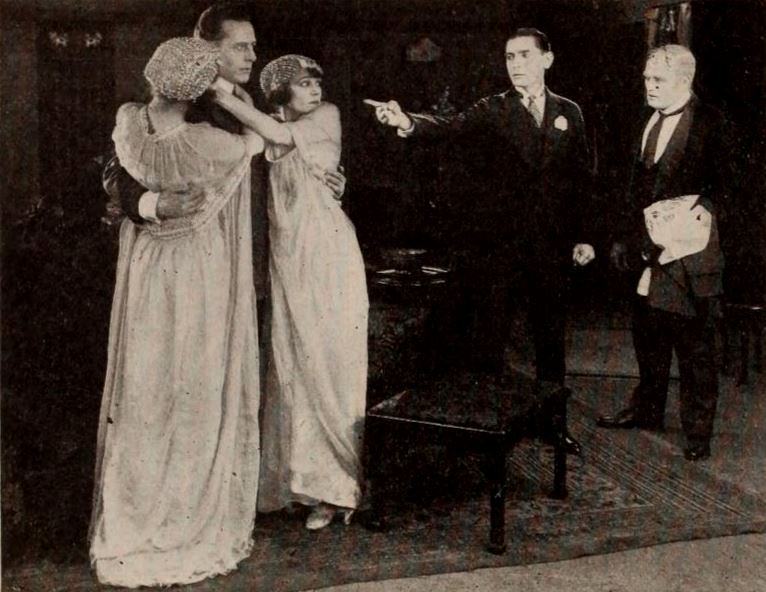
A definitive 7.6/10 rating for a film that redefined the boundaries of cult cinema. His Bridal Night remains a cornerstone of transgressive art.
Step into the captivating, often bewildering, world of early 20th-century cinema, where melodrama reigned supreme and the silent screen spoke volumes through gesture, expression, and the potent power of a well-crafted intertitle. Today, we're delving into a particularly intriguing artifact from this era: the 1919 feature, His Bridal Night. This isn't just another forgotten relic; it's a vibrant tapestry woven with threads of mistaken identity, simmering desire, and the kind of deliciously complicated romantic entanglement that kept audiences spellbound. Directed with a keen eye for dramatic tension and featuring a star turn by the remarkable Alice Brady, this film serves as a fascinating window into the societal mores and narrative conventions of its time, while still offering a surprisingly resonant exploration of human foibles and the elusive nature of true connection.
At its heart, His Bridal Night is a masterclass in the art of the switcheroo, a narrative device perfected in an age where visual storytelling relied heavily on clear, albeit often exaggerated, distinctions. The plot, penned by the collaborative efforts of Lawrence Irving Rising and Kathryn Stuart, is a convoluted delight, beginning on the eve of Vi Playfair's wedding to the seemingly respectable Joe. Vi, portrayed with a flighty, almost naive charm by Alice Brady, confides in her twin sister, Tiny, that she intends to meet her persistent admirer, Lent Trevett, for a final, bittersweet farewell. It's a classic setup for romantic angst, a last gasp of forbidden passion before the shackles of matrimony descend. However, Tiny, also brought to life by Brady's versatile performance, harbors a secret: a deep, unacknowledged love for Lent herself. This unspoken desire ignites the film's central deception. Instead of Vi, it is Tiny who meets Lent, and in a moment of raw, unbridled passion, she kisses him. Lent, utterly convinced he has embraced Vi, is left with the intoxicating, yet utterly false, impression that his beloved reciprocates his feelings, setting the stage for an escalating cascade of misunderstandings.
The very next day, with Vi and Joe officially bound by vows, Lent, fueled by his misconstrued encounter, approaches Vi. With a blend of cunning and conviction, he paints Joe as an oppressive bully, a man unworthy of Vi’s delicate spirit. Vi, ever the impressionable romantic, begins to waver, contemplating the unthinkable: abandoning her newlywed status for a life with Lent. This pivotal moment is witnessed by Tiny, whose complex motivations come to the fore. Is it a desire to protect her sister from a hasty mistake, a longing to experience the romantic adventure Vi seems so cavalier about, or perhaps a calculated move to teach her flighty twin a much-needed lesson about the gravity of relationships? Whatever the impetus, Tiny makes a bold decision: she impersonates Vi and, with a knowing glint in her eye, departs with Joe for their honeymoon. This audacious act propels the narrative into a whirlwind of pursuit and revelation, transforming a simple romantic drama into a high-stakes game of identity and desire. The film deftly navigates these emotional currents, showcasing the power of perception and the often-fragile nature of trust, particularly when shrouded in the veil of mistaken identity.
Undoubtedly, the gravitational center of His Bridal Night is Alice Brady’s breathtaking dual performance. To portray two distinct characters, Vi and Tiny, with such nuance and conviction, especially in the silent era where exaggerated gestures could easily devolve into caricature, is a testament to her prodigious talent. Brady doesn't merely don different costumes; she embodies two entirely separate personalities. Vi is the quintessential flapper-in-training, impulsive and somewhat self-absorbed, easily swayed by romantic notions and external flattery. Her expressions are often open, almost childlike, reflecting a lack of deep introspection. She is the embodiment of the societal ideal of the 'flighty' woman, a trope often explored in films of the period, perhaps even in something like A Modern Cinderella, which might have similarly played with expectations of female roles and desires.
Tiny, on the other hand, is the film's quiet revolutionary. She possesses a depth and an emotional intelligence that her sister lacks. Her love for Lent, though unrequited, is a powerful undercurrent, driving her actions with a fierce, almost desperate, resolve. Brady portrays Tiny with a subtle intensity; her gaze is often more knowing, her movements more deliberate. When Tiny impersonates Vi, there’s a fascinating layer of performance within a performance. Tiny isn't just pretending to be Vi; she's *acting* like Vi, perhaps even exaggerating Vi's more superficial traits as a form of critique or subtle mockery. This allows Brady to showcase her range, shifting seamlessly between the two sisters, sometimes within the same scene, a feat that would challenge even the most seasoned modern actor. The effectiveness of this dual role hinges on the audience's ability to distinguish between the two, not just by costume, but by the very essence of their being, and Brady achieves this with remarkable clarity, making each sister feel distinct and fully realized. Her mastery of subtle facial expressions and body language, essential for silent film, ensures that even without dialogue, the audience understands the emotional complexity of each character's journey.
The narrative gains considerable momentum as Vi, now consumed by a burning jealousy, embarks on her own pursuit of Joe and the imposter Tiny. This emotional turn for Vi is crucial; it marks a transition from passive recipient of romantic overtures to an active agent in her own destiny. Her previous flightiness gives way to a more determined, albeit still somewhat self-centered, drive to reclaim what she perceives as hers. Hot on her heels is Lent, equally confused and desperate to understand the bewildering twists of fate that seem to be snatching Vi away from him. The stage is set for a chaotic, yet ultimately cathartic, confrontation at the honeymoon cottage.
The climax is a delightful piece of silent film ingenuity, relying on a physical mark to resolve the identity crisis. Vi, in a moment of dramatic flair, reveals a mole on her leg, a unique identifier that unequivocally proves her true identity to Joe. This scene, while perhaps quaint by today's standards, was a powerful visual cue in an era before DNA tests and digital forensics. More importantly, it serves as a symbolic shedding of pretense. With her identity confirmed, Vi, perhaps chastened by the emotional rollercoaster, promises Tiny that she will abandon her flirtatious ways. This vow signifies not just a resolution to the immediate conflict but a potential character arc for Vi, suggesting a newfound maturity and understanding of commitment. It's a satisfying, if somewhat abrupt, moment of growth, allowing the audience to believe that Vi has learned her lesson.
Concurrently, Tiny, with a brave and honest confession, clarifies the initial misunderstanding for Lent. She reveals that it was she, not Vi, who shared that passionate kiss, effectively untangling the knot of misplaced affection that had driven much of the film’s drama. This confession is a moment of liberation for both characters; Lent is freed from his delusion, and Tiny, by speaking her truth, perhaps finds a measure of peace, even if her love for Lent remains unrequited by the narrative's end. The film concludes with the rightful couples happily reunited, a testament to the enduring power of truth and the eventual triumph of order over chaos. The journey, however, has been anything but straightforward, a testament to the intricate storytelling capabilities of Rising and Stuart, who managed to craft a plot that, despite its farcical elements, delves into the genuine emotional turmoil of its characters.
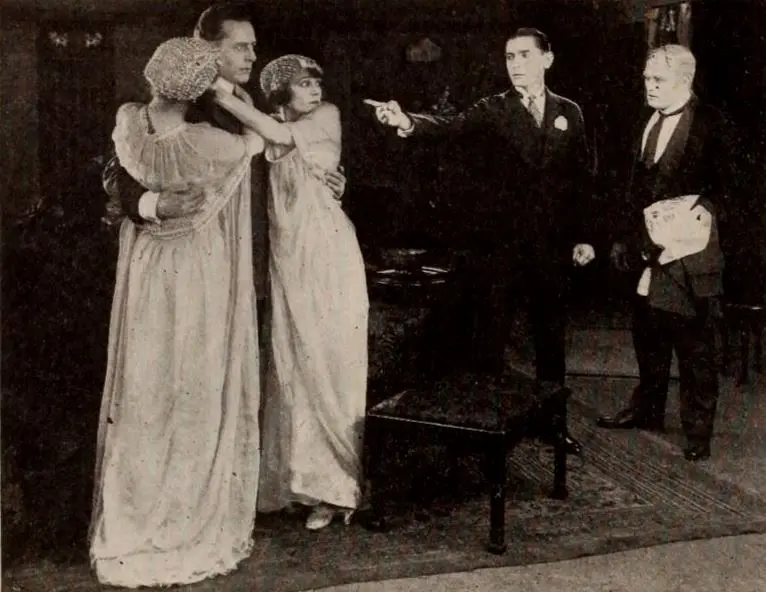
While His Bridal Night revels in the comedic potential of mistaken identity, it also subtly explores deeper themes. The most prominent, of course, is the theme of identity itself. How much of our identity is tied to how others perceive us? How easily can it be manipulated or obscured? For Vi, her identity as 'the bride' and 'the object of desire' is central, and when Tiny usurps it, Vi's sense of self is profoundly challenged. For Tiny, the act of impersonation is a temporary escape, a chance to live out a fantasy, but ultimately, her true self, marked by her honesty and underlying strength, must emerge. This struggle with identity, both internal and external, is a timeless narrative device, seen in countless stories from Shakespearean comedies to modern thrillers, and it's handled here with a surprising degree of psychological insight for a film of its era.
Love and desire are another central pillar. The film presents different facets of love: Vi's flighty, perhaps superficial, affection; Lent's passionate, almost obsessive, pursuit; Tiny's quiet, sacrificing devotion; and Joe's earnest, if somewhat understated, commitment. The mistaken kiss between Tiny and Lent is not merely a plot device; it's an exploration of the intoxicating power of perceived reciprocation, highlighting how easily desire can be misdirected when fueled by illusion. The film suggests that true love, or at least a stable partnership, requires honesty and a clear understanding of who one is truly loving, rather than a romanticized ideal or a convenient stand-in. This aligns with a recurring theme in silent cinema, where the path to true romance was often fraught with obstacles that tested the sincerity of affections, much like the intricate social maneuvers seen in films like The Politicians or the moral dilemmas in The Torch Bearer, albeit with different narrative structures.
The portrayal of women in His Bridal Night is also noteworthy. Vi, with her impulsiveness and susceptibility to flattery, embodies a certain stereotype of the 'modern woman' of the period—one who might flirt with liberation but ultimately seeks domestic stability. Tiny, in contrast, represents a more complex female character, one who takes agency into her own hands, even if her methods are unconventional. Her actions, though born of deception, are also a form of self-assertion, a refusal to be merely a background character in her sister's drama. This interplay between two distinct female archetypes, both portrayed by Brady, adds a layer of social commentary to the film, reflecting the evolving roles and expectations for women in the post-World War I era.
Beyond the performances and themes, His Bridal Night also offers insights into the technical and stylistic choices of silent filmmaking. The direction, while not attributed in the provided details, would have relied heavily on clear visual blocking, expressive acting, and the judicious use of intertitles to convey dialogue and crucial plot points. The pacing, typical of many films from the late 1910s, likely balances moments of rapid action with more deliberate scenes designed to allow the emotional weight of a situation to sink in. Cinematography, even in its nascent stages, would have played a vital role in establishing mood and distinguishing between the characters, perhaps through subtle lighting cues or camera angles that emphasized Brady's transformation from Vi to Tiny. The film's ability to maintain clarity amidst such a tangled plot is a testament to the skill of its creators in utilizing the limited tools available to them.
The role of the supporting cast, including James Crane as Lent Trevett, Edward Earle as Joe, Daisy Belmore, Daniel Pennell, and Mrs. Stuart Robson, would have been crucial in grounding Brady’s dual performance. Their reactions and interactions would have helped to sell the illusion of two distinct sisters, providing the necessary foils for Brady’s dramatic shifts. Crane, as the lovestruck Lent, would need to convey both ardent passion and profound confusion, while Earle, as the bewildered groom Joe, would have to navigate the emotional whiplash of believing his wife had been replaced. The success of the film hinges not just on Brady's individual brilliance but on the ensemble's collective ability to create a believable, if outlandish, world. The narrative structure, with its escalating stakes and dramatic irony, keeps the audience engaged, eager to see how the intricate web of deceit will ultimately unravel.
Today, His Bridal Night stands as more than just a historical curiosity. It's a vibrant example of silent cinema's capacity for complex storytelling and compelling character development. Alice Brady's performance alone makes it a worthwhile watch for any film enthusiast, demonstrating the incredible talent that flourished in the early days of Hollywood. The film's themes of identity, desire, and the consequences of deception remain as relevant today as they were a century ago, proving that good storytelling transcends time and technological advancements. It reminds us that even without spoken dialogue, a film can communicate profound truths about the human condition, inviting us to reflect on our own perceptions and the intricate dance of relationships.
For those interested in the evolution of cinematic narrative, or simply in enjoying a well-executed melodrama, His Bridal Night offers a rich and rewarding experience. It's a reminder of an era when cinema was still finding its voice, yet already capable of producing works of intricate charm and surprising depth. The film's resolution, while neatly tying up all the loose ends, leaves a lingering impression of the emotional journey undertaken by its characters, particularly the twin sisters, whose intertwined destinies form the beating heart of this captivating silent gem. It's a testament to the power of early cinema to not just entertain, but to provoke thought and reflect the complex tapestry of human experience, all without uttering a single word.
The enduring appeal of films like His Bridal Night lies in their ability to transcend their historical context and connect with modern audiences on a fundamental level. The anxieties surrounding marriage, the allure of forbidden love, and the consequences of deceit are universal themes that resonate across generations. The film's use of a physical marker, the mole, to resolve the central identity crisis, while perhaps a quaint plot device now, speaks to the ingenuity of early screenwriters in finding visually compelling ways to drive the narrative forward in the absence of spoken dialogue. It's a clever solution that underscores the visual nature of silent film, where every gesture, every prop, and every physical characteristic had to serve a distinct narrative purpose. This attention to detail, combined with Brady's captivating performance, elevates the film beyond mere period piece status into a timeless exploration of human relationships.
Moreover, the dynamic between Vi and Tiny offers a fascinating study in sibling rivalry and interdependence. While Tiny's initial actions might seem manipulative, they are also born from a deep, albeit misguided, love and concern for her sister. Her impersonation, while causing temporary chaos, ultimately forces Vi to confront her own superficiality and make a genuine commitment. This transformative journey for Vi, facilitated by Tiny's audacious intervention, adds a layer of moral complexity to the narrative. It’s not simply a story of deception, but one of growth and self-realization, albeit achieved through unconventional means. The film subtly suggests that sometimes, the most profound lessons are learned through the most circuitous and surprising paths, leading to a more authentic understanding of oneself and one's desires. The final reconciliation of the couples feels earned, not just because the deceptions are uncovered, but because the characters, particularly Vi, have undergone a significant internal shift. The writers, Lawrence Irving Rising and Kathryn Stuart, crafted a storyline that, despite its theatricality, maintains a surprising emotional core, making His Bridal Night a compelling piece of cinematic history that continues to enchant and intrigue viewers today.
IMDb —
1920
Community
Log in to comment.