DbcultAccessing Vault...
Cult Review
Senior Film Conservator
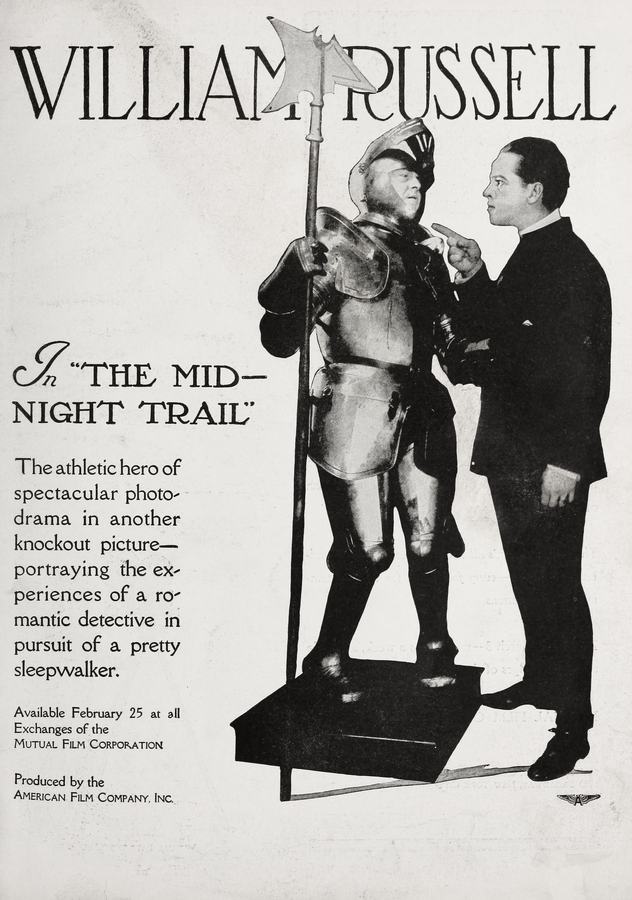
In the grand tapestry of early cinema, where narratives often relied on broad strokes and exaggerated performances to convey emotion without the spoken word, The Midnight Trail emerges as a fascinating, if somewhat understated, example of the burgeoning mystery genre. Released during an era when film was still finding its footing as an art form and popular entertainment, this silent picture, penned by the prolific Charles T. Dazey, offers a compelling glimpse into the storytelling conventions and societal anxieties of its time. It's a film that, while perhaps not possessing the sweeping grandeur of an epic like Vendémiaire, nonetheless captivates with its intricate plot and a central premise that toys with the delicate line between perception and reality.
The narrative thrust of The Midnight Trail hinges on the delightful conceit of a wealthy dilettante, Jack Woodford, whose life of leisure is punctuated by an insatiable appetite for solving enigmas. It's a trope that resonates even today, the amateur sleuth stepping in where official channels falter, or in this case, where they simply haven't been engaged. Woodford, portrayed with a certain earnest charm by William Russell, isn't driven by monetary gain or professional obligation, but by the sheer intellectual sport of unraveling a good puzzle. His overhearing of Alice Moreland's distress over a jewel robbery isn't merely a plot device; it's a window into the character's intrinsic nature, his desire to impose order on chaos, to illuminate the shadows of uncertainty. This initial spark sets in motion a chain of events that transforms a domestic incident into a full-blown nocturnal escapade.
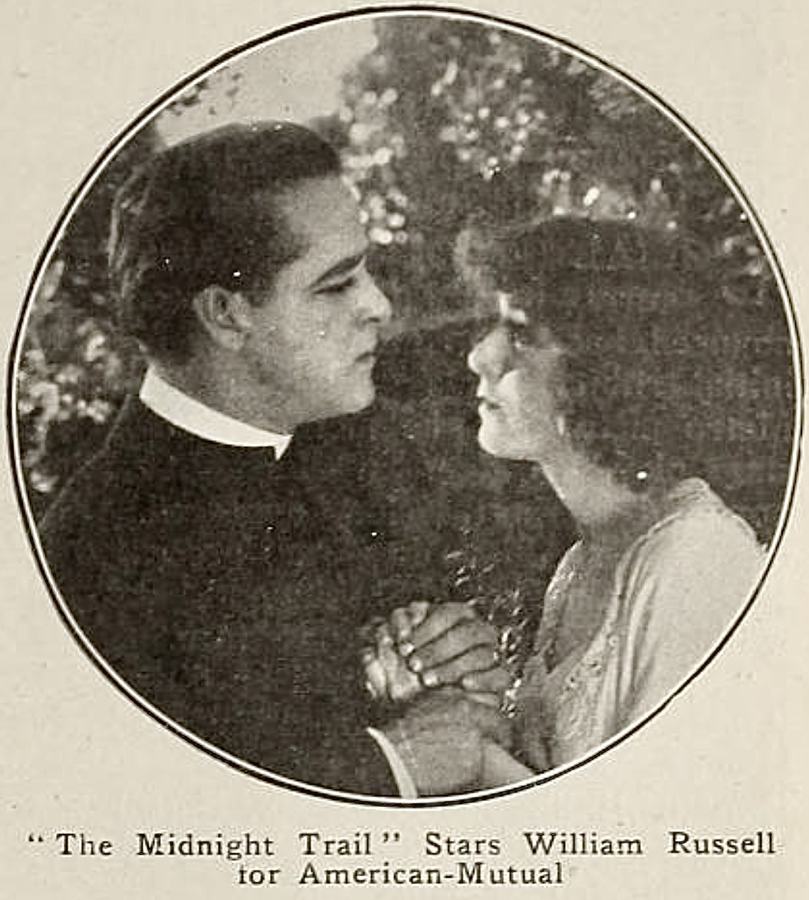
The decision for Woodford and his ever-loyal valet, Jasper Stride (Sydney Deane), to pose as detectives adds a layer of playful deception to the unfolding drama. This isn't just about solving a crime; it's about entering a world under false pretenses, observing human behavior under duress, and navigating a labyrinth of suspicion. The Moreland household, ostensibly a place of piety given the Reverend Robert Moreland's (Carl Stockdale) profession, quickly reveals itself to be a hotbed of potential intrigue. Woodford's keen eye for detail and his intuitive grasp of human nature lead him to initially suspect the Reverend's secretary, Harvey Faxon (Al Ferguson), and then Alice's brother, Harry (Clarence Burton). This shifting focus of suspicion keeps the audience engaged, a classic whodunit technique expertly deployed by Dazey's script, reminiscent of the narrative misdirections found in contemporaneous thrillers like The Secret of the Swamp.
The true brilliance of The Midnight Trail, however, lies in its audacious use of somnambulism as a central plot mechanism. When Woodford witnesses Alice (Francelia Billington) in a trance, absconding with the very jewels he's investigating, the narrative takes a sharp, unexpected turn. This isn't a simple case of a hidden culprit; it's a psychological puzzle, a blurring of innocence and apparent guilt that elevates the mystery beyond mere thievery. Francelia Billington's portrayal of Alice is crucial here, requiring a delicate balance of vulnerability and an almost ethereal detachment during her sleepwalking sequences. Her movements, her expressions, had to convey a state of being neither fully conscious nor entirely inanimate, a challenge that silent film actors often faced in communicating complex internal states.
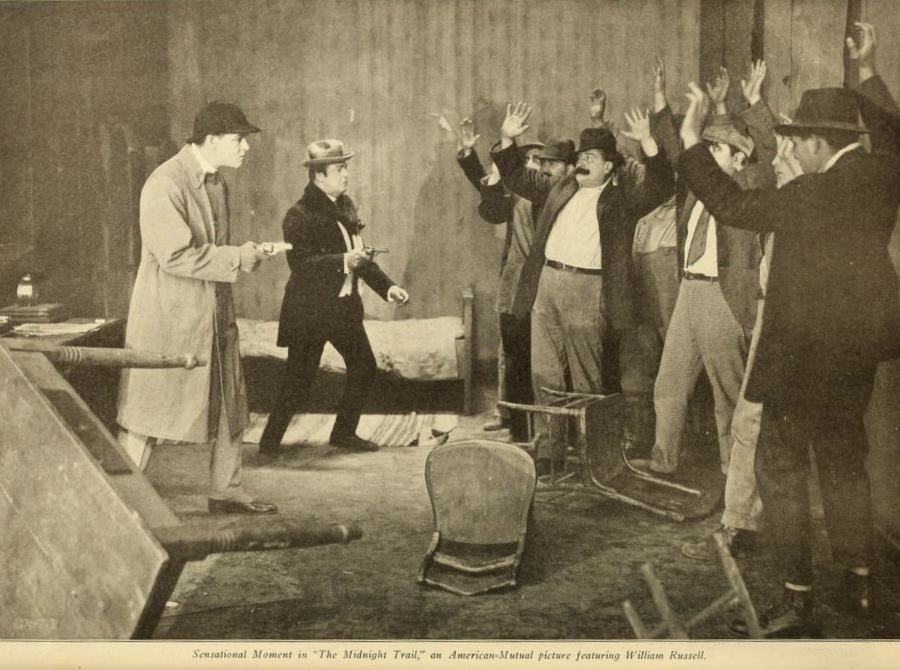
The subsequent framing of Woodford by Faxon, his imprisonment in the basement, and his eventual escape, serve to heighten the stakes and inject a much-needed dose of peril into the proceedings. It transforms Woodford from a mere observer into an active participant, a man fighting not just for truth, but for his own freedom and reputation. This sequence, though brief, is a testament to the film's ability to create tension, a hallmark of effective silent era thrillers. The visual language of confinement and escape, conveyed through stark imagery and rapid cuts, would have been particularly impactful for audiences accustomed to less sophisticated cinematic techniques. It’s a moment that could elicit gasps, much like the dramatic climaxes of films such as The Disciple, showcasing the power of visual storytelling.
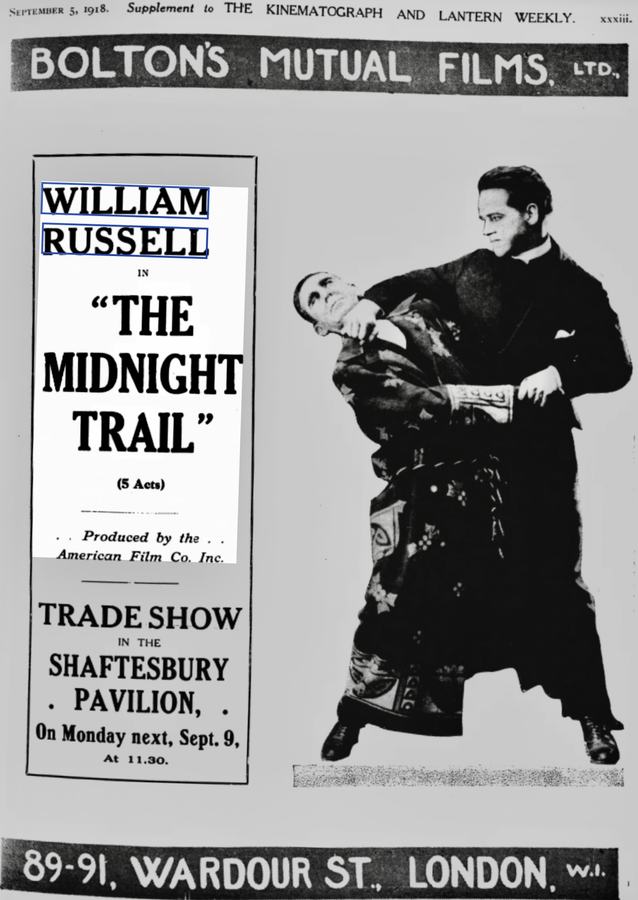
The climax, where Woodford once again encounters Alice sleepwalking, but this time with the crucial realization that Faxon is a predatory puppet master, waiting to exploit her condition, is masterfully executed. It's a moment of intellectual triumph for Woodford, where all the scattered pieces of the puzzle click into place. The silent film medium, without dialogue, relied heavily on visual cues and the actors' ability to convey understanding and dawning realization. William Russell's performance here, through subtle shifts in expression and purposeful action, must communicate this epiphany to the audience. The capture of Faxon by Woodford and Stride is the satisfying resolution to the mystery, a triumph of good over opportunistic evil, and a restoration of order within the Moreland household.
Yet, The Midnight Trail isn't merely a detective story; it's also a nascent romance. Alice’s confession of love for Woodford, born out of gratitude and perhaps a deeper connection forged through shared peril, adds a tender, human element to the otherwise suspenseful narrative. This intertwining of mystery and romance was a common and effective device in early cinema, appealing to a broad audience seeking both thrills and emotional resonance. The quiet dignity of Francelia Billington's Alice, juxtaposed with the decisive actions of William Russell's Jack, creates a compelling dynamic. It suggests a bond built not on superficial charm, but on a shared journey through deception and discovery, much like the blossoming affections often depicted in romantic dramas such as The Gift Girl.
The ensemble cast, a mix of seasoned players and rising talents, largely delivers performances consistent with the theatrical conventions of the era. William Russell, as Jack Woodford, embodies the intrepid amateur detective with a certain gravitas and an engaging screen presence. His physicality and expressive eyes carry much of the narrative burden, communicating curiosity, suspicion, and ultimately, triumph. Francelia Billington, as Alice Moreland, navigates the challenging dual role of a distressed victim and an unwitting accomplice, her portrayal of the sleepwalking state requiring a delicate touch to avoid caricature. Her ability to convey innocence and vulnerability without dialogue is commendable, making her character sympathetic even when her actions are perplexing.
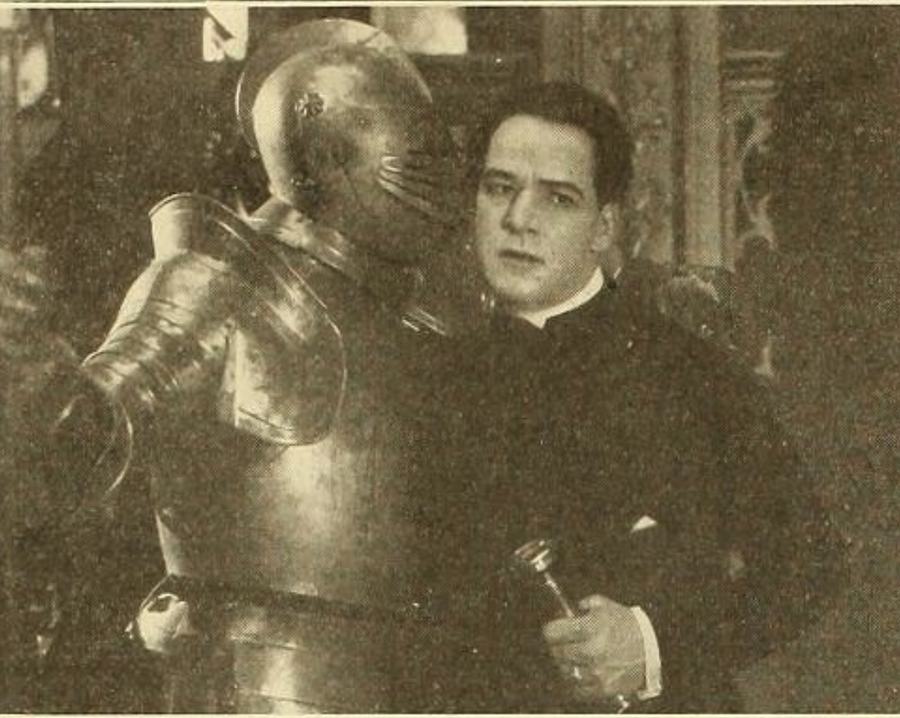
Al Ferguson's Harvey Faxon is a suitably smarmy antagonist, his villainy conveyed through subtle sneers and furtive glances. The silent film villain often relied on exaggerated gestures, but Ferguson manages to imbue Faxon with a more insidious, calculating presence. Sydney Deane, as the faithful valet Jasper Stride, provides a touch of comic relief and steadfast loyalty, a common and beloved archetype in early cinema. The supporting cast, including Harvey Clark, Clarence Burton, Helen Howard, Edward Jobson, Carl Stockdale, and Jerome Sheler, each contribute to the film's atmosphere, their performances adding texture to the domestic drama and surrounding mystery. Their collective efforts, though perhaps less individually highlighted than the leads, are vital in establishing the film's believability and emotional grounding, much like the intricate character work seen in films such as The Chorus Lady.
Charles T. Dazey's screenplay demonstrates a clear understanding of pacing and suspense, building the mystery incrementally before unveiling its surprising core. The decision to use sleepwalking as the central twist is audacious and effective, allowing for a resolution that is both clever and emotionally resonant. While the narrative structure might feel straightforward by modern standards, for its time, it was a finely crafted piece of popular entertainment. The direction, though not attributed in the provided details, would have focused on clear visual storytelling, relying on intertitles to convey dialogue and exposition, and on blocking and camera angles to guide the audience's eye. The visual aesthetics of silent films, often characterized by their reliance on natural light or rudimentary artificial lighting, contribute to a unique atmosphere, distinct from the highly stylized cinematography that would emerge decades later. One can imagine the shadowy hallways and dimly lit rooms of the Moreland house, perfectly suited for the clandestine activities of the night, creating a palpable sense of unease that rivals the atmospheric tension of films like After Death.
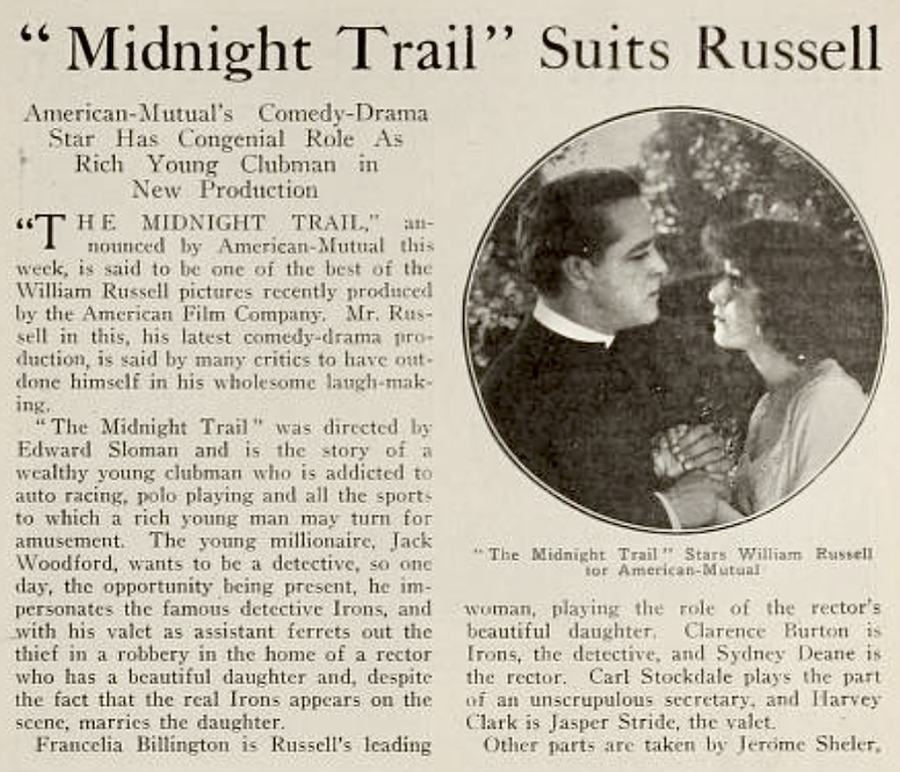
Ultimately, The Midnight Trail stands as a testament to the ingenuity of early filmmakers in crafting engaging narratives within the constraints of the silent medium. It's a film that blends detective work, psychological mystery, and burgeoning romance into a cohesive, entertaining package. While it may lack the grand pronouncements or philosophical depth of some of its more critically lauded contemporaries, its charm lies in its straightforward yet clever execution. It reminds us of a time when cinema was still a nascent art, full of unbridled potential and a willingness to experiment with narrative devices that continue to fascinate audiences today. The film's ability to create genuine suspense and deliver a satisfying resolution, without a single spoken word, is a remarkable achievement. It showcases the universal appeal of a good mystery and the timeless human desire for truth and connection, echoing the simple yet profound storytelling found in classics like Cinderella, where core human emotions drive the plot.
Viewing The Midnight Trail today offers not just a glimpse into a bygone era of filmmaking, but also a chance to appreciate the foundational elements of cinematic storytelling. It's a film that, despite its age, retains a certain vivacity, a playful spirit that invites the viewer to engage with its twists and turns. The sleepwalking motif, in particular, remains a potent narrative device, tapping into subconscious fears and the vulnerability of the human mind. The film's conclusion, marrying the resolution of the mystery with the blossoming of romance, provides a deeply satisfying end, leaving a warm, fuzzy feeling that transcends the grainy footage and orchestral scores of its time. It is a humble yet significant piece of cinematic history, demonstrating how a compelling plot, strong character archetypes, and innovative narrative choices could captivate audiences long before the advent of synchronized sound or special effects. It's a journey into the past that still manages to illuminate the present, proving that some stories, and the ways we tell them, truly are timeless. Much like the enduring power of narratives in films such as Troen, der frelser, its message and entertainment value persist.
IMDb —
1920
Community
Log in to comment.