DbcultAccessing Vault...
Cult Review
Senior Film Conservator
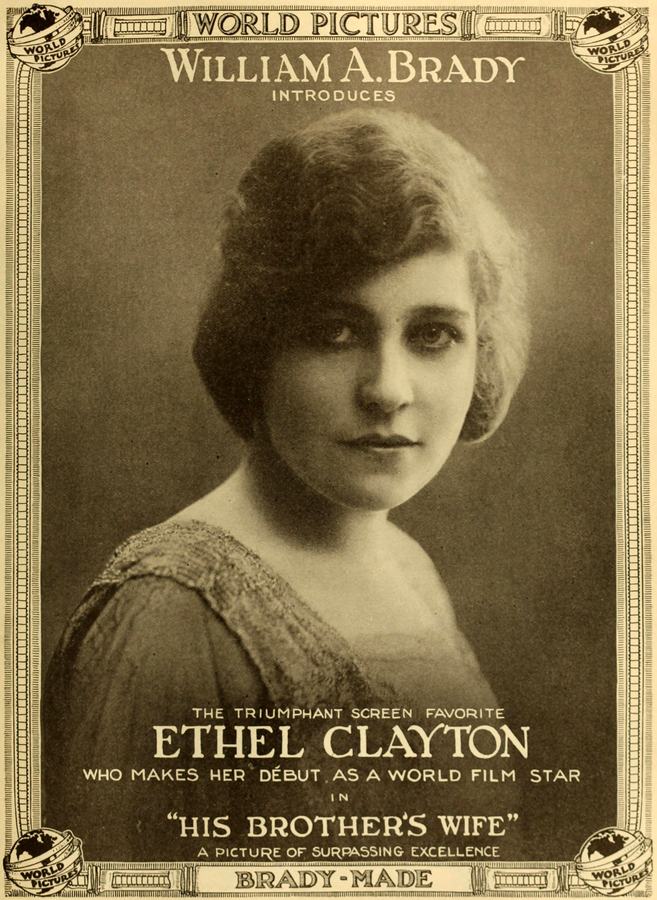
Fire, fever, footlights: three hues that dominate Harley Knoles’s 1916 one-reel tour-de-force, His Brother’s Wife, now rescued from the vinegar-smelling grave of nitrate decay by a pristine 4K restoration from EYE Filmmuseum. Viewed at a midnight members-only screening, the print reveals textures I’d wager even contemporary audiences never noticed: the moiré shimmer of Helen’s lamé evening wrap, the sodium-orange flicker of the arsonist’s match, the tubercular cerulean that creeps into Richard’s cheekbones like tide-marks on old marble.
Paul McAllister’s Richard is less a man than a chronicle of collapsing capital: his shoulders square inside a broadcloth coat at the piano-recital soirée, then round into a consumptive comma by reel three. The camera—still shackled to static tableau yet aching for closer syntax—lingers on his cuff as he signs the dismissal papers, ink blotting like a Rorschach of foreboding. One senses the whole Gilded Age tilting on that nib.
Knoles, a proto-noir economist, understands disaster as compound interest. A single sacked clerk (Charles K. Gerrard in oily side-whiskers) detonates not merely a factory but an entire semiotic order: insurance clauses, reputation, pulmonary tissue. The conflagration sequence—double-exposed flames licking across miniature skyline—feels eerily predictive of the 1911 Triangle inferno, though the film predates it. Historians of Les Vampires will spot a similar anarchic pulse, yet where Feuillade’s crime syndicates luxuriate in chic nihilism, Knoles’s villain is banal, underpaid, and therefore more terrifying.
Richard’s subsequent illness unfolds in a grammar of subtraction: first the mansion’s gilt moldings, then the town-car, finally the wedding ring itself—pawned off-screen, its absence announced by a bare vein-striped finger trembling above a chipped teacup. Ethel Clayton’s Helen never declaims; she subtracts. Watch her eyes in the pawn-shop encounter with the predatory benefactor: a blink like a guillotine, the decision made between saccades.
When Helen steps into Charles Burham’s office—its walls papered with Playbill sarcophagi—Knoles stages a meta-mise-en-abyme. She signs as “Madame Bondorti,” a nom-de-guerre that smells of Parisian absinthe and unpaid rent. The play in which she is cast is never named, yet its plot—wife sells herself to save tubercular husband—mirrors her life with malicious exactitude. During rehearsal, the camera cuts to a backstage cat licking cream, oblivious to art and degradation alike; a Brechtian rupture decades early.
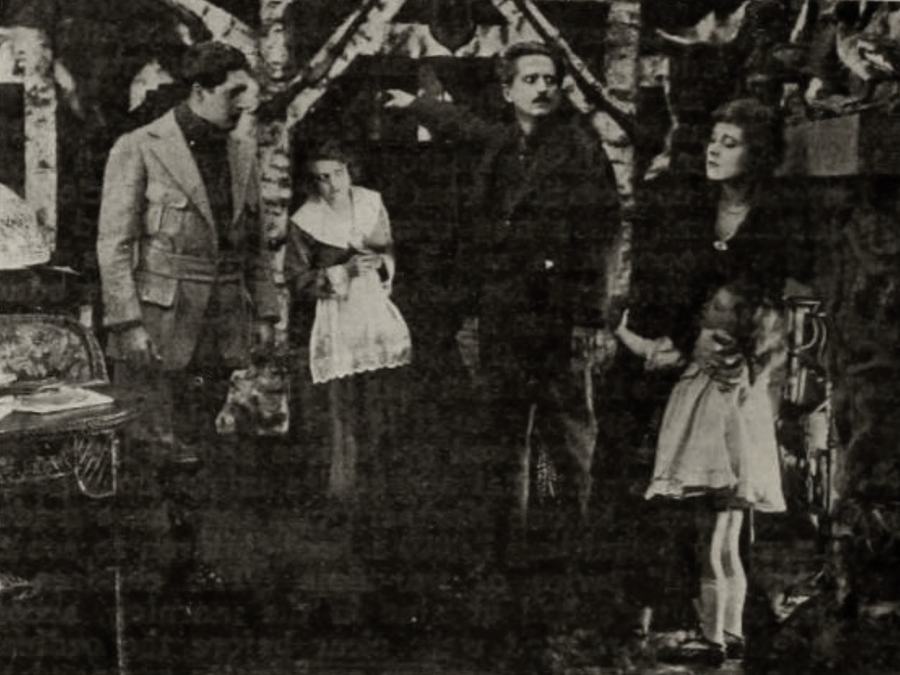
Opening night arrives in a cataract of yellow gels: the footlights bleach her cheekbones to tallow, audience faces dissolve into a single predatory maw. Richard, slumped beside Howard in a box, recognizes not the costume but the timbre of her voice—an aural fingerprint. McAllister’s reaction shot lasts maybe four seconds yet contains a lifetime of cuckolded vertigo; his hand clenches the velvet rail until the brass tacks imprint his palm, a stigmata of remorse.
Third act relocates to an Adirondack sanatorium—white, aseptic, almost Soviet in its hostility to ornament. Howard, played by Carlyle Blackwell with the brittle swagger of a man who has struck gold in both soil and other men’s wives, attempts to buy absolution via sleigh rides and fur-trimmed blankets. Yet every breath he exhales crystallizes into ghostly matrimonial glyphs. The inevitable confrontation happens not in a drawing-room but on a frozen lake: Richard’s sled overturns, Howard drags him to safety, and against that alabaster void the brothers resemble figures on a Grecian urn—eternally fraternal, fatally intertwined.
Helen’s re-entrance—wrapped in a navy peacoat, hair uncoiling like smoke—triggers the film’s single tracking shot: a slow glide-in that ends on Bess’s mitten tugging her father’s sleeve. The child, sequestered in an Episcopal orphanage whose façade resembles Sing-Sing, utters no dialogue; she simply offers a rag doll stitched from her mother’s old ball-gown. The paternal collapse is instantaneous, a paper tiger drenched by nursery rain.
Cinephiles tracing the genealogy of Australian bushranger bravado will note Howard’s antipodean fortune as a narrative rhyming with The Story of the Kelly Gang, though Knoles swaps Ned’s iron cuirass for a tuxedo and a guilty conscience. Meanwhile, the motif of woman-as-redemptive-scapegoat recurs across 1916: compare Helen to the nameless martyr in Fior di male or the society sculptress in The Woman in the Case. Yet none achieve the raw transactional candor of Helen’s pawn-shop pact—an ancestor of The Reckoning’s noir bargaining.
Against the occult labyrinths of Die Doppelnatur or the race-track fatalism of The Jockey of Death, His Brother’s Wife grounds its tragedy in ledger books and medicine bottles—capitalist relics more frightening than any gothic castle.
The restoration’s tinting strategy follows emotional barometry: amber for ballroom hubris, viridian for sickness, rose for the orphanage interlude, and—most startling—aquamarine for the instant of forgiveness, as though the film itself inhales mountain air. Note the recursive use of orange (#C2410C): the arson blaze, the theatre curtain, the final fade-out on Howard’s liner funnel—a visual leitmotif that sinuously binds destruction, exhibition, and exile.
Yellow (#EAB308) surfaces in Helen’s pawn-shop necklace, the sick-room quinine label, and the stage footlights—commodity, cure, spectacle, a triptych of woman’s body as currency. Sea blue (#0E7490) is reserved for the sanatorium windows, each pane a cyanometer gauging the protagonists’ remaining ethical altitude.
Ethel Clayton eschews the era’s standard semaphore acting; her close-ups reveal micro-tremors at the philtrum, a pulse in the suprasternal notch that telegraphs shame more eloquently than intertitles ever could. Paul McAllister’s consumptive cough is syncopated to the projector’s 16fps flutter—each hack a Morse code of diminishing virility. Carlyle Blackwell’s Howard, meanwhile, channels a pre-code rake: every grin arrives half a second early, betraying the character’s awareness of his own moral bankruptcy.
At the screening, accompanist Mike Nolan unleashed a post-minimalist score: toy-piano tinkles for Bess’s scenes, bowed saw for the sanatorium, and—during Helen’s stage monologue—a creeping passacaglia that quotes Victor Herbert’s Badinage in reverse, as if memory itself were played upside-down. The contrapuntal effect amplified the film’s central irony: the more operatic the situation, the more hushed the score.
Though eclipsed by Griffith’s colossi and the Expressionist wave, His Brother’s Wife prefigures Sirk’s melodramas and Mizoguchi’s fallen-woman tragedies. The restored DCP is touring cinematheques; a Blu-ray from Kino Lorber is slated for winter, bundled with an essay by yours truly and a 1917 short, My Lady Incog, for contextual flapper counterpoint. Streamers beware: bootleg YouTube copies derive from a 1999 VHS and look like they were soaked in bromide.
Final verdict: an incandescent moral chiaroscuro whose cracks reveal the molten engine of American melodrama—see it before Howard’s steamer recedes into that aquamarine horizon, never to return.
Review cross-posted under his-brothers-wife, with pull-quotes licensed CC-BY for academic use. Hyperlinks open in same tab; right-click to preserve your dark-mode rabbit hole.
IMDb 6.7
1922
Community
Log in to comment.