Summary
A chilling tableau of avarice and its relentless pursuit, "The Reckoning" unveils the tragic fate of Captain Pierre Bernier, whose triumphant return from sea is marred by an unforeseen delay in Havre. Forced to temporarily entrust his substantial profits to Jacques Villebrun, the seemingly respectable head of a local bank, Bernier becomes an unwitting pawn in a larger scheme of financial malfeasance. Villebrun, poised to abscond with the bank's entire holdings, finds his illicit plans complicated by Renaud, a shrewd clerk who demands a share for his complicity. When Bernier, sensing an impending disaster, attempts to retrieve his funds, he is brutally murdered by Villebrun, his body discarded into the unforgiving depths below a cliff. The crucial receipt for Bernier's deposit, however, falls into Renaud's possession, a silent yet potent weapon. Villebrun, ever the manipulator, double-crosses his accomplice, leaving Renaud stranded as he makes his solitary escape into a life of opulent anonymity. Fifteen years later, the threads of destiny intricately weave together the lives of the now-impoverished Bernier widow and her son with the thriving, re-invented Villebrun, now a Parisian magnate and, ironically, their callous landlord. A chance encounter brings the destitute Renaud face-to-face with the widow, igniting his long-dormant desire for vengeance and justice. Armed with the meticulously preserved receipt, Renaud confronts Villebrun, only to be met with another treacherous attempt on his life. Miraculously surviving, Renaud orchestrates a dramatic confrontation in a gas-filled garret, where the suffocating fumes and the spectral vision of the murdered captain finally compel Villebrun to a desperate, conscience-stricken act of atonement that culminates in his precipitous, fatal plunge.
Synopsis
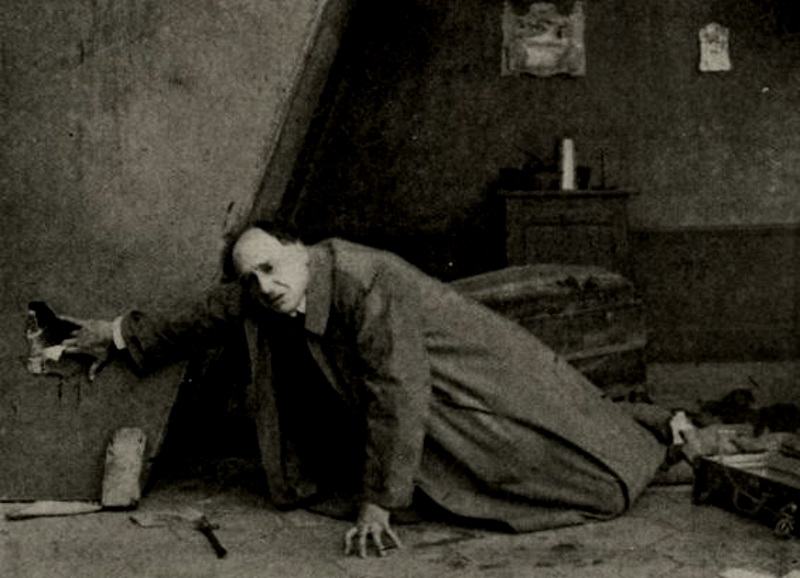
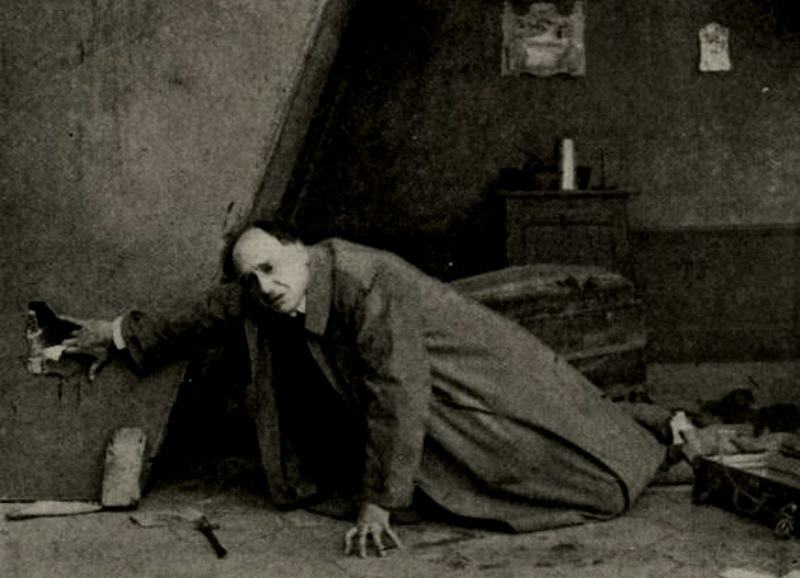
Returning to Havre after a long and prosperous voyage, Captain Pierre Bernier looks forward to rejoining his family in Paris. He reports to his company and is chagrined to receive orders to remain in port for several days. Unable to use the safe of the steamship company, he deposits $10,000 (his share of the profits) with a local bank and places the receipt in a letter which he intends to mail to his wife. Unfortunately, Jacques Villebrun, the president of the bank in which he deposited his money, is about to decamp with the entire funds. Renaud, a clerk, discovers the flight and threatens exposure unless he receives a large share of the money. Villebrun promises him a large sum and they proceed to make their getaway. Bernier learns that the bank is unsteady, decides to withdraw his money and returns to the bank. He is murdered by Villebrun in a struggle and his body is thrown over a cliff. The clerk has meanwhile found the receipt for $10,000 and keeps it. The two absconders then call a taxicab and prepare to flee. The clerk, however, is sent sprawling by the banker, who safely makes his escape alone. Fifteen years pass. The captain's widow and son are reduced to dire poverty, while the banker, under another name, has become a wealthy property owner in Paris. Renaud, the clerk, reduced to the lowest dregs of society, is compelled to beg for a living. One day he assists an old woman who has sprained her ankle, and is startled to discover that she is the widow of the man whom he and the banker had robbed years before. She is about to be evicted by her landlord, who, strangely enough, is her husband's murdered. Renaud promises to intercede for her and calls on the landlord. He is surprised to recognize his old accomplice, and proceeds to blackmail him with the receipt which he had carefully guarded all these years. The banker agrees to buy it from him, but plays false again and throws him off a bridge. He is found unconscious and taken to a hospital. Meanwhile, the widow and her son have been dispossessed and go to live in the rooms of Renaud, who offered to shelter them. Renaud returns from the hospital just in time to rescue the widow after she had been overcome by the fumes of charcoal fire. The banker sneaks into Renaud's garret and searches for the receipt which is hidden there. He discovers it, but is also overcome by the deadly charcoal fumes and is found on the floor unconscious. His conscience is awakened by the distress of those whom he had ruined and he offers a check to the widow to repair, in part, the terrible results of his crime. The vision of the murdered captain appears to the banker and he backs away from its accusing hand only to plunge through an open window to his timely death.
Review Excerpt
"
Unraveling the Threads of Fate: A Deep Dive into The Reckoning
In the vast tapestry of cinematic history, certain narratives stand out not just for their plot mechanics, but for their profound exploration of human nature, particularly its darker impulses. The Reckoning, a title that immediately conjures images of consequence and retribution, is one such film. It's a gripping journey through the labyrinthine corridors of greed, betrayal, and the inexorable march towards justice..."