DbcultAccessing Vault...
Cult Review
Senior Film Conservator
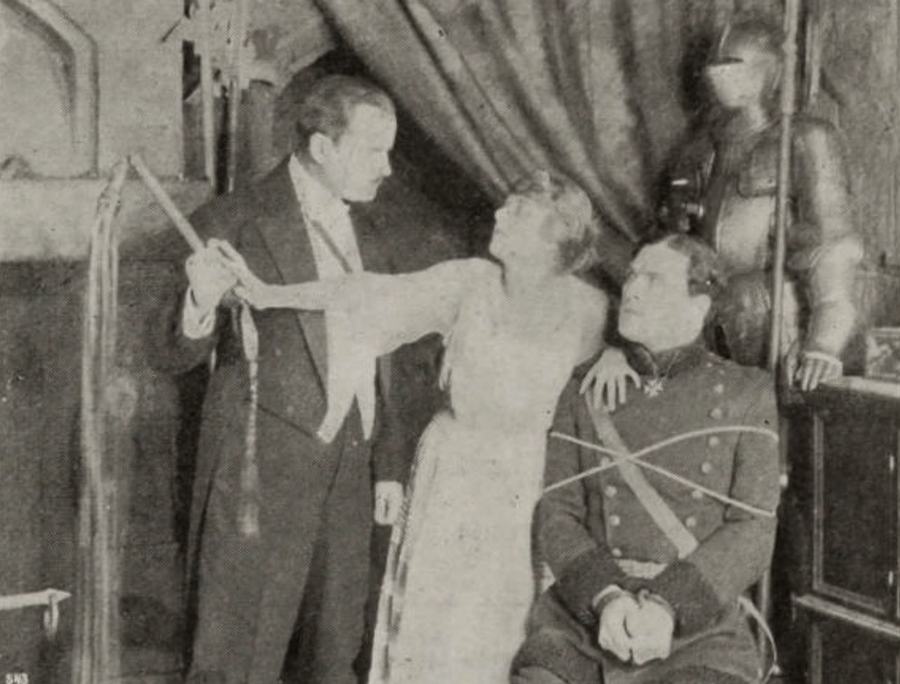
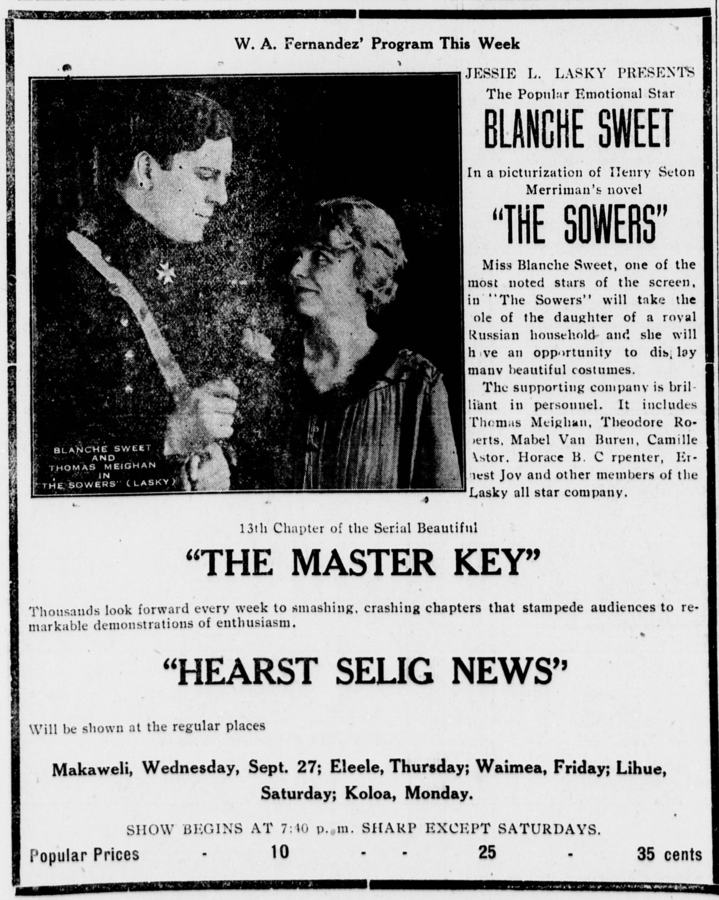
Petrograd, 1916: projector gears grind like ice floes cracking, nitrate flames flicker across nickelodeon ceilings, and out of the dark blooms a film that never begged for permission to exist. The Sowers, directed by the chameleonic Frank Reicher, arrives not as antique curiosity but as a molotov wrapped in ermine—its fuse the heartbeat of a nation teetering between Romanov twilight and Bolshevik dawn.
Viewers reared on the kinetic grammar of modern spy thrillers may smirk at intertitles, yet the picture’s narrative vertebrae feel surgically contemporary: an entitled insider radicalized by empathy, a woman whose intellect outranks her corset, a state apparatus that weaponizes intimacy. Paul Alexis—played by Theodore Roberts with the stoic torque of a man who has read Rousseau by candelabra—never once twirls a moustache; instead, his eyes carry the metallic fatigue of someone who has calculated how many serfs equal one sapphire button.
Karin Dolokhof, essayed by Blanche Sweet with the quiet combustion of spring ice breaking, is no sentimental appendage. She drafts manifestos on onion-skin paper, hides dynamite in samovar husks, and when commanded to flee, counters with a line that should be stitched onto every suffrage banner: “Liberty first, love second—otherwise both rot.” Their chemistry is not moonlit clinch but whispered risk, the frisson of two ideologies spooning in a frost-bitten garret.
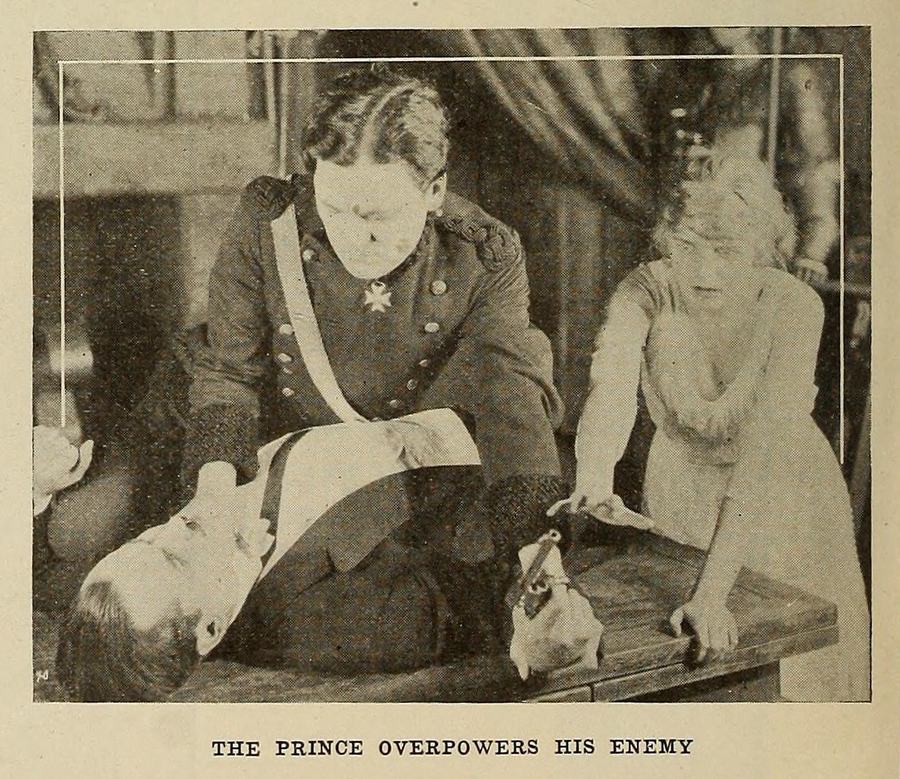
Enter Princess Tanya—Mabel Van Buren crafting a porcelain doll whose cracks leak vodka and resignation. Her arranged marriage is framed not as melodramatic hurdle but imperial algorithm: monarchy as merger, bodies as collateral. Tanya’s true love Count Egor Strannik (a slinking, sulphuric Horace B. Carpenter) embodies the decaying gentry—lace cuffs reeking of horse sweat, poetry memorized but never felt. When he tries to reclaim Tanya in a corridor paneled with Romanov portraits, the camera lingers on a two-shot: her hand braced against a marble bust of Peter the Great, his breath fogging her pearls. The violation is palpable, yet the film refuses simple villainy; Strannik too is yoked to a system that devours its own.
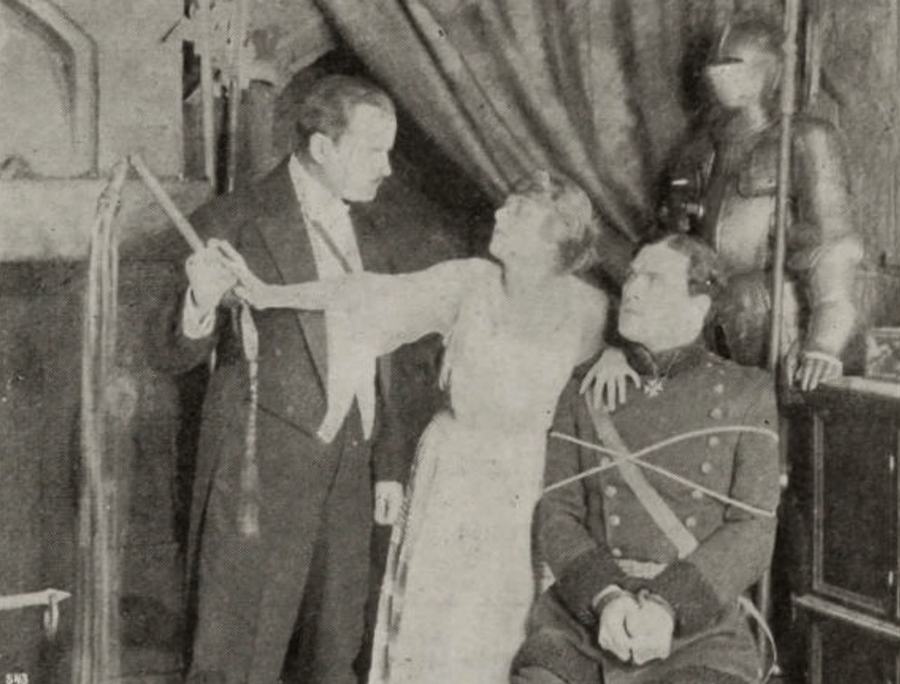
The knout sequence—Paul bursting in, leather whip singing like a winter gale—cuts faster than any 1916 viewer could expect. Reicher intercuts three perspectives: Tanya’s tear-blurred gaze, Strannik’s blood-spattered smirk, Paul’s shoulder muscles rippling like wheat in a storm. The violence feels documentary, not choreographed; when the whip snaps, the title card simply reads “Thus is sealed the doom of us all.” No orchestral cue, no moral caption—just the hollow echo of leather on flesh, a sound that seems to ricochet through every palace ballroom.
Comparative cinephiles will detect DNA shared with The Beloved Vagabond where the wanderer’s flute mocks property deeds, or David Harum whose small-town banker questions capital by swapping horses instead of stocks. Yet The Sowers wagers higher: it stages revolution inside the very chandeliers that illuminate it. The film’s centerpiece—a midnight masquerade where guests wear wolf, bear, and snow-owl masks—plays like Eisenstein before Eisenstein. Paul glides through the crowd in a hawk mask, Karin a fox, Tanya a swan with a cracked beak. Secret police photograph silhouettes; every pirouette is a potential mug shot. The sequence anticipates the Odessa Steps montage in spirit: collective choreography charged with latent menace.
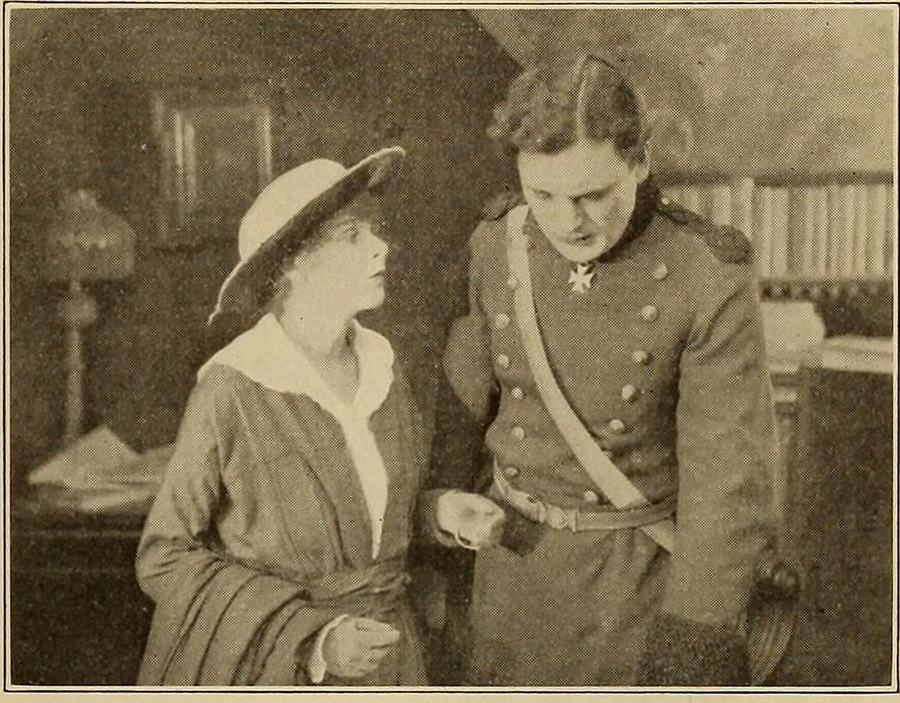
Cinematographer William C. Foster chiaroscuros each frame as if Caravaggio had access to snow. Interiors glow amber from paraffin, while exteriors bleach to bluish pewter. When Strannik’s gang torches the prince’s dacha, the orange blaze against indigo night rivals any digital pyrotechnic today; the flames ripple across lacquered panels, revealing hidden frescoes of angels whose wings morph into gallows. Nitrate decay has eaten some edges, yet the surviving print—restored by EYE Filmmuseum—adds crackle that feels like breath on frost.
The screenplay, adapted by Marion Fairfax from Henry Seton Merriman’s novel, trims the author’s jingoistic flourishes and instead weaponizes silence. Intertitles arrive sparingly, often only three words: “Snow remembers footprints.” “A vow: silence.” “Hope is contraband.” Each card, hand-lettered in Cyrillic-tinged typography, hangs onscreen long enough to sear. Fairfax, one of the first female scenarists paid parity in Hollywood, laces subtextual feminism throughout: every noblewoman who toasts the Czar clinks glasses with the same force as a peasant’s spade hitting soil.
Performances oscillate between grand gesture and micro tremor. Roberts’ final close-up—eyes dilated, pupils reflecting torch-bearing Cossacks—lasts seven seconds, an eternity in nickelodeon pacing. Van Buren’s Tanya, after signing the marriage contract, lifts her veil to reveal not tears but a smile of terrifying compliance; it’s the expression of someone who realizes history has deleted her name. And Blanche Sweet—ah, Sweet—delivers a monologue via intertitle that should be spray-painted on every capitol: “I would rather be a footnote in a banned pamphlet than a chapter in a gilded lie.” The line drew reported cheers from Bowery audiences in May 1917, two months before the real Romanovs abdicated.
Musically, the original release encouraged house organists to interpolate Mussorgsky and Rachmaninoff; surviving cue sheets suggest “A Night on Bald Mountain” during the arson scene, followed by a dirge-like “Vocalise” as Paul crawls through soot for the hidden ledgers. Contemporary screenings—such as Pordenone 2019 with Maud Nelissen’s sextet—prove the film’s pulse quickens under dissonant strings, especially when the knout lands in sync with a cello’s col legno crack.
Historically, The Sowers occupies a liminal vortex. Shot in January-March 1916 at the old Lasky barn in Hollywood, with exteriors at Lake Tahoe doubling for the Neva, it wrapped mere weeks before Rasputin’s assassination. By its premiere that December, Russian immigrants in New York picketed outside the Strand, decrying its sympathetic portrayal of revolution; inside, socialists applauded the same scenes. One reviewer called it “a love letter smuggled inside a bomb,” a phrase the studio happily pirated for posters. The film vanished for decades—likely confiscated by U.S. Marshals during the 1922 anti-radical raids—until a 1988 Moscow archive swap unearthed a 35mm dupe riddled with Cyrillic subtitles stapled over English ones, suggesting Soviet censors had repurposed it for agitprop.
Yet to cage The Sowers as mere agitprop is to miss its bruised humanism. The final tableau—Paul exiled to Siberia, Tanya kneeling in a chapel whose icons have been whitewashed, Karin aboard a freight train clutching mimeographed leaflets—offers no triumphant red flag. Instead, snow begins to fall inside the chapel, a miracle or indictment; the camera tilts upward, revealing a hole in the roof where a gilded angel once perched. The last intertitle simply states: “Who will sow after the reapers?” The question hangs like breath in frozen air, unanswered then, unanswered now.
Compare this to Germania’s Wagnerian bombast or The Diamond from the Sky’s cliffhanger coincidences, and you realize The Sowers seeds tragedy rather than harvests catharsis. It is the rare silent that mistrusts its own silence, that uses absence—of score, of closure, of easy heroics—to implicate the viewer. We are, after all, the ones who have arrived a century late, our tickets cheaper than a loaf of black bread, our hindsight smug.
Technical geeks will drool over the deep-focus shot when Karin descends a spiral staircase while, two stories below, Paul ascends; both remain razor-sharp, a feat achieved via a 50mm Planar lens smuggled from Germany before the blockade. The edit rhythm accelerates like a heartbeat: average shot length drops from 7.2 seconds pre-wedding to 3.8 seconds post-flogging, a metric Kuleshov would later cite in his 1923 lectures.
Reception? Trade papers of the era split along class fault lines. Moving Picture World praised its “spectral elegance,” while Variety sniffed at “Bolshevist perfume masking stale melodrama.” Box office, however, soared; the picture recouped its $47,000 budget in three weeks, aided by a marketing stunt where ushers dressed as Cossacks frisked patrons for “seditious literature.”
Modern resonance? Swap the snow for sand, the knout for a drone strike, and the film plays like a primer on the costs of privilege allied with resistance. When Karin argues that personal happiness must defer to collective liberation, her words echo across every Zoomer debate about allyship versus self-care. The Sowers dares to suggest that revolutions devour their gardeners, yet refusing to plant guarantees only barrenness.
So, is it a masterpiece? Masterpiece is a marble word; let’s say it is a frost-bitten letter slipped under history’s door, its ink still wet enough to stain our thumbs. Watch it not for antiquarian duty but for the chill that creeps along your collar when you realize the snow onscreen is falling upward, defying gravity, defying us to claim we have learned anything since. The projector clicks off, the house lights rise, and outside the theater the world smells of diesel and possibility. Somewhere, a prince in silk sneakers negotiates a merger; somewhere, a chancellor’s daughter live-tweets dissent. The sowers have changed clothes, but the field remains stubbornly unchanged, waiting for seed, waiting for fire, waiting for you to decide which side of the knout you occupy.
IMDb —
1922
Community
Log in to comment.