DbcultAccessing Vault...
6.4/10
Senior Film Conservator
A definitive 6.4/10 rating for a film that redefined the boundaries of cult cinema. Opus IV remains a cornerstone of transgressive art.
Walter Ruttmann's Opus IV stands as a testament to the pinnacle of his abstract animation prowess. This fourth and final short in his series weaves a tapestry of visual and auditory elements that resonate with a rare form of unity and coherence. Ruttmann's ability to marry the intrinsic rhythm of his animations with the corresponding musical score is nothing short of mesmerizing. The fluidity and grace with which each frame unfolds is matched by the vibrancy of the accompanying music, creating a dynamic interplay that is both harmonious and deeply engaging.
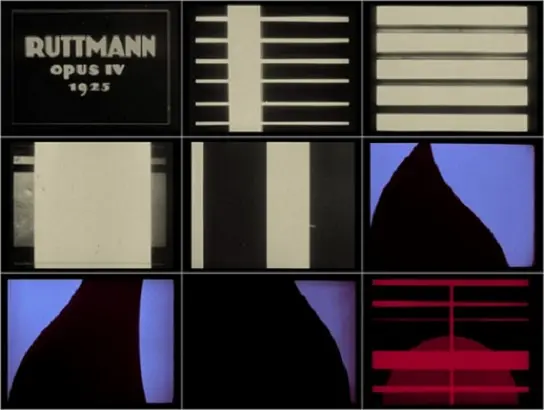
The animation itself is a marvel of modernist design and form. Ruttmann employs a palette of bold, primary colors and minimalist shapes to tell a story that is as much about the juxtaposition of elements as it is about the narrative itself. The composition is meticulously arranged, each movement of the shapes and figures synchronized to the beat and melody of the score. The result is a visual spectacle that is as much a feast for the eyes as it is for the ears, offering a symphony of motion and sound that is both enchanting and intellectually stimulating.
The music in Opus IV is a key component of its success. Ruttmann's collaboration with composers ensures that the auditory landscape complements the visual narrative perfectly. The music is not merely a background element but is an integral part of the storytelling, enhancing the emotional and thematic depth of the animation. The use of different instruments and the varied textures of the score add layers of complexity to the film, making it a multi-dimensional experience that touches on various emotions and themes.
One of the most striking aspects of Opus IV is its ability to create a sense of narrative without using conventional storytelling techniques. Ruttmann's approach is more about the exploration of form and composition than the portrayal of a linear story. The animation moves through a series of abstract scenes that are as much about the exploration of space and time as they are about the characters and events. This makes the film a meditation on the essence of animation and the relationship between motion and music.
For those familiar with Ruttmann's earlier works, such as All Wet and Unclaimed Goods, the progression in Opus IV is evident. Each short builds upon the previous ones, refining the techniques and elevating the art form to new heights. Opus IV represents the culmination of this evolution, where the technical mastery of the earlier films is married to a more cohesive and emotionally resonant narrative.
Compared to other abstract animations, such as Smarty and Hello, Mars!, Opus IV is distinguished by its more focused and deliberate approach. While these films also explore the interplay between music and animation, Opus IV achieves a level of harmony that is unmatched. The animations in Opus IV are not just reactive to the music but are integrated into the very fabric of the score, creating a symbiotic relationship that is both beautiful and thought-provoking.
Walter Ruttmann's Opus IV is a film that demands multiple viewings. Each time one watches, new layers of meaning and emotion are revealed. The film is a celebration of the marriage between visual and auditory art, a testament to Ruttmann's visionary approach to animation. It is a work that not only entertains but also challenges the viewer to engage on a deeper level, to appreciate the subtleties of form, color, and sound. In a world where technology often overshadows the human touch, Opus IV is a reminder of the enduring power of art to move and inspire.

IMDb —
1916
Community
Log in to comment.