DbcultAccessing Vault...
Cult Review
Senior Film Conservator
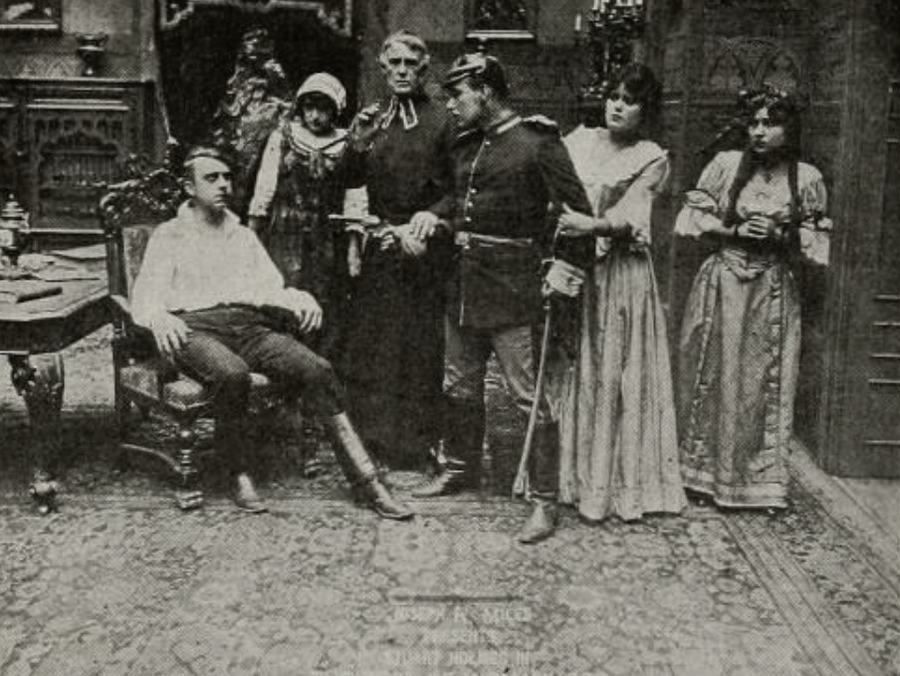
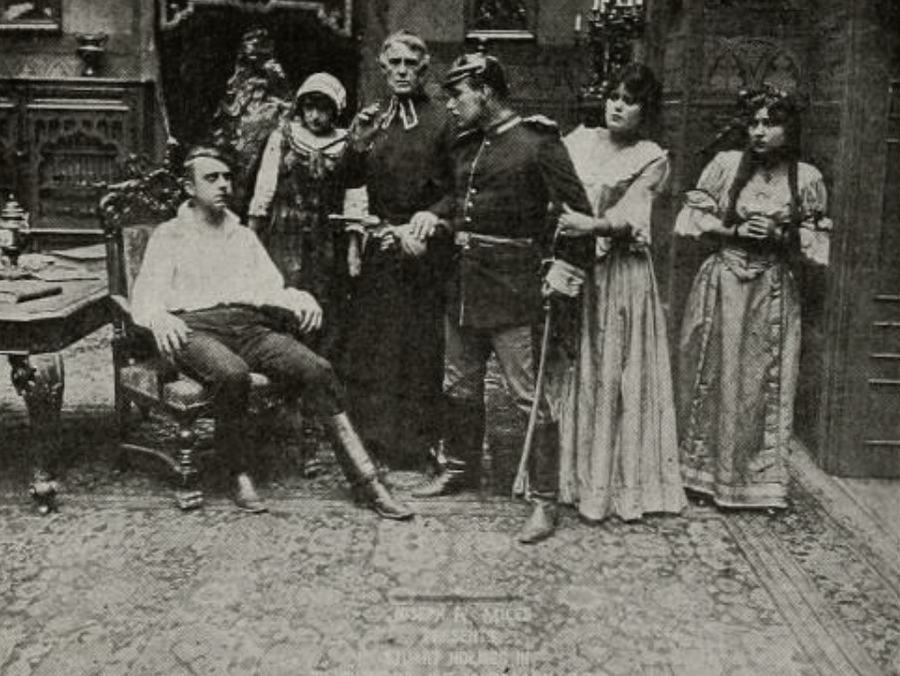
Marie does not scream when she regains consciousness beside a corpse; instead, she studies the blood freckling her cuffs as though counting a rosary of rubies. That mute tableau—half confession, half accusation—encapsulates the film’s wager: can a woman’s silence be louder than cannonade? Director C. Lang Cobb Jr., trading battlefield spectacle for the claustrophobia of drawing rooms, posits warfare as etiquette by other means. Every curtsey is a feint; every compliment, a bayonet.
Stuart Holmes’s Carl strides through these parlours like a man who has read the last page of his own tragedy and decided to annotate it in the margins. His cheekbones carry the weight of empire, yet when he loosens the collar that once anchored medals, we glimpse the throat of a boy who once believed maps were immutable. The camera loves that contradiction, lingering on the pulse beneath his jaw while Marie’s reflection superimposes over his epaulet—a double exposure that silently argues love itself is a kind of occupation.
Viewers weaned on the continent-sprawling carnage of War and Peace may find the film’s battlefronts oddly bloodless; Cobb shoots skirmishes as shadows flickering on nursery wallpaper—children’s hands imitating cavalry. The real siege is hormonal. When Carl unpins Marie’s chignon under a pomegranate bough, the loosened hair falls like a black flag; for a heartbeat, surrender and mutiny are synonyms.
Paul M. Potter’s intertitles, often maligned as novelettish, deserve a second look. One card reads: “She kissed the enemy and tasted her own salt on his lips.” That line, equal parts prophecy and autopsy, compresses the entire plot into a haiku of treason. Notice the pronoun slippage: her salt, as though the body politic has already been absorbed by the occupier. In 1917, with American doughboys filing toward French trenches, such erotic osmosis must have felt both indecent and consolatory.
Cobb’s blocking repeatedly traps Marie within trapezoids of lamplight—domestic stockades. Yet during the trial sequence, the camera finally dollies backward through a doorway, revealing the courtroom as a cavernous void where her silhouette hovers like a paper cutout. That spatial reversal—expansion as incarceration—foreshadows Carl’s marriage proposal: a liberating cage, a velvet shackle. The film understands marriage, like war, as contract law punctuated by artillery.
Compare this with the marital transactions in A Jewel in Pawn, where the heroine’s body is literally collateral; here, Marie’s reputation functions as promissory note, her womb as interest accruing against future peace. The film’s title, then, is a cruel joke: womanhood is not tested—it is leveraged.
The resolution arrives too tidily for modern palates: a deus ex machina dispatch, a reunited couple rowing toward neutral waters. Yet the final shot undercuts the comfort. As the skiff recedes, the camera tilts up to a sky bisected by telegraph wires—Cobb’s reminder that even wilderness is now garrisoned. The lovers escape geography but not history; their oars beat time against a century unspooling ahead, already scripting sequels of fresh hostilities.
Viewers curious about cinematic treatments of gendered nationalism might triangulate this film with Mothers of Men and Nearly a Lady—together they map a continuum from maternal republic to erotic battlefield. Meanwhile, the formal austerity of Intolerance offers a counterpoint: where Griffith cuts history into parallel cataclysms, Cobb compresses cataclysm into the tremor of a teacup.
Restoration prints screened at Pordenone revealed a tinting scheme that digital transfers flatten: nocturnal scenes washed in aquamarine, dawn sieges in rose madder, the climactic wedding drenched in sulphur yellow—colors that seem to cauterize the very wounds they expose. Seek out those 35 mm reels if possible; the flicker of celluloid restores the moral tremor that streaming pixels anesthetize.
In the end, The Test of Womanhood survives not because it answers the question posed by its title, but because it refuses to. Marie’s virtue, guilt, courage, and compromise coexist like overlapping dye layers—separate until heat fuses them into something murkily iridescent. We exit the theatre carrying that composite hue under our fingernails, sensing—correctly—that it will never quite scrub off.
IMDb —
1926
Community
Log in to comment.