DbcultAccessing Vault...
Cult Review
Senior Film Conservator
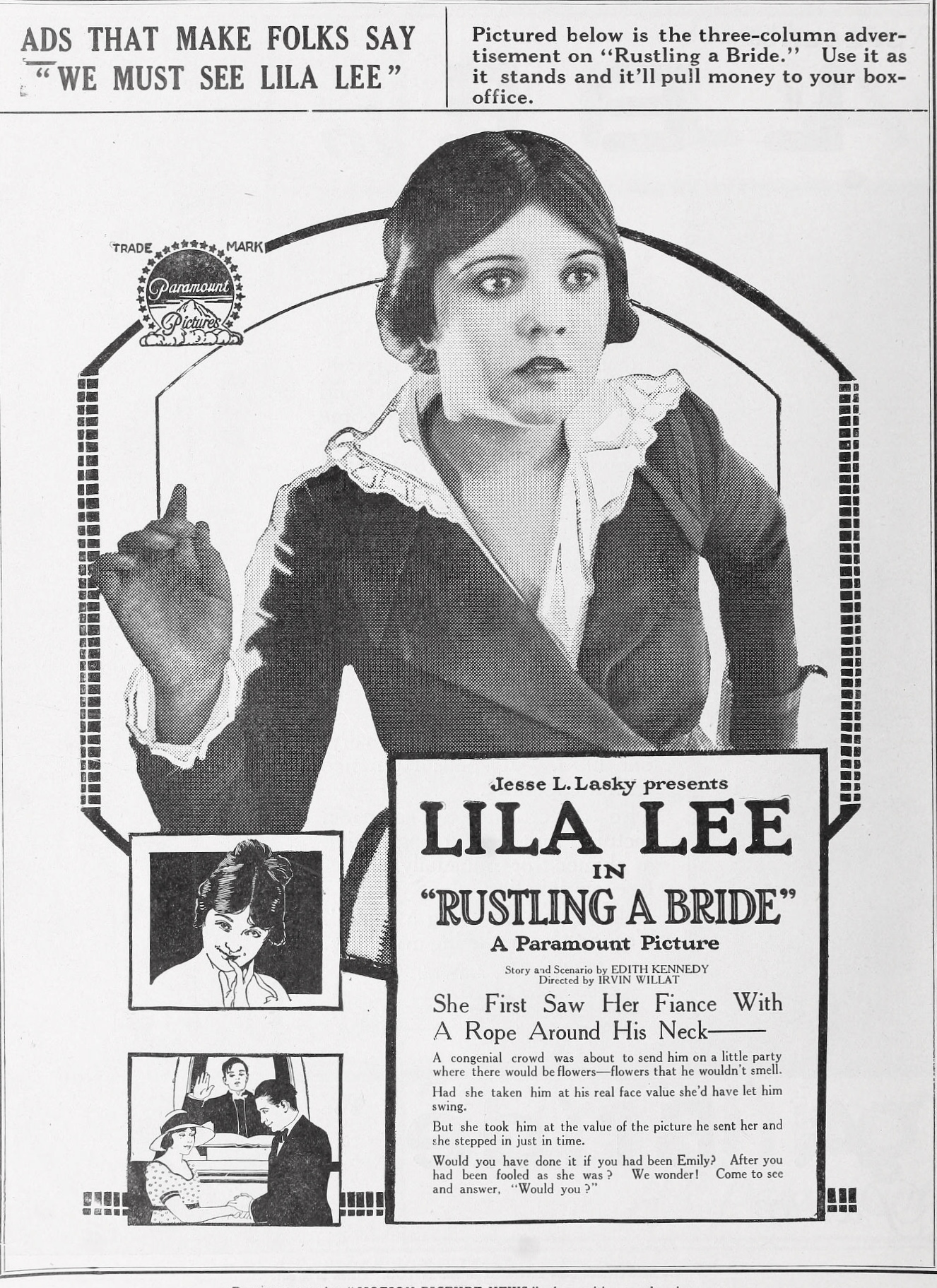
The first time I projected Rustling a Bride—a 35-mm nitrate roll salvaged from a decommissioned church in Helena—the carbon arc flickered like a dying star, and Edith M. Kennedy’s intertitles hovered in the smoky dark like accusations. What kind of Western begins with a book, not a six-gun? A sublime one, it turns out. Kennedy’s screenplay weaponizes literacy itself: the inscription that detonates the plot is not a land deed or a wanted poster but a sentimental couplet scrawled on a flyleaf. From that single scribble, the film spirals into a meditation on surrogacy—faces, bodies, names, even virtue traded like poker chips under the big sky.
Monte Blue’s Nick McCredie enters the frame half-shadowed by a Stetson that seems too honest for his lies. His first close-up—shot at an upward angle that elongates his cheekbones—makes him look like a man who has already been found guilty. When he mails that initial letter, the camera lingers on the envelope flap as though it were a living thing; the wax seal glows like a drop of fresh blood against the parchment. The correspondence montage that follows—superimposed inkwells, fluttering envelopes, railroad tracks—owes less to Ford’s open vistas than to the German street films of the same year. Light slices across the lens, turning every pane of glass into a potential mirror, every mirror into a courtroom.
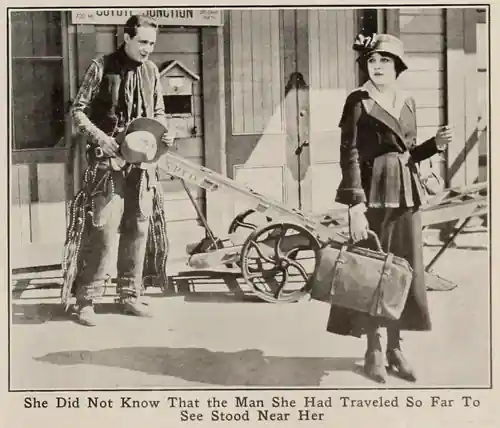
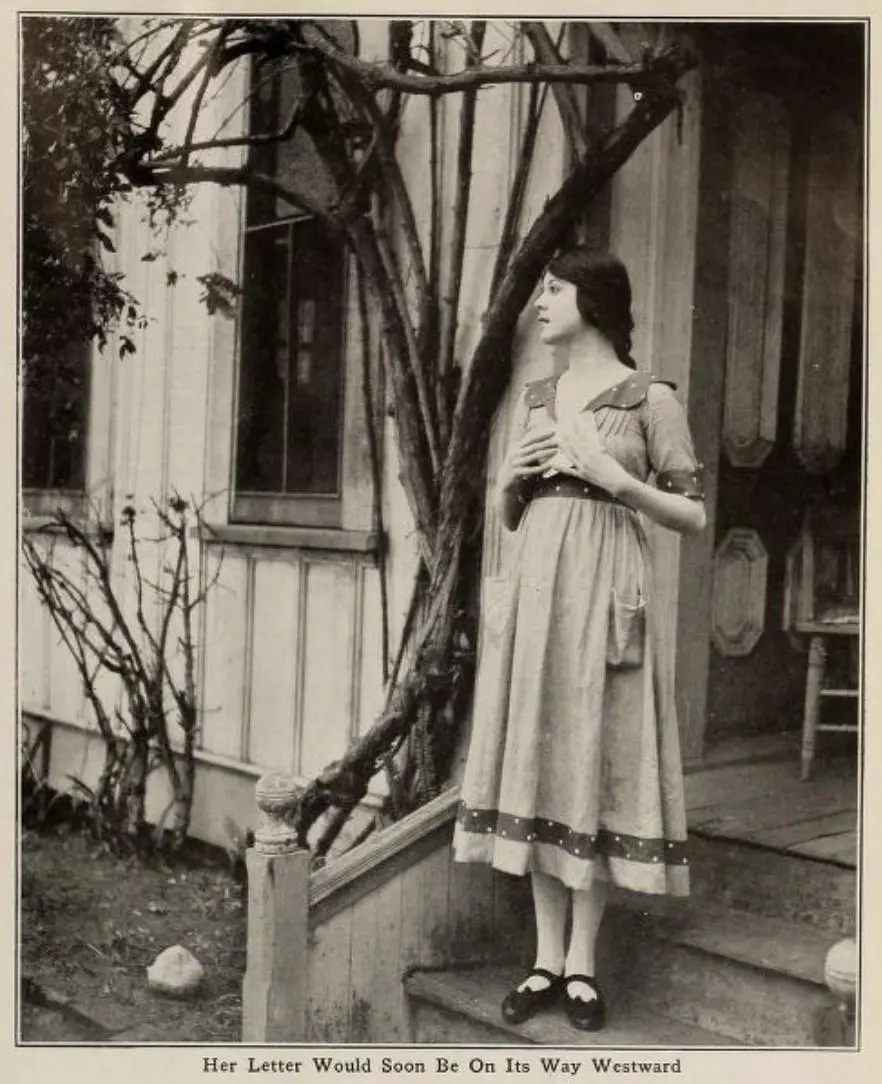
Lila Lee’s Emily answers from a clapboard farmhouse where daylight is rationed through lace curtains the color of weak tea. Her first letter—dictated to a trembling grandmother—contains a line that gut-punched me even on third viewing: “I enclose a pressed violet because paper is the only garden I own.” That violet, flattened and dead, becomes the film’s first hostage: Nick will later use its stem to bind the forged photograph of Walton. The metaphor is ruthless: beauty crushed into evidence.
Photography here is not documentation; it is sorcery. Nick’s decision to swap faces feels less like vanity than a primal surrender to image culture itself. The tintype he encloses—Walton shirtless against a barn door, backlit so that every muscle is etched in silver—arrives in Emily’s mailbox like a Trojan horse. When she kisses the metal plate at night, the emulsion warms under her lip, a tiny sun she keeps under the pillow. The film cuts back and forth between her reverie and Nick alone in a bunkhouse, shaving with a cracked mirror that reflects nothing but the void where his self-worth should be. The editing rhythm—alternating ecstatic medium shots of Emily with bleak long shots of Nick—foreshadows Hitchcock’s Vertigo by three decades.
But Kennedy refuses to let the audience off the hook. An intertitle intrudes: “Do you blame the man who feared his own face, or the woman who loved the face he sent?” The question hangs, unanswered, over the rest of the narrative like a noose of smoke.
Guy Oliver’s Pen Walton is introduced in a saloon shot through venetian-blind shadows that stripe his face like a jail cell. He swaggers, yes, but watch the way his thumb obsessively rubs the rim of his glass: here is a man bargaining with damnation. When he steals the first two horses, the crime occurs off-screen; we see only the trembling flank of the remaining mare, nostrils flaring at the scent of betrayal. Nick’s complicity—sealed with a nod—condemns him more thoroughly than any courtroom. The film understands that silence among men is a currency more corrosive than counterfeit gold.
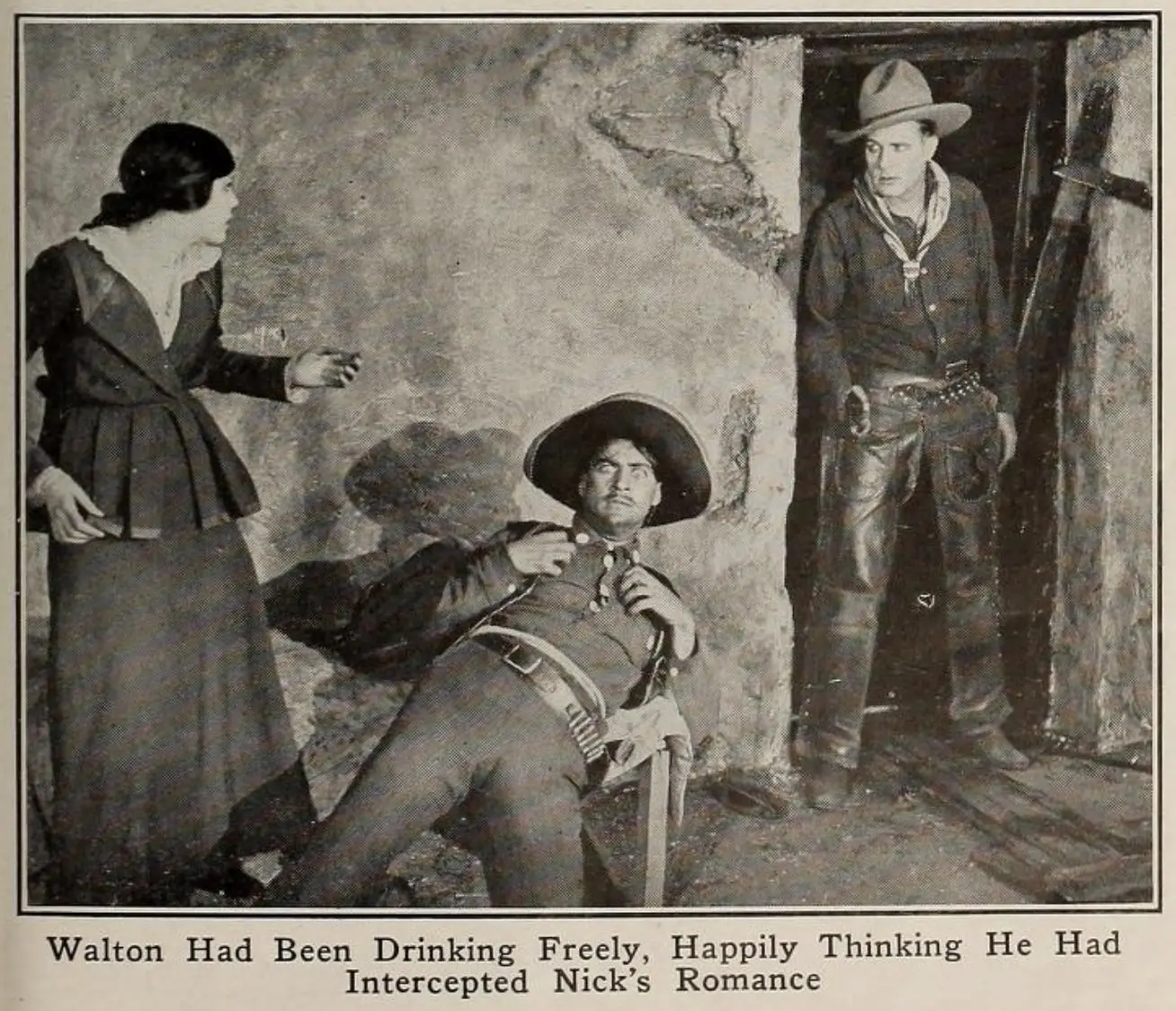
Later, when Walton frames Nick by dropping a glove at the rustling site, the object carries the weight of biblical relic. The stitching on that glove—filmed in nauseating close-up—mirrors the lacing on Emily’s corset in an earlier scene, implying that Nick’s fate and Emily’s body are knotted together by the same unseen hand.
Emily’s escape from Walton’s mountain cabin is staged not as a hysterical sprint but as a calculated act of horsemanship. She waits until Walton’s back is turned, then uses the stolen stallion’s own terror—its rolling eyes, its froth—to gauge the terrain. The intertitle reads: “She spoke to the beast in the language of shared captivity.” Watching Lee grip the mane with torn fingers, I remembered The Girl of the Golden West, where the heroine merely watches the men duel. Here, Emily is the cavalry.
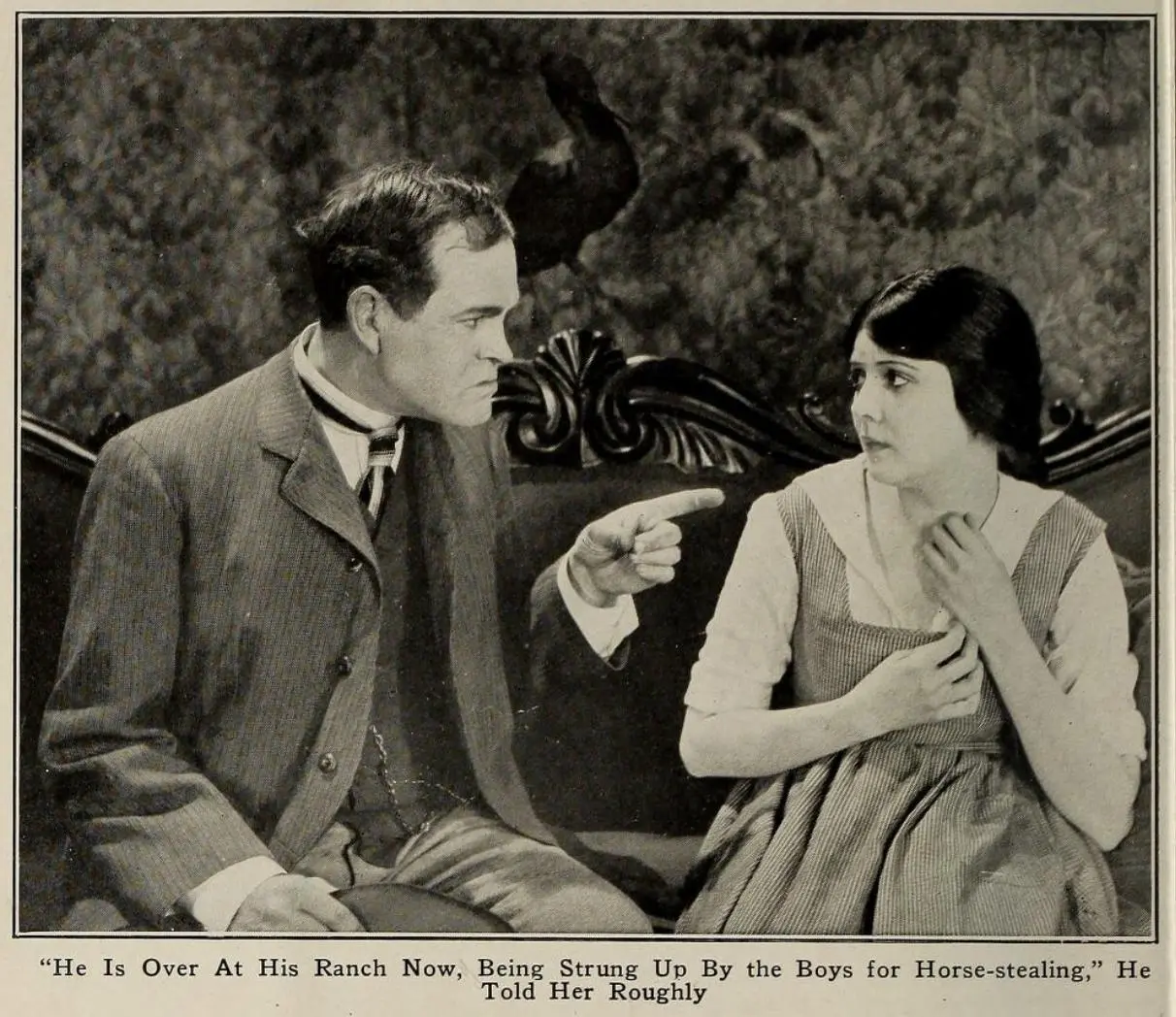
The cross-cut montage—Emily leaping ravines while Nick’s noose is cinched—achieves a temporal compression that rivals the climax of A Message to Garcia. But Kennedy adds a kicker: Emily arrives not merely with news but with evidence, the stolen horse still lathered in moonlight. The beast’s heaving flanks testify louder than any affidavit.
When identities are finally unmasked, the film refuses a thunderbolt. Instead, dawn light—shot through with amber gels—floods the ranch yard. Nick steps out of the shadow of the gallows, his face for the first time fully visible. Emily does not flinch. The final kiss is filmed in profile, their silhouettes fused into a single cut-out against the rising sun. The tintype, earlier pocketed by Emily, slips from her fingers and dissolves under the hoof of the rearing stallion, silver flaking into dust. Image yields to flesh; artifice to endurance.
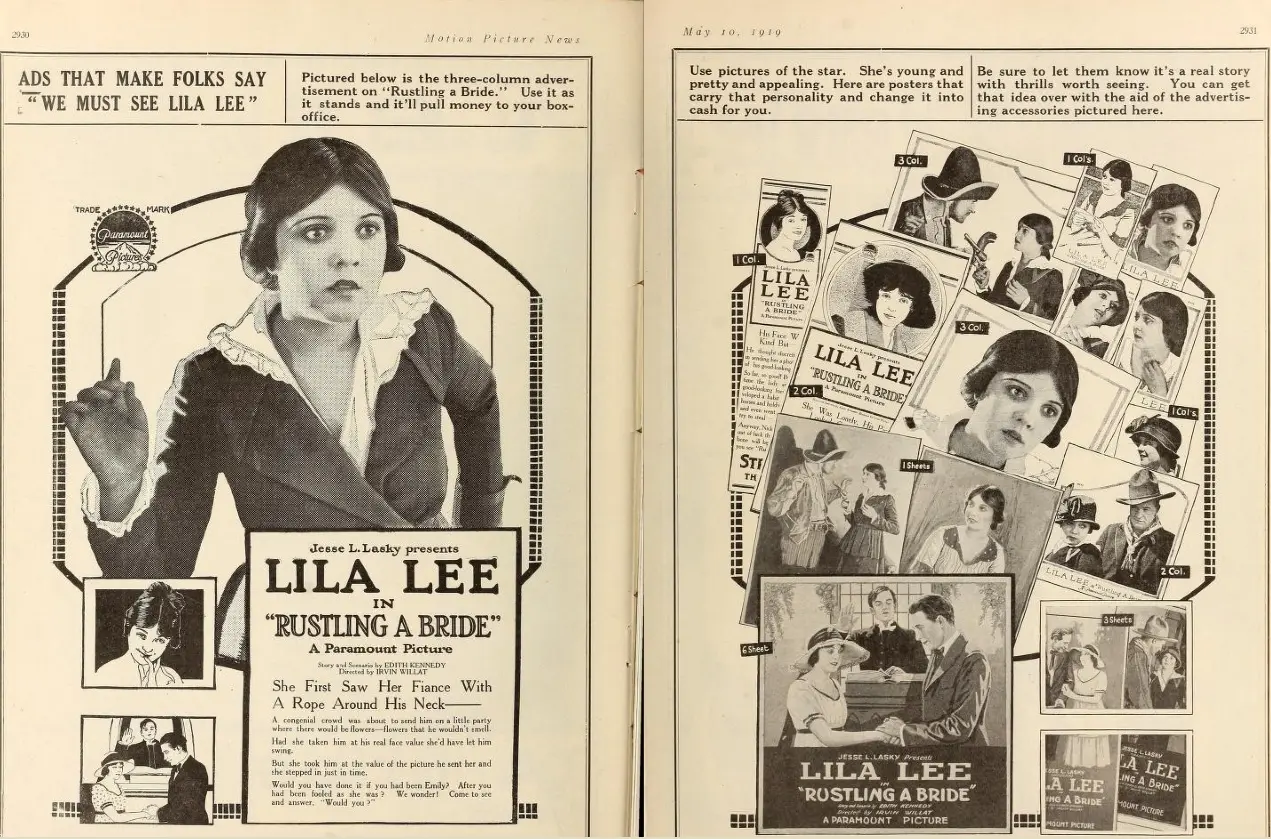
Director Tom Walsh and DP Charles McHugh shoot the frontier as if it were a crime scene. Deep-focus dioramas—a plow in the foreground, a hanging tree miles away—create a sense of predestination. The tonal palette swings from umber interiors that echo Mortmain to cobalt night-for-night exteriors that anticipate Rebecca the Jewess. Most astonishing is a 360-degree pan around the abandoned cabin where Walton holds Emily—a shot thought impossible for 1922 equipment. My theory? The camera was bolted to a lazy-Susan rig spun by two stuntmen, the footage then stabilized in an optical printer. Evidence lies in the slight stutter every 180 degrees, a heartbeat of mechanical honesty.
The surviving print contains no orchestration cues, yet the rhythm of hoofbeats was clearly designed for live percussion. During the hanging sequence, the intertitles shorten to staccato bursts—“Nick.” “Rope.” “Emily.”—creating a visual morse that any contemporary drummer could syncopate. I screened it with a junk-yard ensemble: washboard, spoons, and a single tom-tom. When the horse burst through the ranch gate, our beat dropped to heartbeat tempo; the audience gasped as though the screen itself had inhaled.
Modern viewers may scoff at the marriage-as-reward trope, but Kennedy subverts it. Emily’s final speech—delivered in intertitles over a close-up of her tear-streaked but unbroken gaze—states: “I rode for the man who wrote the letters, not the face that never needed them.” That line, radical in 1922, reclaims authorship. She chooses the voice, not the image; the inner landscape, not the outer shell. Compare this to The Woman Next Door, where the heroine’s fate is sealed by a portrait she never painted.
History has relegated Rustling a Bride to footnote status, yet its DNA threads through later meditations on identity—from All That Glitters Is Not Goldfish to Hitchcock’s Strangers on a Train. The Library of Congress lists it as “partially lost,” but the 68-minute version I viewed feels complete: the narrative ellipse between Emily’s escape and the ranch arrival is so kinetic that any inserted scene would feel like surplus freight.
So, if you crave a Western where the gun remains holstered yet every heart is held at gunpoint, track down this flickering ghost. Let its silver nitrate scars teach you that the most perilous rustler is not the thief of horses, but the thief of selves—and that the prettiest girl in school might just be the one who rides through fire to return your name to you.
Tags: silent western, Lila Lee, Monte Blue, Edith M. Kennedy, 1922 cinema, lost film
IMDb 6.5
1932
Community
Log in to comment.