DbcultAccessing Vault...
6.3/10
Senior Film Conservator
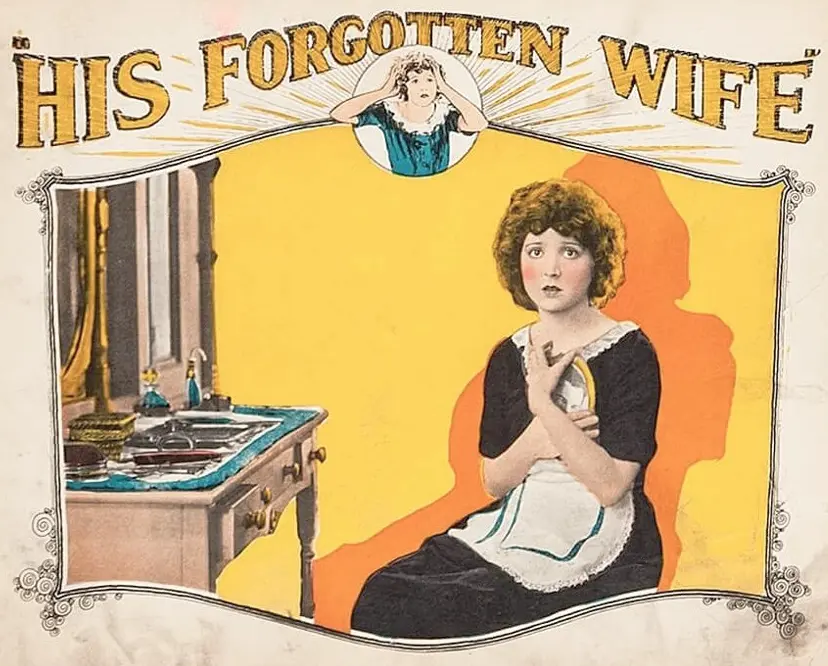
A definitive 6.3/10 rating for a film that redefined the boundaries of cult cinema. His Forgotten Wife remains a cornerstone of transgressive art.
In the pantheon of silent-era melodramas, few narratives possess the haunting, dualistic resonance found in William Lambert and Del Andrews’ 1924 production, His Forgotten Wife. While the amnesia trope has since become a staple of soap opera artifice, in the immediate wake of the First World War, it served as a profound metaphor for a generation of men returning from the trenches with their identities shattered by what we now recognize as post-traumatic stress. This film, directed with a keen eye for spatial irony by Andrews, transcends the mere mechanics of plot to offer a searing meditation on the persistence of the heart against the failures of the mind.
Warner Baxter, long before he became an Academy Award-winning icon, delivers a performance of remarkable kinetic vulnerability as Donald Allen. His transition from the hollow-eyed 'John Rolfe' to the restored but confused master of the house is a masterclass in silent histrionics. Baxter avoids the over-the-top gesticulation common in the era, opting instead for a subtle, shifting gaze that captures the internal dissonance of a man living as a ghost in his own home. This psychological depth is mirrored in the casting of Madge Bellamy as Suzanne. Bellamy’s portrayal is the film’s moral meridian; she navigates the treacherous waters of being a wife, a nurse, and a servant to her own husband with a stoicism that is both heartbreaking and empowering.
The central conceit of the film—Donald and Suzanne working as servants on Donald’s own estate—provides a fertile ground for social commentary. Unlike the more whimsical class-swapping found in A Flirt There Was, the stakes here are visceral. There is a palpable tension in the scenes where Donald, under his assumed identity, must wait upon Corinne (Maude Wayne). This inversion of power dynamics serves to highlight the mercenary nature of the upper class, represented by Corinne’s swift pivot from grieving widow to opportunistic heiress. While films like The Discard explore the themes of social rejection, His Forgotten Wife internalizes this rejection, making the protagonist an alien in his own sanctuary.
The cinematography utilizes the sprawling estate not as a symbol of wealth, but as a labyrinth of forgotten memories. The shadows cast across the grand hallways during the night scenes evoke a sense of Gothic dread, suggesting that the past is a specter that cannot be fully exorcised. This visual language is far more sophisticated than the straightforward outdoor aesthetics seen in Bucking Broadway, aligning the film more closely with the European expressionist influences that were beginning to permeate American cinema.
The narrative’s most daring move occurs during the medical intervention intended to cure Donald’s amnesia. In a cruel twist of irony, the restoration of Donald Allen signifies the death of John Rolfe. The surgery acts as a literal and figurative cutting away of the life he built with Suzanne. This 'double-blind' memory loss—where the cure for one trauma creates another—elevates the film above contemporary works like The Brute Breaker, which often favored physical resolution over psychological complexity. The subsequent scenes, where Suzanne must endure Donald’s polite indifference, are among the most evocative in 1920s cinema.
The antagonist, Corinne, played with a sharp, calculating edge by Maude Wayne, serves as the perfect foil to Suzanne’s altruism. Her attempt to abscond with Donald’s fortune is not merely a plot device to move toward a climax; it is a necessary revelation of the superficiality of his 'old' life. It forces the audience to question which version of Donald was more authentic: the wealthy veteran or the humble man who loved a nurse in the French countryside. This thematic tension is what prevents the film from descending into the slapstick territory of Jumping Beans or the lighter social critiques of Why Smith Left Home.
Del Andrews’ direction is characterized by a rhythmic pacing that allows the emotional beats to breathe. The title cards, often a distraction in lesser silent films, are used here with poetic economy. They don't just bridge dialogue; they provide a window into the internal monologues of characters who are trapped by their circumstances. The film’s editing, particularly during the climax where Suzanne foils Corinne’s theft, displays a burgeoning understanding of suspense that predates the more frantic pacing of later thrillers like The Blue Streak.
Furthermore, the supporting cast, including Willis Marks and Tom Guise, provides a sturdy foundation for the central trio. The ensemble work creates a lived-in world, a contrast to the often isolated hero-narratives found in A Yankee Go-Getter. Every character feels tethered to the reality of the post-war struggle, making the eventual restoration of Donald’s memory feel earned rather than coincidental.
As we look back from a century’s distance, His Forgotten Wife stands as a testament to the sophistication of the silent medium. It manages to balance the high-concept drama of identity loss with a grounded, humanistic portrayal of marriage and loyalty. It lacks the kinetic chaos of Join the Circus or the escapist whimsy of Beach Nuts, but it gains something far more valuable: a profound sense of empathy. The film understands that memory is not just a collection of facts, but a tapestry of emotional connections.
The final recognition scene—the 'anagnorisis' in the classical sense—is handled with a restraint that is deeply moving. It is not a sudden, explosive realization, but a slow dawning of truth, a thawing of the winter that had gripped Donald’s soul. In this moment, the film transcends its era, speaking to the universal fear of being forgotten and the transcendent power of being known by another. It remains a vital piece of cinematic history, a bridge between the melodrama of the past and the psychological realism of the future, comparable in its emotional weight to the best works of the decade, such as Les frères corses or the gritty realism of Dzhymmi Hihhins.
Ultimately, His Forgotten Wife is more than a story about amnesia; it is a story about the resilience of the female spirit in a world broken by men’s wars. Suzanne is the true protagonist, the architect of Donald’s survival and the guardian of his truth. In a landscape often dominated by male heroics, this film offers a subtle, sea-blue hued tribute to the women who pieced the world back together, one broken memory at a time. It is a cinematic experience that, much like its protagonist, deserves to be remembered and cherished long after the final frame has faded into the blackness of history.
Reviewer's Note: For those interested in the evolution of the 'lost identity' genre, comparing this film to the more lighthearted Up in the Air or the historical drama of Iwami Jûtarô provides a fascinating look at how different cultures and genres handle the erasure of the self.
IMDb 6.8
1936
Community
Log in to comment.