DbcultAccessing Vault...
Cult Review
Senior Film Conservator
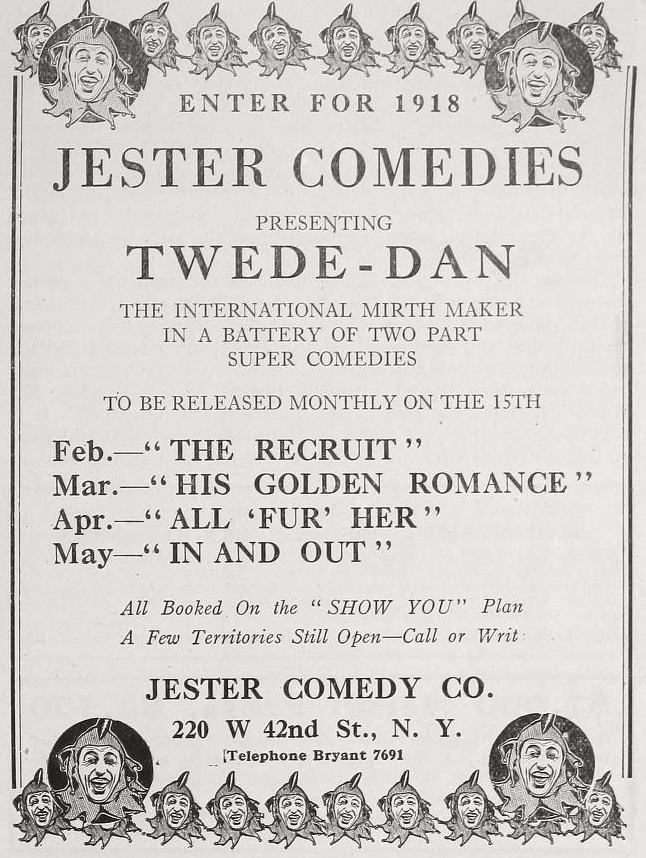
In the annals of early cinematic history, where physical comedy reigned supreme and narrative ingenuity often blossomed from simple premises, Marcel Perez stands as a figure deserving of far greater recognition. His 1917 creation, His Golden Romance, is more than just a relic of the silent era; it's a vibrant, often poignant, and surprisingly incisive social commentary wrapped in the delightful antics of a master comedian. This film, co-written by Perez himself alongside Cortland Van Deusen, transcends mere slapstick, offering a nuanced exploration of identity, class, and the often-illusory nature of societal acceptance. As we peel back the layers of this century-old gem, we discover a work that speaks volumes about the human condition, even without a single spoken word.
At its heart, His Golden Romance introduces us to Twede-Dan, portrayed with an inimitable blend of pathos and exuberance by Marcel Perez. He is a man of the streets, an archetypal vagabond whose existence is defined by scarcity and the relentless pursuit of the next meal. Yet, amidst this destitution, he encounters a kindred spirit, a young woman (Nilde Baracchi) who mirrors his own down-and-out circumstances. Their initial connection is one of shared hardship, a bond forged in the crucible of poverty. It’s a beautifully understated beginning, devoid of grand pronouncements, yet brimming with a quiet hope. They form a compact, a simple, heartfelt promise: once prosperity finds them both, they will reunite and marry. This isn't just a romantic agreement; it's a testament to resilience, a shared vision of a future where their love can flourish free from the crushing weight of their present reality. It's a poignant setup that immediately invests the audience in Twede-Dan's subsequent journey, rooting for his eventual triumph and the fulfillment of this earnest vow.
The film deftly establishes the stark contrast between their current existence and the aspirational future they envision. This initial segment, brief as it is, lays the crucial groundwork for the comedic and dramatic ironies that are to follow. It’s a world away from the bombastic, often chaotic introductions of some other contemporary comedies, opting instead for a more grounded, character-driven opening. One might even draw a subtle parallel to the socio-economic critiques found in later works, albeit presented with a comedic lens. The very simplicity of their pact underscores a universal human desire for stability and companionship, a dream that transcends their immediate, challenging environment. This shared vulnerability, this mutual yearning for a better life, becomes the emotional anchor for the entire narrative. Without this foundational understanding, Twede-Dan’s later transformations and eventual downfall would lack the profound resonance they achieve.
Their paths diverge, and Twede-Dan, ever in quest of a position, stumbles upon a pivotal moment. He witnesses a robbery, two tramps preying upon a woman of apparent means. His intervention is swift and decisive; he comes to her rescue, restoring her stolen purse with a flourish that belies his own ragged appearance. This act of unwitting heroism serves as the narrative’s primary catalyst, propelling Twede-Dan into an entirely new social stratum. The grateful woman, captivated by his bravery—and perhaps a certain rugged charm beneath the grime—falls in love with her unlikely savior. This rapid shift in affection, though a comedic trope, also highlights the superficiality of immediate attraction, especially when contrasted with the deeper, more empathetic bond Twede-Dan shared with his first love.
What ensues is a delightful sequence of transformation. The benevolent society woman takes Twede-Dan to a tailoring establishment, orchestrating a complete sartorial overhaul. This is where Perez truly shines, showcasing the comedic potential of physical transformation. He is literally "made to look human," a phrase that, while perhaps jarring to modern sensibilities, perfectly captures the societal belief that clothing dictates status and, by extension, humanity. The before-and-after contrast is stark and played for maximum comedic effect, yet it also carries a subtle undercurrent of social commentary. Can clothes truly make the man? Or do they merely mask the inherent self? This question lingers, unspoken but visually palpable, as Twede-Dan sheds his rags for tailored finery. It’s a visual gag with a philosophical punch, a brilliant example of how silent cinema could communicate complex ideas through performance and mise-en-scène. This scene is reminiscent of similar Cinderella-esque narratives in cinema, though with a distinct comedic twist that only Perez could deliver. Unlike the straightforward upward mobility portrayed in some contemporary films, His Golden Romance immediately hints at the potential pitfalls of such a rapid, externally driven change. The audience is left wondering if this new persona can truly stick, or if the tramp within will inevitably resurface.
The pinnacle of Twede-Dan's superficial ascent arrives in the form of an engagement banquet, a grand affair meant to celebrate his impending union with his rescuer. This scene is a masterclass in comedic discomfort and social satire. Placed within the opulent confines of high society, Twede-Dan, despite his new attire, remains fundamentally himself. His ingrained mannerisms, the habits of a lifetime spent on the margins, clash spectacularly with the refined decorum expected of him. He is a fish out of water, and Perez milking every ounce of humor from his character's inherent clumsiness and inability to adapt. From mishandling cutlery to committing various faux pas, Twede-Dan's actions are a constant source of mortification for his bewildered fiancée and her aristocratic guests. It’s a scene that could easily devolve into mean-spirited humor, but Perez imbues Twede-Dan with such an endearing innocence that we empathize with his plight even as we laugh at his predicaments.
The banquet sequence functions as a brilliant critique of class snobbery and the superficiality of appearances. No matter how finely dressed, Twede-Dan cannot shed his past entirely, and his genuine self, unpolished and unrefined, ultimately sabotages his attempts to fit into this new world. The humor here is derived from the clash between expectation and reality, between facade and authenticity. It’s a familiar comedic trope, certainly, but executed with Perez's unique physical expressiveness and a keen understanding of human nature. The escalating series of mishaps culminates in his inevitable disgrace and ignominious expulsion from the house. This public humiliation is not just a comedic beat; it's a profound moment of narrative consequence, stripping Twede-Dan of his borrowed identity and casting him back into the very streets he had hoped to escape. It's a stark reminder that true acceptance often requires more than just a change of clothes, demanding a deeper, more fundamental shift that Twede-Dan, perhaps, isn't capable of, or perhaps, shouldn't have to make. This sequence, in its biting commentary on social climbing, echoes themes found in other silent films that explored class divisions, though few delivered it with Perez’s particular brand of charming awkwardness. One can almost feel the echoes of similar societal pressures found in films like The Strangler's Grip, where characters often found themselves entangled in circumstances beyond their control due to their social standing, albeit often with more dramatic rather than comedic outcomes.
Cast out, disgraced, and stripped of his newfound, albeit temporary, status, Twede-Dan finds himself back where he started, perhaps even worse off. The gilded cage has been replaced by the cold, unforgiving reality of the streets. It is in this moment of profound desolation that fate, with a cruel twist of irony, brings him face-to-face with his first love, the girl with whom he made the hopeful pact. This encounter, however, is far from the joyous reunion they had once envisioned. Witnessing him in his state of dishevelment and public shame, she spurns him. Her rejection is swift, decisive, and heartbreaking, delivering the ultimate blow to Twede-Dan's aspirations. The 'golden romance' he had momentarily inhabited, a dream built on superficiality, crumples completely, leaving him adrift and alone. This final scene is a powerful, melancholic conclusion, contrasting sharply with the earlier comedic flourishes. It underscores the film's deeper message: that genuine connection and self-worth cannot be bought or tailored; they must be earned and recognized for what they truly are.
The poignant finality of this moment resonates long after the credits roll. It's a testament to the narrative's unexpected depth, moving beyond simple gags to explore the often-harsh realities of social prejudice and the fragility of dreams. The film doesn't offer a sugar-coated ending, instead opting for a more realistic, albeit somber, resolution that solidifies its status as a work of art that, while comedic, doesn't shy away from the bittersweet. This ending, while perhaps surprising for a silent comedy, aligns with a strain of realism sometimes found in early cinema, where happy endings were not always guaranteed, offering a more complex emotional landscape than often credited to the genre. It's a dramatic counterpoint to the more overtly optimistic conclusions one might find in, say, The Mate of the Sally Ann, where simpler resolutions often prevailed.
Marcel Perez, a name that arguably deserves to be uttered in the same breath as Chaplin, Keaton, and Lloyd, demonstrates his unparalleled genius in His Golden Romance. His performance as Twede-Dan is a masterclass in silent film acting. Perez was not merely a comedian; he was an auteur, a writer, director, and performer who crafted a unique comedic persona. His physical dexterity is astounding, allowing him to execute elaborate sight gags with precision and grace. Yet, it's his ability to convey a wide range of emotions through facial expressions and body language that truly sets him apart. Twede-Dan is never just a caricature; he's a fully realized character, capable of inspiring both laughter and profound sympathy.
Perez's comedic timing is impeccable, a testament to his stage background and an innate understanding of rhythm. He understands the power of the pause, the exaggerated gesture, and the subtle shift in expression. In His Golden Romance, he navigates the delicate balance between broad physical comedy and nuanced character work, ensuring that Twede-Dan's misfortunes never feel entirely farcical. There's a genuine human vulnerability beneath the clownish exterior. Comparing his work here to other films like Bulling the Bolshevik, one can discern a consistent thread in his characterizations: an underdog, often a bit bumbling, but always possessing a resilient spirit. His characters, while often unlucky, retain a core of innocence and earnestness that makes them profoundly relatable. This consistent persona is a hallmark of great silent comedians, allowing audiences to connect with them across various narratives. His collaborative effort with Cortland Van Deusen in writing the script likely contributed to the depth of the character and the narrative structure, moving beyond simple episodic gags to a more cohesive story arc.
The direction, presumably largely guided by Perez's vision, ensures that the film's pacing is brisk, the gags land effectively, and the emotional beats resonate. The use of intertitles is economical, allowing the visual storytelling to take precedence, which is exactly what a silent film should do. The cinematography, while not groundbreaking for its era, is competent and serves the narrative well, capturing Perez's expressive performance with clarity. The film's strength lies not in its technical virtuosity, but in its masterful blend of performance and storytelling. It stands as a testament to the fact that compelling cinema doesn't always require grand budgets or revolutionary techniques; sometimes, all it takes is a brilliant performer and a well-crafted story that understands the human heart. This film, like many of its contemporaries such as Hands Up!, demonstrates the incredible ingenuity and creativity that flourished during the nascent years of cinema, proving that even with limited technology, artists could tell powerful and entertaining stories.
His Golden Romance is a film that, despite its age, offers surprisingly rich thematic material. It's a charming silent comedy on the surface, but beneath that, it's a shrewd commentary on social climbing, the illusion of appearances, and the often-disappointing reality of chasing external validation. The film asks us to consider what truly defines a person: their clothes, their wealth, or their inherent character? Twede-Dan’s journey, from hopeful tramp to disgraced suitor, serves as a timeless fable about authenticity and the perils of pretending to be something you're not. In an era obsessed with image and superficial success, its message remains remarkably relevant.
For enthusiasts of silent cinema, rediscovering films like His Golden Romance is a genuine pleasure. It provides an invaluable glimpse into the comedic sensibilities of the early 20th century and showcases the underappreciated talent of Marcel Perez. His ability to blend poignant character work with uproarious physical gags is a rare gift, and this film is a shining example of his craft. It’s a reminder that the foundations of modern comedy were laid by these pioneers, whose innovations continue to influence filmmakers today. While perhaps not as widely known as some of his more famous contemporaries, Perez’s contributions, particularly in works such as this, are significant and worthy of renewed attention. It encourages a deeper appreciation for the artistry involved in storytelling without dialogue, relying solely on visual cues and the sheer power of performance to captivate and move an audience. This film, much like a carefully preserved antique, offers a window into a bygone era, yet its core themes remain as fresh and compelling as ever, proving that true artistry transcends the limitations of its medium or its time. It’s a film that deserves to be seen, studied, and celebrated as a testament to the enduring power of silent storytelling and the unique genius of Marcel Perez.
IMDb 5.6
1917
Community
Log in to comment.