DbcultAccessing Vault...
Cult Review
Senior Film Conservator
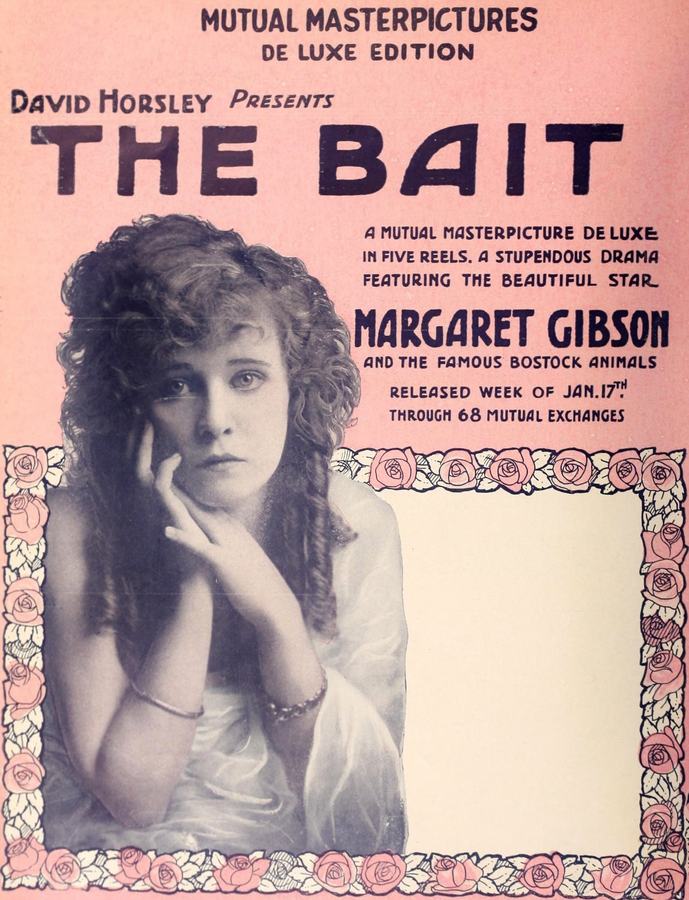
The first time I watched The Bait I kept flinching at the wrong things: the over-cranked bear trap that snaps like a castanet of fate, the saloon doors sighing open with the same predatory rhythm, the way Margot’s laugh seems to echo inside a metal box. Then, somewhere between the sixth whiskey pour and the seventh intertitle, it hit me—this 1915 one-reel whirlwind isn’t a Western; it’s a chiaroscuro noir wearing deerskin gloves. Every frame is a moral snare, every cut a trigger.
Director William Clifford (also essaying Tom, the venal gambler) compresses the entire human predicament into three looping motions: clamp, swing, slam. The trap’s iron jaw is the id of the frontier—hungry, indiscriminate, patient. The saloon doors become its urban twin: swinging invitation, guillotine closure. Between them stands Margot, a woman reduced to currency, her body the coin tossed into the mechanism. Watch how cinematographer Oliver C. Allen stages her first appearance: she’s center-punched in the doorway’s narrowing iris, a living cameo framed by darkness, as though the screen itself is swallowing her whole.
Notice the timing. We never see the hand that scatters the leaves; we only witness the aftermath—cover-up as casual habit. In 1915, that’s a radical ellipsis, a visual shrug that says predation is bureaucratic. Compare it to the way the payroll money later migrates from safe to satchel to Tom’s pocket without a single insert of pick-locking. The film trusts us to fill the criminal gaps, a courtesy mainstream cinema will forget for the next hundred years.
Marvel Spencer’s Margot arrives pre-broken yet electrically self-aware. She swivels on the card table, skirts hitched just enough to weaponize ankles, but her eyes perform the opposite maneuver: they keep breaking the fourth wall, begging some phantom spectator to recognize the gag. In a decade that still trafficked in virginal innocents like Little Eve Edgarton, Margot is the cracked mirror image—damaged goods who knows the price tag sewn into her skin.
When she finally leads Tom toward the forest trap, the camera records not triumph but exhaustion. She isn’t femme fatale; she’s femme fatigue, a woman who would rather be the jaws than the meat. The ethical tremor you feel is intentional: the film refuses to grant her a heroic close-up. Instead, Powell and Mitchell arrive as secondary witnesses, men who will retell the event in saloons while Margot’s silhouette recedes into pine-smoke.
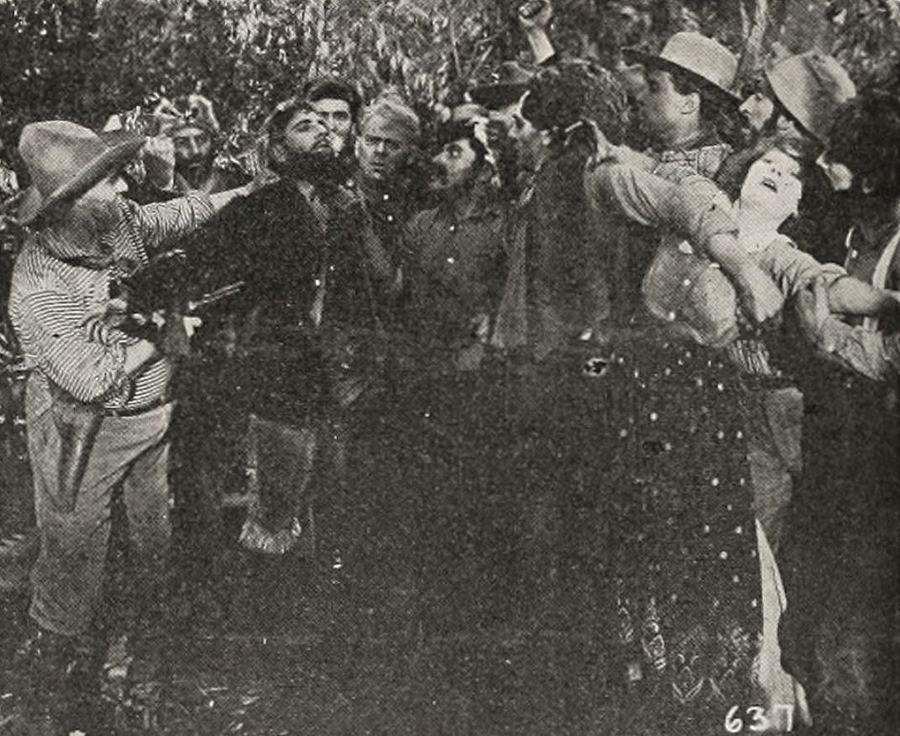
Because the short is silent, every gunshot arrives as a visual percussion—white flash, ribbon of smoke, then a body folding like defective origami. The absence of audio forces us to supply the crack ourselves, a synesthetic burden that makes the violence oddly intimate. When Tom is clipped the first time, the edit omits the bullet’s impact; we cut from muzzle flare to a curtain fluttering, as though the building itself flinched. It’s a trick borrowed from Victorian stagecraft—let the audience hear with their spine.
Contrast that with the trappers’ revolt near the finale: torches smear across the lens like comets, boots drum up auroras of dust, yet the soundtrack you imagine is a low, constant growl—men turning into pack animals. The film argues that money, not bears or pumas, is the apex predator of the range.
Four months of marital bliss are condensed into a single irised shot: Margot kneads bread while Powell skins a beaver, both framed by a window that converts the landscape into a living diorama. The tableau is so serene it feels sarcastic, a sarcophagus of domesticity waiting for the hammer. When Tom re-enters, the cabin literally contracts; the camera dollies backward to make space for the returning repressed, as though the boards themselves reject the usurper.
Keep an eye on Powell’s rifle rack. It begins the sequence unloaded, symbolic truce; by the time Tom steals the payroll, every slot is full again, a visual sentence that reads peace was just a breathing space between reloads. The film may be 32 minutes long, but its architecture of tension rivals any three-hour prestige miniseries you’ll stream this weekend.
When the trappers storm the cabin, howling for Powell’s blood, the mise-en-scène quotes The Seats of the Mighty—a 1914 Revolutionary War parable also obsessed with the thin scrim between justice and vendetta. Yet here the mob isn’t faceless; each fur-clad participant gets a mini-portrait, a litany of frostbit noses and payday hangovers. Their grievance is economic, not moral, and that specificity scalds. The film anticipates every Reddit witch-hunt: give people a scapegoat and a delayed paycheck, and they’ll invent their own evidence.
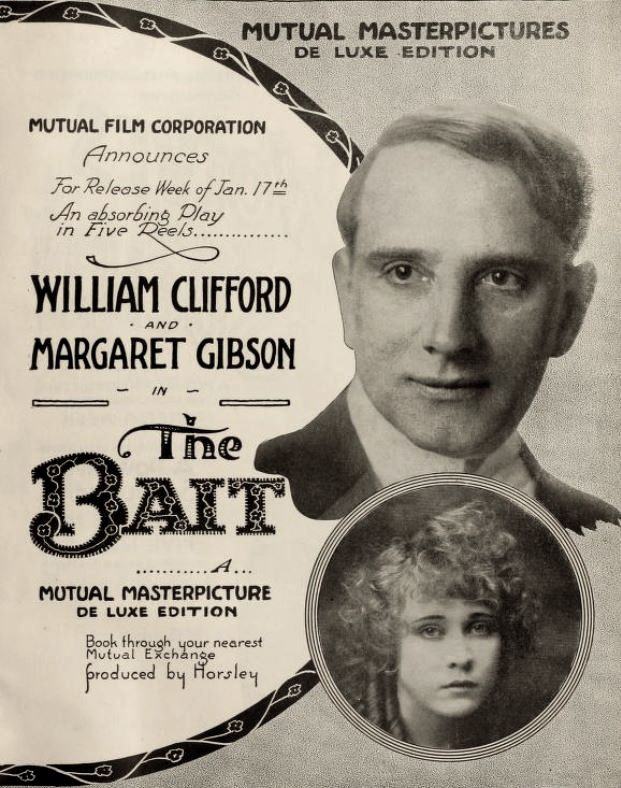
Enter Mitchell—the stranger who began the narrative as the gullible mark—now performing the role of chorus and legal counsel. His single line of dialogue in the intertitle, “The reckoning is between these two souls,” might as well be a silent-era subtweet canceling cancel-culture itself.
Restoration prints tint night scenes a bruised sea blue, saloon interiors a venomous dark orange, and money a queasy yellow. The palette becomes a moral ledger: blue for the wilderness where traps lie, orange for the gambling dens where souls are bartered, yellow for the object that converts both realms into hunting grounds. When Margot finally walks away from Tom’s corpse, the frame momentarily desaturates—a flaw in the nitrate that preservationists left untouched because it looks like the world itself has been wrung dry of ethical color.
Contemporary viewers will squirm at how often the camera lingers on Margot’s calves, but notice the power inversion: every leering shot is followed by a cut to her POV, showing men reduced to outlines, silhouettes, mere threats without detail. The film weaponizes the male gaze only to neuter it, a sleight-of-hand that wouldn’t resurface until Out of the Past three decades later. Compare that to A Good Little Devil, where female suffering is decorative. Here it’s structural, causal, and therefore political.
Money migrates through the film like a virus: from Mitchell’s roll to Tom’s wallet, to the trappers’ communal pouch, to Powell’s humble lockbox, and finally back to the soil when the sack is buried beneath leaves again. The closing shot rhymes with the opening: a trap reset, ready for the next season. Capitalism, the film whispers, is just a more genteel set of jaws.
That insight lands harder in 2024 than it did during Woodrow Wilson’s presidency. Gig workers chasing delayed paychecks, miners paid in company scrip, influencers hawking vitamins to survive—The Bait predicted each iteration. Its only miscalculation was the duration: it thought one hunting season would suffice.
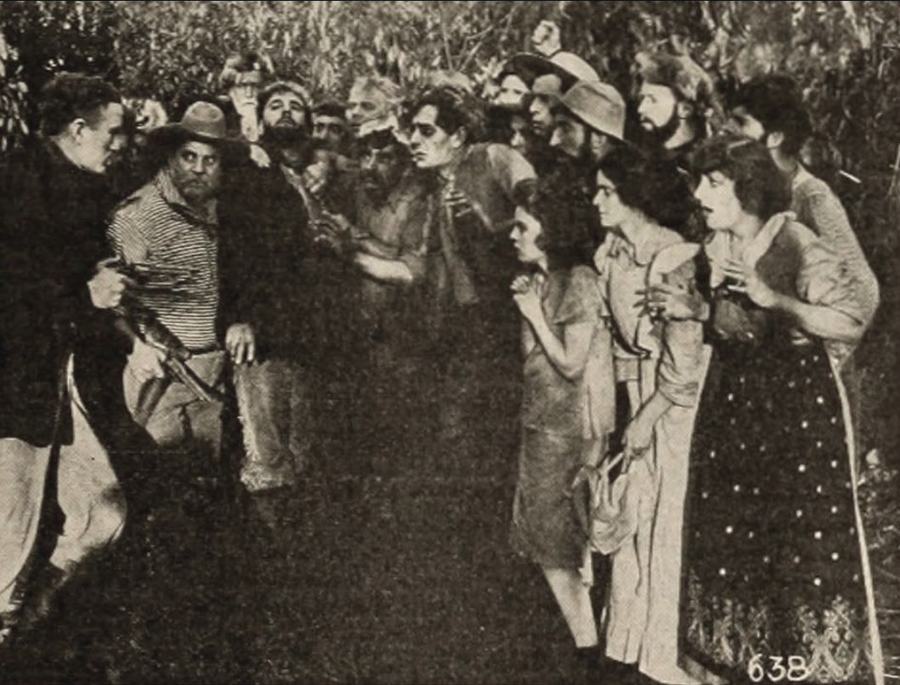
William Clifford directs himself as Tom with the unblinking vanity of a man recording his own nightmare. Watch how he strokes the saloon’s doorframe before each scheme, the gesture halfway between lover and surveyor. As Powell, Fred Montague channels a granite rectitude that feels biblical; he stands as if he’s been carved from the surrounding fir trunks. Marvel Spencer’s Margot is the film’s tremulous core—every micro-gesture calibrated for the front row of a nickelodeon: the slight backward tilt when Tom’s shadow falls across her, the way her fingers flutter like trapped sparrows before she steels herself to commit murder.
Patricia Palmer’s Greta, the neighbor child, is less a character than a moral tuning fork: when she’s onscreen, the adult world’s depravity rings sharper. Her final glance at Margot—half adoration, half accusation—could power a dissertation on the cyclical inheritance of trauma.
The film averages 2.8 seconds per shot, frenetic even by 1915 standards, yet each cut lands like a heartbeat, not a hammer. Note the match-action across scenes: a hand sprinkling leaves dissolves into fingers scattering cards; the trap’s clang becomes the saloon doors’ slap through pure graphic rhyme. It’s the kind of associative montage Kuleshov would theorize three years later, but here it emerges from sheer instinct, the way folk songs invent harmony before music theory names it.
Trace the lineage: The Bait’s chiaroscuro saloons beget Detour’s diner, its femme-fatigue informs Gun Crazy, its circular money trail anticipates The Killing. Even the bear trap resurfaces as the snare in Shadow of a Doubt. The short is a stem cell: crude, microscopic, yet containing the entire organism of American pessimism that will flower once the Hays Code loosens its grip.
As of this month, a 2K restoration circulates via the San Francisco Silent Film Festival streaming portal, tinted according to the original cue sheets. Avoid the grayscale YouTube rips—they flatten the moral color code into murk. If you can snag the Eric Grayson Quartet score, grab it; their bowed-saw rendition of “Oh! Susanna” turns the folk tune into a predator’s lullaby.
Run it on a big screen, blackout curtains drawn, volume cranked so the piano’s low A vibrates your ribcage exactly when the trap springs. Invite friends who still believe silent movies are quaint; watch their smugness evaporate like morning mist off a mountain creek.
Great art doesn’t age; it waits. Ninety-plus years before Promising Young Woman or I May Destroy You, a 32-minute nickelodeon flick already knew that revenge is not justice, that survival can look like seduction, that the only thing sharper than a bear trap is the moment a woman decides who gets caught. The Bait still snaps because, on some pine-scented night inside us all, the leaves are still being gently rearranged.
IMDb 5.5
1933
Community
Log in to comment.