DbcultAccessing Vault...
7.3/10
Senior Film Conservator
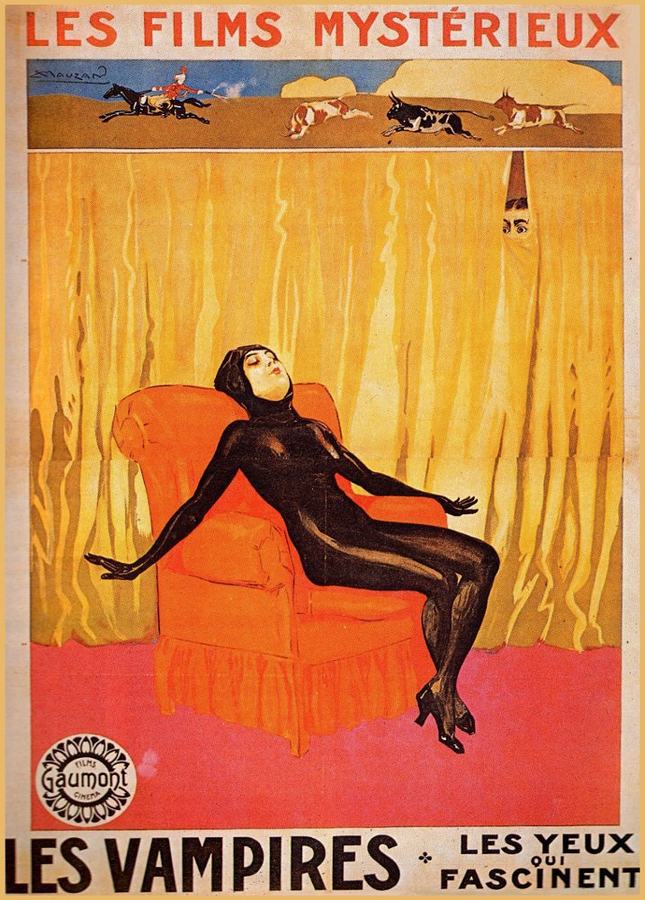
A definitive 7.3/10 rating for a film that redefined the boundaries of cult cinema. Les Vampires remains a cornerstone of transgressive art.
Picture a city that never truly sleeps—only dozes under morphine skies—while a clandestine sirocco of crime whips through its arrondissements. Louis Feuillade’s Les Vampires is not merely a 399-minute serial; it is a subterranean map of Parisian anxieties circa 1915, sketched with shadows sharp enough to slice the bourgeois throat. Shot while shells pummeled the Marne, the film channels wartime paranoia into a baroque fever dream where journalists, ballerinas, and apache gangsters swap identities the way other people swap dance cards.
The plot—ostensibly a cops-and-robbers chase—operates like a fumigatory séance: each episode exhales toxic secrecy into the viewer’s lungs. Guérande (Édouard Mathé) opens the narrative rifling through a dead man’s desk, only to discover a blank sheet that later bleeds ink under acid. That alchemical moment signals Feuillade’s larger gambit: cinema as occult revelation, where surfaces lie and only the flicker between frames tells the truth.
Irma Vep—anagram of Vampire and embodied by Musidora with feline, androgynous swagger—emerges as the century’s first anti-It girl. Clad in a midnight catsuit that hugs the curvature of censorship itself, she slinks across parapets, interrogation rooms, and even a newspaper office, weaponizing the male gaze by turning it into a boomerang. When she kidnaps the editor’s fiancée or impersonates a nun, the performance is so fluid that morality liquefies; you root for the criminal because she is the only one honest about her hunger.
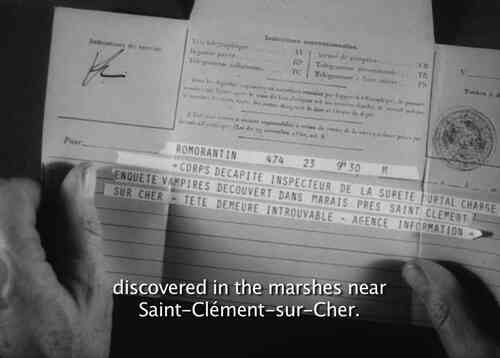
Feuillade’s camera, static by technological necessity, compensates through compositional audacity: doorframes become proscenium arches, mirrors fracture identities, and deep-focus stairwells yawn like Mephistophelean mouths. In Episode 3, “The Red Cryptogram,” a letter written in human blood is deciphered via a child's toy projector—an ancestor to both the ransom video and the GIF. The filmmaker anticipates surveillance culture by staging a criminal council that communicates through phonograph records glued inside hat linings; the moment the needle drops, the bourgeois drawing room becomes a resonant chamber of conspiratorial whispers.
Sound, though absent on the track, haunts as a phantom limb. Intertitles arrive like ransom notes, clipped and epigrammatic: “The poison works at midnight.” “The gendarmes see only what the fog allows.” Feuillade weaponizes silence the way later directors weaponize Dolby Atmos—every off-screen rustle is amplified by the mind. When the Vampires pump cyanide through a bedroom keyhole, the viewer hallucinates the hiss.
Scholars often tether Les Vampires to the fantastique tradition, yet its pulse is fiercely materialist. Looted jewelry finances political assassinations; ink mixed with human fat becomes invisible ink. Even the iconic black costume worn by Irma Vep is stitched from stolen ballroom drapes—couture cannibalized by crime. Feuillade anticipates Guy Debord’s Society of the Spectacle: every gala, every newspaper spread, is merely camouflage for extraction. The serial’s true protagonist may be Capital itself, wearing a domino mask.
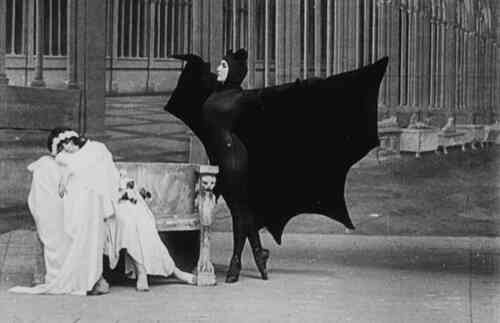
Compare it with the same year’s Brother Against Brother—a moralistic tearjerker—or the florid orientalia of A hercegnö pongyolája, and you’ll gauge how radical Feuillade’s nihilism felt. Where contemporaries kneaded catharsis, he served corrosion. The closest analogue in tone is perhaps Ipnosi, yet that Italian curio lacks the serial’s urban sprawl and proto-feminist venom.
Restoration-wise, the 4K scan by Gaumont in 2022 rescues lavender birefringence from the nitrate bloom; you can now trace the grain of Musidora’s stockings, count the sequins on a duchess’s décolleté. The dark-orange tinting of night scenes feels volcanic, while daytime episodes glow with the wan nicotine of a city rationing coal. Underneath, a new score by Ensemble 0—percussion, electric hurdy-gurdy, whispered French slang—loops like a conspiratorial earworm. Headphones become an accomplice.
Performance hierarchies invert typical star-system logic. Mathé’s Guérande is deliberately stiff—an avatar of journalistic rectitude whose very blandness magnetizes chaos around him. Marcel Lévesque’s Mazamette supplies burlesque oxygen: his elastic mug toggles between terror and larcenous glee, especially when he poses as a corpse to smuggle a pistol past palace guards. The duo’s homosocial rapport—equal parts Holmes-Watson and Laurel-Hardy—softens the serial’s misanthropic edge, offering the viewer a raft of slapstick in an ocean of soot.
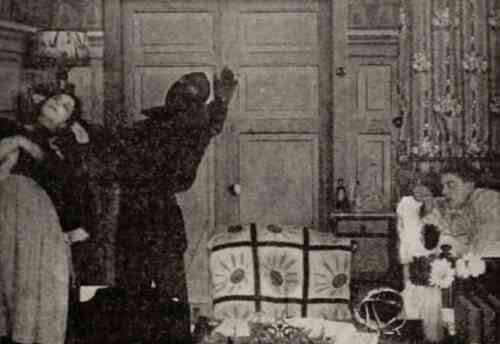
Yet every frame bends toward Musidora. She weaponizes stillness; a single arched eyebrow ricochets across the tableau like a bullet. In Episode 7 she hijacks a moving tram wearing nothing but a veil and a smile, then vanishes into the Parisian dawn. Critics have read the moment as proto-surrealist, but it’s also an act of proto-cinema: the star exiting the narrative the way a cyber-flâneur logs off—leaving only the trace of her grin.
Feuillade’s legacy snakes through Lang’s Dr. Mabuse, Hitchcock’s Vertigo, and even the Wachowskis’ Matrix—any text where reality wears a mask and the mask turns out to be another reality. Assayas paid overt homage in his 1996 Irma Vep, staging Maggie Cheung as an actress playing Musidina in a remake gone awry. Yet no successor has replicated the serial’s dirty immediacy: the sense that the next reel might combust, that the police censor’s scissors could snip the femme fatale mid-sentence.
Viewing protocol: bingeing in one night risks neuronal meltdown. Treat it like absinthe—sip two episodes, pause for oxygen, debate whether Irma Vep’s crimes are resistance against patriarchal order or mere capitalistic appetite. The film invites such dialectics yet refuses synthesis; it is the objet petit a of early cinema, forever circling satisfaction.
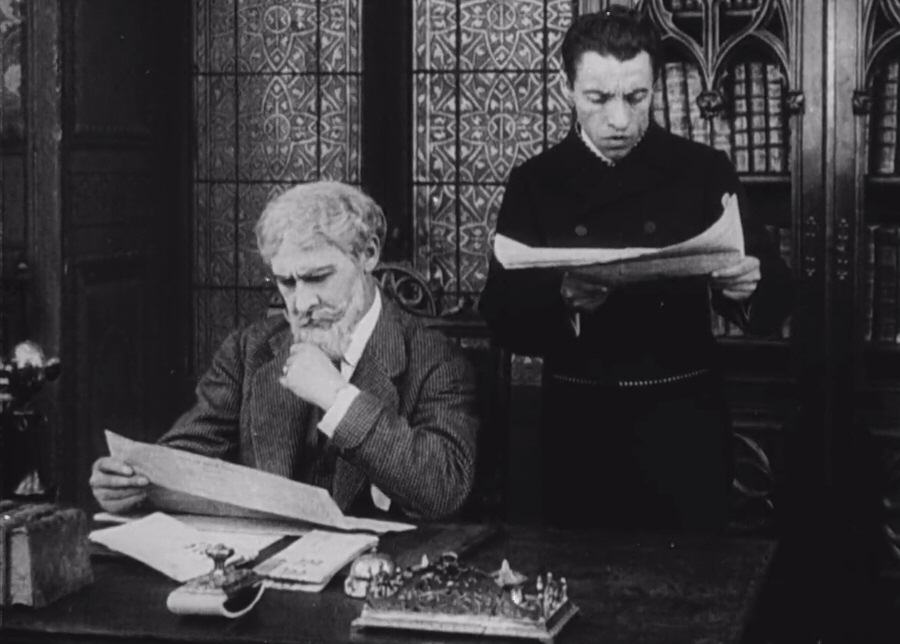
Censorship scars add texture. French authorities excised shots of the Grand Vampire aping a priest; the Catholic lobby decried the serial as “a cathedral of sin.” Feuillade, devout himself, countered that exposure of evil is not endorsement—yet his camera lingers on Irma’s rump with voyeuristic piety. The tension between moral lesson and libidinal investment is the engine that keeps the narrative throbbing a century on.
Technically, the special effects—double exposures, dummy plunges off Notre Dame—read as primitive yet acquire eerie credibility because the stunt performers really dangle. When a Vampire parachutes from the Opéra roof, the camera tracks the silhouette against actual clouds; no CGI will ever replicate that meteoric authenticity. The absence of rear-projection grounds fantasy in brick dust, forging a tactile hallucination.
Feminist readings oscillate between empowerment and fetish. Irma commands male underlings, designs heists, even dictates newspaper headlines—yet her denouement (spoilers omitted) subjects her to patriarchal retribution. One could argue Feuillade scripts karmic balance; another view sees the Industrial-Age equivalent of today’s “punish the bold woman” trope. The ambivalence is productive: each generation projects its gender politics onto Musidora’s catsuit, and the film morphs like a cinematic boggart.
Economically, the serial salvaged Gaumont Studios from wartime bankruptcy. Shot on the cheap in Nice and Montreuil, repurposing theater sets and surplus military uniforms, it embodies bricolage bravura. Notice how corridors elongate between episodes—sets were cannibalized mid-production. The resulting spatial impossibility adds uncanny vertigo: you exit a boudoir and enter a cavern without transition, as though Paris itself were a Möbius strip.
Reception history resembles a sinewave: condemned in 1916, rediscovered by the Cinémathèque Française in 1954, fetishized by mid-’90s ravers who projected episodes at raves scored by Aphex Twin. Today TikTokers splice Irma’s slinky dance with synthwave tracks, accruing millions of views—proof that the Vampire DNA keeps mutating, always ahead of the host.
For the cine-curious, Les Vampires is both gateway drug and final boss. It teaches you how to watch narrative elasticity, how to forgive technical crudity when visionary voltage is cranked to max. After finishing, try Feuillade’s Judex or Tih Minh, but expect diminishing returns; nothing matches the primal rush of first tasting celluloid hemoglobin.
Final verdict: not a relic but a living contagion. Watch it on a rainy night, windows cracked so gutter water percussion syncs with the on-screen rain. Let the flicker infect your retina; let Irma Vep whisper that laws are merely costumes sewn to be stripped. When the last iris closes, you’ll sense someone behind you—maybe a lover, maybe a burglar, maybe just the 20th century catching up at last.
IMDb —
1918
Community
Log in to comment.