DbcultAccessing Vault...
Cult Review
Senior Film Conservator
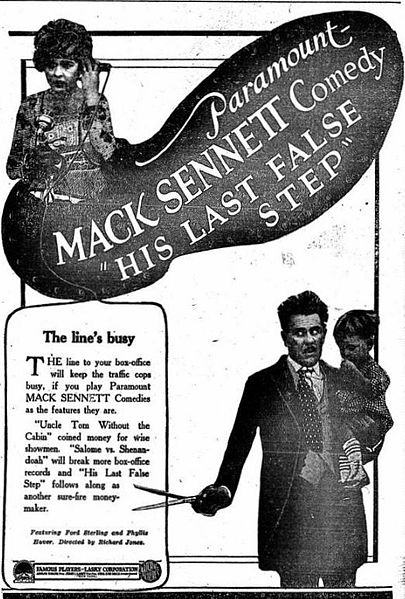
In the annals of early cinema, where morality often took center stage cloaked in the guise of slapstick or melodrama, a film like 'His Last False Step' emerges as a fascinating artifact. This silent-era gem, while seemingly a simple comedic romp, delves surprisingly deep into the psychological underpinnings of temptation, guilt, and eventual redemption. It’s a narrative that, despite its age, resonates with a timeless quality, proving that the human condition, with all its foibles and desires, remains remarkably consistent across epochs.
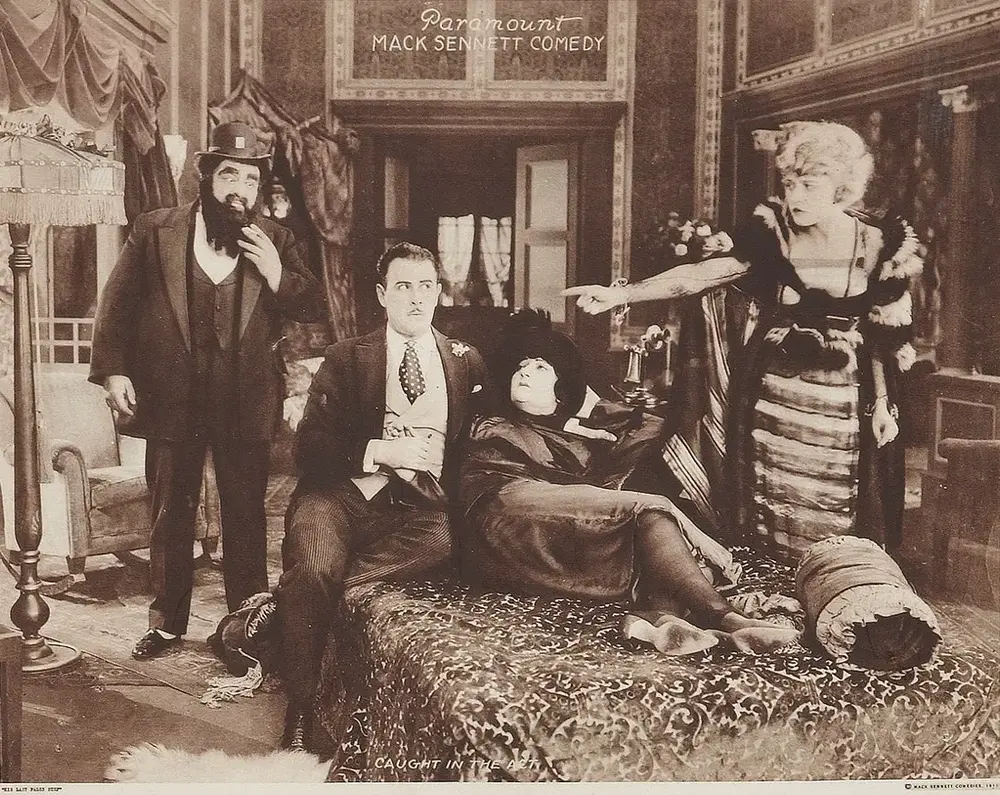
The film opens with a deceptively mundane domestic tableau, quickly disrupted by a husband's foolish dalliance with temptation. Ford Sterling, a master of comedic timing and physical expression, portrays our protagonist whose name, or lack thereof, only serves to amplify his everyman quality. He stumbles upon a calling card, an innocuous piece of paper that becomes a potent symbol of forbidden fruit. The card belongs to a woman described as 'fair and frivolous,' an archetype of the alluring danger that often lurks just beyond the boundaries of marital commitment. Sterling's character, with a mixture of nervous excitement and ill-advised bravado, begins to arrange a clandestine meeting. The beauty of silent film, particularly in the hands of skilled performers, is how much can be conveyed without a single spoken word. We see his furtive glances, the almost conspiratorial whispers, and the palpable shift in his demeanor, all indicative of a man stepping onto a slippery slope.
Crucially, his wife, played with understated intensity, stands nearby, a silent observer whose presence is a constant, unspoken indictment. Her stillness speaks volumes; her knowledge of his transgression is a heavy, invisible weight in the room. This initial sequence brilliantly establishes the domestic tension, the quiet drama of a marriage teetering on the brink. The husband's pathetic attempts to explain away his actions as 'business matters' are met with the stony silence of his wife, a silence far more damning than any verbal accusation. This moment of domestic friction is a classic setup for many silent comedies, yet here it's imbued with a deeper sense of moral unease. It’s not just about getting caught; it’s about the erosion of trust.
Overwhelmed by guilt and the crushing weight of his wife's silent disapproval, our protagonist retreats to the bathroom, ostensibly to 'think it over.' This mundane setting becomes the gateway to the film's most inventive and impactful sequence: a horrific, cautionary dream. Here, the film truly takes flight, transforming from a domestic comedy into a psychological thriller tinged with dark humor. The dream is not merely a flight of fancy; it's a vivid, visceral manifestation of his deepest fears and the potential consequences of his actions. It's a testament to the power of the subconscious, acting as a moral compass, albeit a terrifying one.
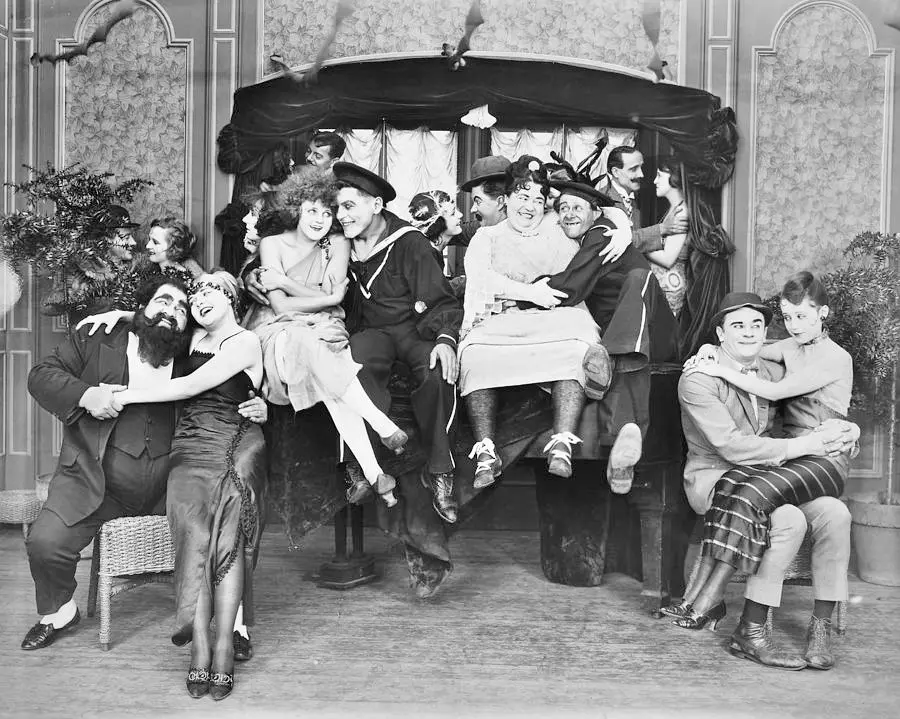
In this dream, the 'frivolous charmer' he sought to meet transforms into a femme fatale of the most dangerous kind, the orchestrator of a nefarious scheme known as a 'badger game.' For those unfamiliar with this early 20th-century con, it typically involved a man being lured into a compromising situation by a woman, only to be 'discovered' by her male accomplice (often posing as her enraged husband or brother). The victim would then be blackmailed into paying a significant sum to avoid public scandal. The dream sequence in 'His Last False Step' masterfully illustrates the mechanics and terror of this scheme, putting Sterling's character through an escalating series of humiliating and perilous adventures.
The ensemble cast truly shines in this extended nightmare sequence, each playing a crucial role in the protagonist's torment. Ford Sterling, known for his work with the Keystone Kops, brings his unique brand of frantic, bewildered comedy to the role, making his fear palpable yet also inherently amusing. Billy Bevan, another stalwart of silent comedy, likely contributes to the chaotic energy, perhaps as one of the menacing figures or a bystander to the unfolding disaster. George Gray and Marvin Loback, often seen in similar comedic roles, would have added to the gang of conspirators, their menacing presence amplifying Sterling's plight. Mildred June, Kathryn McGuire, Gonda Durand, Fanny Kelly, and Phyllis Haver, among others, would have contributed to the allure and the danger, embodying the deceptive charm and subsequent ruthlessness of the 'frivolous lady' and her associates.
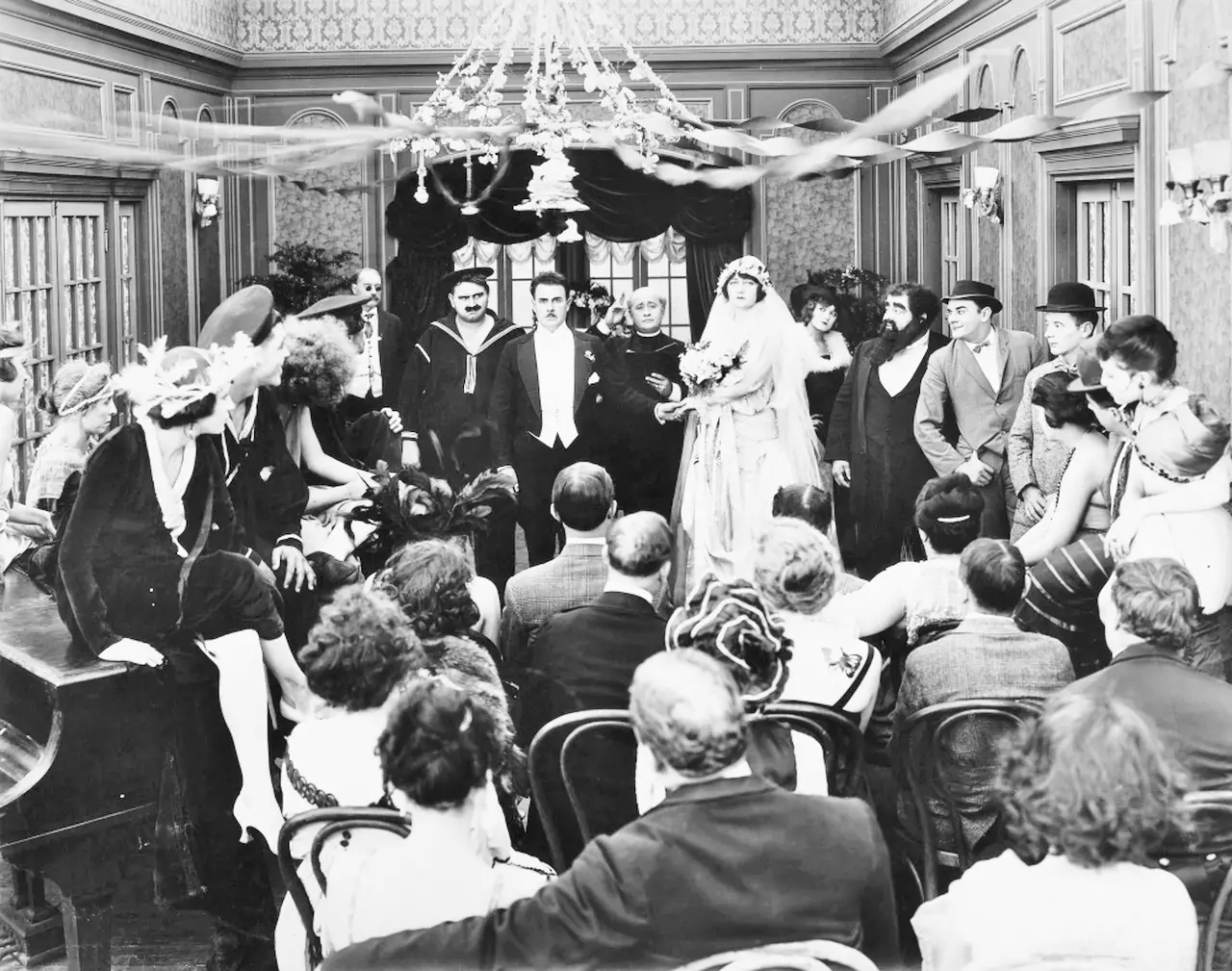
The dream is a whirlwind of narrow escapes, mistaken identities, and escalating threats. Our foolish husband finds himself stripped of his dignity, pursued through various absurd scenarios, each more terrifying than the last. The film employs classic silent comedy tropes—chases, pratfalls, and exaggerated expressions—but imbues them with a genuine sense of dread. Eddie Gribbon, Kalla Pasha, Don Marion, Malcolm Ford, Garry O'Dell, Joseph Belmont, Al Cooke, Charlotte Mineau, Frank Earle, Sybil Seely, and Gladys Whitfield, with their diverse comedic and dramatic talents, would have populated this nightmarish landscape, each adding a layer to the protagonist's escalating panic. The sheer number of cast members suggests a bustling, chaotic world within the dream, reflecting the overwhelming nature of his guilt and fear.
The climax of the dream sees him making a desperate, frantic escape, a final scramble to elude his tormentors. The relief is palpable when he finally wakes, safe and sound in his own home, the terrifying ordeal revealed to be nothing more than a product of his subconscious. The transition from the dream's chaotic energy to the quiet reality of his bathroom is expertly handled, emphasizing the profound impact of his internal journey. This awakening is not just a return to consciousness; it's a spiritual rebirth, a profound realization of the error of his ways.
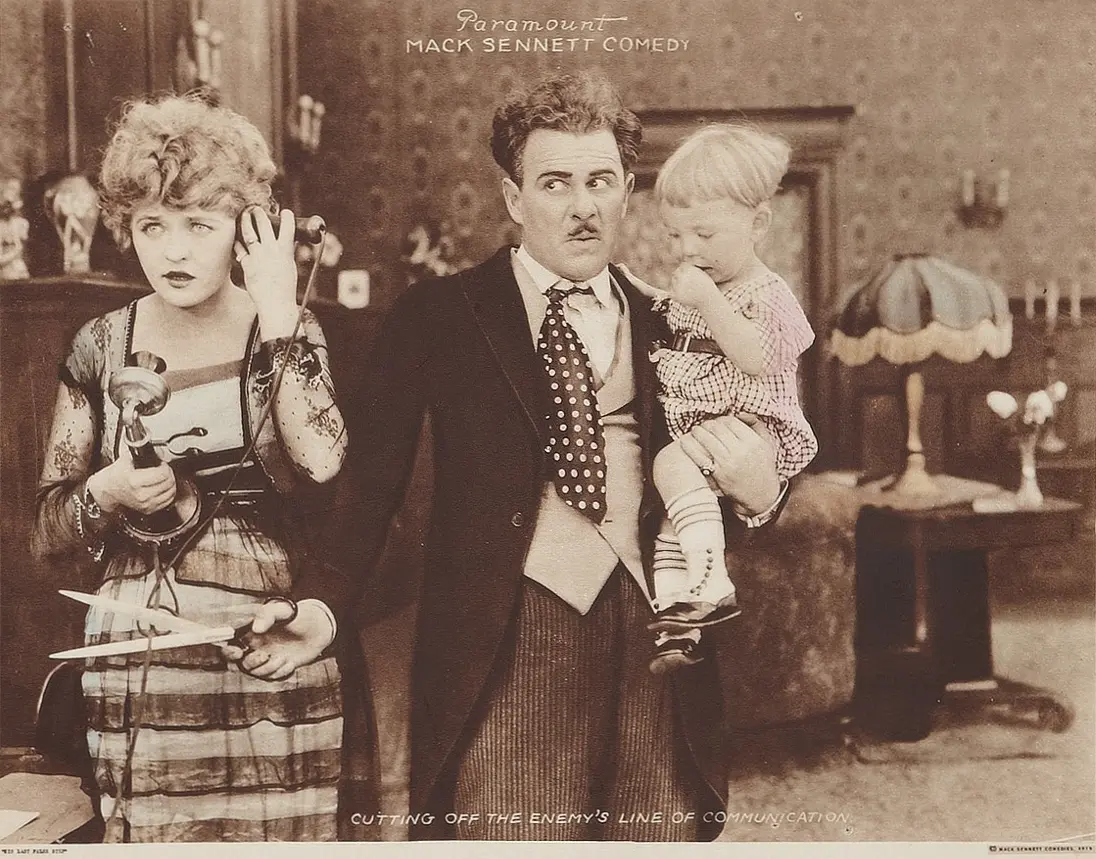
The film's title, 'His Last False Step,' becomes explicitly clear in this final act. The harrowing dream serves as a potent deterrent, etching an indelible lesson into his psyche. He emerges from the bathroom a changed man, his flirtation with infidelity thoroughly purged by the terrifying vision. The moral is delivered with a clarity that is characteristic of early cinema, yet it feels earned through the preceding psychological journey. It's a powerful testament to the idea that sometimes, the most effective lessons are learned through the vivid, if imagined, consequences of our actions.
While ostensibly a comedy, 'His Last False Step' possesses a remarkable thematic depth. It explores the universal themes of temptation, fidelity, guilt, and the redemptive power of self-reflection. The film cleverly uses the dream sequence as a narrative device to externalize internal conflict, a technique that would be explored in more psychological dramas much later. It’s a sophisticated approach for a film of its era, demonstrating that silent cinema was capable of more than just simple gags.
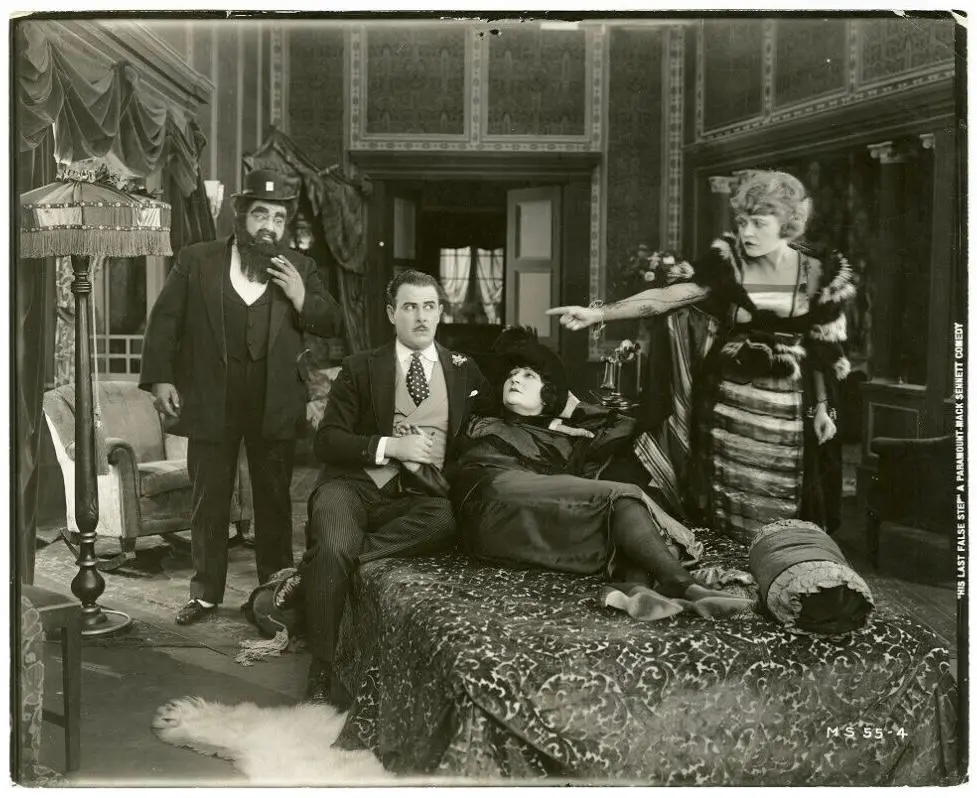
Ford Sterling's performance is central to the film's success. His ability to convey a wide range of emotions—from nervous excitement to abject terror to profound relief—without dialogue is nothing short of brilliant. His physical comedy is precise, yet his expressions carry the weight of his character's internal struggle. The director (uncredited, as was common in many early shorts) demonstrates a keen understanding of pacing, building the tension in the dream sequence with escalating stakes and frantic action. The visual storytelling, through exaggerated gestures and dynamic camera work (for its time), effectively communicates the chaotic nature of the 'badger game' and the protagonist's growing despair.
Comparing it to other films of the era, 'His Last False Step' stands out for its unique blend of comedy and moral allegory. While films like Hands Up! might offer similar bursts of frantic physical comedy and chase sequences, 'His Last False Step' grounds its humor in a more personal, moral dilemma. It's less about the grand adventure and more about the internal journey. Similarly, while films dealing with moral quandaries like The Scarlet Sin explored the repercussions of illicit affairs, 'His Last False Step' offers a preventative, dream-induced lesson rather than a tragic aftermath. The film's inventiveness in using a dream to deliver its message is a narrative device that feels surprisingly modern.
The portrayal of the 'badger game' also offers a glimpse into the social anxieties and criminal underworld of the early 20th century. This type of con was a real threat, and its depiction in the film, even within a dream, would have resonated with contemporary audiences. It adds a layer of social commentary, subtly warning against the dangers of illicit liaisons beyond the moral implications. This aspect of the film, therefore, provides a fascinating historical window into the fears and moral codes of the time, much like how films such as The Prussian Cur reflected wartime propaganda or The Border Wireless touched upon espionage anxieties.
'His Last False Step' is more than just an entertaining silent comedy; it's a shrewdly constructed moral fable. It demonstrates the sophisticated narrative techniques that were evolving in early cinema, proving that even short films could deliver substantial thematic weight. The film's ability to blend genuine humor with a profound, cautionary tale is its enduring strength. It reminds us that temptation, while often alluring, can lead to imagined (or real) consequences far more terrifying than the fleeting pleasure it promises.
For enthusiasts of silent film, particularly those interested in the evolution of comedic storytelling and the moral undercurrents of early narratives, 'His Last False Step' is an essential viewing. It showcases the remarkable talents of Ford Sterling and a robust ensemble cast, all contributing to a film that is both uproariously funny and surprisingly insightful. It’s a testament to the power of cinema, even in its nascent form, to entertain, instruct, and provoke thought. The film's message, delivered through a riotous dream, remains as relevant today as it was a century ago: sometimes, a good scare is all it takes to keep one on the straight and narrow path. It’s a cinematic sermon delivered with a wink and a pratfall, ensuring its lesson, once learned, becomes truly unforgettable.
IMDb 4.6
1928
Community
Log in to comment.