DbcultAccessing Vault...
Cult Review
Senior Film Conservator
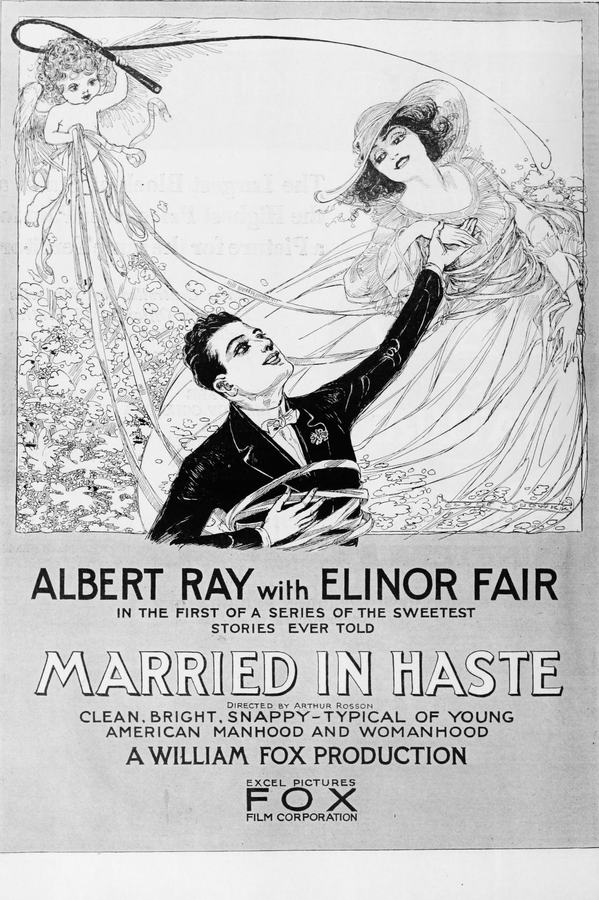
In the annals of silent cinema, where grand gestures and physical comedy often spoke louder than words, J. Searle Dawley's 1923 romp, Married in Haste, emerges as a delightful, if often overlooked, comedic gem. This film, a spirited exploration of wealth, marital dynamics, and the surprising resilience of the human spirit when faced with an unexpected downturn, offers more than just laughs; it provides a fascinating social commentary on the Roaring Twenties' perception of inherited affluence and the value of genuine resourcefulness. It's a testament to an era when narrative ingenuity could shine without the crutch of dialogue, relying instead on the expressive power of its cast and the cleverness of its scenario.
At the heart of this exuberant narrative is Sam Morgan, portrayed with a charming, almost childlike naiveté by Don Bailey. Sam is the quintessential scion of inherited wealth, a man whose understanding of finance seems to extend no further than the balance of his immediate pocket money. He embodies the carefree, somewhat irresponsible spirit often associated with the 'new money' or the perpetually comfortable elite of his time. His world is one of boundless luxury, where every whim is indulged, and the practicalities of earning a living are as alien as a foreign language. This initial portrayal of Sam isn't merely for comedic effect; it lays the groundwork for his dramatic transformation, highlighting the vast chasm between his privileged existence and the stark realities that await him. His casual profligacy, a source of lighthearted amusement in the film's opening, quickly becomes the catalyst for the entire plot, demonstrating how easily unchecked indulgence can unravel even the most gilded lives. One might even draw parallels to the societal critique found in films like To-Day, which often grappled with the moral implications of financial excess and societal decay.
Enter Constance Winwood, played with a blend of steely resolve and underlying affection by Elinor Fair, Sam's newlywed bride. Constance is no passive ornament to Sam's lavish lifestyle; she possesses a keen intellect and a pragmatic worldview that sharply contrasts with her husband's obliviousness. Her decision to cure Sam of his spendthrift habits is both audacious and deeply personal. Instead of mere remonstrations, she conceives an elaborate, almost theatrical, scheme: she convinces Downer, the family's venerable trustee, to stage a dramatic disappearance with Sam's entire inheritance. This act, while born of love and concern, is a significant gamble, fraught with moral complexity. It raises questions about the nature of marital trust and the ethics of deception, even when intended for a noble purpose. Constance's character arc is as compelling as Sam's, as she navigates the guilt and anxiety of her own machinations, witnessing firsthand the profound impact of her 'tough love' approach.
The honeymoon, typically a period of unbridled romance and indulgence, swiftly transforms into a crucible of financial despair for the Morgans. The initial signs are subtle, almost comically so: Sam's pocket money, a paltry $10.30, quickly evaporates. The real shock, however, arrives with the ignominy of bouncing checks. The film masterfully uses these escalating financial embarrassments to build both tension and comedic absurdity. The audience, accustomed to Sam's effortless existence, is forced to watch as his world crumbles, one bounced check at a time. This rapid descent from the lap of luxury to the brink of destitution is handled with a light touch, ensuring the humor never veers into genuine pathos, but rather emphasizes the farcical nature of Sam's predicament. The visual gags of hotel managers' exasperated expressions and Sam's bewildered attempts to comprehend his new reality are particularly effective in the silent medium.
Perhaps the most enduring image and sustained comedic sequence in Married in Haste is the couple's predicament with the taxi. Thrown out of their opulent hotel, and utterly unable to pay the mounting fare, Sam and Constance find themselves in a bind that escalates into pure, delightful absurdity. Their solution? To simply keep the cab and its perpetually sleepy driver engaged. This isn't just a clever plot device; it's a brilliant piece of visual comedy that speaks volumes about their desperation and their inability to truly grasp the consequences of their actions. The taxi, with its unwitting, slumbering chauffeur, becomes a mobile symbol of their financial woes, a rolling reminder of their spiraling debt. The humor here lies in the sheer audacity of their situation, the growing tally on the meter acting as a silent, relentless antagonist. It’s a classic comedic trope, executed with precision, reminiscent of the kind of escalating, farcical situations seen in other silent-era comedies, where everyday objects become sources of extraordinary predicaments. The sheer length of this particular gag underscores the film's commitment to extracting maximum comedic value from its premise.
Just when their situation seems utterly hopeless, a serendipitous encounter introduces a 'friendly thief' into Sam's life. This character, a charming rogue who operates outside the bounds of conventional society, becomes an unexpected mentor, guiding Sam to his first taste of honest labor: a job in a herring refinery. The irony is palpable: Sam, who once lived a life of effortless luxury, now finds himself surrounded by the pungent aroma of fish, his hands soiled with the realities of manual work. This abrupt immersion into a world utterly alien to his upbringing is crucial for his character development. It forces him to confront the dignity of labor and the intrinsic value of earned money, a concept previously abstract. The thief’s role is a subtle subversion of expectations, demonstrating that help can come from the most unexpected corners, challenging conventional notions of morality and class. This twist adds a layer of warmth and human connection to what could otherwise be a purely farcical journey, echoing perhaps the unexpected alliances found in films like The Scarlet Shadow, where characters from different social strata are thrown together by circumstance.
Sam's transformation culminates in a truly ingenious, and highly comedic, business venture. Discovering that his rudimentary knowledge of Spanish is a unique asset in the herring refinery, he seizes an opportunity that would have been unthinkable just weeks prior. He negotiates the purchase of an entire shipload of herring from a South American dealer, leveraging his limited linguistic skills to bridge a cultural and commercial gap. The true stroke of genius, however, lies in his subsequent sale of this cargo to the refinery's directors, who, knowing no Spanish, are entirely at Sam's mercy regarding the terms. This sequence is a brilliant display of wit and newfound entrepreneurial spirit. It’s not just about making money; it's about Sam's awakening, his realization that his intellect and resourcefulness can be powerful tools. The profit he accrues from this audacious deal is not merely enough to settle his now-exorbitant taxi bill; it represents his triumph over his former self, a testament to his capacity for growth and adaptation. This quick-witted financial maneuver provides a satisfying comedic climax to his journey through practical poverty.
As Sam revels in his newfound financial independence, Constance, burdened by guilt and witnessing her husband’s profound transformation, finally confesses her elaborate scheme. The moment of truth is fraught with emotional tension, as she reveals the charade orchestrated with Downer. However, the film delivers a delicious narrative twist: it appears that Downer may have genuinely absconded with the money, turning Constance's fabricated crisis into a terrifying reality. This sudden shift from planned farce to potential tragedy adds a surprising depth to the story, momentarily suspending the comedic tone and injecting genuine dramatic stakes. The relief, therefore, is immense when Downer finally makes his dramatic return, dispelling fears and restoring their considerable fortune. This narrative arc, moving from a controlled experiment in poverty to a brush with actual destitution, then back to prosperity, underscores the film's playful yet pointed commentary on the fickle nature of wealth and the often-unforeseen consequences of well-intentioned deception. It’s a moment that tests the marital bond, ultimately strengthening it through shared adversity, much like the trials faced by characters in films such as Indiscreet Corinne, where relationships are often forged and tested under unusual circumstances.
The success of Married in Haste rests significantly on the shoulders of its lead actors, Don Bailey and Elinor Fair. Bailey, as Sam Morgan, masterfully conveys the character's journey from a clueless dilettante to a self-sufficient individual. His expressions, ranging from bewildered innocence to determined entrepreneurship, are a testament to the nuanced art of silent film acting. He avoids caricature, instead allowing the audience to empathize with Sam's plight even as they laugh at his initial foolishness. Elinor Fair, as Constance, provides the perfect foil. Her performance balances a shrewd intelligence with a palpable undercurrent of concern and affection for Sam. She is the architect of their predicament, yet her portrayal ensures that her actions are understood as driven by love, not malice. Together, their on-screen chemistry, conveyed through subtle glances and exaggerated gestures, creates a believable and engaging marital dynamic, a cornerstone of the film's enduring appeal. Their performances capture the essence of early 20th-century characters navigating societal expectations and personal growth.
The directorial vision of J. Searle Dawley, combined with the astute screenwriting of Charles Kenyon and E. Lloyd Sheldon, is evident in every frame of Married in Haste. The pacing is brisk, the comedic beats are well-timed, and the narrative progression is consistently engaging. Dawley’s direction ensures that the visual gags land effectively, and the emotional shifts in the characters are clearly communicated without the aid of dialogue. The writers deserve credit for constructing a plot that, while farcical, remains remarkably coherent and character-driven. They deftly weave together elements of social satire, romantic comedy, and even a touch of dramatic suspense, creating a story that is both entertaining and thought-provoking. The specificity of the plot points – the $10.30 pocket money, the herring refinery, the Spanish-speaking deal – speaks to a meticulous attention to detail that elevates the film beyond mere slapstick. It’s a well-oiled machine of comedic storytelling, showcasing the sophisticated craftsmanship that often defined the best of silent era filmmaking.
The film culminates in a truly charming and memorable visual: Sam and Constance, now wealthy once more and profoundly changed by their shared ordeal, adorn their bedroom with taxi meters and headlights. This quirky decorative choice is far more than a whimsical flourish; it’s a powerful symbol of their journey. The taxi meter, once a relentless tally of their mounting debt and public humiliation, is transformed into a trophy, a memento of their triumph over adversity. The headlights, symbols of guidance and forward motion, represent their newfound clarity and shared direction. It signifies their acceptance of the past, their ability to find humor in hardship, and a profound appreciation for the lessons learned. It’s a beautiful, understated way to conclude their story, demonstrating that while their wealth has been restored, their values and understanding of life have been permanently altered for the better. This final, indelible image encapsulates the film's core message: true riches lie not just in one's bank account, but in character, resourcefulness, and a resilient spirit.
Married in Haste, despite its age, retains a vibrant, timeless appeal. Its comedic situations, while rooted in the societal norms of the 1920s, speak to universal themes of financial responsibility, marital understanding, and the unexpected paths to self-discovery. The film's ability to blend genuine character development with escalating farce is a testament to its enduring quality. For those interested in the evolution of cinematic comedy or a delightful glimpse into a bygone era, this film offers a rich and rewarding experience. It reminds us that even without spoken dialogue, stories can be told with immense charm, wit, and emotional resonance, proving that some tales, like a good herring deal, are truly universal. It stands as a vibrant example of how silent films, far from being mere historical curiosities, were sophisticated works of art capable of engaging audiences on multiple levels, much like the timeless human stories explored in The Heart of Rachael or the satirical bite of Vanity and Vengeance.
The film's delightful eccentricity, from a cunning wife's scheme to a millionaire's unexpected foray into the fish industry, culminates in a resolution that is both satisfyingly humorous and deeply symbolic. It's a journey that transforms not just a fortune, but the very essence of its protagonists, leaving them richer in experience and understanding than any inheritance could provide.
IMDb 7.8
1935
Community
Log in to comment.