DbcultAccessing Vault...
6.7/10
Senior Film Conservator
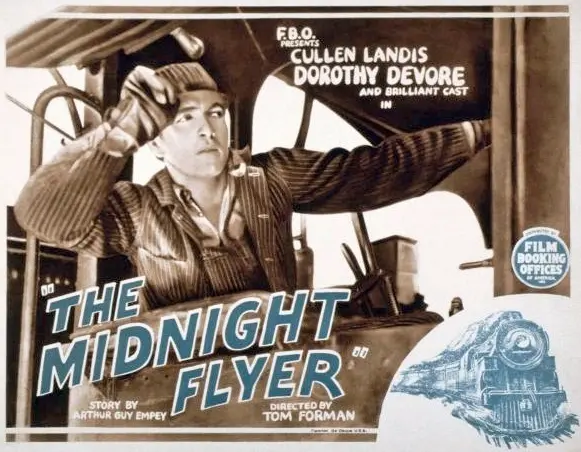
A definitive 6.7/10 rating for a film that redefined the boundaries of cult cinema. The Midnight Flyer remains a cornerstone of transgressive art.
The Midnight Flyer, unlike many of its contemporaries, captivates with its deeply rooted narrative and layered characters, set against the backdrop of 1920s West Virginia. The film, a silent gem from a bygone era, masterfully interweaves themes of family conflict, romance, and the relentless pull of duty and justice.
Si Henderson emerges as the protagonist, a rugged mountaineer whose employment with the emerging railroad introduces him to a world beyond the rugged terrain he knows. This development, however, stirs the long-simmering feud between the Slaters and the Hendersons from a century past. Jeb Slater, the patriarch of the Slaters, harbors a deep-seated grudge against Si, who is the sole Henderson to secure a job with the railroad. Jeb's vendetta, though, is ultimately directed at more than just a job; it is a personal crusade to maintain the ancient enmity between his family and the Hendersons.
The narrative's complexity lies in its exploration of personal and familial relationships amidst the backdrop of industrial progress. When Jeb attempts to eliminate Si, his plan backfires, resulting in the tragic death of Si's wife, Mrs. Henderson. Her final act, as she dies, is to make her son, David, and her husband, Si, vow to end the feud. This moment of familial sacrifice and the promise to honor her last wish sets the stage for the subsequent decades of turmoil and reconciliation.
In the years that follow, David and Jeb's son, Mel, work together on the railroad, but the shadow of the past continues to loom large over David. Mel, a hardened and alcoholic bully, torments David, leading to a breaking point when David, in a moment of desperation, jumps off the train to avoid a collision with a wagon. This act, while a means of escape, also results in David's dismissal from his position as engineer.
The tension reaches a boiling point when Jeb, released from prison, orchestrates a sabotage of the Midnight Flyer. This act of sabotage not only cripples Si but also forces him to retire. David, now the engineer, takes over his first run, only to face the torment of his tormentor, Mel, who goads him to the brink of suicide. This moment, a pivotal turning point, sees David's bravery and resolve tested to the utmost.
The narrative takes a dramatic turn when Mel, fueled by alcohol and a thirst for revenge, attacks a detective sent to arrest Jeb. In a drunken rampage, Mel imprisons Mary, David's love interest, and the superintendent, Kellogg, in a train, setting it on a collision course with the Midnight Flyer. This sequence of events is a testament to the film's ability to maintain a high level of suspense and drama, even as it delves into its most intense confrontations.
David, driven by a mix of guilt, love, and a sense of duty, embarks on a mission to save Mary and Kellogg. His journey is one of self-discovery and redemption, as he confronts his fears and ultimately comes to terms with the legacy of the past. The climax, a brutal and emotional fight between David and Mel, serves as a cathartic release of all the pent-up tensions, culminating in David's triumph and the train's safe arrival.
The film's visual and auditory elements contribute significantly to its impact. The setting of the West Virginia mountains, with its rugged terrain and dense forests, provides a stark and beautiful backdrop to the story. The use of music and sound effects, while limited by the era, adds to the film's atmosphere, enhancing the tension and emotion of pivotal scenes.
Despite its silent nature, 'The Midnight Flyer' excels in character development and storytelling. The performances, led by Elmo Billings as Si Henderson and Charles A. Post as Jeb Slater, are compelling and nuanced. The chemistry between the actors, particularly in their dynamic of revenge and reconciliation, brings depth to the narrative. The supporting cast, including Charles Hill Mailes and Barbara Tennant, also deliver strong performances, adding layers to the story's tapestry.
'The Midnight Flyer' stands out in its genre for its rich storytelling and its exploration of complex themes. While it may not be as widely known as some of its contemporaries, it offers a valuable insight into the human condition, the weight of family legacy, and the pursuit of justice. Its ability to balance historical context with universal themes makes it a film that continues to resonate with audiences.
For those interested in cinema history, 'The Midnight Flyer' is a must-watch. It serves as a reminder of the artistry and emotional depth that could be achieved in silent films and offers a compelling narrative that transcends its era. It is a film that challenges and entertains, offering a unique and compelling viewing experience.
In conclusion, 'The Midnight Flyer' is a powerful and deeply moving film, a testament to the enduring themes of family, revenge, and redemption. Its rich narrative and strong performances make it a landmark in silent cinema, a film that continues to captivate and inspire.
IMDb 5.2
1935
Community
Log in to comment.