DbcultAccessing Vault...
Cult Review
Senior Film Conservator
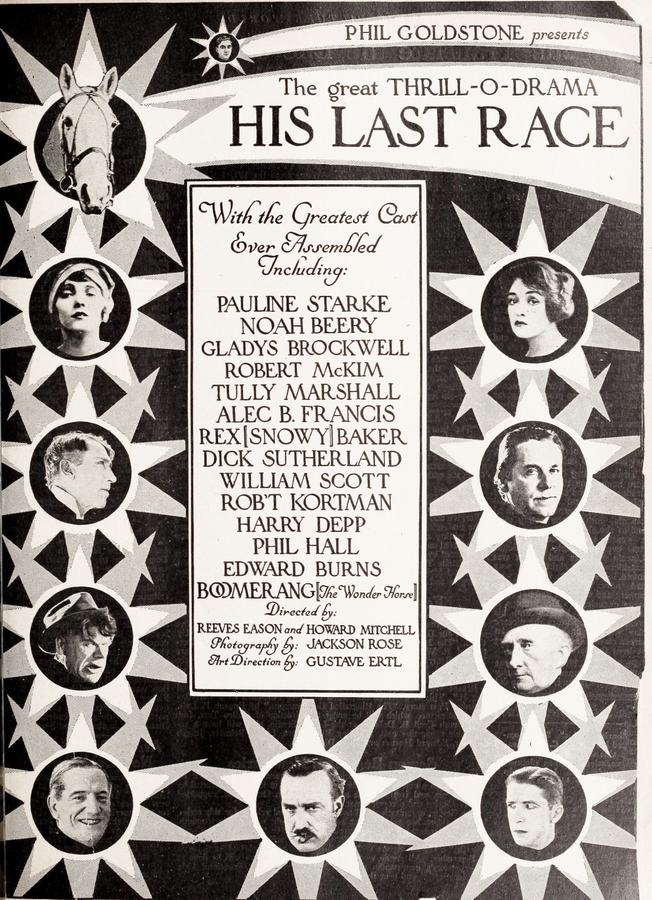
His Last Race (1925) unfolds like a weathered map of human tenacity, its narrative etched into the jagged contours of the alpine landscape. Carleton, portrayed with grizzled conviction by William Scott, is a man whose heartache has calcified into purpose. Spurned by Mary—a character whose emotional trajectory mirrors the film’s own oscillations between hope and despair—he retreats into the wilderness, not in defeat, but in calculated rebirth. The health resort he co-founds with his newfound companions is less a business than a crucible, a place where physical vitality and moral resolve are tested. The resort’s idyllic premise is juxtaposed with the encroaching shadows of greed, embodied by Carleton’s adversaries who plot to dismantle his sanctuary through underhanded means. This tension between idealism and corruption is what propels the film into the realm of high-stakes drama, where every horseback ride and handshake carries the weight of existential stakes.
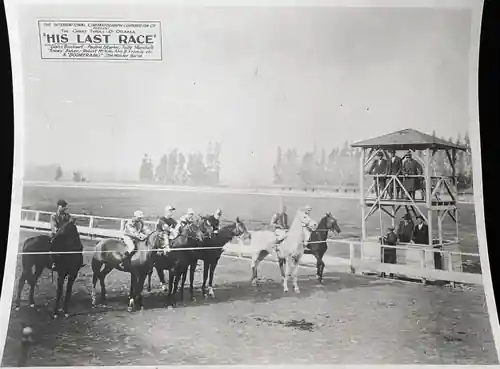
Richard Schayer’s direction is a masterclass in visual storytelling, utilizing the mountainous setting as both a character and a critic. The stark, almost hostile beauty of the landscape mirrors Carleton’s internal struggle—a man who must navigate treacherous terrain to reclaim his dignity. The health resort, with its rustic charm and functional simplicity, stands in sharp contrast to the urban decadence Mary initially associates with her first love. This duality is echoed in the film’s color palette: warm, earthy tones for scenes of communal effort and cooler, desaturated hues during moments of conflict. The climactic horse race, underpinned by a haunting score, is a symphony of motion and stillness, where the gallop of Boomerang the Wonder Horse symbolizes both Carleton’s desperation and his unyielding spirit. The camera lingers on the horse’s galloping hooves, framing them against the sky as if to suggest that even in motion, there is a kind of transcendence.
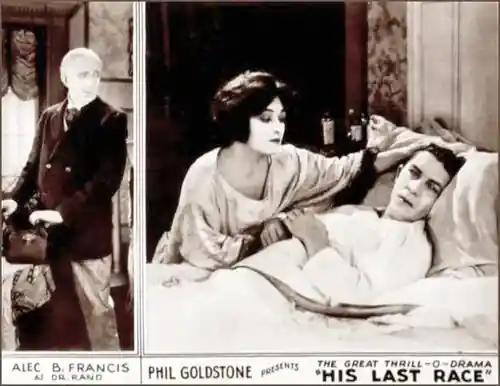
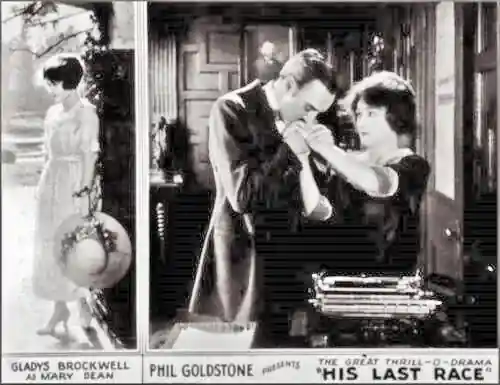
William Scott’s portrayal of Carleton is the film’s emotional nucleus, a performance tempered by restraint and simmering intensity. His interactions with Pauline Starke’s Mary are charged with an unspoken history, their dialogue sparse yet laden with subtext. Mary’s character arc—from spurned lover to grieving widow—adds layers to the narrative, positioning her as both a prize and a moral compass. The supporting cast, including Harry Burns and Dick Sutherland, provide a counterpoint of camaraderie, their banter and collective labor infusing the resort with a sense of shared purpose. Even minor characters, like Gladys Brockwell’s enigmatic nurse, contribute to the film’s texture, their brief scenes a reminder that every individual in this microcosm of society has their own story to tell. The chemistry between Scott and Starke is particularly noteworthy; their scenes together hum with the unresolved tension of two people bound by love yet divided by pride.
The film’s structure is deliberate, its pacing akin to the slow unfurling of a banner in a windstorm. The first act establishes Carleton’s disillusionment and the resort’s precarious beginnings, the second introduces Mary’s return and the threat of sabotage, and the third escalates to the race—a metaphorical and literal race against time. This tripartite structure allows Schayer to explore themes of redemption and perseverance without overcomplication. The subplot involving Mary’s son, while briefly touching on maternal sacrifice, serves more as a narrative device to deepen the stakes. The film’s resolution, wherein Carleton triumphs not just over his enemies but over his own self-doubt, is rendered with a satisfying simplicity: the resort is saved, Mary’s heart is won, and the horse gallops into legend. Yet, it is the quieter moments—Carleton’s solitary rides through the mountains, the shared glances between characters—that linger longest, suggesting that victory is not an end but a continuation of the journey.
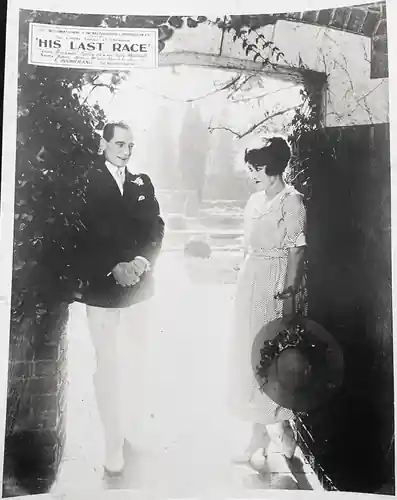
His Last Race occupies a unique space in the annals of 1920s cinema, bridging the silent film era’s visual lyricism with the emerging narrative sophistication of the talkies. It shares thematic DNA with Nimrod Ambrose, where isolation and redemption are similarly explored, though Schayer’s film leans more heavily on its naturalistic setting. The use of Boomerang the Wonder Horse evokes the grandeur of The Invisible Ray, but here the horse is not a supernatural force but a grounded symbol of resilience. In contrast to the melodramatic excesses of When Knighthood Was in Flower, His Last Race opts for a grittier realism, its characters shaped more by their environment than by romantic conventions. This rawness aligns it with The Blue Bandanna, another tale of honor and survival, though Schayer’s work is less about vengeance and more about quiet determination.
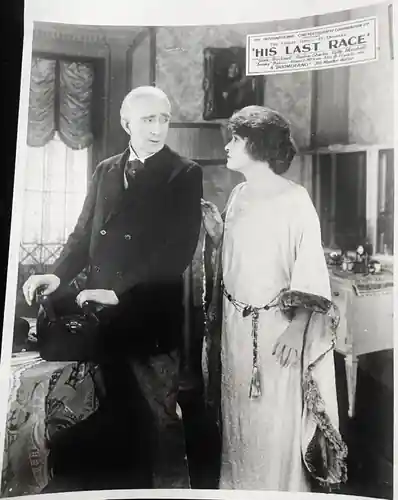
His Last Race may not be a household name in the pantheon of cinematic classics, but its merits are undeniable. It is a film that understands the power of simplicity, using minimalistic settings and a focused narrative to maximum effect. The performances, particularly Scott’s, are quietly compelling, while Schayer’s direction imbues every frame with a sense of urgency and authenticity. For modern audiences, the film serves as a reminder of an era when storytelling prioritized character over spectacle. It invites comparison with contemporary Westerns like His Birthright, yet stands apart for its nuanced exploration of emotional landscapes. In an age where films often rush to deliver spectacle, His Last Race is a testament to the enduring power of patience, both in art and in life. It is a ride worth taking, for those who appreciate the quiet triumphs that define the human condition.
IMDb 6.2
1932
Community
Log in to comment.