DbcultAccessing Vault...
7/10
Senior Film Conservator
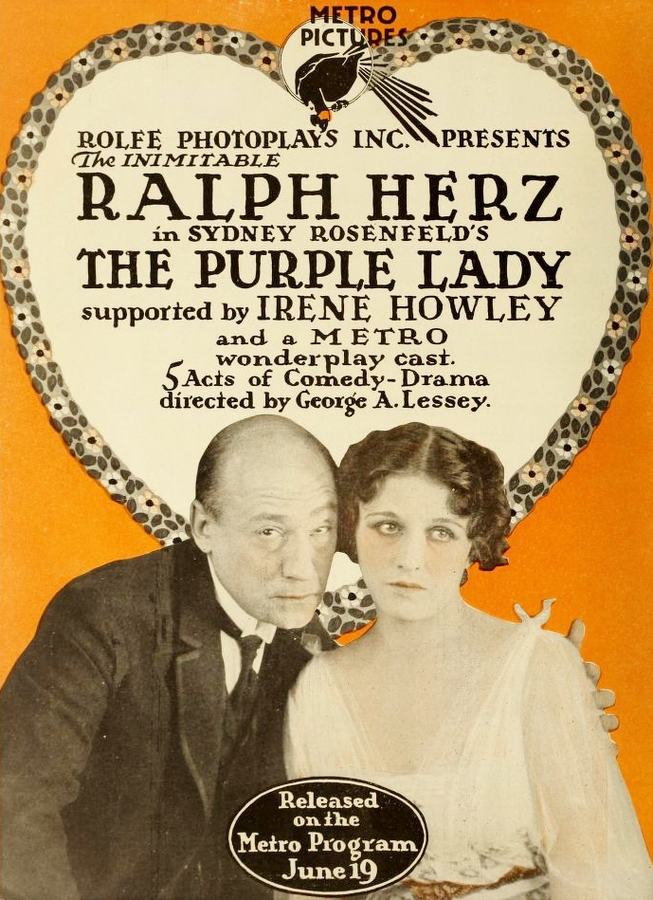
A definitive 7/10 rating for a film that redefined the boundaries of cult cinema. The Purple Lady remains a cornerstone of transgressive art.
Stepping back into the flickering glow of early 20th-century cinema, one often encounters narratives that, despite their age, resonate with an astonishing contemporary relevance. The Purple Lady, a 1915 production penned by the prolific and pioneering June Mathis, is precisely such a cinematic artifact. It’s a compelling tapestry woven from threads of moral absolutism, clandestine romance, and the ever-present allure of scandal. In an era when the silver screen was still finding its voice, films like this laid crucial groundwork, demonstrating the profound power of visual storytelling to dissect societal hypocrisies and explore the tumultuous landscape of human desire. This isn't just a historical curiosity; it's a vibrant, often breathless, melodrama that invites a deep dive into its layers of intrigue and character complexity.
At its core, The Purple Lady introduces us to Silas Gilworthy, portrayed with a captivating blend of earnestness and naiveté by Guido Colucci. Silas embodies the archetypal reformer of the Progressive Era – a man convinced of his moral rectitude, utterly devoted to stamping out what he perceives as the burgeoning moral decay of the urban landscape. His particular bête noire? The dance halls, those pulsating, dimly lit havens where societal norms were playfully, if not outright defiantly, challenged. Among these, the Purple Lightning Tango Parlor stands as the preeminent symbol of everything Silas despises. It’s a den of iniquity, a crucible of temptation, a place he is determined to shut down, believing he is safeguarding the very soul of the city. This fervent conviction, however, is destined for a spectacular collision with the very human emotions he seeks to suppress.
Enter Fifi, brought to life with an exquisite blend of vulnerability and cunning by Gretchen Hartman. Fifi is no mere dancer; she is a creature of circumstance, navigating the treacherous waters of survival in a society quick to judge. Her world, the Purple Lightning Tango Parlor, is a stark contrast to Silas's pristine, puritanical existence. It is here, amidst the swirling skirts and passionate embraces of the tango, that Silas first encounters Fifi. His initial interactions are undoubtedly fueled by his reformist zeal, perhaps even a desire to 'save' her. Yet, a more potent, undeniable force begins to take hold: attraction. The very woman he seeks to condemn becomes the object of his burgeoning affection, a delicious irony that forms the bedrock of the film's dramatic tension. This forbidden allure is reminiscent of the moral dilemmas faced in films like Det gamle fyrtaarn, where austere environments often clash with the raw, untamed aspects of human nature, though The Purple Lady injects a more overtly romantic and criminal element.
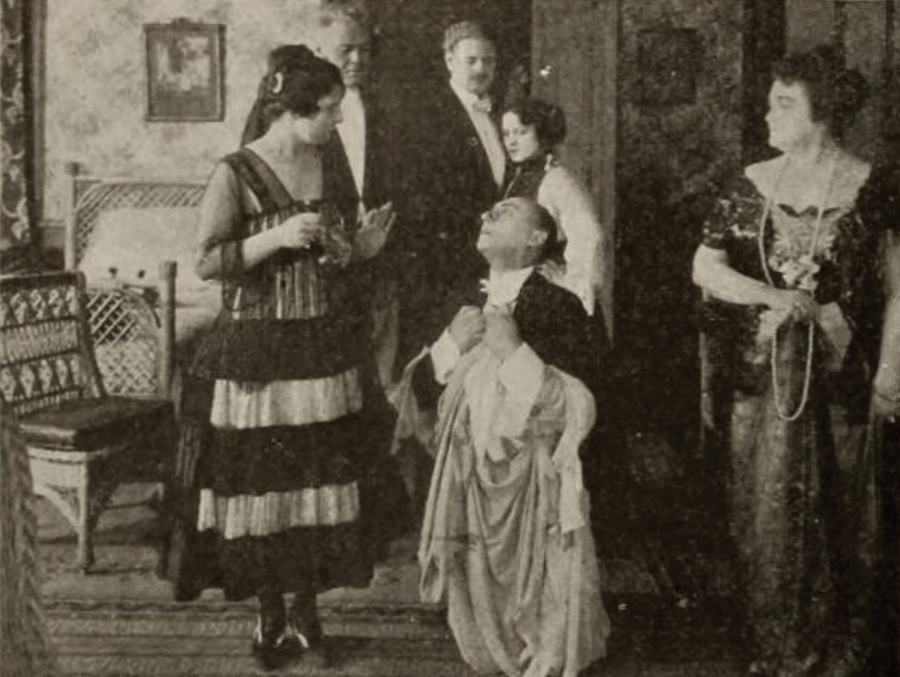
But Fifi, for all her captivating charm, harbors a secret that threatens to shatter Silas's carefully constructed world. She is entwined in a criminal enterprise, having secreted a valuable cache of stolen pearls within the most unlikely of places: Silas Gilworthy's own desk. This audacious act of concealment elevates the narrative beyond a simple tale of forbidden love, transforming it into a thrilling game of cat and mouse, where the stakes are not merely reputation but freedom and justice. The pearls become a potent MacGuffin, driving the plot forward with relentless momentum, much like the hidden clues in a mystery from the era such as The Thumb Print, where every object held potential significance.
The supporting cast, though perhaps less central, contributes significantly to the film's rich texture. Alan Hale, a name that would become synonymous with Hollywood's Golden Age, brings a robust presence to his role, hinting at the versatility that would define his lengthy career. Mrs. William Bechtel, George Pauncefort, Cora Williams, Ralph Herz, Irene Howley, and Howard Truesdale each play their parts in fleshing out the societal tapestry against which Silas and Fifi's drama unfolds. Their collective performances, typical of the silent era, rely on exaggerated expressions and gestures, yet within this stylistic framework, they manage to convey a surprising depth of character, guiding the audience through the narrative's emotional peaks and valleys.
The true genius behind The Purple Lady, however, lies in the pen of June Mathis. Mathis was a trailblazer, one of the most powerful women in early Hollywood, whose influence as a screenwriter and executive cannot be overstated. Her script for this film is a testament to her keen understanding of dramatic structure and character psychology. She masterfully crafts a narrative that is not only thrilling but also deeply empathetic, allowing the audience to understand the motivations of even the most morally ambiguous characters. Mathis had a knack for weaving intricate plots with strong emotional cores, a skill evident in her later, more famous works. Here, she skillfully navigates the societal anxieties of the time, pitting rigid morality against the undeniable pull of human connection and the harsh realities of economic necessity. This kind of complex narrative, where identity and perception are constantly at odds, echoes the sophisticated storytelling found in films like Mysteries of the Grand Hotel, where secrets lurk behind every polished facade.
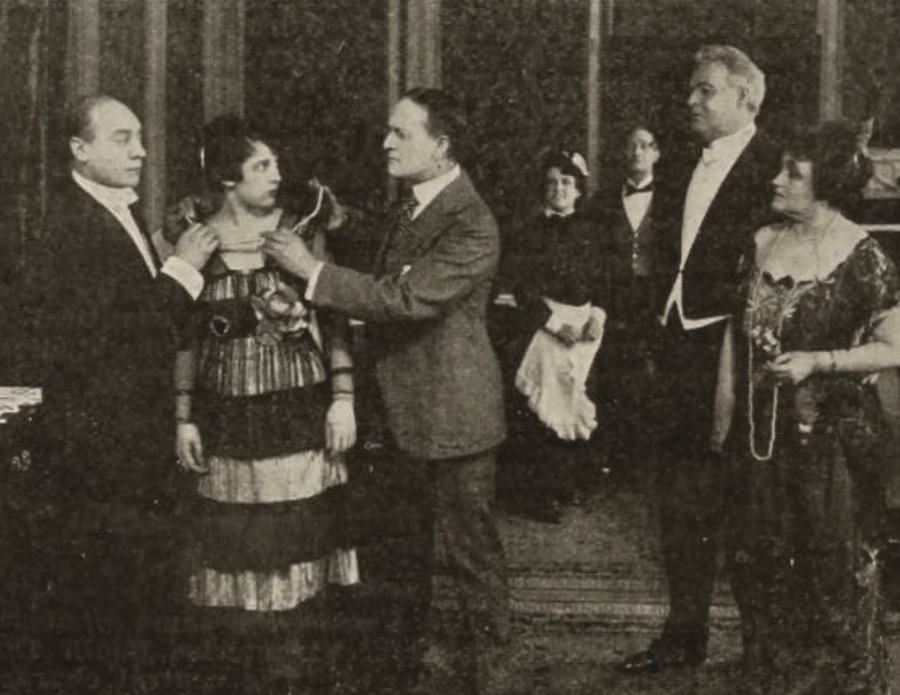
The film's climax is a crescendo of chaos and revelation, set against the backdrop of Silas's wedding. This is where all the carefully constructed facades crumble, where identities clash with devastating force, and where the true thief makes a dramatic, scene-stealing appearance. The wedding, traditionally a symbol of new beginnings and societal approval, transforms into an arena for the violent collision of past and present, truth and deception. This dramatic unraveling is a hallmark of silent melodrama, designed to elicit gasps and tears from the audience. The sheer audacity of the reveal, coupled with the emotional fallout, ensures that the film leaves a lasting impression. It’s a moment of pure cinematic spectacle, illustrating the power of silent film to build tension and deliver a truly cathartic release, much in the vein of the grand, perilous cliffhangers found in serials like The Perils of Pauline, though with a more singular, character-driven focus.
Visually, The Purple Lady likely employed the stylistic conventions of its era: dramatic lighting contrasts, elaborate sets for the dance hall sequences, and close-ups to emphasize emotional states. The very name 'Purple Lightning Tango Parlor' suggests a vibrant, perhaps even gaudy, aesthetic that would have stood in stark relief to Silas's more subdued, respectable world. These visual dichotomies are crucial in silent cinema, conveying mood and character through mise-en-scène. The costume design, particularly for Fifi and the other dancers, would have been integral to establishing their alluring, yet potentially dangerous, personas, while Silas's attire would have underscored his upright, albeit rigid, character. The film's aesthetic would have been a language in itself, communicating the social strata and moral leanings of its characters without a single spoken word.
Reflecting on the performances, Guido Colucci as Silas must convey a journey from rigid conviction to bewildered vulnerability. His portrayal requires a delicate balance, ensuring Silas remains sympathetic even as his worldview is challenged. Gretchen Hartman’s Fifi is arguably the more complex role, demanding a performance that oscillates between seductive charm, genuine fear, and perhaps a flicker of hope for a different life. Her ability to hold the audience’s empathy, despite her criminal involvement, is crucial to the film’s success. The dramatic confrontations, particularly during the wedding sequence, would have required intense, physical acting, characteristic of the period, yet still capable of conveying nuanced emotional shifts. This kind of demanding character work, where internal turmoil is externalized, can be seen in other complex female roles of the era, such as those in Beatrice Cenci or The Daughter of the People, where heroines navigate treacherous social landscapes.
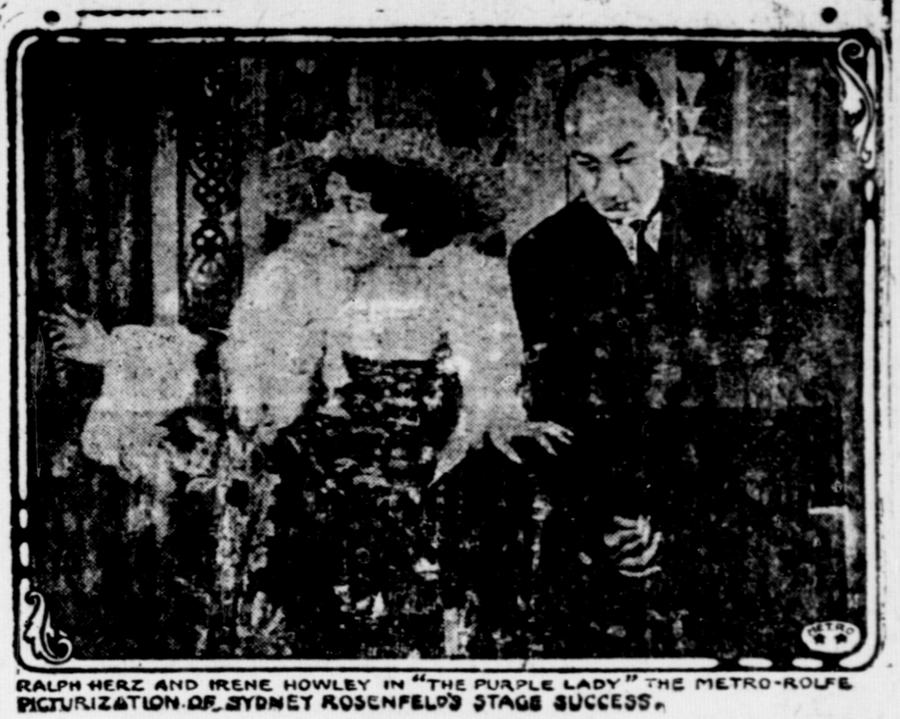
The film also serves as a fascinating lens through which to view the social anxieties of the early 20th century. The reformers' fervent campaigns against dance halls, saloons, and other forms of public entertainment reflect a broader societal struggle between traditional values and burgeoning modernism. Silas Gilworthy is a product of this tension, a man genuinely believing he is acting for the greater good, yet blind to the complexities of human nature and the nuances of individual circumstance. The clash between his ideals and Fifi's reality highlights the often-stark divide between moralistic rhetoric and the lived experiences of those on the fringes of society. This underlying social commentary elevates The Purple Lady beyond mere melodrama, giving it a thoughtful, critical edge, much like the examination of societal pressures found in The Revolutionist, albeit with a different focus.
June Mathis's contribution to the narrative is particularly noteworthy for its time. She didn't shy away from depicting morally ambiguous characters or challenging conventional notions of good and evil. Fifi, while a thief, is not painted as a purely villainous figure; her actions are contextualized, making her a more relatable and tragic character. Silas, for all his uprightness, is not immune to human folly and attraction. This nuanced approach to characterization was sophisticated for the era and speaks volumes about Mathis’s progressive storytelling sensibilities. Her ability to craft a story that is both entertaining and thought-provoking is a testament to her enduring legacy in cinema. The way she weaves together disparate elements – romance, crime, social critique – into a cohesive and engaging whole is truly remarkable.
The legacy of The Purple Lady, though perhaps not as widely known as some of its contemporaries, lies in its vivid portrayal of an era in flux and its demonstration of silent cinema's capacity for complex storytelling. It showcases the talents of a groundbreaking writer and a dedicated cast, all working within the constraints of early film technology to create a compelling human drama. For modern audiences, it offers a window into the artistic and social landscape of a bygone era, reminding us that the fundamental human struggles – love, betrayal, the search for identity, and the clash between personal desire and societal expectation – remain timeless. It's a film that, despite its age, continues to speak volumes about the human condition.
In conclusion, The Purple Lady is far more than a simple silent film; it is a vibrant, intricate narrative that defies easy categorization. It’s a romantic entanglement wrapped in a criminal mystery, set against a backdrop of intense social reform. The performances, particularly by Colucci and Hartman, bring a palpable tension to the screen, while June Mathis’s script is a masterclass in dramatic construction. The film's eventual explosion of truth on Silas’s wedding day is a moment of pure, unadulterated cinematic gold, a testament to the power of well-crafted melodrama to shock and enthrall. It is a film that deserves to be rediscovered and appreciated, not just as a historical document, but as a compelling piece of storytelling that continues to captivate and provoke thought, proving that even without spoken dialogue, a truly great story can resonate across generations. Its themes of hidden identities and societal facades find echoes in countless narratives, from the more straightforward detective stories like The Hound of the Baskervilles to the intricate moral quandaries of Price of Treachery; Or, The Lighthouse Keeper's Daughter. Ultimately, The Purple Lady stands as a testament to the enduring allure of cinematic intrigue and the timeless power of human drama.
IMDb 5.8
1936
Community
Log in to comment.