DbcultAccessing Vault...
Cult Review
Senior Film Conservator
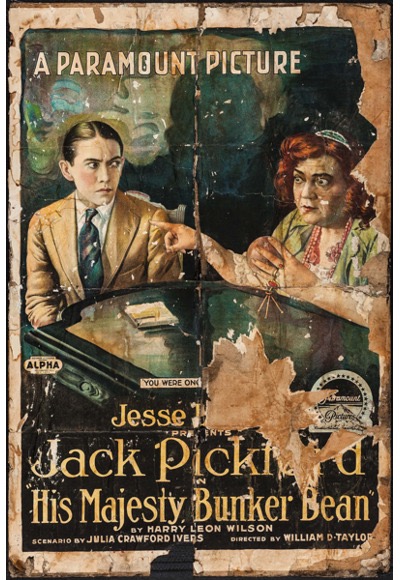
A timid clerk becomes Napoleon, then Ramses, then himself—only shinier.
There is a moment—somewhere between the 17-minute mark and the flutter of a title card—when Jack Pickford’s lower lip trembles like a candle wick caught in cross-draft. He has just been told he is the reincarnation of an Egyptian demigod and a French artillery genius within the same breath. The camera dares not blink; we, the 2024 viewer peering through a century of nitrate decay, feel the celluloid itself inhale. His Majesty, Bunker Bean may masquerade as a trifling 1925 romantic comedy, yet beneath its lacquered clown mask lies the most slyly radical thesis of the Roaring Twenties: identity is a hustle you run on yourself, and the only con more lucrative than selling a mummy is buying your own.
Director William A. Seiter orchestrates the picture like a drunken palm-reader shuffling tarot and stock tips in the same deck. Early scenes throb with chiaroscuro corridors, the office where Bean toils a maze of iron pillars and moral intimidation. Note how cinematographer Bert Glennon’s frames treat vertical lines as prison bars until the instant Bean’s delusions kick in; suddenly ceilings soar, windows yawn open to sodium streetlights, and the world cartwheels into possibilities priced by the share. The visual grammar anticipates the speculative ecstasy that would climax four years later in the crash of ’29—history’s own rude smash-cut.
Jack Pickford—forever shadowed by his megawatt sister Mary—channels a different wattage here: 40-watt insecurity surging to 200-watt megalomania without ever caricaturing either. Watch him practice Napoleon’s hand-inside-waistcoat stance before a tarnished mirror: fingers twitch, retract, try again. The gesture is half homage, half self-mockery, pure human.
Prof. Balthasar, essayed by Gustav von Seyffertitz with the velvet menace of a continental maître d’ who knows your credit is trash, embodies the decade’s spiritual hunger. Theosophy, séances, eugenics-inflected mysticism—pick your poison; the film ladles it with a wink. When he unfurls a papyrus that looks fishily like yesterday’s butcher paper soaked in tea, we taste the gullibility that sold Egyptian cotton to Brooklyn dowagers.

Opposite this hokum stands Louise Huff’s “Flapper,” never named beyond that Jazz Age shorthand. She enters astride a polo pony, crop in hand, eyes ringed with enough kohl to shame a silent-screen vamp. Yet Huff—underrated tragedienne of her era—lets melancholy seep through the mascara. Her flirtation with Bean is less courtship than anthropology: she’s studying an extinct species suddenly vocal. Their erotic charge crackles in small anachronisms—she offers him a cigarette, he declines; she shrugs, exhales smoke like bored incense to a pharaoh who doesn’t yet know he’s mortal.
Bean’s windfall—ten grand transmuting into seven-figure opulence—arrives via a montage so brisk it feels sarcastic. Newspapers spin, tickers vomit zeros, brokers genuflect. Seiter isn’t glorifying the scam; he’s lampooning a culture that mistakes market graphs for EKGs of the divine. When our hero buys Ramses’ so-called mummy, the transaction is staged like a communion: dim candles, reverent hush, the sarcophagus hoisted by wage slaves who’d rather be at a speakeasy. Capital absorbs myth, repackages it, sells it back to the dreamer at markup—an echo chamber older than pyramids.
Intertitles sparkle with the arch wit of novelist Harry Leon Wilson. One card reads: “He discovered that confidence, like cologne, is most effective when sprayed liberally on others.” The sentence pirouettes on the precipice of self-help treacle, yet the film’s cynicism saves it. Compare this to the glut of contemporary manifestation fare—from The Secret to crypto gurus—Bunker Bean prefigures each with smirking benevolence. Only here, the universe isn’t vending miracles; a cigar-chomping huckster is.
Seiter’s camera predates the whip-pan by decades, yet he approximates it via match-cuts on flapping curtains and swinging doors, implying a cosmos forever agape. The approach feels oddly modern, akin to the frenetic transitions in Chase Me Charlie, though that 1918 romp chases slapstick where Bean stalks sociology.
Edith M. Lessing, as Bean’s landlady, supplies brittle comic relief by weeping into onion-scented handkerchiefs—an homage to Victorian melodrama the film otherwise skewers. Jack Hoxie, in a pre-cowboy cameo, plays a broker whose grin could sell sand in the Sahara; observe how his teeth catch the klieg lights—an unintentional harbinger of Hollywood’s coming commodification.
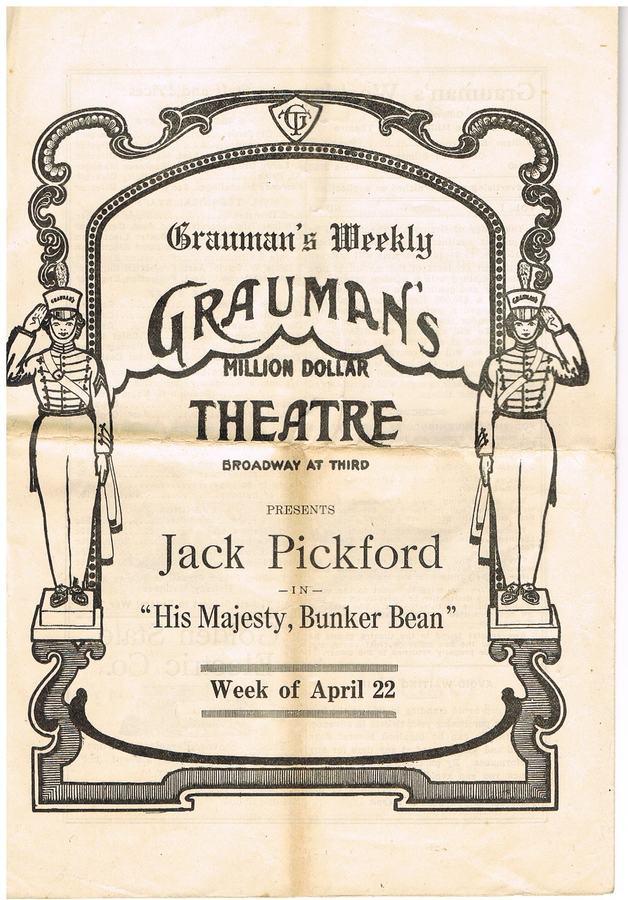
But the film’s pulse resides in Pickford’s eyes: twin black pools reflecting futures that never were. When disillusionment lands—Balthasar exposed as patent-medicine fraud—Pickford doesn’t deflate; he steadies, like a man learning the tightrope was on the ground all along. The performance anticipates James Stewart’s thawing naïveté in Capra’s universe, albeit baked in flapper-era fatalism.
Writers Julia Crawford Ivers and Wilson refuse to let Huff’s flapper merely decorative. She engineers the final moral pivot, slipping Bean a note that reads: “Rule yourself, or the world will do it for you—signed, Your Faithful Subject.” The line, half jest-half gauntlet, repositions her from object to co-author of destiny. For 1925, such agency glints like a switchblade in a satin purse.
Only two incomplete 35 mm negatives are known: one at MoMA, decomposing quietly; another in a Parisian cellar, water-stung but salvageable. A 4K restoration toured festivals in 2022 under a live-score by the Alloy Orchestra—percussion, typewriter, musical saw—turning every tick of Bean’s reawakened ambition into industrial hymn. Streaming rights remain knotted in Pickford estate litigation, yet bootleg rips circulate among cine-clubs, usually traced from a 1990 TCM broadcast. Hunt them while the nitrate gods slumber.
For completists, pair this with Arizona (1918) to chart Louise Huff’s evolution from desert rose to jazz Jezebel. Or double-feature with A Wall Street Tragedy for a diptych on capital’s mirage, though that later film lacks Bean’s feather-light touch.
Because every era gets the bunko it deserves. Ours traffics in algorithmic tarot—personalized ads whispering you’re a main character—while the 1920s had Balthasars peddling pharaohs. His Majesty, Bunker Bean unmasks both shell games, yet retains a stubborn generosity: imagination, even when fraudulent, can solder backbone to jelly. The film ends not on triumph but on a cautious smile, Bean and bride strolling into a skyline half-built by fools and visionaries. No fanfare, just the city humming—a promise that tomorrow’s con is already in rehearsal.
Verdict: Seek it, imperfections and all, for cinema this emotionally transparent rarely slips past the censors of time.
IMDb 5.3
1926
Community
Log in to comment.