DbcultAccessing Vault...
5.9/10
Senior Film Conservator

A definitive 5.9/10 rating for a film that redefined the boundaries of cult cinema. Pied Piper Malone remains a cornerstone of transgressive art.
The year 1924 was a watershed moment for American silent cinema, a period where the medium had fully matured into a sophisticated visual language capable of expressing profound psychological depth. Standing at the intersection of populist entertainment and literary nuance is Pied Piper Malone, a film that serves as a testament to the enduring magnetism of Thomas Meighan and the narrative finesse of Booth Tarkington. Unlike the kinetic thrills of Plunder, which relied on serial excitement, this film opts for a slow-burn exploration of moral fortitude and the fragility of reputation in a small-town microcosm.
The collaboration between Booth Tarkington and Thomas Meighan was nothing short of alchemical. Tarkington, a writer deeply attuned to the rhythms of American life, provided a script that avoided the melodramatic excesses often found in contemporaneous works like The Easiest Way. Instead, we are presented with Jack Malone, a protagonist whose heroism is grounded in quiet resilience rather than grandiosity. Meighan’s performance is a masterclass in subtlety; his face becomes a canvas upon which the agony of false accusation is painted with agonizing clarity. He possesses an everyman quality that makes his descent into pariahdom feel visceral to the viewer.

The narrative arc, centered on the 'Pied Piper' motif, is particularly inspired. It suggests that children possess an innate moral compass that adults, clouded by the 'vicissitudes' of social competition and ego, have long since lost. This theme of juvenile purity vs. adult corruption echoes the tonal gravity seen in international works of the era, such as Die Teufelskirche, though 'Pied Piper Malone' maintains a distinctly American optimism. The children do not just follow Malone; they witness for him, their presence acting as a living shield against the vitriol of the town elders.
Director Alfred E. Adolfi utilizes the coastal setting not merely as a backdrop, but as a dynamic character in its own right. The cinematography captures the stark contrast between the claustrophobic interiors of the town’s gossip-filled parlors and the expansive, liberating horizon of the Atlantic. This visual dichotomy mirrors Malone’s internal struggle: the town represents the suffocating weight of false judgment, while the sea represents the meritocratic arena where a man is judged solely by his skill and character. In this regard, the film shares a spiritual DNA with All at Sea, though it treats its nautical themes with a far more somber reverence.
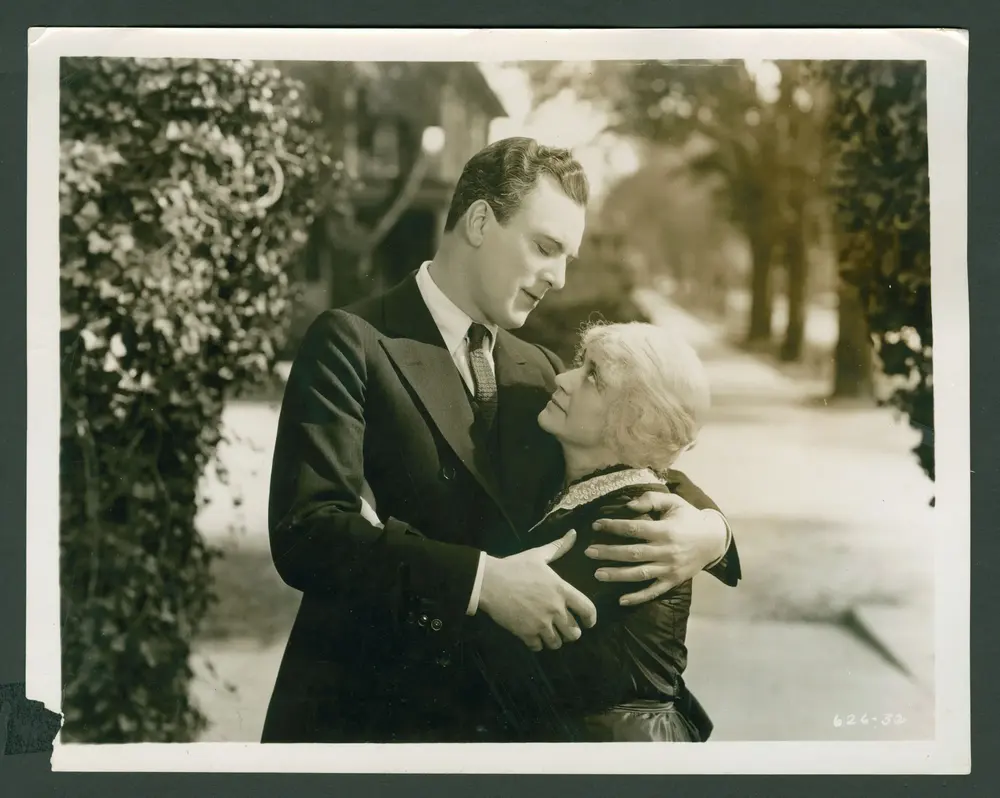
The supporting cast provides a sturdy framework for Meighan’s lead. Lois Wilson, as Patty Thomas, delivers a performance of luminous sincerity. Her loyalty to Malone provides the film's emotional anchor, preventing it from drifting into a purely cynical critique of human nature. The antagonism provided by Cyril Ring as Crosby is appropriately oily; he embodies the petty malice of a man who can only ascend by pulling others down. It is a performance that contrasts sharply with the broader villainy found in The Snarl, opting instead for a more grounded, realistic brand of treachery.
One cannot overlook the social commentary embedded within the plot. The accusation of drunkenness—a career-ending stigma in the maritime world of the 1920s—is handled with a gravity that reflects the era's temperance-inflected anxieties. The film explores how easily a life’s work can be dismantled by a single, well-placed lie. This theme of the 'fallen man' was a popular trope, explored through different lenses in films like The Bar Fly, but 'Pied Piper Malone' elevates the stakes by involving the entire community in the process of shunning. It is a harrowing depiction of 'cancel culture' before the term ever existed.

The sequence where the children rally around Malone is arguably one of the most moving moments in silent cinema. It is staged with a rhythmic grace that justifies the film’s title. As Malone walks through the streets, trailed by a burgeoning parade of youngsters, the visual metaphor of the Pied Piper is inverted. He is not leading them to their doom; they are leading him back to his life. The sheer innocence of their faith in him acts as a corrosive agent against the town's calcified prejudices. This narrative choice elevates the film from a standard drama to a secular parable about truth and the perceptive power of the innocent.
When placed alongside other 1924 releases, the unique texture of 'Pied Piper Malone' becomes even more apparent. While The Vermilion Pencil pushed the boundaries of exoticism and visual flair, and Das Geheimnis der Mumie delved into the burgeoning fascination with archeological mystery, Adolfi’s film remains steadfastly focused on the human heart. It eschews the whimsical escapism of Nancy from Nowhere for a more rugged, salt-of-the-earth realism. Even the pacing feels deliberate, mirroring the steady, rhythmic pulse of the ocean waves.

The film’s climax, involving the purchase of a new ship by Malone’s brothers, serves as a powerful resolution of the familial and professional arcs. It underscores the importance of kinship—a theme also prevalent in A Self-Made Widow, albeit in a vastly different context. In 'Pied Piper Malone', the restoration of the captain and Malone to their rightful place on the sea is not just a personal victory; it is the restoration of the natural order. The ship becomes a vessel of literal and metaphorical redemption, sailing away from the petty squabbles of the shore toward a future defined by agency and truth.
To watch 'Pied Piper Malone' today is to witness a bygone era of storytelling that valued moral clarity and character integrity. It lacks the cynical irony of modern cinema, yet it feels surprisingly relevant in its depiction of how easily public opinion can be manipulated. The film’s reliance on visual storytelling—using light, shadow, and the expressive faces of its cast—reminds us of the unique power of the silent screen. It does not need dialogue to convey the crushing weight of Malone’s despair or the soaring joy of his eventual triumph.

While it may not have the historical political weight of Gira política de Madero y Pino Suárez or the experimental edge of The Sultan of Djazz, its strength lies in its universality. It is a story about the resilience of the human spirit and the redemptive power of love and community. The final images of Malone returning to the sea, Patty waiting on the shore, and the children watching from the docks, create a lasting impression of peace attained through hardship. It is a quintessential piece of American silent film history, deserving of recognition for its sophisticated blend of social drama and maritime adventure.
The technical prowess of the production, from the authentic location shooting to the nuanced editing, ensures that 'Pied Piper Malone' remains more than just a historical curiosity. It is a living, breathing work of art that continues to resonate. Whether compared to the rugged frontier tales like By Indian Post or the romantic struggles of Love's Battle, this film carves out its own unique space in the cinematic landscape. It is a poignant reminder that while reputations may be fragile, the truth, once brought to light, is as vast and enduring as the sea itself. The film stands as a beacon of silent era excellence, anchored by Meighan's iconic presence and Tarkington's literary soul.
In the final analysis, the film’s brilliance lies in its restraint. It avoids the easy path of explosive confrontation, opting instead for a resolution that feels earned and authentic. The vindication of Jack Malone is not just a victory for the character, but a victory for the audience’s faith in justice. It is this emotional resonance that has allowed the film to endure, much like the delicate shimmer of Broken Bubbles, capturing a fleeting but profound truth about the human condition. 'Pied Piper Malone' is, and shall remain, a cornerstone of 1920s narrative cinema.

IMDb 6.8
1935
Community
Log in to comment.