DbcultAccessing Vault...
Cult Review
Senior Film Conservator
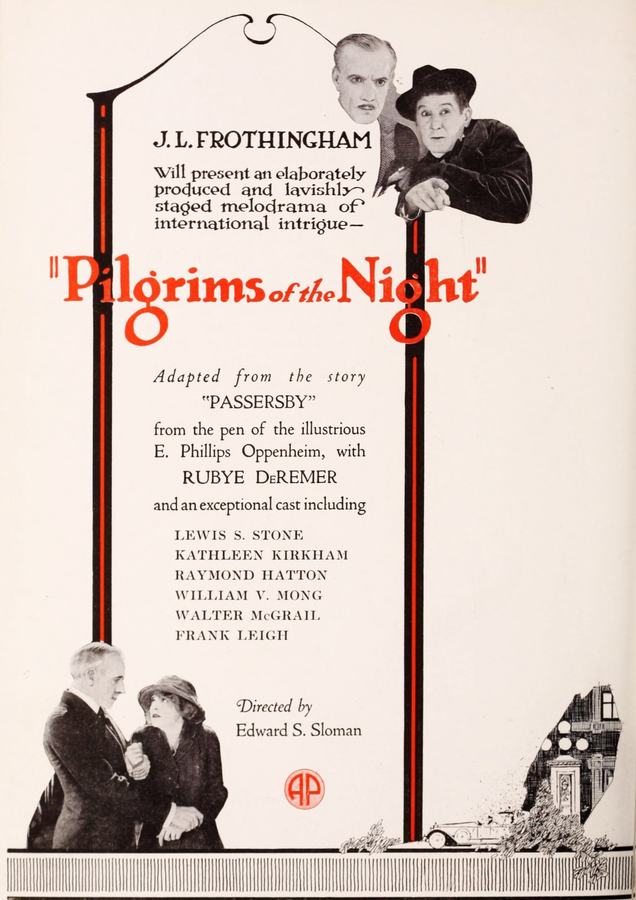
Pilgrims of the Night
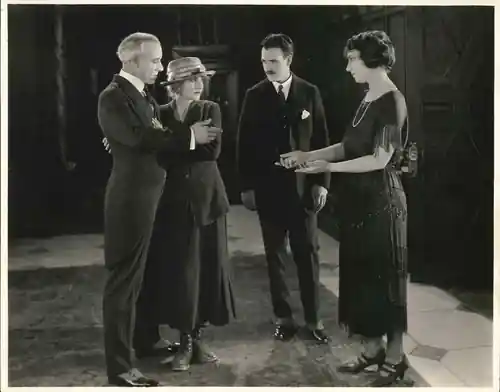
is a film that thrives in the interstices of moral ambiguity, where every character’s decision ripples through a sea of unintended consequences. Set against the decaying splendor of pre-war Europe, the story unfolds as a labyrinthine tale of familial betrayal, criminal enterprise, and the corrosive effects of class privilege.Philip Champion (Frank Leigh), the disgraced heir to a crumbling British earldom, is the film’s reluctant antihero—a man whose actions, while often morally questionable, are driven by a desperate need to reclaim his dignity in a world that has already cast him aside. His alliance with Marcel (Raymond Hatton), a charismatic yet ruthless gambler, is both a pragmatic alliance and a Faustian pact. Marcel’s gambling salons, which double as hubs for a criminal syndicate, become the stage for a series of escalating deceptions that blur the line between survival and complicity. The film’s early acts are a masterclass in tension-building, with Sloman and Oppenheim crafting a narrative where even the most mundane interactions are laced with subtext.
Christine Champion (Kathleen Kirkham), the daughter caught in the crossfire of her father’s misfortunes, is the emotional core of the film. Her journey from a sheltered heiress to a vengeful avenger is rendered with harrowing nuance. The revelation that Marcel, whom she mistakenly believes to be her father, is actually a criminal mastermind, is handled with a deftness that avoids melodramatic histrionics. Her decision to pursue Philip Champion—a man she holds responsible for her mother’s death—becomes a cathartic exploration of identity, as she grapples with the realization that her father’s flaws are inextricably tied to her own.
The film’s second act pivots on the enigmatic figure of Ambrose (Lewis Stone), the hunchbacked street musician who serves as both a red herring and a moral compass. Ambrose’s role is a masterstroke of narrative misdirection; his initial framing as a villain is subverted in a way that challenges the audience’s assumptions about justice and retribution. His death, orchestrated by the very forces he sought to dismantle, is a tragic coda that underscores the film’s central thesis: in a world governed by greed and self-preservation, even the most noble intentions are doomed to futility.
Gilbert Hannaway (Walter McGrail), the amateur criminologist who becomes Christine’s unlikely confidant, adds a layer of intellectual heft to the proceedings. His monologues on the psychology of crime are delivered with a dry wit that contrasts sharply with the film’s darker themes. Hannaway’s relationship with Christine evolves from mentorship to romantic entanglement, a transition that feels organic despite the film’s brevity. His character’s arc—marked by a gradual disillusionment with his own theories—mirrors the broader narrative’s critique of rationalism in the face of human frailty.
Visually,
Pilgrims of the Night
is a feast of shadows and chiaroscuro lighting, with cinematographer (uncredited) using light as a metaphor for moral clarity. The Parisian underworld is rendered in stark contrasts, with Marcel’s gambling salons bathed in the lurid glow of chandeliers that double as symbols of ill-gotten wealth. The film’s most iconic sequence—a tense confrontation in a dimly lit alley—uses rain and fog to create an atmosphere of claustrophobic dread, a technique that would later influence the visual language of noir.The film’s score, though largely unremembered in the annals of film history, deserves mention for its ability to amplify the emotional stakes. The recurring motif of Ambrose’s street music—a haunting melody played on a battered accordion—serves as a thematic leitmotif for the film’s undercurrent of melancholy. In one particularly poignant scene, the melody is heard as Christine walks through a moonlit cemetery, the dissonant notes echoing her internal turmoil.
If there is a flaw in
Pilgrims of the Night
, it lies in its pacing. The film’s final act, while thematically rich, feels slightly rushed, with key revelations delivered in a manner that prioritizes narrative resolution over emotional resonance. The inclusion of a monkey retrieving stolen funds from a street organ—a moment of absurdity that borders on slapstick—is a tonal misstep, though it can be read as a darkly comic commentary on the randomness of fate.In the pantheon of pre-war British cinema,
Pilgrims of the Night
Pilgrims of the Night
distinguishes itself through its unflinching portrayal of moral ambiguity.Ultimately,
Pilgrims of the Night
is a film that rewards repeat viewings. Its intricate plot, rich characterizations, and visual poetry make it a hidden gem of 1930s cinema. While it may not have achieved the enduring popularity of Her Strange Wedding, its thematic depth and narrative daring ensure its place as a cult classic among cinephiles who appreciate the interplay of shadow and revelation. The film’s legacy is further cemented by the performances of its leads, who infuse their roles with a complexity that transcends the limitations of their source material.In an era where moral certainty is increasingly elusive,
Pilgrims of the Night
serves as a cautionary tale about the perils of hubris and the redemptive power of self-awareness. Its exploration of familial bonds and the corrosive effects of secrecy remains as relevant today as it was when the film was first released. Though the monkey’s climactic retrieval of the stolen funds may seem anachronistic, it is a fittingly absurd conclusion to a story that treats fate as both a puppeteer and a jester. For those willing to navigate its labyrinthine plot, the film offers a rewarding journey into the darker recesses of the human condition.
IMDb 5.2
1935
Community
Log in to comment.