DbcultAccessing Vault...
Cult Review
Senior Film Conservator
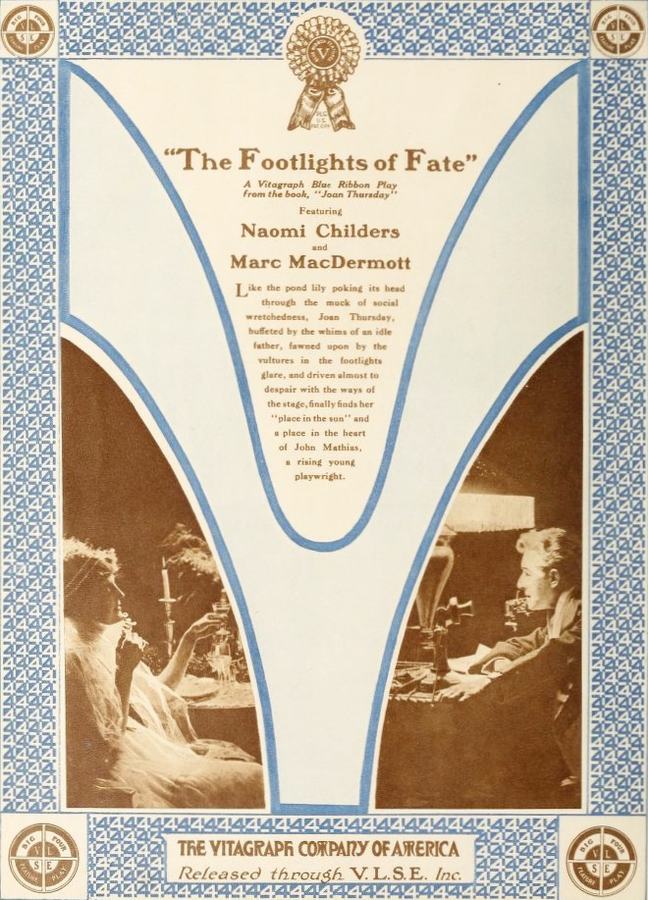
Stepping into the flickering glow of The Footlights of Fate, one is immediately enveloped by the potent melodrama that defined an era. This isn't merely a silent film; it's a raw, pulsating dissection of human ambition, the capricious nature of desire, and the often-fatal consequences of moral compromise. It unspools a narrative as intricate as it is emotionally charged, a testament to the storytelling prowess of Frederick H. James and Louis Joseph Vance, whose script, even in its silent manifestation, speaks volumes through its meticulously crafted plot points and character arcs.
At its heart lies Joan Thursday, portrayed with a compelling blend of innocence and burgeoning resilience by Carolyn Birch. Her journey begins in the crucible of urban destitution, where virtue is a luxury she can ill afford. Her refusal to capitulate to the lecherous demands of a floorwalker costs her not just her job, but also her place in a home made unbearable by her father's chronic inebriation and gambling addiction. This initial expulsion is a foundational trauma, an inciting incident that propels Joan towards the intoxicating allure of the stage, a world she perceives as a sanctuary, a realm where talent might transcend circumstance. It's a classic silent film trope, the innocent driven to the glittering, yet dangerous, world of performance, reminiscent of the societal critiques found in films like The Price of Vanity, where the allure of upward mobility often masks a darker underbelly.
Joan's initial isolation is profound, her trusted friends conspicuously absent. It is in this void that she encounters John Matthias, played with a nuanced earnestness by Templar Saxe. Matthias, a playwright of promising talent, shares her boarding house, and their nascent connection forms the first tentative threads of a complex romantic tapestry. Yet, Matthias himself is entangled. His affections are ostensibly pledged to Venetia Tankerville (Naomi Childers), a woman of considerable wealth. His internal conflict, a struggle between genuine affection and a principled aversion to her fortune, adds a layer of psychological depth to his character. When Venetia, with a knowing grace, engineers his proposal, he succumbs, and their engagement is swiftly sealed, validated by the well-wishes of Helena (Katharine Lewis). This initial romantic entanglement, seemingly stable, serves as a delicate prelude to the maelstrom of emotions and betrayals that will soon engulf them all.
The theatrical world, Joan's new aspiration, is introduced through the formidable figure of Marbridge, a silent partner in a theatrical enterprise, brought to life with a menacing charm by Marc McDermott. His professional life is inextricably linked to his personal one, as his mistress, Nella (Josephine Earle), is also his leading lady. Marbridge's acceptance of Matthias's play marks a pivotal turning point, offering both playwright and the aspiring Joan a foot in the door. Matthias, ever mindful of Joan, secures a small part for her, a gesture of kindness that unwittingly sets the stage for a cascade of catastrophic events. This intertwining of professional opportunity with personal entanglement is a recurring motif in silent-era melodramas, often leading to moral quandaries, much like the intricate social webs explored in The Masqueraders.
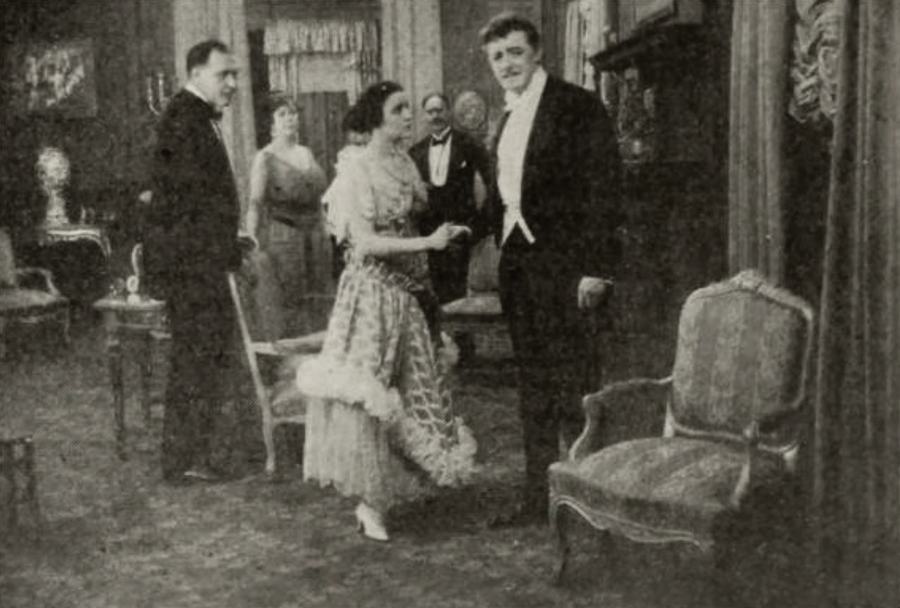
However, the narrative takes a sharp, unexpected turn. Matthias, having secured Joan a foothold in the theatrical world, finds himself increasingly drawn to her. The initial, perhaps superficial, attraction blossoms into a profound fascination, leading him to abandon his engagement to Venetia and propose to Joan. Her acceptance and their subsequent elopement represent a dramatic shift in allegiances, a testament to the potent, often irrational, forces of attraction. This sudden pivot in Matthias's affections, while seemingly romantic, also hints at a certain impulsiveness, a susceptibility to immediate charm that undermines his earlier, more principled stance.
Parallel to this, Marbridge, the calculating impresario, executes his own audacious scheme. Driven by pure avarice, he elopes with Venetia, not for love, but for her considerable fortune. This dual elopement sets up a deliciously dramatic collision, a moment of high tension upon the return of the two couples. Marbridge's encounter with the newly wedded Joan is fraught with unsettling admiration. His overt, almost possessive, appreciation of her beauty is a public affront, causing palpable embarrassment to Matthias, Venetia, and her father, Tankerville (Robert Whitworth). This scene is a masterclass in silent film's ability to convey complex emotions through gestures and expressions, laying bare the raw power dynamics at play.
Marbridge, now thoroughly captivated by Joan, wastes no time in leveraging his influence. He strips her of her minor role, only to bestow upon her a more significant one, a move transparently designed to keep her within his orbit and under his thrall. This manipulation of professional opportunity for personal gain is a chilling illustration of the corrupting power of the theatrical world, where talent can become a commodity, and vulnerability an invitation for exploitation. Joan, perhaps naive or simply desperate for success, accepts, unwittingly drawing herself deeper into Marbridge's dangerous game. This particular plot device, where a character's career is manipulated by powerful figures, echoes the struggles for agency seen in many silent dramas, where external forces often dictate personal destinies.
The night of the play's premiere, a moment that should signify triumph, instead descends into tragedy. Marbridge, ever the predator, meets Joan and escorts her to his apartment, a space meticulously prepared for seduction. The scene, though silent, pulses with an insidious tension, the audience acutely aware of the imminent danger. This is where Nella, Marbridge's spurned mistress and leading lady, enters the fray. Her mounting suspicion, fueled by jealousy and a visceral sense of betrayal, drives her to follow them. The discovery of Joan in Marbridge's arms ignites a primal fury within Nella, a raw, unbridled emotion that erupts in a fatal act. Josephine Earle's portrayal of Nella's escalating jealousy and eventual violent outburst must have been a tour de force, conveying the devastating power of unrequited or betrayed love, a theme explored with similar intensity in films like Conscience.
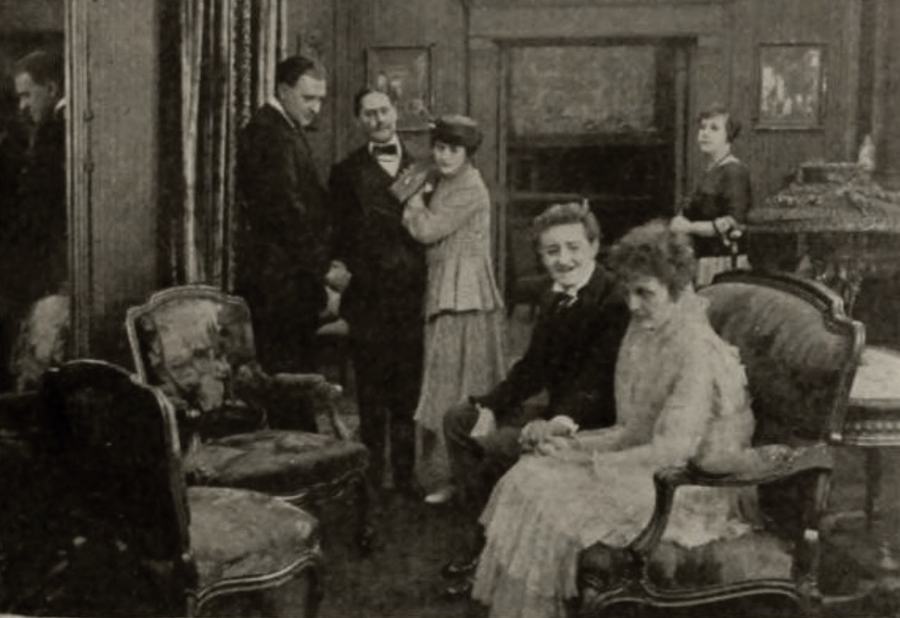
The subsequent moments are a blur of frantic chaos. Nella, realizing the enormity of her action, is overcome by hysterical regret, desperately, futilely, attempting to undo what is done. Marbridge's valet, a silent witness to the unfolding horror, intervenes, taking Nella away and, incredibly, managing to revive Marbridge, if only for a fleeting moment. In his dying breaths, Marbridge, with a final, chilling assertion of control, makes a series of pronouncements. He contacts Matthias, entrusting Joan and Venetia to his care, a perverse act of bequeathal that binds them together even in death. Nella, the instrument of his demise, is placed in the care of Arlington (William Shea), his business partner. And then, Marbridge succumbs, leaving behind a tangled web of lives irrevocably altered by his machinations and Nella's desperate act. The sheer melodrama of this conclusion, with its rapid succession of events and dramatic pronouncements, is characteristic of the period, aiming for maximum emotional impact.
The Footlights of Fate is a compelling example of silent cinema's ability to craft narratives of profound human struggle and moral complexity. The performances, particularly Carolyn Birch's Joan, who navigates a treacherous landscape with a compelling blend of vulnerability and nascent strength, are central to its lasting power. Templar Saxe's Matthias, initially idealistic, then swayed by new affections, embodies the shifting moral compass of the era's protagonists. But it is perhaps Marc McDermott's Marbridge, a character of unvarnished ambition and predatory charm, who serves as the film's true antagonist, driving much of the tragic action. His demise, though violent, feels like an inevitable consequence of his unchecked desires and manipulations, a karmic retribution that often characterized the moralizing narratives of the time.
The film's thematic richness extends beyond individual character arcs. It delves into the inherent dangers of the theatrical world, presenting it not just as a stage for dreams, but as a crucible where innocence is tested, and morals are often sacrificed at the altar of ambition. The contrast between Joan's initial purity and the corrupting influences she encounters is stark, highlighting societal anxieties about women entering public life and the perils they faced. The complex web of romantic entanglements and betrayals, where love is intertwined with wealth, power, and jealousy, paints a cynical, yet perhaps realistic, portrait of human relationships. This exploration of social anxieties and the precariousness of virtue aligns with other melodramas of the period, such as Souls in Bondage, which often depicted the moral struggles of individuals against societal pressures.
From a cinematic perspective, one can only imagine the evocative power of its visual storytelling. Silent films relied heavily on expressive acting, dramatic staging, and the judicious use of intertitles to convey dialogue and internal monologues. The rapid shifts in character allegiances, the dramatic confrontations, and the climactic violence would have been rendered with heightened realism through the exaggerated yet potent acting styles of the era. The use of close-ups to capture the raw emotions of Josephine Earle's Nella in her jealous rage, or Carolyn Birch's Joan in her moments of fear and determination, would have been particularly impactful, allowing the audience to connect deeply with the characters' internal worlds. The film's title itself, The Footlights of Fate, suggests a deterministic worldview, where characters are propelled by forces beyond their control, performing their roles on a stage set by destiny. This fatalistic undertone adds another layer of tragic resonance to the narrative.
In conclusion, The Footlights of Fate stands as a compelling artifact of early cinema, a rich tapestry woven with threads of ambition, love, betrayal, and ultimately, tragedy. It's a film that, even in synopsis, speaks to the enduring power of human drama, reminding us that the struggles for agency, affection, and survival are timeless. The combined talents of the writers and the dedicated performances of Carolyn Birch, Naomi Childers, Templar Saxe, Josephine Earle, Robert Whitworth, Katharine Lewis, Jack Bulger, Marc McDermott, and William Shea coalesce to create a narrative that, despite its silent medium, resonates with a profound emotionality. It's a powerful reminder of the foundational narratives that shaped cinematic storytelling, a dramatic tour de force that continues to captivate with its intricate plot and timeless themes of human folly and fate. Its intricate web of relationships and fatal consequences solidifies its place as a significant melodrama of its era, a precursor to the complex character studies that would define later cinematic periods. This film, like many of its contemporaries such as The Rosary or What Happened to Mary, captures the essence of a particular time in film history while exploring universal human experiences.

IMDb —
1932
Community
Log in to comment.