DbcultAccessing Vault...
Cult Review
Senior Film Conservator
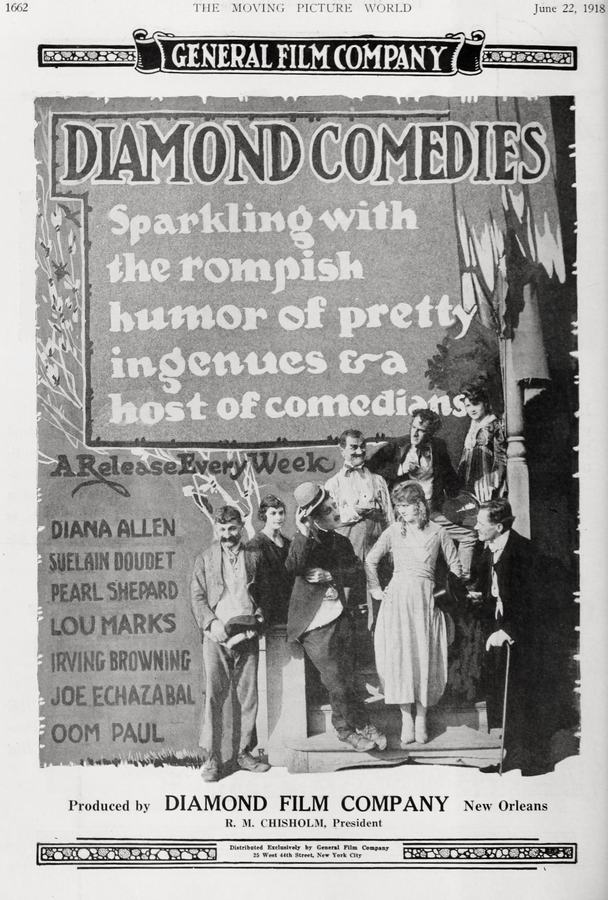
To witness His Matrimonial Moans is to step into a bygone architecture of humor, where the 'gay dog'—a term once synonymous with the roguish man-about-town—reigned supreme. This film, a frantic exploration of the matrimonial industrial complex of the early 20th century, serves as a fascinating specimen of the short-form comedy. Unlike the sprawling narratives found in The Beloved Vagabond, which sought a more lyrical approach to the wanderer archetype, this film leans heavily into the kinetic energy of the urban farce. The protagonist, portrayed with a certain rubber-faced desperation by Irving Browning, finds himself ensnared in the machinations of a matrimonial agency proprietor whose business model seems predicated on the sheer volume of romantic chaos.
The film doesn't merely present a plot; it presents a social choreography. The 'pretty girls' mentioned in the original logline are not merely decorative elements but are deployed as a kaleidoscope of hurdles for our protagonist. In the rigid social strata of the time, the matrimonial agency was a bridge between classes and desires, a theme also touched upon, albeit with more gravitas, in The Woman in the Case. Here, however, the gravity is replaced by the levity of the chase. The proprietor of the agency acts as a puppet master, orchestrating meetings that inevitably descend into slapstick turmoil.
Irving Browning’s performance is a masterclass in the physicality required of silent comedians. There is a specific cadence to his movements—a mixture of high-society preening and low-brow panic. When compared to the more stoic protagonists of The King's Game, Browning represents the everyman pushed to the brink of absurdity. His interactions with the cast, particularly Diana Allen and Pearl Shepard, highlight a dynamic where the male ego is constantly being punctured by the sheer unpredictability of the female ensemble. The 'clever children' mentioned in the billing serve as the ultimate agents of chaos, often acting as the moral compass or the comedic foil that exposes the protagonist's pretenses.
The use of children in these comedies often mirrored the vaudevillian traditions of the era. They weren't just background noise; they were catalysts. In His Matrimonial Moans, their precociousness provides a sharp contrast to the bumbling adult world of marriage and money. This juxtaposition is a recurring motif in silent shorts, where the innocence of youth is often used to highlight the artifice of adult social rituals. It’s a far cry from the gritty realism of Dope, yet it shares a common thread of exposing the undercurrents of societal expectations.
In the broader landscape of 1910s and 20s cinema, His Matrimonial Moans occupies a space between the high-octane stunts of Keaton and the domestic comedies of the era. If The Golden Idiot explored the folly of wealth, Browning’s film explores the folly of the heart—or perhaps the folly of the libido. The matrimonial agency proprietor is a character type that reappears throughout film history, representing the commercialization of intimacy. This theme is handled with a light touch here, avoiding the melodrama found in Der Ruf der Liebe, but the satirical edge remains sharp.
"The film functions as a rhythmic sequence of disillusionment, where every 'moan' of the protagonist is a testament to the hilariously impossible standards of the matrimonial market."
Technically, the film utilizes standard flat lighting and proscenium-style framing, typical of mid-tier silent comedies. However, the editing—likely overseen by a director with a keen sense of timing—keeps the viewer engaged. There is a palpable sense of movement, a 'moan' that resonates through the celluloid as the protagonist is shuttled from one disastrous encounter to the next. The inclusion of Oom Paul and Joe Echazabal adds a layer of character-actor depth that grounds the more ethereal presence of the leading ladies. Unlike the isolationist themes of The Island of Surprise, this film is claustrophobically social, thriving on the friction of crowded rooms and overlapping intentions.
The concept of the matrimonial agency in His Matrimonial Moans serves as a precursor to modern dating apps, albeit with more physical comedy and fewer algorithms. The proprietor is an entrepreneur of hope, selling a version of domestic bliss that the protagonist is clearly ill-equipped to handle. This exploration of the 'marriage market' is a theme that resonates even in more dramatic works like Daughter of Maryland or The Footlights of Fate. In the comedic realm, however, the stakes are lowered, allowing the audience to laugh at the transactional nature of these relationships without the burden of tragic consequences.
The 'pretty girls' are presented as a collective force of nature—a phalanx of beauty that the protagonist must navigate. This trope, while dated by modern standards, provides a fascinating look at the gender dynamics of the time. The women are often more composed and strategically minded than the 'gay dog' himself, who is frequently reduced to a state of sputtering confusion. This inversion of the power dynamic is a key element of the film's success. It isn't just about a man looking for a wife; it's about a man realizing he is completely outmatched by the very system he sought to exploit. This sentiment is echoed in the thematic struggles of The Little Duchess, where social navigation is a matter of survival.
Visually, the film relies on the expressive faces of its cast. Suelain Doudet and Lou Marks provide excellent support, their reactions often serving as the 'punctuation' for Browning's broader movements. While it lacks the sweeping vistas of Riders of the Purple Sage, it compensates with a densely packed mise-en-scène that captures the clutter of a 1920s office and the frantic energy of a matrimonial clearinghouse. The 'moans' of the title are both literal and metaphorical, representing the protagonist's vocalized (via title cards) and physicalized frustration with his lot in life.
In comparing this work to The Wager, one sees a similar fascination with the consequences of impulsive decisions. However, His Matrimonial Moans remains firmly rooted in the comedic tradition, refusing to allow its protagonist any real moment of pathos. He is a caricature of desire, a vessel for the audience's own anxieties about the complexities of romance. Even in the more serious Die Doppelnatur, the duality of human nature is explored through drama; here, the 'double nature' of the protagonist—part gentleman, part buffoon—is the primary source of the humor.
Ultimately, His Matrimonial Moans is a delightful, if chaotic, artifact of early cinema. It captures a moment when the world was rapidly changing, and the old rules of courtship were being rewritten by the forces of commerce and comedy. It stands alongside films like Fighting Back as a testament to the resilience of the human spirit in the face of overwhelming absurdity. For the modern viewer, it offers a window into a world where a 'gay dog' could still find himself lost in a sea of matrimonial possibilities, moaning all the way to the altar.
Critic's Verdict: A frantic, fascinating relic of early 20th-century farce that remains surprisingly relatable in its depiction of the romantic hustle.
IMDb 7
1926
Community
Log in to comment.