DbcultAccessing Vault...
Cult Review
Senior Film Conservator
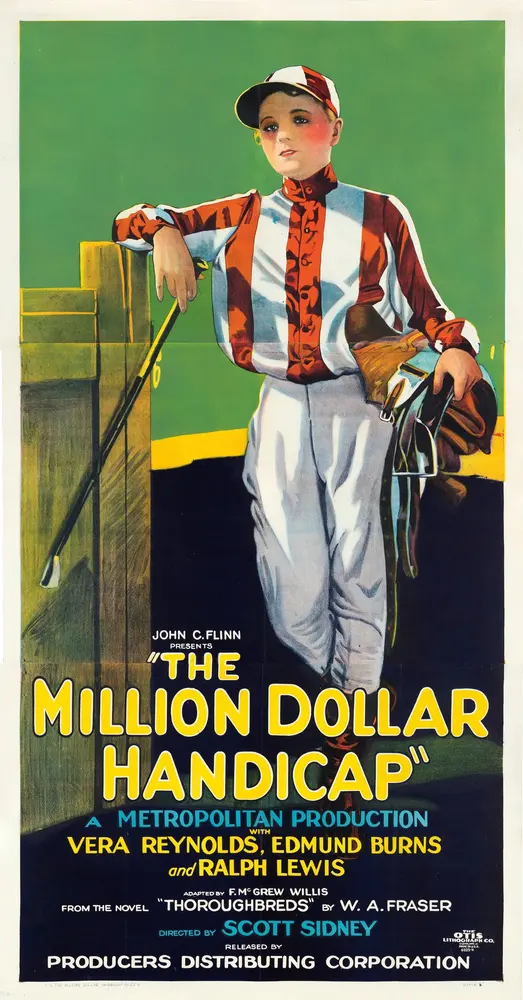
Is The Million Dollar Handicap worth watching today? Short answer: yes, but with significant caveats that demand a certain appreciation for the nuances of early silent cinema. This 1926 melodrama, steeped in the grand traditions of its era, offers a fascinating window into a bygone form of storytelling, yet it’s undeniably a product of its time, complete with pacing that might challenge modern sensibilities.
This film is tailor-made for silent film enthusiasts, those with a keen interest in historical cinematic techniques, and anyone fascinated by early 20th-century melodramas that often hinged on themes of family honor, sacrifice, and unexpected heroism. However, it is decidedly not for viewers seeking rapid-fire pacing, subtle character development, or high-fidelity visual effects. If your cinematic diet consists solely of contemporary blockbusters, this will feel like a journey to an alien land.
To truly engage with The Million Dollar Handicap, one must first adjust their expectations. This is not a film designed for casual background viewing. It demands attention, not just to the intertitles that convey dialogue and exposition, but to the exaggerated gestures, the dramatic lighting, and the often-slow build-up of tension that were hallmarks of the silent era. For those willing to make that adjustment, there are genuine rewards.
The film’s central narrative, while undeniably melodramatic, possesses an earnest charm. It’s a story of a family pushed to the brink, saved by the improbable courage of its daughter. The sheer audacity of Alis (Vera Reynolds) donning a male disguise to ride her horse to victory is a powerful, if somewhat simplistic, symbol of female agency in a patriarchal world. This moment, despite its inherent contrivance, resonates with a surprising force.
However, the journey to this triumphant climax is often fraught with narrative detours and a pacing that can feel glacial. The film struggles to maintain consistent emotional engagement, with some sequences stretching beyond their dramatic utility. It works. But it’s flawed.
This film works because of its unwavering commitment to its melodramatic heart, particularly in the climactic race and Alis’s transformative arc.
This film fails because of its inconsistent pacing and the underdeveloped nature of several key supporting characters who feel more like plot devices than fully realized individuals.
You should watch it if you appreciate the historical context of silent cinema, enjoy a good old-fashioned tale of redemption and sacrifice, and are patient with the storytelling conventions of the 1920s.
The plot of The Million Dollar Handicap unfolds with a series of escalating misfortunes, a common narrative device in silent-era melodramas designed to wring maximum emotional impact from the audience. John Porter (Clarence Burton), a Southern horse breeder, makes what he believes is a shrewd investment in a promising filly, Dixie. The initial excitement over Dixie’s prowess, however, is quickly dampened by the discovery that the horse was doped for her strong showing. This early moral quandary sets a tone of underlying deception and struggle.
The film then escalates the stakes dramatically. Porter suffers a crippling fall from a horse, leaving him paralyzed and his family’s finances in dire straits. This turn of events pushes his son, Alan (Ralph Emerson), into a desperate act: embezzling funds from the bank. It's a classic setup for moral compromise and familial burden, echoing themes found in contemporary films like The Invisible Bond or Moth and Rust, where characters grapple with societal pressures and personal failings.
The subsequent sacrifice of George Mortimer (Lon Poff), Alan's sister Alis's love interest, who takes the blame for the embezzlement, adds another layer of tragic nobility. This selfless act, while a convenient plot device, speaks to the era’s idealized notions of chivalry and honor. It's a narrative beat that, while predictable, serves to amplify the family's despair and highlight the moral rot threatening to consume them.
The heart of the story, and arguably its most compelling element, lies with Alis (Vera Reynolds). Her transformation from a seemingly passive figure to a determined heroine is the film’s strongest arc. The decision to disguise herself as a boy to ride Dixie in the climactic race is a potent symbol. It's not just about winning money; it's about reclaiming agency, defying gender expectations of the time, and literally riding to the rescue of her family’s honor and financial stability. This narrative choice, while a common trope in silent cinema, provides a powerful and surprisingly modern undercurrent of female empowerment, albeit one wrapped in the necessity of subterfuge.
The film’s thematic explorations are fairly straightforward: the corrupting influence of greed, the resilience of family, and the power of individual sacrifice. What makes it interesting is how these themes are conveyed through the visual language and exaggerated performances inherent to silent film. The melodrama is not just a style; it's the very fabric of the story, with every emotional beat amplified for maximum impact.
In silent cinema, acting is a delicate balance of pantomime, facial expression, and body language, all magnified to convey emotion without spoken dialogue. The cast of The Million Dollar Handicap delivers performances that are, for the most part, in keeping with the conventions of the era, though some stand out more than others.
Vera Reynolds as Alis is undoubtedly the film’s anchor. Her performance, particularly in the latter half, carries the emotional weight of the narrative. Reynolds possesses a natural screen presence, conveying Alis’s initial distress with wide-eyed vulnerability, which then hardens into steely resolve as she prepares for the race. Her transformation, both physical and emotional, is palpable, making her the most relatable and dynamic character on screen. The scene where she first tries on her male jockey disguise is a quiet moment of revelation, hinting at the courage she’s about to unleash.
Clarence Burton, as the patriarch John Porter, effectively portrays a man stripped of his power and agency. His expressions of pain and despair, particularly after his paralyzing fall, are convincing and elicit genuine sympathy. While his role is largely reactive, Burton manages to convey the immense burden his character feels, contributing significantly to the film’s foundational tragedy.
Ralph Emerson as Alan, the son who succumbs to embezzlement, struggles to fully embody the internal conflict his character should possess. His portrayal often veers into generic villainy rather than the nuanced desperation of a good man making a bad choice. This makes his redemption, when it comes, feel less earned and more a narrative inevitability. It's a common failing in silent films where character depth was often sacrificed for plot momentum.
Lon Poff, as George Mortimer, the self-sacrificing suitor, delivers a performance that is earnest and appropriately noble. His willingness to take the fall for Alan’s crime is conveyed with a quiet dignity, making him a sympathetic figure, if a somewhat one-dimensional one. The supporting cast, including Rosa Gore and Ralph Lewis, fills out the world with various archetypes—the concerned family friend, the stern bank manager—each contributing to the overall tapestry of the melodrama without necessarily leaving a lasting impression.
Overall, the performances are exactly what one would expect from a 1926 production: broad, expressive, and designed to communicate emotion without dialogue. Reynolds, in particular, elevates the material, making Alis’s journey feel genuinely compelling amidst the more conventional portrayals.
F. McGrew Willis, in the director's chair, crafts a film that is visually competent for its era, though it rarely ventures into truly innovative territory. The direction is straightforward, prioritizing clear storytelling and dramatic impact over stylistic flourishes. Willis understands the power of close-ups to convey emotion, often relying on them during moments of high drama or revelation, such as Alis’s resolve before the race or John Porter’s anguish.
The cinematography, while not groundbreaking, effectively captures the mood and setting. The Southern backdrop, presumably evoked through set design and perhaps some outdoor location shooting, contributes to the film’s atmosphere. There’s a certain grit to the horse racing sequences, even if the editing can sometimes feel rudimentary by today's standards. The camera work during these scenes attempts to convey speed and excitement, often employing dynamic angles and quick cuts—for the time—to immerse the audience in the thrill of the track. One particularly effective sequence involves the juxtaposition of Alis’s determined face with the thundering hooves, building a palpable sense of anticipation.
Lighting plays a crucial role in silent film, and here it is used to emphasize emotional states. Shadows are employed to suggest despair or moral ambiguity, while brighter, more open lighting accompanies moments of hope or triumph. For instance, the dimly lit scenes of Alan’s embezzlement contrast sharply with the sun-drenched victory at the race track, visually reinforcing the narrative’s moral trajectory.
The film’s visual storytelling relies heavily on intertitles, which are integrated seamlessly to provide dialogue, exposition, and emotional context. While some modern viewers might find the constant interruptions jarring, they were an essential component of silent film narrative, and Willis uses them effectively to propel the plot forward and clarify character motivations. Compared to more experimental films of the period, such as The Salvation Hunters, The Million Dollar Handicap adheres to a more conventional, accessible visual grammar.
Pacing is perhaps the most significant hurdle for a contemporary audience approaching The Million Dollar Handicap. Silent films operate on a different temporal logic. Without spoken dialogue, scenes often linger longer, allowing actors’ expressions and gestures to fully register. This can lead to moments that feel drawn out, particularly in the film’s expositional segments. The initial setup of John Porter’s family and their financial woes, while necessary, takes its time to unfold, testing the patience of viewers accustomed to more immediate narrative gratification.
However, when the film hits its stride, particularly in the second half leading up to the climactic race, the pacing tightens considerably. The sequence involving Alis’s preparations, her disguise, and the race itself is genuinely engaging. The stakes are clear, and the visual storytelling, combined with the dramatic intertitles, creates a thrilling sense of urgency. This shift in tempo highlights the film’s strengths, proving that even within the constraints of silent cinema, effective tension could be built.
The tone of The Million Dollar Handicap is unashamedly melodramatic. Every emotion is heightened, every setback is catastrophic, and every triumph is exhilarating. This isn’t a flaw; it’s a defining characteristic of the genre and the era. The film embraces its dramatic excesses, from the paralyzing injury of the patriarch to the son’s desperate crime and the daughter’s heroic gamble. There’s an earnestness to this melodrama that, when viewed through the appropriate historical lens, becomes quite charming.
There’s also a strong undercurrent of moralizing, common in films of the 1920s. The consequences of dishonesty (the doped horse, the embezzlement) are clearly laid out, as are the rewards of courage and selflessness. This moral clarity, while perhaps simplistic, provides a solid framework for the narrative, ensuring that the audience understands the good and evil at play. It’s a film that believes in clear heroes and villains, even if the lines occasionally blur for characters like Alan.
The Million Dollar Handicap is not a forgotten masterpiece, nor is it a cinematic revolution. It is, however, a thoroughly engaging example of silent-era melodrama that, despite its flaws, offers genuine entertainment and valuable historical insight. Its unwavering commitment to its dramatic premise, coupled with Vera Reynolds's spirited performance, makes it a worthwhile watch for those willing to meet it on its own terms.
While its pacing demands patience and some characterizations feel thin, the film’s central narrative of redemption, sacrifice, and the unexpected strength of a young woman transcends its era. The climax, in particular, is a testament to the power of visual storytelling, proving that even without a single spoken word, a film can deliver a thrilling and emotionally resonant experience. It’s a solid entry in the annals of silent cinema, a compelling argument for its enduring appeal, and a testament to the power of a good horse race.
IMDb 6.8
1919
Community
Log in to comment.