DbcultAccessing Vault...
5.9/10
Senior Film Conservator
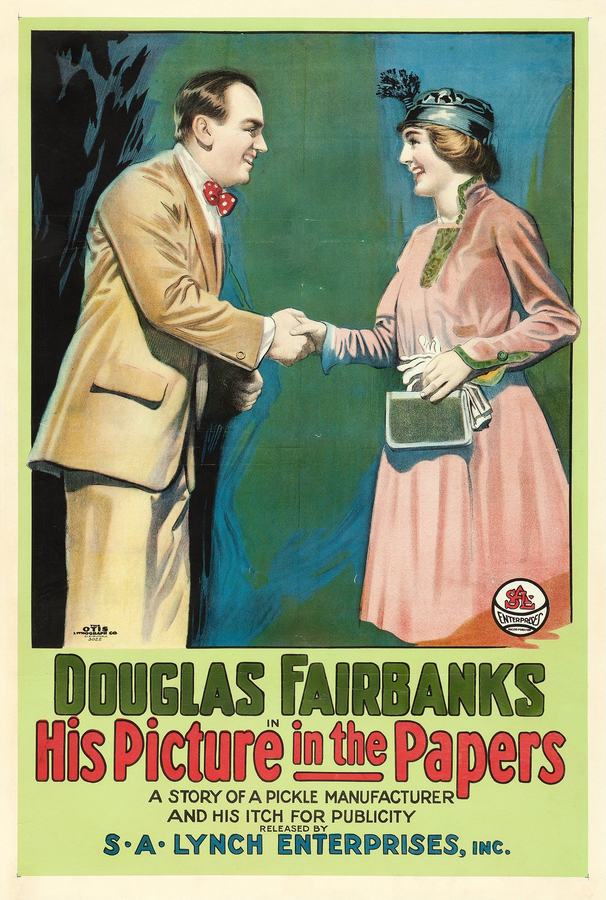
A definitive 5.9/10 rating for a film that redefined the boundaries of cult cinema. His Picture in the Papers remains a cornerstone of transgressive art.
In the annals of early cinema, few figures cast a shadow as vibrant and enduring as Douglas Fairbanks. His magnetic screen presence, characterized by an astonishing athleticism and an infectious, boyish charm, defined an era of swashbuckling heroes and daring romantics. Yet, before he became the iconic Zorro or Robin Hood, Fairbanks honed his craft in a series of sophisticated comedies, often penned by the brilliant Anita Loos and directed by John Emerson. Among these delightful early works stands His Picture in the Papers (1916), a film that, even a century later, offers a remarkably prescient and utterly charming critique of media obsession, familial expectations, and the lengths one might go for love and public recognition. It’s a kinetic, witty exploration of ambition that remains surprisingly relevant in our hyper-connected, image-driven world.
The narrative thrust of His Picture in the Papers is elegantly simple, yet its implications are profound. We meet Pete Prindle, portrayed with characteristic exuberance by Fairbanks, a young man deeply smitten with Christine Cadwalader (Jean Temple). Their path to matrimony, however, is obstructed by Christine’s father, a shrewd businessman who demands that Pete first secure a significant half-interest in his own father's burgeoning food product company. This seemingly straightforward request, designed to test Pete’s mettle and financial acumen, quickly spirals into a comedic maelstrom. Pete’s father, Proteus Prindle (Charles Butler), a patriarch more concerned with the trivial publicity his daughters garner in the ‘Vegetarian Gazette’ than his son’s romantic plight, dismisses Pete’s plea for assistance. It’s a delightful reversal of expectations, where the father’s pride is rooted in superficial media mentions rather than genuine achievement or familial support. This sets the stage for Pete’s audacious vow: he will not merely get a half-interest in the company, but he will emblazon his face across the front pages of every major New York newspaper. Proteus, amused by his son's bravado, gives him a paltry hundred dollars and banishes him until this seemingly impossible feat is accomplished. This initial premise, a blend of romantic aspiration and a bizarre challenge, immediately draws the audience into Pete's increasingly desperate, and often hilarious, quest for fame.
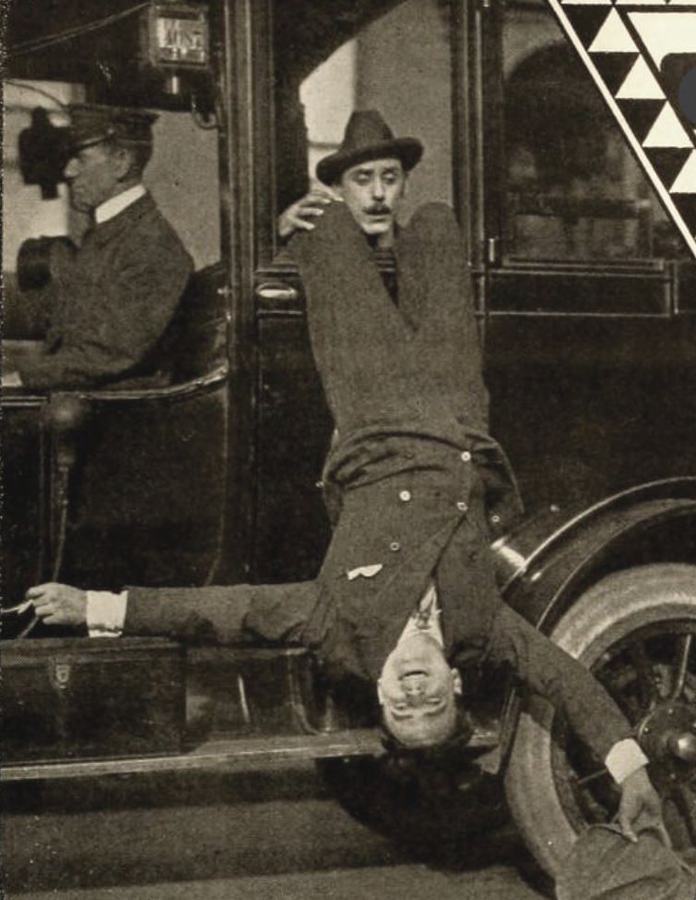
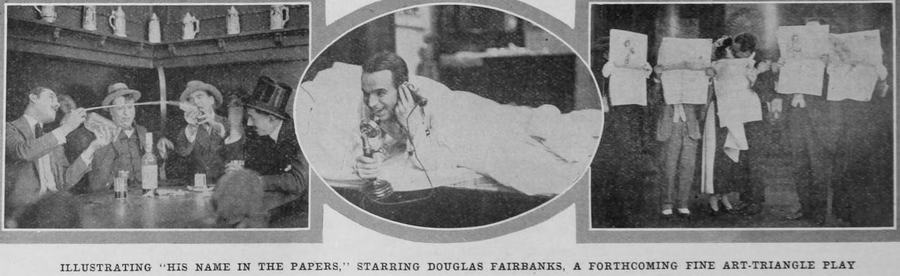
The genius of the film lies in its satirical lens on the nascent media landscape. Long before the age of reality television and social media influencers, His Picture in the Papers astutely observes the burgeoning public fascination with celebrity and the lengths individuals would go to achieve it. Pete’s attempts are a series of grand, often self-destructive, gestures designed solely for headlines. He orchestrates a spectacular automobile wreck, engages in a staged prize fight, performs a dramatic ocean swim from a steamer, and even provokes a chaotic brawl with the police, resulting in his brief incarceration. Each of these escapades, meticulously planned for maximum shock value and journalistic appeal, yields frustratingly minimal results – a mere line or two buried deep within the papers. This repeated failure highlights the capricious nature of fame, demonstrating that manufactured stunts, no matter how audacious, often fall short of genuine public interest. It's a comedic commentary on the fleeting and unpredictable currency of notoriety, a theme that resonates powerfully even today. The film, through Pete's trials, suggests that true recognition often emerges not from calculated theatrics, but from unforeseen circumstances and authentic acts of heroism.
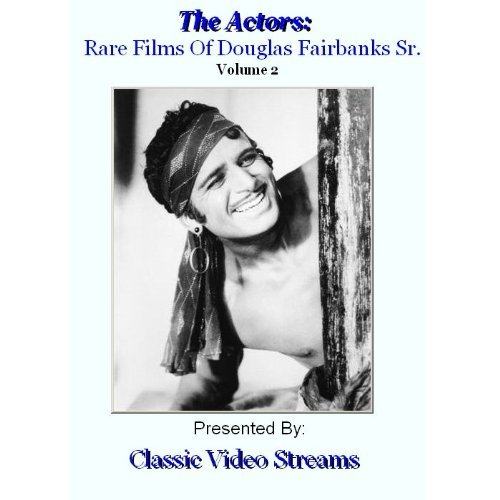
Douglas Fairbanks, even in these early comedic roles, was a force of nature. His portrayal of Pete Prindle is a masterclass in physical comedy, boundless energy, and an underlying earnestness that makes his character profoundly endearing despite his often ridiculous antics. Fairbanks doesn't merely act; he embodies Pete with every fiber of his being, leaping, running, and tumbling across the screen with an infectious vitality. His movements are fluid, almost choreographic, transforming mere slapstick into an art form. One can see the nascent seeds of his later swashbuckling persona in Pete’s daring stunts, particularly in the climactic train sequence. His ability to convey a range of emotions – from romantic longing to exasperated frustration and ultimately, triumphant joy – without a single spoken word, speaks volumes about his inherent talent and understanding of silent film acting. He possessed a unique ability to connect with the audience, drawing them into Pete’s absurd predicament with a wink and a smile.
Fairbanks' presence elevates the film beyond a simple farce. He brings a genuine humanity to Pete, making his desperate pursuit of headlines not just a comedic device, but a relatable struggle for validation and love. His expressions, from the hopeful gleam in his eyes when conceiving a new publicity stunt to the slump of his shoulders upon reading yet another disappointing newspaper clipping, are nuanced and highly effective. This blend of physical comedy and emotional depth was a hallmark of his early work and set him apart from many of his contemporaries. While other films of the era, such as The County Chairman, might have explored local politics and community standing, Fairbanks' films often focused on the individual's spirited battle against societal constraints or personal challenges, imbued with a distinctly American optimism and can-do spirit. His performance here is a clear indication of the star power that would soon make him one of Hollywood's most beloved and influential figures.
The brilliance of His Picture in the Papers is not solely attributable to Fairbanks’ performance; it is equally a testament to the formidable creative partnership of writer Anita Loos and director John Emerson. Loos, with her sharp wit and keen observational skills, crafted scenarios that were both wildly farcical and subtly incisive. Her screenplays for Fairbanks were renowned for their intelligent humor, often poking fun at societal pretensions and human follies with a light but piercing touch. Emerson, in turn, translated Loos’s vision onto the screen with a directorial flair that emphasized rapid pacing, dynamic action, and clear visual storytelling. Their collaboration was marked by a synergistic understanding of how to maximize Fairbanks’ unique talents, creating vehicles that allowed him to shine while delivering genuinely clever narratives.
Loos’s contribution, in particular, cannot be overstated. She brought a distinctly modern sensibility to silent comedy, moving beyond mere slapstick to explore character-driven humor and satirical themes. Her intertitles, often pithy and humorous, served not just to advance the plot but to add layers of commentary and wit. In His Picture in the Papers, her writing deftly balances the absurdities of Pete’s quest with moments of genuine romantic tension and familial conflict. Emerson’s direction ensures that the film never loses its momentum, guiding the audience through a series of escalating comedic set pieces with precision and energy. The visual gags are meticulously timed, and the camera work, while rudimentary by today’s standards, is effective in capturing the frenetic pace of Pete’s adventures. Together, Loos and Emerson crafted a brand of sophisticated comedy that was both immensely popular and critically acclaimed, solidifying Fairbanks’ reputation as a leading man capable of both physical prowess and comedic finesse. Their work here stands as a significant milestone in the evolution of American screen comedy, demonstrating that silent films could be as intelligent and nuanced as they were entertaining.
After a string of failed attempts to secure his coveted newspaper coverage, Pete’s luck finally turns, not through deliberate orchestration, but through an act of genuine, impulsive heroism. The narrative culminates in a thrilling sequence where Pete inadvertently foils a band of “yeggs” – early 20th-century slang for burglars or safecrackers – who are attempting to wreck a train. It is a moment of pure, unadulterated action that showcases Fairbanks’ physical capabilities in a truly heroic light. The stakes are suddenly very real, moving beyond the comedic consequences of a staged car crash to the potentially fatal outcome of a train derailment. This shift in tone, from lighthearted satire to genuine peril, is handled with surprising dexterity, momentarily allowing the audience to forget the comedic premise and invest fully in Pete’s desperate struggle.
The brilliant stroke of the plot, however, is the serendipitous presence of Christopher Cadwalader and his daughter Christine aboard the imperiled train. Their firsthand witness to Pete’s valor transforms his image from a publicity-hungry dilettante to a bona fide hero. This twist cleverly resolves the central conflict: Pete finally gets his picture on the front pages of all the metropolitan papers, not through a manufactured stunt, but through an authentic act of courage. It’s a powerful statement, albeit delivered with comedic flair, that true recognition often follows genuine merit rather than superficial posturing. The final scenes, with Christine and her father congratulating Pete amidst the flashing cameras, offer a satisfying conclusion to his arduous journey. This ending, where love and public acclaim converge through an unexpected act of heroism, is a classic trope, yet executed here with such charm and energy that it feels fresh and earned. The film subtly argues that while the pursuit of fame can be a vain endeavor, genuine heroism will inevitably find its spotlight. The dramatic tension of the train rescue, even in a comedic film, can be seen as an echo of the thrilling, often melodramatic, rescues found in films like Under the Gaslight, though here it serves a distinctly different, more lighthearted narrative purpose. The juxtaposition of high-stakes action with the film's overarching comedic tone is a testament to the skillful writing and direction.
Beyond its historical significance as an early Fairbanks vehicle and a product of the Loos-Emerson partnership, His Picture in the Papers offers a surprisingly enduring commentary on the nature of ambition, public image, and the pursuit of love. In an era increasingly defined by personal branding and the relentless quest for viral fame, Pete Prindle’s desperate attempts to garner media attention feel remarkably contemporary. The film critiques the superficiality of seeking fame for fame’s sake, implicitly suggesting that true worth and recognition emerge from more substantial actions. His father’s obsession with his daughters’ minor press mentions, juxtaposed with Pete’s grander, yet initially futile, gestures, highlights the absurdity of valuing fleeting notoriety over genuine achievement or familial bonds. This satirical take on media manipulation and public perception is as relevant today as it was over a century ago.
The film’s charm also lies in its ability to balance its critical observations with an undeniable optimism. Pete Prindle is never a cynical character; he is earnest, resourceful, and ultimately good-hearted. His journey, while filled with missteps, is fundamentally about proving himself worthy of love and respect. This underlying positivity, coupled with Fairbanks’ infectious energy, ensures that the film remains light and entertaining throughout. It avoids becoming preachy, instead opting for a playful exploration of human nature. In contrast to films that might delve into the darker side of public image or societal pressure, like Scandal, His Picture in the Papers maintains a buoyant spirit, focusing on the comedic potential of its premise. It's a delightful time capsule, not just of early Hollywood filmmaking, but of universal human desires: to be seen, to be celebrated, and ultimately, to be loved.
His Picture in the Papers stands as a vital piece of cinematic history, not only showcasing the early brilliance of Douglas Fairbanks but also the astute craftsmanship of Anita Loos and John Emerson. It’s a film that, despite its age and silent format, manages to transcend its era, offering universal themes wrapped in a package of high-energy comedy and endearing romance. Its exploration of media, fame, and the pursuit of success feels remarkably contemporary, making it more than just a historical curiosity. For silent film enthusiasts, it's an essential viewing experience, a vibrant example of how sophisticated storytelling and character development were achieved without spoken dialogue. For newcomers, it serves as an accessible and utterly charming introduction to the magnetic allure of Douglas Fairbanks, a star who truly understood the power of the moving image.
The film's enduring appeal lies in its sheer joyous spirit. Fairbanks' boundless enthusiasm is contagious, and the cleverness of Loos's writing ensures that the humor remains fresh. It reminds us that while the tools of media and communication have evolved dramatically, the fundamental human desire for recognition, for love, and for a place in the public eye remains constant. His Picture in the Papers is more than just a historical artifact; it is a lively, insightful, and profoundly entertaining film that continues to resonate, inviting us to laugh at the absurdities of ambition while cheering for the earnest hero who, against all odds, finally gets his picture in the papers.
IMDb 6.9
1929
Community
Log in to comment.