DbcultAccessing Vault...
Cult Review
Senior Film Conservator
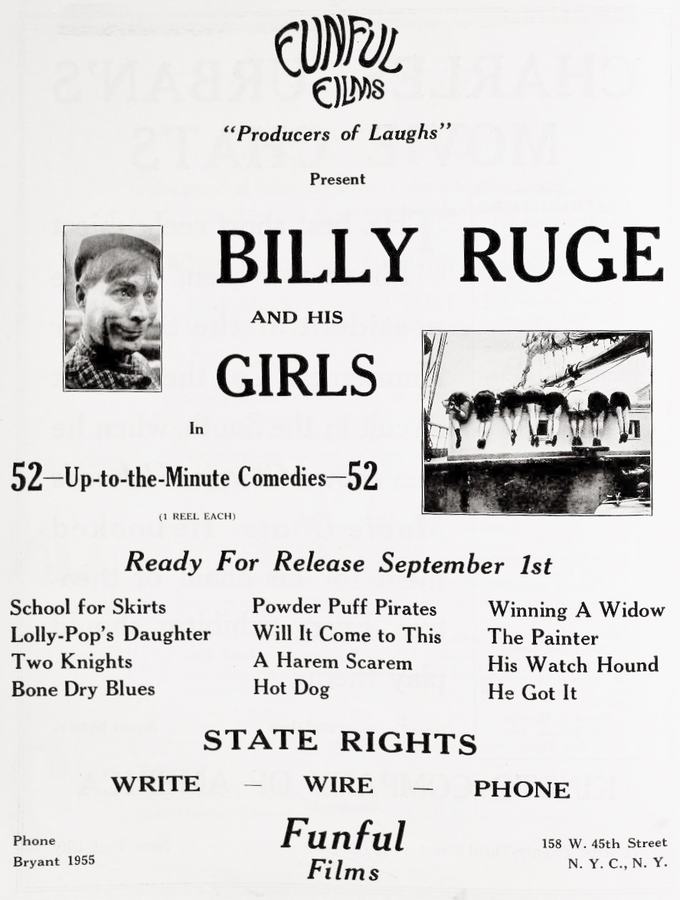
Stepping into the flickering glow of early cinema, one often encounters the ephemeral, the lost, and the occasionally rediscovered. Among these cinematic specters, His Watch Hound emerges not as a grand epic, but as a delightful, if somewhat obscure, testament to the unadulterated joy of silent-era slapstick. This short, a quintessential product of its time, offers a fascinating glimpse into the comedic stylings that captivated audiences before the advent of synchronized sound, largely propelled by the inimitable presence of Billy Ruge. To truly appreciate its modest genius, one must shed the expectations of modern narrative complexity and instead embrace the raw, physical poetry of early film comedy.
Billy Ruge, a name that might not resonate with contemporary cinephiles, was a stalwart of the silent screen, particularly adept at portraying the bumbling everyman, the perpetually flustered character caught in a whirlwind of his own making. In His Watch Hound, Ruge embodies Percy Piffle, a night watchman whose dedication is inversely proportional to his competence. Percy is a walking, talking (or rather, gesticulating) disaster magnet, a figure whose very presence guarantees a cascade of unfortunate events. His mission: to guard the lavish estate of the eccentric Baron Von Schnickel, a task made all the more critical by the presence of a newly acquired, breathtakingly valuable diamond necklace. The premise itself is a classic comedic setup: an invaluable treasure, an incompetent guardian, and the inevitable forces conspiring against order.
The true catalyst for the film's escalating pandemonium, however, is not a human antagonist but a scruffy, intelligent stray terrier, whom Percy, in a moment of misplaced affection, names Mutt. Mutt's arrival on the estate is initially a source of additional anxiety for Percy, who, in his loneliness, attempts to befriend the canine. These interactions are a goldmine of physical comedy, showcasing Ruge's mastery of broad gestures and exaggerated facial expressions. A simple act of offering a biscuit devolves into a tea tray catastrophe, a game of fetch transforms into a perilous dance through antique displays, and a gentle pat on the head nearly brings down a precarious stack of decorative armor. Ruge’s ability to convey utter bewilderment and earnest, if misguided, effort is the linchpin of these early scenes, establishing Percy as a character who is endearing precisely because of his flaws.
The narrative gains another layer of delicious irony with the introduction of two archetypal silent-era villains: "Fingers" Malone and "Slippery" Pete. These burglars, despite their ominous monikers, are as inept as Percy is ineffectual, creating a comedic ecosystem where incompetence reigns supreme. Their elaborate, yet poorly executed, attempts to infiltrate the Baron's estate and abscond with the necklace are repeatedly, and hilariously, thwarted. Crucially, their undoing is never at the hands of Percy's vigilance. Instead, Mutt, the titular "watch hound," inadvertently becomes the estate's true protector through a series of accidental interventions. A dropped bone trips a burglar mid-sneak, a playful bark at a squirrel alerts a sleeping maid, or a frantic chase after a rolling ball inadvertently triggers a hidden alarm. Each near-miss is a carefully choreographed ballet of cause and effect, where the consequences are always more amusing than threatening.
Ruge's performance here is a masterclass in silent film acting. His wide-eyed confusion, his frantic gesticulations, and his almost balletic tumbles are all delivered with a precision that belies the apparent chaos. He doesn't just react to the events; he embodies the very spirit of a man overwhelmed by circumstances beyond his control. This distinguishes him from some of his contemporaries, who might have relied more on pure acrobatics. Ruge brings a certain pathos to Percy, making his mishaps feel less like mere gags and more like the natural, albeit exaggerated, consequences of his well-meaning ineptitude. This level of character investment, even in a short film, is what elevates His Watch Hound beyond simple farce.
The film's comedic timing, a crucial element in silent cinema, is impeccable. The build-up to each gag, the visual cues, and the payoff are all executed with a rhythm that keeps the audience engaged and amused. Tom Bret, as the presumed writer, demonstrates a keen understanding of physical comedy and narrative economy, packing a surprising amount of plot and character development into a relatively short runtime. While we don't have extensive details on the production, the seamless integration of animal action with human slapstick suggests a director and crew who were adept at handling the unique challenges of early filmmaking. The interplay between Ruge and Mutt is particularly noteworthy, highlighting the training and patience required to elicit such naturalistic, yet comically timed, performances from an animal actor.
Comparing His Watch Hound to other silent films of its era provides valuable context. While not possessing the grand scale of a film like St. Elmo or the dramatic intensity of Sealed Orders, it shares a certain spirit with the more lighthearted, character-driven shorts. For instance, the intricate, almost accidental, thwarting of crime by an unwitting protagonist can be seen in the lineage of films like A Perfect 36, where misunderstandings and comedic coincidences drive the plot. The focus on a canine character, while not central in the same way as the dramatic narrative of The Bar Sinister, nonetheless predates and informs the long tradition of animal actors playing pivotal roles in cinematic storytelling. The film's charm lies in its simplicity and its commitment to pure, unadulterated entertainment, a common thread among many successful shorts of the period.
The climax of His Watch Hound is a masterclass in escalating absurdity. As the burglars finally get their hands on the coveted necklace, their triumph is short-lived. Mutt, in a moment of pure animal instinct, mistakes the glittering jewels for a toy and, in a frantic pursuit of a rolling ball, snatches the necklace from their grasp. The ensuing chase, a whirlwind of flailing limbs and frantic barks, culminates in Mutt returning the necklace directly to Percy, who, ever oblivious, believes the dog is merely playing fetch. The burglars, caught in a comically elaborate trap of their own making, are apprehended, leaving Percy to be hailed as an unlikely hero. The irony is palpable: Percy, the supposed guardian, played no active role in the capture, yet he reaps the rewards, attributing his success entirely to his faithful (and utterly unwitting) "watch hound." This narrative twist, where the hero's success is entirely accidental, is a hallmark of comedic genius, allowing the audience to delight in the character's obliviousness while appreciating the cleverness of the plot.
The film's technical aspects, while rudimentary by today's standards, were effective for its time. The cinematography, likely shot with a static camera for much of its duration, nevertheless captures the physical comedy with clarity. The editing is brisk, ensuring that the gags land with maximum impact and the narrative progresses without unnecessary drag. The use of intertitles, a necessity for silent films, is judicious, providing just enough context without interrupting the visual flow. The set design, featuring the opulent (if slightly cluttered) interiors of the Baron's estate, provides a rich backdrop for the chaos, contrasting sharply with Percy's inherent disarray. These elements coalesce to create a cohesive cinematic experience that, despite its age, remains remarkably engaging.
While His Watch Hound might not possess the philosophical depth of films like Nachtgestalten or the social commentary of The Absentee, its contribution to the comedic landscape of early cinema is undeniable. It represents a genre that prioritized laughter above all else, a form of escapism that was vital for audiences of the era. The film's ability to extract humor from everyday incompetence and unexpected animal antics is a timeless comedic formula. It reminds us that sometimes, the greatest heroes are those who are least aware of their heroism, and that chaos, when properly orchestrated, can be profoundly entertaining.
The enduring appeal of films like His Watch Hound lies in their universal themes. The bumbling protagonist, the unwitting hero, the mischievous animal, and the inept villain are archetypes that transcend cultural and temporal boundaries. Billy Ruge's portrayal of Percy Piffle taps into a common human experience: the struggle to maintain control in a world that constantly conspires against us. His character is relatable because we all, at some point, feel like Percy, flailing through life's challenges with more hope than skill. The film's lack of pretension is also a significant asset; it simply aims to entertain, and in that, it succeeds admirably. It doesn't attempt to redefine cinematic language or push artistic boundaries, but rather perfects a specific, beloved form of storytelling.
Reflecting on the legacy of such shorts, one realizes their immense importance in the evolution of film. They were the proving ground for countless actors, writers, and directors, shaping the conventions of cinematic storytelling and comedic timing. While many have been lost to the ravages of time, those that survive, like His Watch Hound, offer invaluable insights into the origins of popular entertainment. They demonstrate how early filmmakers, with limited resources and nascent technology, managed to craft engaging narratives and memorable characters that resonated deeply with their audiences. The simplicity of the narrative allowed for a focus on performance and visual gags, elements that were crucial for a medium still finding its voice.
The sheer energy of Billy Ruge's performance is infectious. He throws himself into every pratfall, every bewildered glance, every frantic attempt to regain control. This commitment to the character, even in the face of relentless humiliation, is what makes Percy Piffle so endearing. One can easily draw parallels between Ruge's physical comedy and that of other silent-era greats, though Ruge carved out his own niche with a particular brand of wide-eyed, almost childlike innocence that made his mishaps all the more charming. He wasn't the cynical trickster or the suave romantic lead; he was the everyman perpetually out of his depth, and audiences loved him for it. This accessibility is a key factor in the film's enduring appeal, allowing viewers to connect with Percy's plight on a fundamental level.
In a broader context, His Watch Hound fits comfortably into the burgeoning genre of animal-centric films, though perhaps less dramatically than some. While not a tear-jerker or a grand adventure, it highlights the natural comedic potential of animals interacting with humans, a trope that continues to thrive in cinema today. The dog, Mutt, is not just a prop but an active participant, his actions driving much of the plot's comedic momentum. This intelligent use of an animal actor speaks to the ingenuity of early filmmakers who understood the power of non-human performers to captivate and entertain. This film, in its own small way, contributed to the evolving understanding of how animals could be integrated into narrative structures, moving beyond mere spectacle to become integral plot devices.
The socio-cultural backdrop of the early 20th century also adds a layer of appreciation for His Watch Hound. In an era marked by rapid industrialization, social change, and the looming shadows of global conflict, films like this offered a much-needed respite. They provided a space for communal laughter, a shared experience that transcended class and background. The innocence of the humor, the clear distinction between good and bad (even if both are incompetent), and the ultimate triumph of accidental justice would have resonated deeply with audiences seeking simple pleasures and clear moral outcomes. It’s a reminder that sometimes, the most profound impact comes from the most unpretentious sources.
One cannot overstate the importance of preservation for films like His Watch Hound. So much of early cinema has been lost, disintegrated, or forgotten. Each surviving reel is a treasure, offering a direct link to a bygone era of entertainment. This film, with its simple premise and effective execution, serves as a valuable artifact for film historians and enthusiasts alike. It allows us to trace the lineage of comedic tropes, to understand the evolution of cinematic language, and to appreciate the foundational performances that paved the way for future generations of actors. It’s a piece of living history, a vibrant snapshot of what once captivated the masses in darkened theaters.
In conclusion, His Watch Hound is far more than a mere curiosity from the silent era. It is a vibrant, funny, and surprisingly clever comedic short that showcases the talents of Billy Ruge and the ingenuity of early filmmakers. Its enduring charm lies in its universal themes of incompetence, accidental heroism, and the delightful chaos that ensues when humans and animals interact in unexpected ways. For anyone interested in the roots of cinematic comedy, or simply in need of a good laugh, this film is a delightful discovery, a testament to the timeless power of well-executed slapstick and the sheer joy of watching a bumbling hero stumble into success. It’s a film that, despite its age, still possesses the power to elicit genuine smiles and hearty chuckles, proving that true comedic brilliance knows no temporal bounds. The legacy of films like this is not measured in box office receipts or critical accolades, but in the simple, enduring pleasure they continue to provide to those fortunate enough to unearth them.
IMDb —
1915
Community
Log in to comment.