DbcultAccessing Vault...
6.4/10
Senior Film Conservator
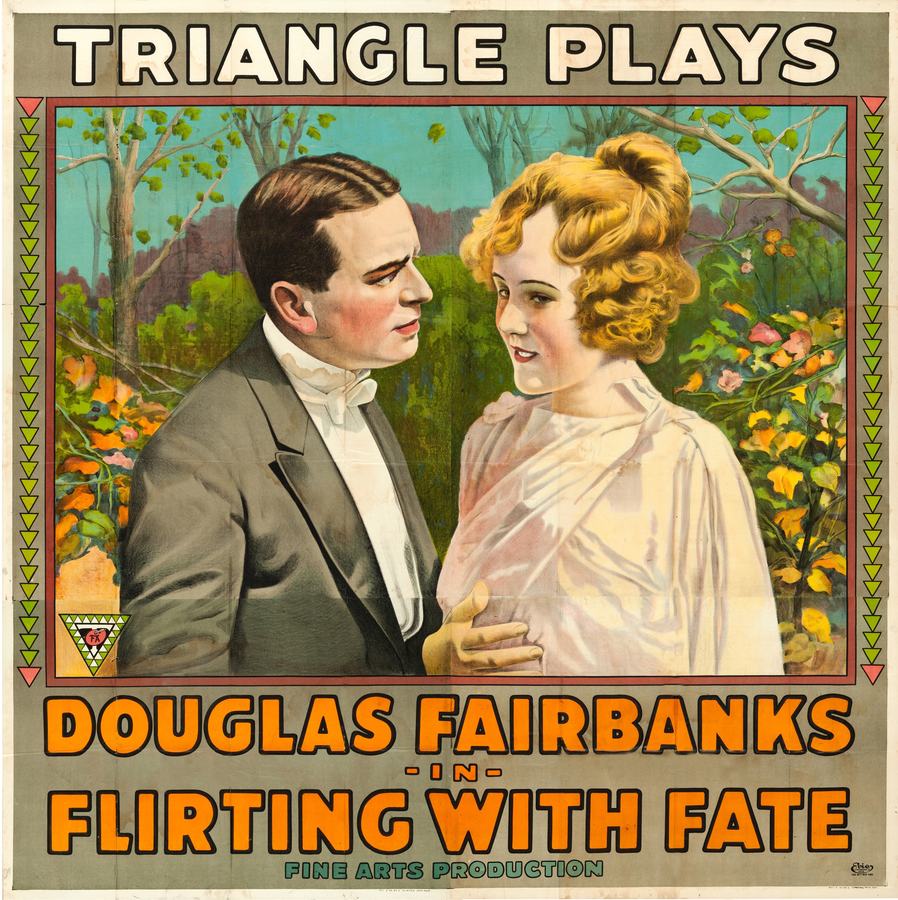
A definitive 6.4/10 rating for a film that redefined the boundaries of cult cinema. Flirting with Fate remains a cornerstone of transgressive art.
In the annals of early cinema, few stars burned as brightly or with as much kinetic energy as Douglas Fairbanks. His name became synonymous with swashbuckling adventure, boundless optimism, and an athleticism that redefined the very possibilities of screen performance. Yet, even the most ebullient of heroes occasionally ventured into the darker corners of human experience, albeit with a characteristic wink and a mischievous grin. Such is the fascinating premise of 1916's 'Flirting with Fate', a film that, even a century later, retains a remarkable capacity to surprise, entertain, and provoke thought. Directed by Christy Cabanne and penned by Robert M. Baker and Cabanne himself, this picture offers a unique blend of existential dread, farcical comedy, and pulse-pounding chase sequences, all filtered through the irrepressible charisma of its leading man.
The narrative, audacious in its conception, introduces us to a protagonist in the throes of a profound, incapacitating depression. This isn't the typical romantic malaise or a mere bout of melancholy; it's a soul-crushing despair so potent that it drives him to the most extreme of measures: contracting his own assassination. The sheer audacity of this setup, particularly for a film of its era and starring a figure celebrated for his vitality, immediately sets 'Flirting with Fate' apart. It's a dark comedy of errors before the term even truly existed, a macabre contemplation of the human psyche's most fragile state, yet executed with an underlying buoyancy that only Fairbanks could deliver.
Fairbanks' character, initially a figure of profound despondency, makes his fateful arrangement with a hired killer, a chillingly pragmatic individual who views death as a mere transaction. The film deftly establishes the gravity of this decision, yet it's in the immediate aftermath that the true brilliance of the screenplay unfurls. No sooner has the morbid contract been sealed than a transformative shift occurs within our protagonist. A sudden, inexplicable surge of renewed zest for life washes over him. Perhaps it's the sheer finality of his decision that jolts him back to an appreciation of existence, or perhaps a serendipitous encounter reignites his dormant spirit. Whatever the catalyst, the man who yearned for oblivion now desperately clings to the promise of tomorrow.
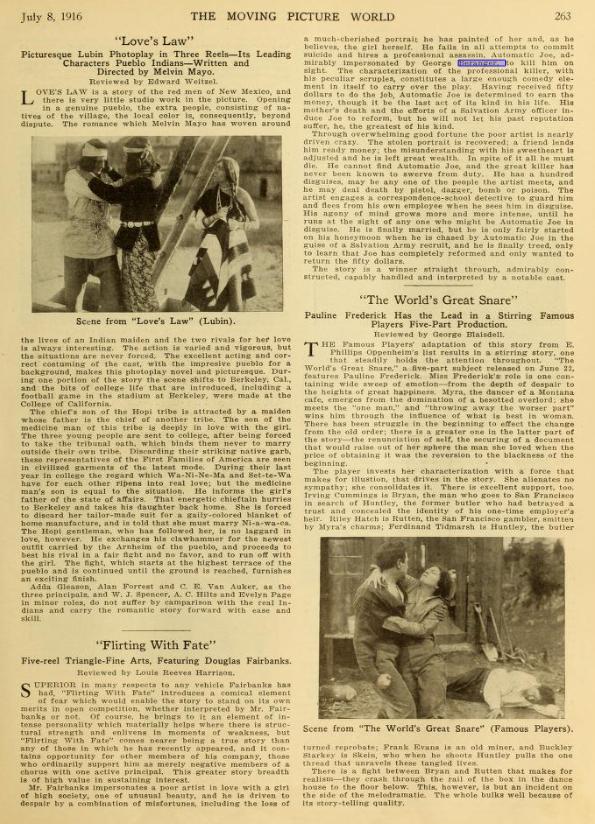
This abrupt reversal of fortune forms the comedic and thrilling engine of the film. The very instrument of his intended release becomes his most formidable pursuer. The irony is palpable, the dramatic tension immediate. Fairbanks, with his unparalleled physical prowess and expressive pantomime, conveys this rapid emotional metamorphosis with compelling conviction. One moment, he is a picture of resigned sorrow; the next, a whirlwind of frantic energy, a man scrambling to outwit a fate he himself designed. This psychological pivot is handled with an impressive lightness, preventing the film from descending into true morbidity, instead elevating it to a high-wire act of comedic suspense.
Douglas Fairbanks' performance here is nothing short of a masterclass in silent screen acting. He doesn't merely portray a character; he embodies a spectrum of human emotion, from the depths of despair to the heights of desperate hope. His physical comedy, which would become his enduring hallmark, is already in full bloom. He leaps, tumbles, and narrowly escapes, transforming potentially grim situations into exhilarating spectacles. The chase sequences, a staple of early cinema, are elevated by his unique brand of acrobatic grace and comedic timing. Unlike the more straightforward action of a film like On the Fighting Line or the stark drama of The Destroying Angel, 'Flirting with Fate' infuses its thrills with an undeniable sense of the absurd, making the audience not only gasp but also chuckle.
Fairbanks' appeal lay not just in his athleticism but in his ability to project an everyman quality, even when performing superhuman feats. He was the relatable hero, the underdog who, despite his extraordinary abilities, still seemed to be one of us. In 'Flirting with Fate', this relatability is amplified by his character's initial vulnerability. We empathize with his despair, and then we root for his desperate struggle for survival with an almost visceral connection. The contrast between his initial suicidal ideation and his subsequent fierce will to live is what gives the film its compelling emotional resonance, showcasing Fairbanks' range beyond mere derring-do.
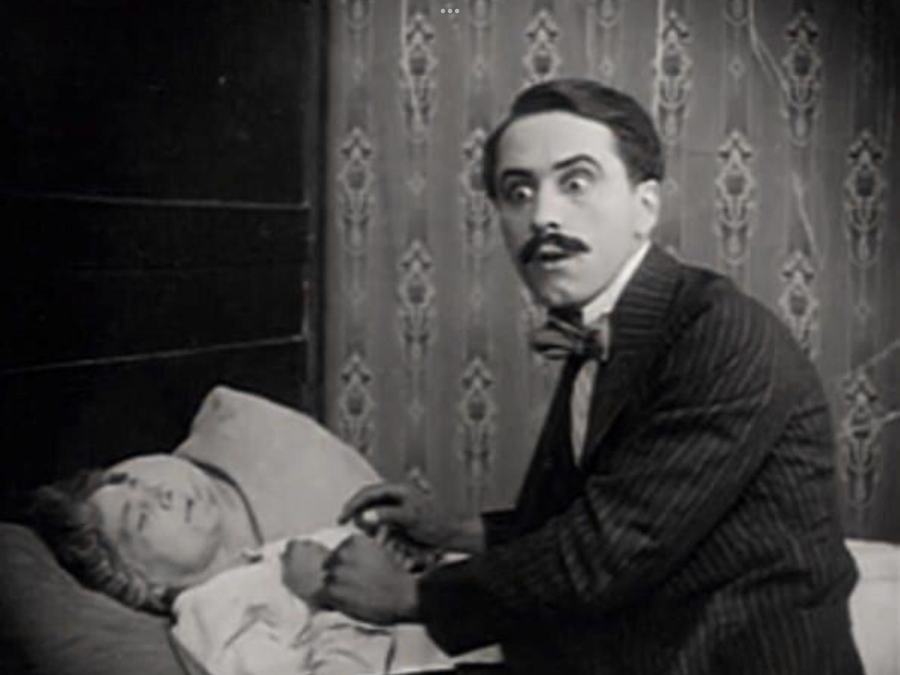
Christy Cabanne, a prolific director of the era, navigates the film's tricky tonal shifts with considerable skill. It would have been easy for 'Flirting with Fate' to buckle under the weight of its dark premise, but Cabanne maintains a delicate balance, allowing the inherent humor of the situation to shine through without trivializing the initial despair. His pacing is brisk, propelling the narrative forward with an urgency that mirrors the protagonist's desperate flight. The visual storytelling, characteristic of the silent era, is clear and effective, relying on strong compositions and dynamic movement to convey emotion and action.
Cabanne's collaboration with Fairbanks was fruitful, and this film stands as a testament to their combined ability to craft engaging popular entertainment that also subtly explores deeper themes. While not as grand in scale as some of Fairbanks' later epics, 'Flirting with Fate' demonstrates a sophisticated understanding of cinematic storytelling for its time, proving that compelling narratives didn't always require elaborate sets or immense casts. Its focus on a singular, high-concept premise allows for a concentrated exploration of character and consequence.
While Fairbanks undeniably carries the film, the supporting cast plays crucial roles in enhancing the narrative's texture. Howard Gaye, as the professional assassin, delivers a chillingly detached performance, a stark contrast to Fairbanks' effervescent energy. His portrayal avoids caricature, presenting a figure whose cold efficiency makes the protagonist's predicament all the more dire. Dorothy Haydel and Jewel Carmen contribute to the romantic and dramatic subplots that often serve as catalysts for Fairbanks' character's changing outlook, providing anchors in the tumultuous sea of his self-imposed peril.
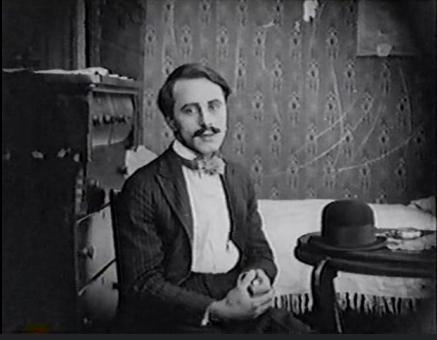
Lillian Langdon, George Beranger, W.E. Lawrence, Wilbur Higby, and J.P. McCarty, though perhaps in smaller roles, flesh out the world, adding to the sense of a bustling, indifferent society through which our desperate hero must navigate. Their performances, often relying on exaggerated gestures and expressions typical of the silent era, provide both comedic relief and additional obstacles for Fairbanks to overcome. The effectiveness of a silent film often hinges on the clarity of its supporting performances, and here, each actor contributes to the overall coherence and impact of the story.
At its core, 'Flirting with Fate' is a profound meditation on the human capacity for change and the often-fickle nature of our emotional states. The protagonist's initial despair is not presented as a moral failing but as a genuine, albeit temporary, condition. His subsequent desire to live is not a sudden epiphany but a gradual re-engagement with the world, spurred by new connections and a rediscovered appreciation for the simple act of existing. This nuanced portrayal of mental state is surprisingly sophisticated for a film from 1916, offering more than just a simplistic 'pull yourself up by your bootstraps' message.
The film also toys with the concept of fate versus free will. Has the protagonist truly escaped his destiny, or was his initial despair and subsequent renewal all part of a larger, predetermined plan? The very title, 'Flirting with Fate', suggests a playful yet dangerous dance with destiny, a recognition that while we may make choices, the universe often has its own peculiar way of intervening. This thematic depth elevates the film beyond a mere comedic thriller, placing it in conversation with more serious works of the era, even if its tone remains resolutely light. One might draw a thematic parallel to the existential quandaries, albeit in a much darker vein, found in films like Doch isterzannoy Pol'shi, though the comedic approach here offers a stark contrast.
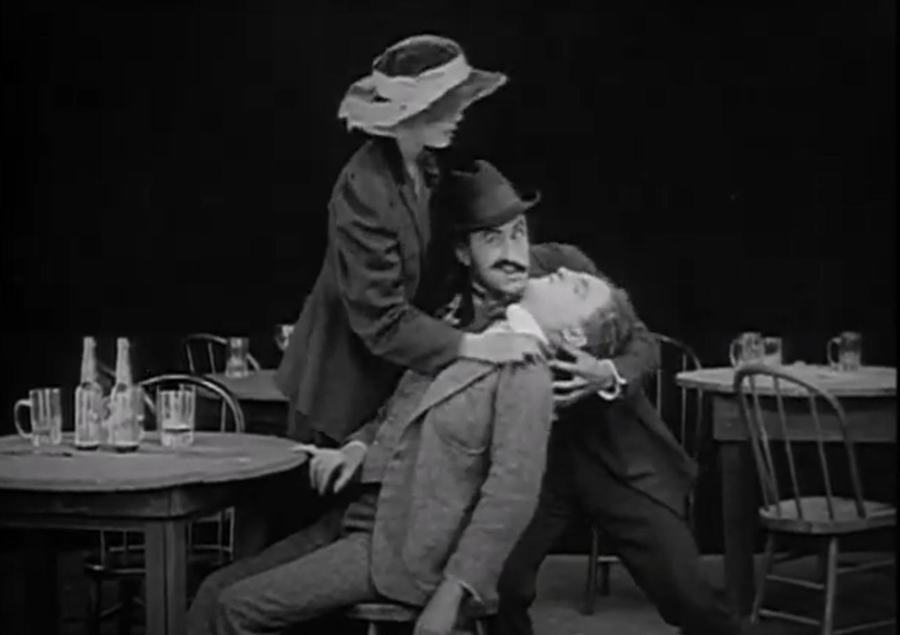
Released during a burgeoning period for American cinema, 'Flirting with Fate' represents an important step in Douglas Fairbanks' career, solidifying his status as a unique star whose appeal transcended mere physicality. It showcases the versatility of silent film storytelling, demonstrating how complex emotional arcs and intricate plot mechanics could be conveyed without dialogue. The film's blend of genres—dark comedy, thriller, and romance—was innovative, laying groundwork for future cinematic explorations of similar themes.
Comparing it to other films of the period, one can see echoes of the 'comedy of errors' found in films like Brewster's Millions (though with a far more morbid initial premise) or the intense pursuit elements present in thrillers such as On the Night Stage. However, 'Flirting with Fate' carves its own niche by combining these elements with a distinctly psychological core. It's less about external villains and more about the internal struggle made manifest.
The film's enduring appeal lies in its timeless premise: the desire to live, even after contemplating its opposite. It reminds us that life is precious and often renewed in the most unexpected ways. For modern audiences, it offers a fascinating glimpse into the early artistry of filmmaking, showcasing how compelling narratives and unforgettable performances were crafted in an era without sound. The inventive camera work and editing, while rudimentary by today's standards, were cutting-edge for their time, contributing significantly to the film's dynamic energy.
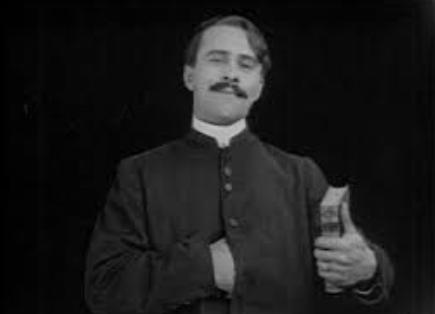
Over a century later, 'Flirting with Fate' remains a captivating watch. It's a testament to the power of a strong concept, expertly executed by a star at the peak of his early powers. The film doesn't just entertain; it gently prompts reflection on the value of life, the resilience of the human spirit, and the often-unpredictable turns our journeys can take. Fairbanks' magnetic presence ensures that even the darkest elements of the plot are infused with a sense of adventure and ultimately, hope.
For enthusiasts of silent cinema, or anyone curious about the foundational works of cinematic storytelling, 'Flirting with Fate' is an essential viewing. It's a vibrant, imaginative, and surprisingly profound piece of filmmaking that showcases the inventive spirit of the era and the enduring star power of Douglas Fairbanks. It is a cinematic experience that manages to be both lighthearted and thought-provoking, a delicate balance that few films, even today, manage to achieve with such effortless charm. The sheer audacity of its premise, coupled with Fairbanks' inimitable performance, solidifies its place as a minor masterpiece, demonstrating that even in the face of despair, there's always room for a thrilling, life-affirming chase.
The film's exploration of renewed purpose, of finding a reason to live after having actively sought its cessation, is handled with a remarkable sensitivity that transcends its comedic framework. It's a universal theme, presented through a unique lens, making the narrative accessible and impactful across generations. Fairbanks, in his various roles, often championed the spirit of adventure and optimism, and 'Flirting with Fate', despite its darker starting point, ultimately reinforces these very ideals. His character's frantic efforts to escape the assassin are not merely for survival but for the chance to embrace a life he had prematurely discarded. This transformation from despair to determination is the film's true victory, leaving the audience with a profound appreciation for the often-overlooked beauty of existence itself.
In conclusion, 'Flirting with Fate' stands as a brilliant example of early silent cinema's capacity for complex storytelling and compelling character development. It is a film that defies easy categorization, blending genres with a fluidity that was ahead of its time. Douglas Fairbanks delivers a performance that is both physically exhilarating and emotionally resonant, solidifying his status as one of cinema's earliest and most enduring superstars. Its premise, while dark, ultimately leads to a celebration of life, making it a timeless piece that continues to engage and inspire. This cinematic journey from the brink of self-destruction to a desperate embrace of life is a powerful reminder of the human spirit's indomitable will and the unpredictable, often ironic, pathways that lead us to our ultimate destinies.
IMDb —
1917
Community
Log in to comment.