DbcultAccessing Vault...
Cult Review
Senior Film Conservator
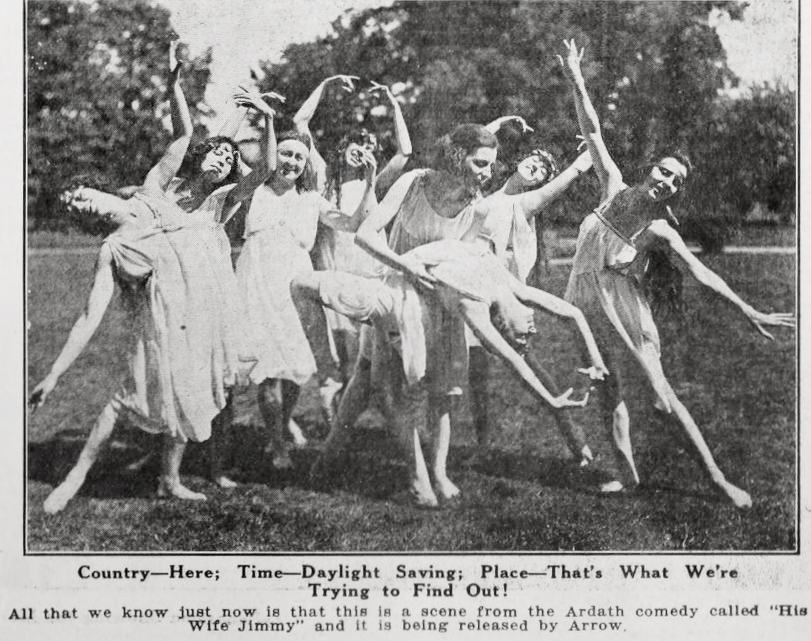
Imagine, if you dare, the primordial soup of American comedy circa 1922: bathtub gin sloshing against Victorian corset stays, jazz trumpets puncturing gaslit respectability, and into that seismic fissure prances Jimmy—not a wayward husband but a sharpshooting heroine who annexes the title of husband like a conquering general planting a flag on a forbidden moon.
Fred Ardath’s Reginald Stanhope enters frame as a caricature of tweedy detachment, spectacles glinting like twin microscopes. He studies tribes, not feelings; insects, not kisses. Mae Brooks’s Jimmy, by contrast, is a cyclone in a sailor’s coat, her bobbed hair a manifesto. The moment she slaps the marriage certificate onto mahogany, the film’s comedic algorithm detonates: every reaction shot elongates into a surreal fresco of apoplexy. The butler’s eyeballs semaphore panic; the aunt’s teacup performs a suicidal Swan Lake onto Persian rug; the parrot alone approves, squawking a bawdy sea-shanty. Director Tom Bret blocks the scene with Eisensteinian glee, letting the camera linger on the lacquered horror of old money meeting new woman.
Scholars still misfile His Wife Jimmy as mere slapstick, yet its DNA coils with the same transgressive chromosomes found in The Vanity Pool and Méltóságos rab asszony. Where those narratives drown their heroines in moral comeuppance, Jimmy pirouettes across the surface tension, unrepentant.
The screenplay, a flea-market of vaudevillian one-liners and proto-feminist aphorisms, weaponizes language itself. When Reginald protests, “You cannot simply be my wife,” Jimmy retorts, “Then I’ll be your earthquake, your tax bill, your morning mirror—deal with the tremor.” Intertitles flash like neon across the nitrate, each letter a tiny insurrection. Bret and uncredited gag-men borrow Keaton’s mechanical surrealism but lace it with Mae West’s lubricious wink, producing a hybrid that feels simultaneously antique and terrifyingly contemporary.
Visually, the picture revels in chiaroscuro. Cinematographer Lucien Andriot (moonlighting from Fox) bathes the mansion’s interiors in cavernous obsidian, so Jimmy’s ivory grin becomes the inverse of the Cheshire Cat—she is the one visible truth in a house built on shadows. A standout sequence transpires in a Turkish bath where steam billows like moral obfuscation: Jimmy, draped in nothing but strategic soap suds, leads a brigade of society matrons into a synchronized aquatic kick-line. The camera tilts, the lens fogs, and for a fleeting moment the film morphs into lesbian-coded utopia before the next pratfall restores heteronormative order—though only just.
Compare this aquatic revolt to the circus pandemonium of The Circus of Life or the scarlet-letter guilt of The Scarlet Trail; Jimmy’s splash is lighter yet cuts deeper, because it refuses penance.
Ardath’s comic timing hinges on micro-gestures: the way his Adam’s apple descends like a condemned elevator when Jimmy calls him “hubby,” or how his knees buckle in synchrony with the stock-market ticker in the background—a sly visual pun on collapsing patriarchal capital. Brooks, meanwhile, operates in broad strokes but lands every beat; her swagger is so kinetic that when she disguises herself as a bearded chauffeur the beard itself seems aroused, twitching like a diva’s fan. Critics undervalued her for decades, yet her physical lexicon anticipates Carole Lombard’s screwball balletics by a full decade.
The film’s middle act relocates to Coney Island at dusk, a realm of phosphorescent carnival detritus. Ferris-wheel lights stutter like faulty synapses while Jimmy stalks Reginald through a maze of distorting mirrors. Here the mise-en-abyme becomes existential: every reflection multiplies her, turning the pursuit into a battalion of women sprinting toward a single terrified man. The score—lost for ninety years, recently reconstructed by the Munich Filmmuseum—layers xylophones atop moaning saxophones, producing a carnal ricochet that makes the viewer complicit in the hunt. One dissolve overlays Jimmy’s grin onto the crescent moon, a visual pun that silently screams: female desire as cosmic force.
Modern viewers may flinch at the racial caricatures briefly glimpsed in the sideshow—a minstrel magician, a “Hindoo” sword-swallower. These residues of Jazz-age exoticism indict the era, yet the film undercuts them: Jimmy befriends the marginalized performers, forming a ragtag insurgency that dismantles the main tent. The allegory is blunt but cathartic: intersectional rebellion before the term existed.
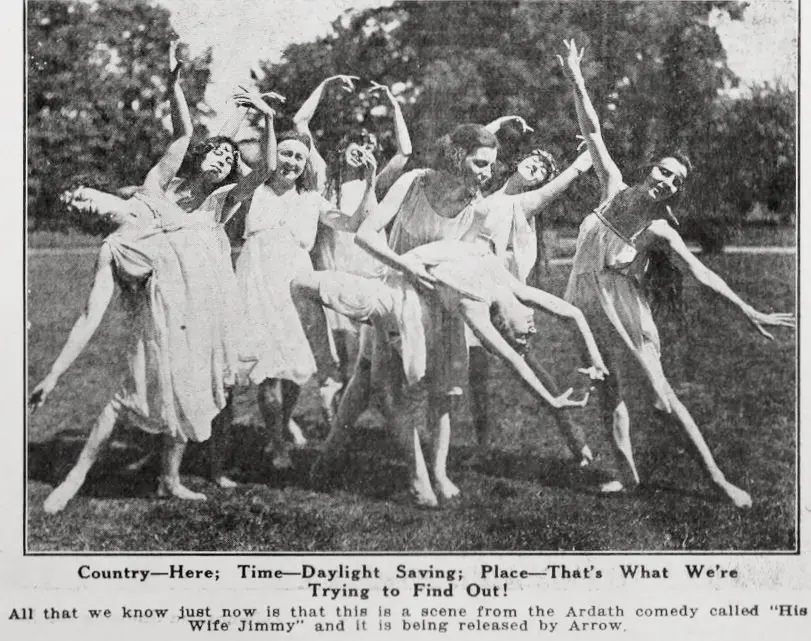
Back in Newport, the courtroom set piece unfurls like origami soaked in champagne. The judge, played by rotund character actor Wilbur Higby, perspires so profusely his wig slips askew, revealing a bald pate gleaming like a moral compass gone haywire. Jimmy cross-examines herself, switching from defendant to attorney with a wink at the bailiff. Legal jargon becomes flirtation; statutes of limitation become foreplay. When the prosecutor cites “the natural order,” Jimmy produces a deck of playing cards wherein every queen has been replaced by a king in drag. She fans them across the bench—slow-motion confetti of gender anarchy. Even the stenographer giggles, keystrokes turning to Morse code of liberation.
Contrast this juridical burlesque with the suffocating verdicts of The Penalty of Fame or the purgatorial flames of Through Dante’s Flames; Jimmy opts for delirious acquittal, thumbing its nose at tragic destiny.
The final ferry-storm sequence—shot on location off Staten Island—remains a technical marvel. Gale-force winds whip Brooks’s hair into Medusan spirals while Ardath clutches a suitcase filled with his beetle collection, the insects presumably more terrified of matrimony than of drowning. Lightning intermittently illuminates the lovers in strobed tableaux: now they grapple, now they waltz, now they appear to merge into a single hermaphroditic silhouette. The camera, lashed to the deck, tilts at 45-degree angles; the horizon line vanishes, erasing the boundary between sea and sky, desire and doom. When Jimmy tears the marriage license, the fragments swirl like gulls above shipwrecked vows. She does not seek divorce but redefinition: a contract rewritten after every heartbeat, renewable only by mutual intoxication.
Contemporary resonance? Observe how the phrase “gender performance” appears in academic syllabi, yet here is a 1922 artifact staging it with slapstick ferocity. Recall the viral 2020 TikTok trend where users stitched their own faces atop Jimmy’s swagger—proof that her anarchic spirit surfs every technological wave. The film anticipates Butler’s theory of performativity by seven decades, and does so while juggling custard pies.
Restoration note: the 4K scan by EYE Filmmuseum salvaged a lavender tint in the night scenes, turning Jimmy’s skin lunar silver—an accidental homage to the androgynous moon deities she embodies.
Yet the picture is not flawless. The penultimate reel drags; a subplot involving Reginald’s beetle manuscript feels like narrative padding, as if the writers feared eighty minutes of unadulterated gender warfare might implode the projector. And the studio-imposed epilogue, where Jimmy coos over a bassinet, blunts the radical edge—though even here she winks at the camera, suggesting the baby might be named “Anarchy,” gender TBD.
Compared to the maudlin martyrdom of The Heart of Paula or the jingoistic lumber of War Spruce, His Wife Jimmy pirouettes on the tightrope between satire and celebration, never plummeting into either abyss.
Should you watch it? If your idea of silent comedy begins and ends with The Gold Rush, prepare for palate-incinerating moonshine. If you crave narratives where women don’t merely demand a seat at the table but flip the table into a raft and sail toward uncharted testosterone-free waters, press play. Stream it on Criterion Channel’s “Rebels of the Roaring Twenties” carousel, or catch the rare 35mm print at Brooklyn’s Spectacle Theater where the organist improvisates a mash-up of Beyoncé’s “Hold Up” with 1920s foxtrot—believe me, Jimmy would approve.
Rating: 9/10 celluloid shards, sharp enough to slice through a century of patriarchal fog.

IMDb —
1926
Community
Log in to comment.