DbcultAccessing Vault...
Cult Review
Senior Film Conservator
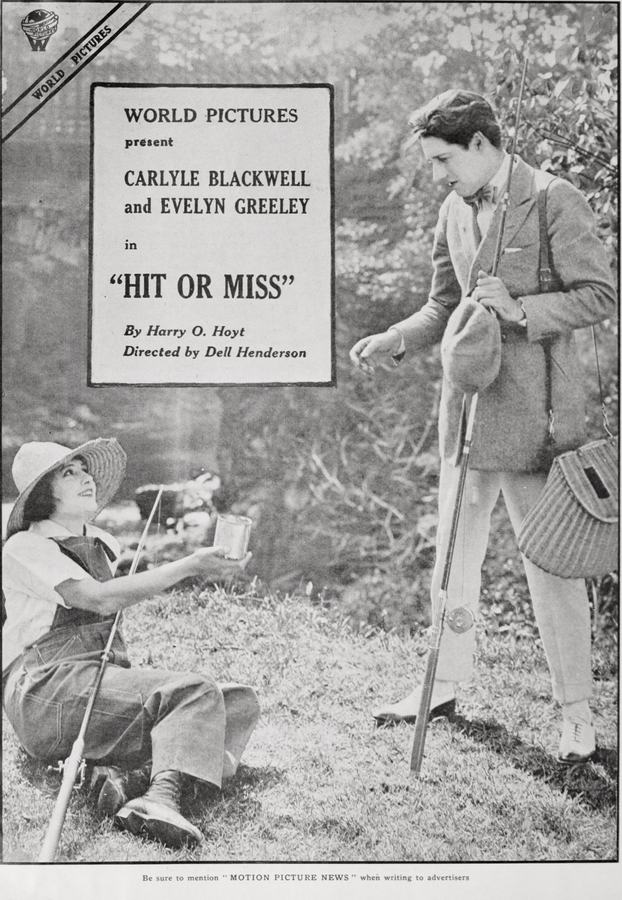
In the grand tapestry of early cinema, where narratives often hinged on grand melodramas or sprawling epics, there occasionally emerges a gem of understated charm, a film that, despite its age, retains a surprising vivacity. Such is the case with 1919’s ‘Hit or Miss,’ a delightful confection that deftly weaves together elements of romantic comedy, social satire, and the perennial quest for validation. This silent era offering, penned by the collaborative talents of Clara Beranger and Harry O. Hoyt, and brought to life by a spirited ensemble, stands as a testament to the enduring power of a well-told story, even when delivered without the benefit of spoken dialogue. It's a film that asks us to consider the often-absurd lengths to which individuals will go for love and lucre, all under the thinly veiled guise of scientific endeavor.
At the heart of 'Hit or Miss' is J. Butterfield Conroy, a character affectionately, if somewhat unfortunately, nicknamed 'Butts.' Portrayed with an infectious blend of roguish charm and earnest desperation by Carlyle Blackwell, Butts is a press agent, a man whose professional life is built on crafting perceptions, shaping narratives, and, let's be honest, a good deal of artful deception. His father's will, however, throws a rather considerable wrench into his well-oiled world, stipulating that the bulk of his considerable inheritance hinges on him proving 'service to humanity in a scientific capacity.' This is, for a man whose expertise lies in public relations, a truly Sisyphean task. Blackwell, a seasoned performer of the era, navigates this predicament with a nuanced comedic touch, allowing us to empathize with Butts's plight even as we chuckle at his increasingly convoluted schemes. His performance here is a masterclass in silent comedy, relying on expressive facial gestures and fluid physicality to convey a spectrum of emotions, from lovestruck infatuation to frantic desperation. It’s a far cry from the more stoic, heroic roles often seen in contemporary films like Den sorte drøm, showcasing Blackwell's versatility.
The inciting incident for Butts's romantic entanglement is pure cinematic serendipity. In a New York restaurant, amidst the clinking of cutlery and hushed conversations, he encounters Mary Bruce MacDowell, played with an engaging blend of grace and intelligence by Evelyn Greeley. Their meeting is facilitated by Mary's uncle, Professor Angus, an entomologist whose passionate pursuit of a runaway butterfly provides the comedic backdrop for their initial spark. Greeley imbues Mary with a quiet strength and an unmistakable warmth, making her a compelling object of Butts's affections. She is not merely a damsel in distress or a prize to be won; she possesses an agency that subtly pushes back against the patriarchal norms of the era. Her character’s steadfast love for Butts, even when a more 'reputable' suitor emerges, anchors the film's romantic core, preventing it from devolving into mere farce. The chemistry between Blackwell and Greeley, though communicated through glances and gestures, is palpable, creating a believable and endearing central couple.
Butts, utterly smitten, follows Mary to Bug Hollow, a resort that serves as the professor's base of operations for his entomological quest. This setting provides a charmingly rustic contrast to the urban sophistication of New York, allowing for a shift in tone and a fresh canvas for Butts's schemes. The initial comedic beats here involve Butts trying to ingratiate himself with the professor, often with disastrous but humorous results. However, his financial woes, exacerbated by an unfortunate poker game, soon force his hand. Losing all his money, Butts begins the long, ignominious walk back to Manhattan, a journey of both literal and metaphorical despair. It's during this low point that he encounters Frank Morrison, an acquaintance whose designs on Mary lead him to hire Butts. Morrison, portrayed by Joel Day, is a rather bland rival, serving primarily as a foil for Butts's ingenuity and a catalyst for the plot's central deception. He represents the kind of superficial respectability that Butts, ironically, must now manufacture.
The core of the film's comedic brilliance lies in Butts's task: to invent a scientific reputation for Morrison so convincing that Professor Angus will deem him worthy of Mary's hand. This premise allows for a delightful exploration of illusion versus reality, a theme that resonates even today. Butts, the master of spin, applies his press agent skills to the realm of academia, creating a facade of scientific prowess for Morrison that is both elaborate and hilariously fragile. The film cleverly satirizes the often-pompous world of academia and the ease with which appearances can be manipulated, a commentary that feels surprisingly contemporary. The humor isn't broad slapstick, but rather a more subtle, character-driven comedy derived from the absurdity of the situation and the sheer audacity of Butts's plans. It’s a nuanced approach to deception, perhaps less overtly dramatic than the moral quandaries explored in a film like The Curse of Greed, but equally effective in its own genre.
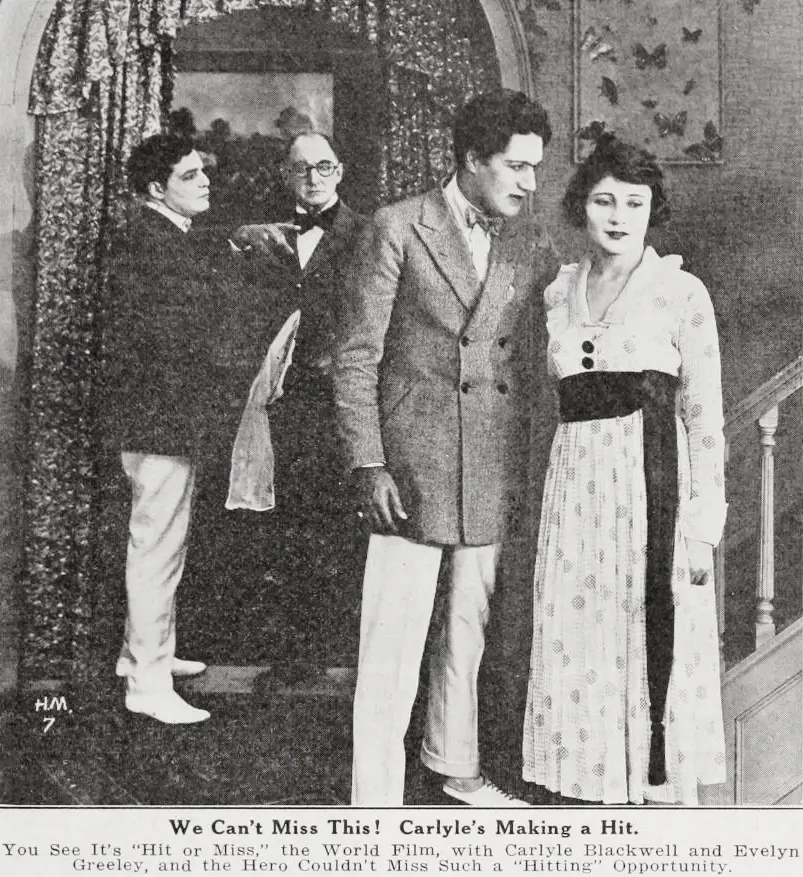
Despite Butts's undeniable success in crafting Morrison's scientific persona, the true affections of Mary remain unwavering. Her refusal of Morrison, driven by her love for Butts, serves as a pivotal moment, affirming the triumph of genuine emotion over manufactured prestige. This is where the film truly shines as a romantic comedy; it understands that love, in its purest form, cannot be bought or engineered. The narrative then takes an unexpected turn, injecting a surprising element of dramatic tension with the introduction of Ybor Cavallo, the Brazilian swindler, played by E.L. Fernandez. Cavallo's villainy, culminating in the arson of Professor Angus's laboratory, provides the necessary crisis for Butts to prove his worth not through intellectual deception, but through genuine heroism. Richard Neill as Professor Angus, though largely a comedic figure in his entomological obsession, becomes the focal point of this dramatic rescue, providing a tangible threat that elevates the stakes beyond mere romantic rivalry. Charles Sutton and Jack Drumier also provide solid support in their respective roles, adding texture to the ensemble.
The burning laboratory sequence is surprisingly effective, showcasing the capabilities of silent film to create suspense and action without dialogue. It is here that Butts, the erstwhile con artist of reputation, transforms into a bona fide hero. His rescue of Professor Angus is not just a daring feat; it is the ultimate fulfillment of his father's bizarre will. By saving a man of science, and by extension, his scientific endeavors, Butts finally demonstrates 'service to humanity in a scientific capacity,' albeit in a way his father likely never envisioned. This climactic moment is not only thrilling but deeply satisfying, providing a clear resolution to both the romantic and the inheritance plotlines. The film, in this moment, transcends its comedic origins to deliver a powerful message about the true nature of value and service, suggesting that genuine heroism often arises from unexpected places, much like the unexpected turns in films such as The Yellow Passport, which often surprise with their dramatic shifts.
The strength of 'Hit or Miss' lies undeniably in its screenplay, a credit to the collaborative efforts of Clara Beranger and Harry O. Hoyt. Beranger, a prolific and influential screenwriter of the era, was known for her ability to craft engaging narratives with strong characterizations, often imbued with a sense of social commentary. Hoyt, too, contributed significantly to the silent film landscape. Together, they construct a plot that, while leaning into comedic exaggeration, remains remarkably coherent and well-paced. The dialogue, though absent, is brilliantly implied through the intertitles and the actors' performances, conveying wit, irony, and genuine emotion. They masterfully set up the initial premise, escalate the stakes with the introduction of Morrison and the subsequent deception, and then provide a satisfying, albeit dramatic, resolution. The script avoids saccharine sentimentality, opting instead for a brisk, intelligent approach to storytelling that keeps the audience invested from start to finish. Their ability to balance multiple plot threads—the romance, the inheritance, the scientific deception, and the final dramatic rescue—without losing focus is commendable, showcasing a narrative sophistication that belies the film's relatively lighthearted tone. This intricate plotting, while different in subject matter, shows a similar dedication to narrative complexity as seen in other ambitious projects of the era, like Australia's Peril, which also juggled multiple storylines.
‘Hit or Miss’ serves as an excellent example of the versatility of early cinema, demonstrating that silent films were far more than just visual spectacles or simplistic morality tales. They were capable of nuanced comedy, intricate plotting, and engaging character development. The film’s production values, while perhaps not as lavish as some of the epic productions of the time, are more than adequate, with effective set design and cinematography that clearly conveys the narrative. The direction, though uncredited in some records, ensures a consistent tone and keeps the action flowing, allowing the comedic beats to land effectively and the dramatic climax to resonate. It's a film that reminds us of the foundations upon which modern cinematic storytelling was built, a period where filmmakers were constantly experimenting with narrative forms and visual language to captivate audiences without the aid of sound. The ingenuity required to convey such a rich story solely through visuals and intertitles is a testament to the artistry of the era, a stark contrast to the direct, action-heavy storytelling of something like The Indian Wars, highlighting the diverse approaches to film even then.
In conclusion, ‘Hit or Miss’ is more than just a historical curiosity; it’s a genuinely entertaining film that holds up surprisingly well a century after its release. Its blend of romantic comedy, satirical wit, and a dash of thrilling adventure makes it a compelling watch for anyone interested in the evolution of cinema or simply looking for a charming, well-crafted story. Carlyle Blackwell delivers a standout performance, anchoring the film with his charismatic portrayal of Butts Conroy, while Evelyn Greeley provides a captivating romantic lead. The screenplay by Beranger and Hoyt is intelligent and engaging, demonstrating a keen understanding of comedic timing and narrative structure. While it may not possess the grand scale of some contemporary blockbusters, its intimate focus on character and clever plotting ensures its place as a significant, if often overlooked, piece of silent film history. It’s a delightful reminder that sometimes, the most enduring stories are those that simply hit the mark, time and time again, much like the enduring appeal of character-driven narratives found in films such as The Apple-Tree Girl or The Way of the World.
IMDb 6.4
1936
Community
Log in to comment.