DbcultAccessing Vault...
5.7/10
Senior Film Conservator
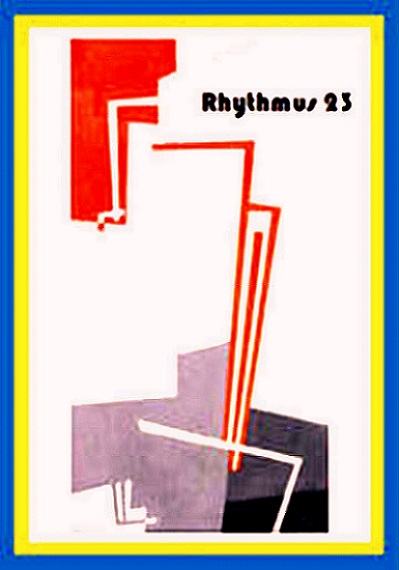
A definitive 5.7/10 rating for a film that redefined the boundaries of cult cinema. Rhythmus 23 remains a cornerstone of transgressive art.
In the pantheon of early experimental cinema, few figures loom as large or as enigmatically as Hans Richter. His 1923 opus, Rhythmus 23, represents a pivotal moment where the moving image finally severed its umbilical cord from the theatrical and literary traditions that had defined its infancy. While contemporaries were busy refining the grammar of suspense in films like Safety Last! or delving into the psychological depths of guilt in The Whispering Chorus, Richter was looking elsewhere—or rather, he was looking at the screen itself. He saw not a window into a fictional world, but a surface upon which to conduct experiments in temporal organization. Rhythmus 23 is not a story; it is a pulse. It is a visual manifestation of the heartbeat of the modern age, stripped of the artifice of character and plot.
The film exists as a fascinating evolution of Richter's earlier work. Where Rhythmus 21 felt like an exercise in the fundamental properties of the square—the way it could grow, shrink, and occupy space—Rhythmus 23 introduces a level of complexity that borders on the symphonic. The introduction of diagonal lines and overlapping planes creates a sense of three-dimensionality that is paradoxically flat. It is a dance of shadows and light that demands a different kind of spectatorship. We are not asked to empathize, but to perceive. In this regard, Richter’s work is more akin to the grand historical spectacles like Theodora only in its ambition; however, while the latter seeks to fill the screen with thousands of bodies, Richter seeks to fill it with the infinite possibilities of a single line.
The historical debate surrounding the production dates of Richter's 'Rhythmus' series often obscures the sheer audacity of the vision itself. Whether Rhythmus 23 was a separate endeavor or an extension of the 1921 sessions is, in many ways, an academic distraction. What matters is the progression of the visual logic. The film utilizes a sophisticated technique of multiple exposures and masking that was light-years ahead of the standard commercial fare of the time. While audiences were being charmed by the Dickensian sentimentality of David Copperfield, Richter was dismantling the very concept of the 'view' itself. He was interested in the 'universal language' of abstraction, a concept he shared with Viking Eggeling, hoping to find a visual syntax that could be understood across all cultures without the need for translation.
This quest for universality is what makes Rhythmus 23 so enduring. It doesn't age because it doesn't rely on the fashions, dialects, or social mores of the 1920s. It is as primordial as a cave painting and as futuristic as a digital glitch. When we compare it to the narrative structures of films like The Hoosier Schoolmaster or Wooden Shoes, we see a radical divergence. Those films are anchored in the specificities of time and place. Richter’s work, conversely, is anchored in the mathematics of the frame. It is a cinema of pure presence, where the only 'event' is the transition from one state of being to another.
One cannot discuss Rhythmus 23 without lamenting the loss of its successor, the hand-colored Rhythmus 25. The transition from the monochromatic starkness of the '23' iteration to the chromatic vibrancy of the '25' would have been the ultimate realization of Richter's 'Visual Music' theory. In Rhythmus 23, the absence of color forces the viewer to focus entirely on the interplay of form and duration. The rhythm is dictated by the length of the shots and the speed of the geometric transformations. It is a percussive experience. The lines strike the screen like hammers on a piano string, creating a visual melody that resonates long after the film has stopped rolling.
The technical prowess required to achieve these effects in 1923 should not be understated. Without the aid of computers or sophisticated optical printers, Richter had to manually manipulate the film strip, calculating the position of every line and square with mathematical precision. This labor-intensive process is what gives the film its organic, slightly vibrating quality. It is not the sterile perfection of modern CGI; it is the tactile, breathing abstraction of a human hand working in concert with a machine. It shares a certain artisanal spirit with the early swashbuckling energy of Casanova or the adventurous whimsy of Sands of the Desert, albeit channeled into a much more cerebral medium.
To truly appreciate what Richter achieved, one must contrast it with the contemporary landscape of the 1920s. Consider the domestic dramas and moralistic tales like Blind Wives or The Hand That Rocks the Cradle. These films used the camera to document reality, to tell stories of social consequence. Richter, however, used the camera to create a new reality. He was not interested in the 'hand that rocks the cradle' but in the 'hand that draws the line.' His work is a defiance of the domestic, a flight into the cosmic. Even when compared to the lighthearted escapades of Landsvägsriddare or the pastoral beauty of Springtime, Rhythmus 23 stands apart as a cold, brilliant diamond of intellectual rigor.
There is a structural tension in Rhythmus 23 that mirrors the social upheaval of the Weimar Republic. The shifting squares and intersecting lines suggest a world where the old order is being dismantled and a new, more chaotic, yet more vibrant one is emerging. It is a film of the city, of the machine, of the future. While Life's Whirlpool might depict the literal dangers of a turbulent existence, Richter depicts the abstract beauty of that same turbulence. He finds harmony in the clash of forms, a visual equivalent to the twelve-tone music that was beginning to emerge in the same period. It is a cinema of the 'new man,' one who is comfortable in the flux of the modern world.
As we look back at Rhythmus 23 through the lens of a century, its influence is everywhere—from the title sequences of Saul Bass to the music videos of the 1980s and the generative art of today. Richter proved that the screen did not need a face to be expressive, nor a voice to be heard. He understood that the fundamental unit of cinema is not the scene, but the frame, and the fundamental force is not the plot, but the rhythm. In the context of his larger body of work, often shown under the umbrella Un film de Hans Richter, Rhythmus 23 remains the most sophisticated realization of his early ideals.
It is a film that rewards repeated viewings. Each time the eye catches a different intersection, a different nuance in the fade, a different relationship between the black void and the white form. It is a meditative experience, a cleanse for the visual palate. In an era where we are bombarded by narrative content and sensory overload, returning to the stark, disciplined beauty of Richter's lines is a necessary act of cinematic devotion. It reminds us that at its core, cinema is an art of light and time, a truth that films like Urteil des Arztes or even the comedic All for the Dough Bag often overlook in their pursuit of immediate gratification. Richter was playing the long game, and a hundred years later, his rhythm is still beating, as steady and as radical as ever.

IMDb 5.2
1924
Community
Log in to comment.