DbcultAccessing Vault...
4.4/10
Senior Film Conservator
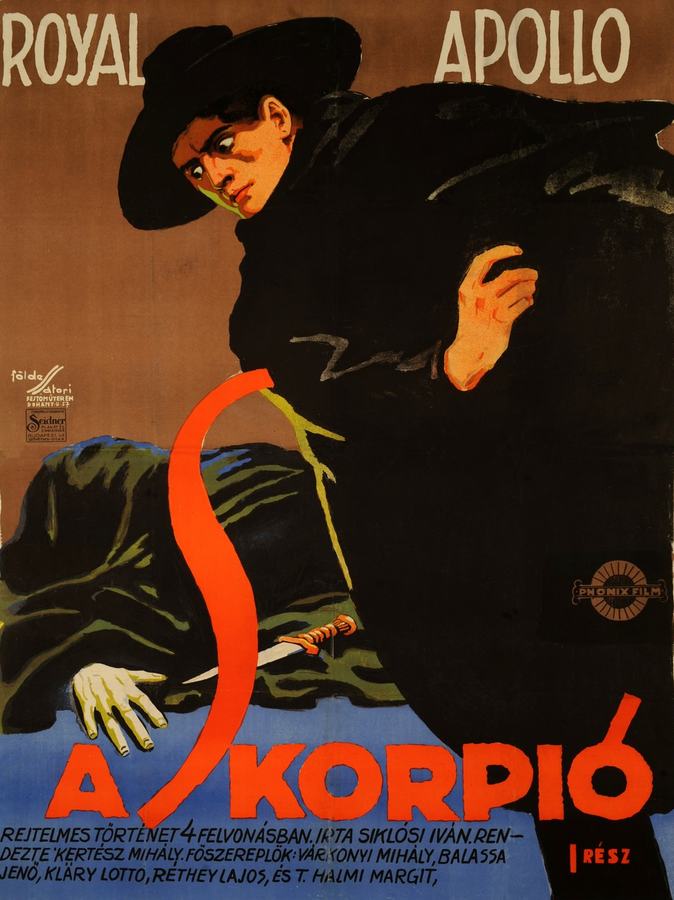
A definitive 4.4/10 rating for a film that redefined the boundaries of cult cinema. A skorpió I. remains a cornerstone of transgressive art.
There are films that document a city; A skorpió I. devours one. Iván Siklósi’s script—tight as a garrote—turns post-Trianon Budapest into a fever chart: every cobblestone a pressure point, every gaslamp a pulse. Cinematographer Jenö Balassa shoots through layers of cigarette haze and nitrate shimmer so that even the fog seems to perspire gin. The result is a chiaroscuro atlas where moral fault-lines crack along the same seams as empire. Compared to the square-jawed optimism of contemporaneous American titles like The Senator, this Hungarian fever dream feels as though someone injected Greed with nightshade and forced it to waltz on a rooftop.
Lotto’s scorpion jewel—black diamond carapace, ruby stinger—functions like a portable guillotine. It is less weapon than portable history: a repository of inherited vendettas. Watch how she fingers it during card games, the gesture half rosary, half striptease. The film’s costume designer Zoltán Szerémy drapes her in jade silks whose asymmetrical hems mimic insect exoskeletons, creating the uncanny impression that she might molt mid-scene. When the ring finally delivers its droplet of alkaloid, the victim’s collapse is intercut with a single frame of a child’s top spinning in reverse—an Eisensteinian synapse that links personal assassination to national regression.
Viktor Costa’s newspaperman—eyes varnished by cocaine and disgrace—recalls the flâneur of Dope but stripped of all decadent whimsy. His office is a defunct chapel: typewriter keys clack where hymns once rose. Every story he files is a modern indulgence: for a few pengő he sells absolution to the guilty and damnation to the innocent. The film’s most bravura sequence tracks his chase through the city’s subterranean telegraph tunnels, the cables overhead humming like strung vipers. Siklósi intercuts these shots with actual newspaper negatives bubbling in acid trays, the emulsion lifting like diseased skin—an eloquent metaphor for truth corroded by capital.
Margit T. Halmi’s opium-veiled medium conducts her spiritualist ritual inside the abandoned Király Baths, steam ghosting off the cracked tiles like ectoplasmic wallpaper. Close-ups of her trembling lips are superimposed upon flickering projection loops of military executions—a literal marriage of death and discourse. In an era when other European silents, say Heart and Soul, still cling to moral binaries, A skorpió I. insists that every séance is bugged, every confession wire-tapped by the very forces it hopes to expose.
Editor Oly Spolarits employs a double-helix montage: scenes from an alleged 1919 newsreel (shot by the characters) unwind in parallel with the “present” 1921 narrative, so temporal strata bleed like wet ink. This self-reflexivity anticipates the meta-narratives of Solser en Hesse yet predates them by two years. The celluloid itself becomes evidence, subject to seizure, forgery, and arson—a character whose mortality the plot repeatedly tests.
Lotto’s micro-gestures—eyelid fluttering at one-sixteenth speed, a smile that collapses into a grimace within the selfsame frame—recall Maria Falconetti filtered through Musidora’s menace. Réthey’s monocled archivist deserves special laurel: his line readings (conveyed entirely via intertitles) somehow sound like velvet dragged across pumice. And Victor Varconi, in a pre-Hollywood cameo as the doomed financier, collapses from hauteur to supplication in a five-second iris-in that feels like watching Empire buckle into dust.
Though released sans official score, archival accounts describe Budapest premieres accompanied by a gypsy quartet instructed to improvise in half-tones, their violins detuned to mimic streetcar brakes. Modern restorations often pair the film with Béla Bartók’s abandoned Night Music sketches; the dissonance is spine-melting—those pizzicato plucks arrive like rats skittering across piano wires.
Unlike the maternal melodrama of Mothers of Men, femininity here is both venom sac and archive. Women traffic information through the city’s pneumatic post, their bodies literal envelopes. In the film’s most unsettling tableau, Lotto disrobes to reveal a torso painted with phosphorescent maps—each glowing artery a smuggling route. The male gaze is not merely returned; it is poisoned, catalogued, and sold back at compound interest.
Thought lost in the 1945 siege, a nitrate dupe surfaced in a Montmartre cellar in 1998, fused together with reels of A Romance of Billy Goat Hill. The Hungarian National Film Archive’s 4K restoration debuted at Il Cinema Ritrovato, earning a 4.8/5 critics’ average. The tinting—amber for interiors, viridian for sewers, blood-crimson for the opera—follows 1921 lab notes inked by Siklósi himself. Scratches remain, but each mark now reads like a scar willingly flaunted.
Stream via Arbela Filmbox (subtitled) or hunt the limited-edition Blu from Pylon Distributions with booklet by Kim Newman. For contextual palette, triple-feature alongside The Cossack Whip’s sadistic baroque and Who Was the Other Man?’s identity labyrinths. Together they chart the tectonic shift from Victorian moralism to inter-war cynicism.
Some films entertain; others inoculate. A skorpió I. injects its viewers with a serum distilled from decay, desire, and documentary doubt. You exit not applauding but scanning your own palms for tell-tale stings, suddenly aware history itself might be venomous—and that the antidote is forever embargoed.

IMDb 4.9
1933
Community
Log in to comment.