DbcultAccessing Vault...
Cult Review
Senior Film Conservator
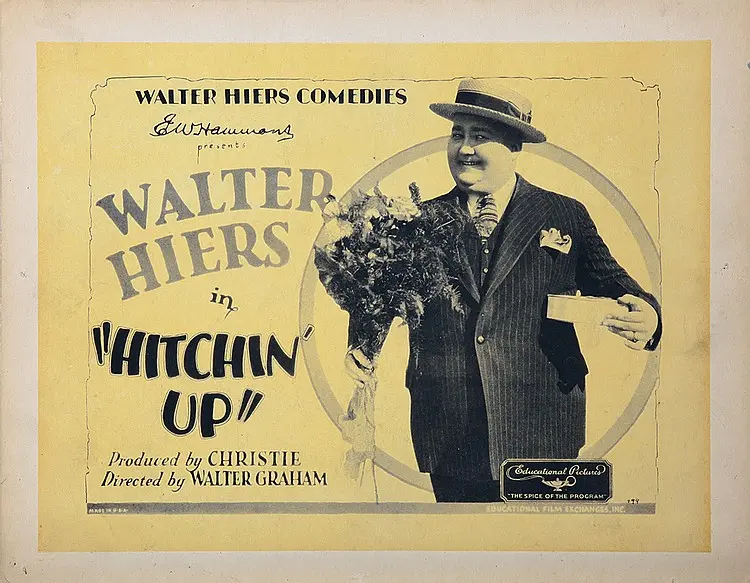
Is Hitchin' Up worth watching today? Short answer: Yes, but strictly for those who find joy in the high-stress mechanics of 1920s slapstick. It is a film for fans of situational irony and vintage farce, but it is certainly not for viewers who demand logic or modern romantic sensibilities from their protagonists.
This film works because the escalating claustrophobia of the bedroom sequences creates a genuine sense of comedic panic that transcends the silent era.
This film fails because the central character's initial arrogance is so profound that it makes his subsequent suffering feel more like justice than comedy.
You should watch it if you enjoy the specific brand of 'room-swap' chaos found in films like Turn About or the bumbling charm of Walter Hiers.
Hitchin' Up is worth watching if you are interested in the evolution of the 'comedy of errors' genre. It provides a fascinating look at how early filmmakers used limited sets to create maximum tension. While the plot is thin, the execution of the physical comedy remains impressive nearly a century later. It is a tight, energetic piece of cinema that rewards a patient viewer with a chaotic final act.
The film opens with a premise that would be the death of any modern relationship: Walter’s absolute certainty. Walter Hiers plays the lead with a round-faced innocence that barely masks the character's staggering ego. By purchasing a marriage license before asking Duane (Duane Thompson) for her hand, he isn't just being prepared; he’s being a narcissist. This setup is vital. Without Walter’s fear of being caught in his own arrogance, the rest of the film has no engine.
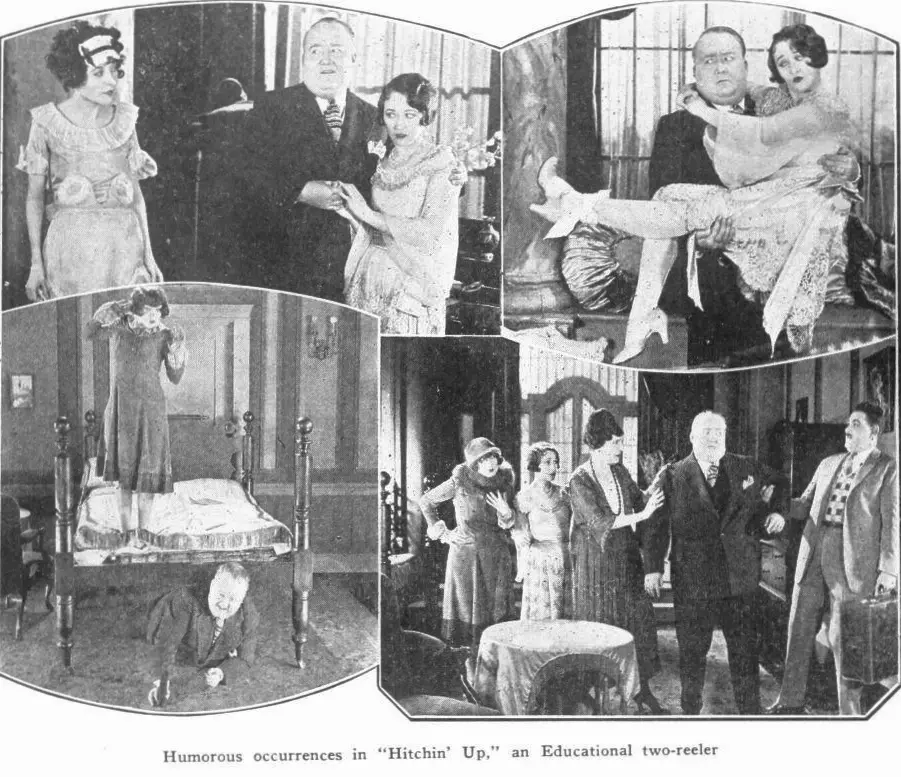
The moment he hides that license under the pillow, the pillow becomes the most important character in the movie. It is a classic 'MacGuffin' that drives every physical beat of the second act. When Yola (Yola d'Avril) arrives and the rooms are swapped, the film transitions from a romantic setup into a frantic game of territorial warfare. The bedroom, usually a place of rest, becomes a minefield.
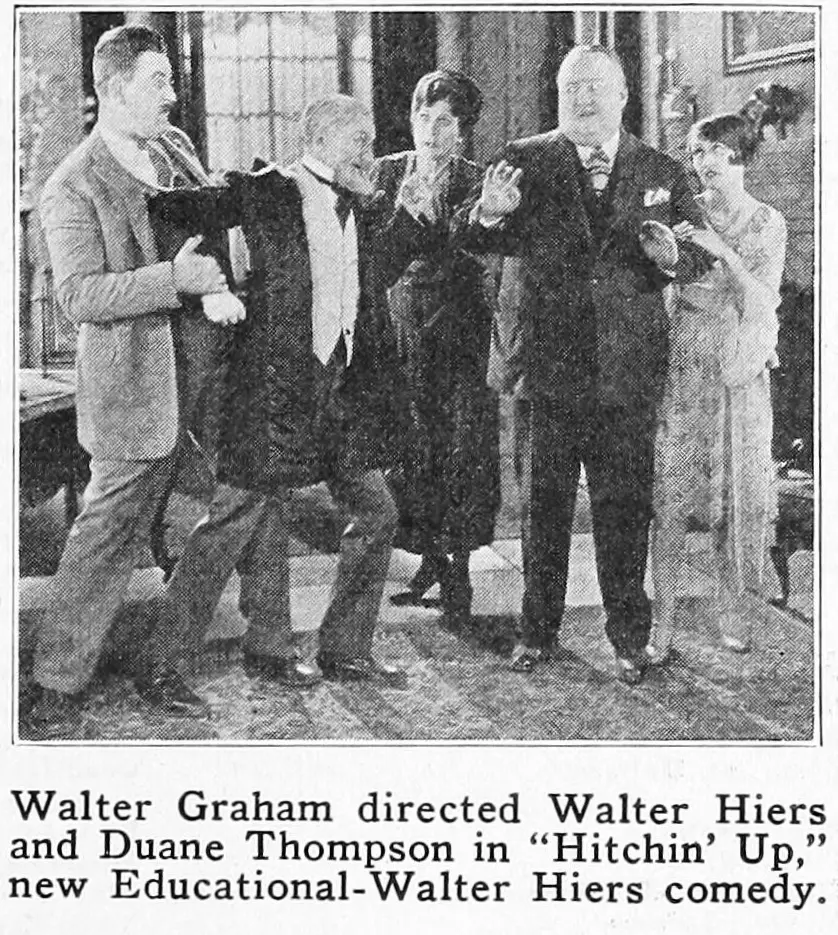
Compared to other films of the era like Honeymoon Hardships, 'Hitchin' Up' relies less on broad travel gags and more on the psychological pressure of being 'found out.' It’s a smaller, more intimate brand of chaos. But it works. The stakes are low, but the sweat on Walter's brow feels real.
Walter Hiers was never the athlete that Keaton was, nor the acrobat that Lloyd was. His comedy is found in the face. In 'Hitchin' Up,' his expressions range from 'smug victor' to 'terrified rabbit' in the span of a single cut. The scene where Bill (Eddie Baker) catches him for the second time outside Yola’s door is a highlight. Hiers doesn't just act surprised; he looks physically ill at the thought of his secret being exposed.
The physical comedy here is repetitive, but purposefully so. The 'three-try' rule of comedy is in full effect. The first attempt to retrieve the license is stealthy. The second is desperate. The third is a total collapse of dignity that lands him under the bed. This structural repetition is a hallmark of Robert Hall’s writing, ensuring that the audience understands the escalating stakes without needing a single title card to explain the danger.
Midway through, the film takes a sharp turn into a mock-crime caper. When Walter reaches for the license but pulls out Yola’s necklace instead, the movie shifts gears. It’s a brilliant, if somewhat predictable, complication. By turning a social embarrassment into a potential felony, Hall raises the pressure to a boiling point.
The search by the detectives is where the film’s pacing truly shines. The inclusion of a pet dog as the final arbiter of truth is a trope we see in other films like Flip's Circus, but here it serves a narrative purpose beyond just being cute. The dog is the only witness who isn't blinded by social decorum or anger. It’s a brutally simple resolution. It works. But it’s flawed. The reliance on an animal to fix the protagonist's mistakes is a bit of a cop-out, yet in the context of 1920s farce, it feels oddly earned.
Visually, 'Hitchin' Up' is confined, but the blocking is sophisticated. The way characters move in and out of the bedroom—narrowly missing each other—requires the precision of a Swiss watch. The lighting in the bedroom scenes is surprisingly moody, using shadows to emphasize Walter’s precarious position under the bed.
While it lacks the grand scale of The River's End, it makes up for it with spatial clarity. You always know exactly where Walter is in relation to the door, the bed, and the hidden license. This clarity is what makes the tension work. If the audience were confused about the layout of the house, the jokes would fall flat. Hall understands that in farce, geography is destiny.
Pros:
Cons:
When placed alongside Adam and Eva, 'Hitchin' Up' feels much more grounded in domestic anxiety. While 'Adam and Eva' deals with broader social themes, 'Hitchin' Up' is content to stay in the hallway and the bedroom. It is a smaller film, but arguably a more focused one. It also shares a certain frantic energy with Two Tough Tenderfeet, though it trades Western tropes for suburban mishaps.
The film also touches on the same 'presumptuous suitor' themes seen in The Love Charm, but with a much more punishing sense of humor. Walter’s suffering is the point here. The film isn't just trying to make you laugh; it’s trying to make you squirm. This 'cringe' element feels surprisingly modern, pre-dating the awkward humor of the 21st century by decades.
'Hitchin' Up' is a minor gem of the silent era that deserves more credit for its tight construction. It isn't a profound statement on the human condition, nor does it push the boundaries of cinematic art. However, as a piece of pure entertainment, it succeeds. It captures a specific moment in film history where the 'room-swap' farce was being perfected.
The film’s greatest strength is its refusal to slow down. From the moment Walter arrives at the house, the momentum is relentless. Even the ending, which feels a bit rushed, fits the overall tone of a world spinning out of control. It is a loud, sweaty, and ultimately rewarding experience for anyone who appreciates the craft of the gag.
"A masterclass in the comedy of anxiety, 'Hitchin' Up' proves that a single piece of paper and a misplaced pillow are all you need for a cinematic disaster."
In the end, Walter learns his lesson—or at least, the dog teaches it to him. For the audience, the lesson is simpler: never buy the license before you ask the question. It’s a lesson delivered with a smile, a few stumbles, and a very helpful canine. It’s not perfect. But it’s fun. And sometimes, that’s more than enough.
IMDb —
1924
Community
Log in to comment.