DbcultAccessing Vault...
Cult Review
Senior Film Conservator
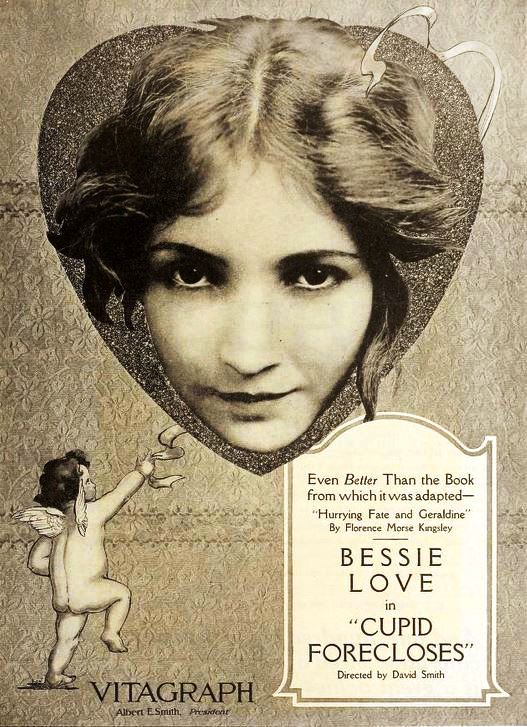
The year 1919 was a watershed moment for American cinema, a period where the medium began to shed its primitive skin and embrace a more nuanced, psychological interiority. In the midst of this evolution, Cupid Forecloses emerged as a poignant, if understated, exploration of the fragility of the middle class. Directed with a keen eye for domestic detail, the film serves as a vehicle for the luminous Bessie Love, whose portrayal of Geraldine Farleigh transcends the typical 'damsel in distress' tropes of the era.
While many contemporary films of the late 1910s sought out grand spectacles—think of the exoticism in The White Pearl or the rugged survivalism found in Vengeance of the Wilds—Cupid Forecloses finds its power in the mundane. It is a film about the terror of a knock at the door, the weight of a signed promissory note, and the exhausting labor of maintaining appearances in a small town where everyone knows your balance sheet better than your name.
The narrative architecture, penned by the trio of Stanley Olmstead, Edward J. Montagne, and Florence Morse Kingsley, is deceptively simple. Geraldine Farleigh is a schoolteacher, a role that in 1919 carried a specific weight of moral guardianship and social precariousness. She is the breadwinner, a position that places her at odds with the quiescent expectations of her gender. The plot’s engine is the debt owed to Bruce Cartwright. In the silent era, debt was often used as a melodramatic cudgel, but here it feels more like a slow-acting poison.

Unlike the high-stakes political intrigue of La reina joven, the conflict in Cupid Forecloses is intimate. It’s about the claustrophobia of the village. The village schoolhouse becomes a microcosm of the struggle between the individual and the community. Geraldine is not just fighting Cartwright; she is fighting the systemic reality that a woman's value is often tied to her father’s failures or her husband’s successes. The film avoids the broad strokes of The Man from Nowhere, opting instead for a granular look at the emotional toll of financial insecurity.
Bessie Love’s performance is nothing short of a masterclass in silent film acting. At a time when many actors were still relying on the exaggerated gestures of the stage, Love utilizes her eyes and the subtle set of her jaw to convey Geraldine’s internal monologue. There is a specific scene where she reviews her family’s accounts—a quiet moment that could have been dull in lesser hands. Yet, Love makes us feel the coldness of the numbers. She isn't just a timid teacher; she is a woman holding back an avalanche of despair with a single, trembling hand.
Her chemistry with Wallace MacDonald provides the necessary romantic counterpoint, but the film wisely never lets the romance overshadow the central conflict of the 'foreclosure.' It’s a delicate balance. If we compare this to the social urgency of Within Our Gates, we see a different kind of American struggle—one that is less about racial identity and more about the crushing weight of the 'genteel poor.' Love’s Geraldine is a cousin to the characters seen in The Silent Woman, where the female protagonist must navigate a world that prefers her seen but not heard.
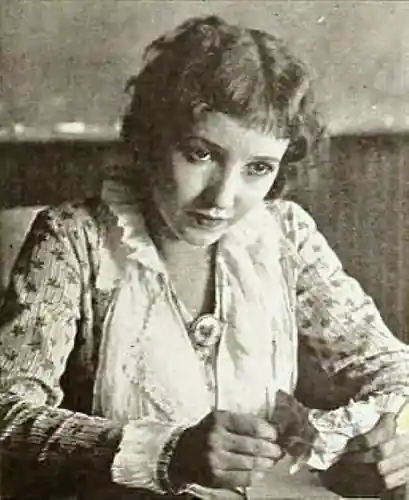
Visually, Cupid Forecloses utilizes the natural light of its rural settings to create a sense of authenticity. The cinematography doesn't strive for the expressionistic shadows of Korol Parizha, nor the rugged, sweeping vistas of Australia's Peril. Instead, it focuses on the textures of the village—the dust of the road, the wood grain of the school desks, the stiff lace of a collar. These details ground the film in a reality that makes the threat of Cartwright’s debt feel tactile.
The supporting cast, featuring stalwarts like James Donnelly and Aggie Herring, populates the village with recognizable archetypes that never veer into caricature. Frank Hayes and Dorothea Wolbert provide the necessary communal friction, illustrating how a small town can be both a support system and a panopticon. There is a sense of lived-in history in every frame, a stark contrast to the more theatrical staging of The Spider and the Fly.
What makes Cupid Forecloses stand out over a century later is its refusal to offer an easy out. While the title suggests a romantic resolution, the 'foreclosure' of the heart is inextricably linked to the foreclosure of the home. It’s a sophisticated take on the 'marriage of convenience' trope. The film asks: can love truly exist when it is used as a bargaining chip for survival? It’s a question that feels as relevant in our modern era of gig-economy precarity as it did in the post-WWI era of rural decline.

Comparing it to The Clean-Up, we see a similar fascination with moral hygiene and financial rectitude. However, Cupid Forecloses is less about a literal cleaning of the streets and more about the internal cleaning of one's conscience. Geraldine’s struggle is a moral one—how to remain 'good' while being treated as a commodity. The film’s pacing is deliberate, allowing the audience to sit with Geraldine in her moments of quiet desperation. It lacks the frantic energy of Black and Tan Mix Up, but it gains a profound emotional resonance in its place.
The script by Olmstead, Montagne, and Kingsley is remarkably tight. Every scene serves to further the central tension between Geraldine’s duty to her family and her own burgeoning desires. The dialogue intertitles are used sparingly, allowing the visual storytelling to carry the heavy lifting. This is a film that trusts its audience to understand the subtext of a look or a lingering shot on a stack of bills. It shares a certain thematic DNA with The Torch Bearer, particularly in its depiction of a woman carrying the weight of a legacy she didn't ask for.
It is a tragedy of film history that works like Cupid Forecloses are often overshadowed by the grander epics of the time. While it may not have the colonial scale of The Rose of Rhodesia or the genre-bending experimentation of Mixed Blood, it possesses a quiet integrity that is rare. It is a film that respects its characters' poverty without sentimentalizing it. Bruce Cartwright is not a mustache-twirling villain; he is a man of his time, operating within the cold logic of the law, which makes him all the more terrifying.
The resolution of the film, while satisfying the generic requirements of the 1919 audience, leaves a lingering sense of melancholy. We are left wondering about the cost of Geraldine’s victory. Did she win her freedom, or did she simply trade one form of obligation for another? This ambiguity is what elevates the film from a simple melodrama to a work of art. It echoes the nautical dread of The Port of Doom, but relocates that dread to the sun-drenched porches of small-town America.
In the end, Cupid Forecloses remains a vital piece of the silent era puzzle. It showcases Bessie Love at the height of her powers and provides a window into a world that was rapidly disappearing. It is a film about the endurance of the human spirit in the face of the ledger book, a story of a schoolteacher who taught us that the most important lessons are often the ones we learn outside the classroom. For anyone interested in the intersection of economics and emotion in early cinema, this is essential viewing. It’s a reminder that even when Cupid is at the door, he might just be there to collect the rent.
Final Verdict: A nuanced, emotionally resonant pastoral drama that proves silent cinema could be as sophisticated and socially conscious as any modern production. Bessie Love is a revelation.
IMDb —
1915
Community
Log in to comment.