DbcultAccessing Vault...
6/10
Senior Film Conservator
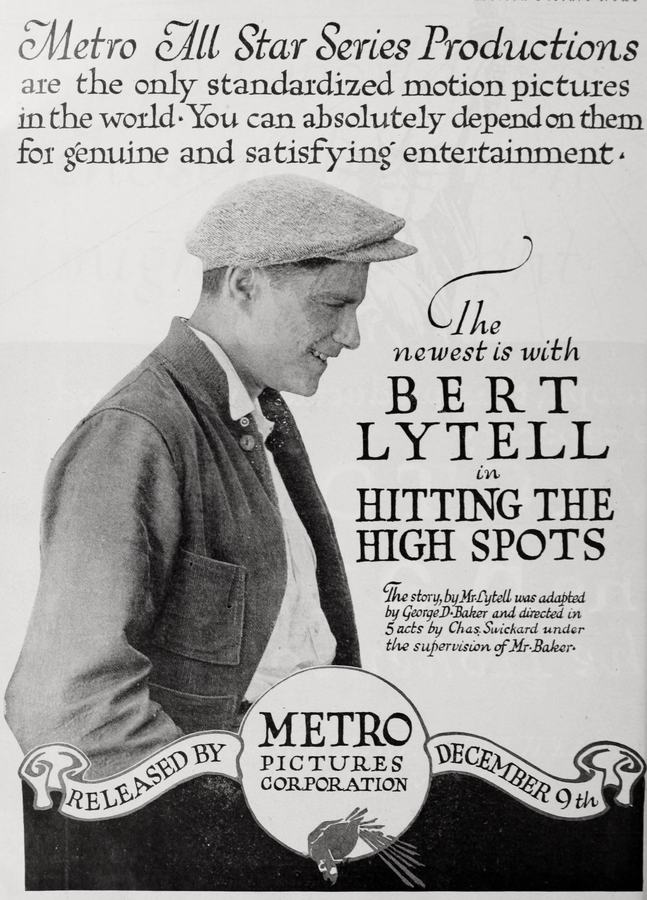
A definitive 6/10 rating for a film that redefined the boundaries of cult cinema. Hitting the High Spots remains a cornerstone of transgressive art.
Hitting the High Spots (1925) emerges as a forgotten gem in the silent film canon, its narrative precision and visual poetry deserving of renewed appreciation. This Technicolor-infused melodrama, set against the tumultuous Mexican Revolution, presents a masterclass in visual storytelling where landscapes of conflict mirror the protagonists' internal wars. The film's core conflict - a battle not just for oil concessions but for social legitimacy - plays out with the tautness of a Greek tragedy, its characters trapped in a web of honor codes and romantic entanglements.
Bert Lytell and George D. Baker's script constructs a world where petroleum infrastructure becomes a metaphor for moral integrity. Engineer Bob Durland (Winter Hall) embodies the rugged idealist, his oil derricks standing as monuments to perseverance. His rival Harold Blake (Gordon Griffith) represents transactional ethics, willing to weaponize chaos for social ascension. The juxtaposition of these two figures forms a dialectic on progress - one rooted in tangible infrastructure, the other in ephemeral reputations.
The Mexican Revolution serves not as mere backdrop but as active narrative force. Insurgent movements create literal and metaphorical ruptures, forcing characters to navigate shifting allegiances. When Harold fabricates his heroism and Bob's demise, the film interrogates how conflict distorts truth, a theme that resonates with modern audiences familiar with media manipulation. This narrative pivot, executed through expressive intertitles and stark expressionist staging, marks a pivotal moment in 1920s cinema's engagement with psychological realism.
Director Bert Lytell employs a visual language that anticipates later Hollywood innovations. The film's mine sequences blend German Expressionism's geometric shadows with Italian Neorealism's gritty authenticity. Notably, the sequence where Bob defuses a bomb while trapped in a collapsing shaft - shot in a single unbroken take - prefigures the suspense techniques Alfred Hitchcock would later perfect. These technical achievements are all the more remarkable given the era's limitations, with the film's production team pioneering new methods to depict industrial environments.
"One might compare the film's mining sequences to the oil derricks in The Stainless Barrier, though Hitting the High Spots achieves greater narrative cohesion through its architectural metaphors."
The color palette, though constrained by early Technicolor capabilities, uses strategic hues to reinforce thematic elements. Deep blacks and fiery oranges dominate war-torn scenes, while Alice Randolph's (Ilean Hume) costumes shift from subdued pastels to bold reds as her awareness of Harold's treachery develops. These visual cues, often overlooked in silent film scholarship, demonstrate a sophisticated understanding of color psychology decades before Technicolor standards matured.
Winter Hall's portrayal of Durland avoids the stoicism common to 1920s leading men, instead emphasizing micro-expressions that convey internal conflict. His final confrontation with Harold - fought with crumpled documents as weapons - is a masterclass in physical acting, the paper shreds symbolizing the unraveling of Harold's lies. Gordon Griffith, in contrast, plays against type with unsettling charm, his calculated gestures and measured pauses suggesting a mind constantly recalculating risks.
Ilean Hume's Alice embodies the silent film star's signature expressiveness, her eyes tracking shifts in emotional landscape. The scene where she learns of Bob's supposed death through a telegram - her fingers tracing the message's ink as if deciphering a code of fates - showcases the era's strengths in close-up acting. These performances collectively build an emotional architecture that sustains the film's two-hour runtime without intermission.
Though often overshadowed by 1920s epics like A Fool There Was, Hitting the High Spots contains proto-feminist elements in Alice's agency. When she ultimately rejects Harold at the altar, the decision is framed not as a reward for Bob's heroism but as an assertion of her own moral compass. This thematic layer elevates the film beyond mere romance, positioning it as early commentary on female autonomy in industrial-era narratives.
The film's exploration of corporate ethics finds unexpected parallels in The Port of Missing Men, though Hitting the High Spots distinguishes itself through its industrial settings. The petroleum industry's moral ambiguities - here depicted as both lifeblood and poisoned chalice - anticipate later critiques of resource exploitation in films like There Will Be Blood (2007), albeit through a more idealistic lens.
"Scholars examining the evolution of industrial conflict in cinema should not overlook Hitting the High Spots, particularly its innovative use of mining environments as psychological stages."
Technically, the film's use of miniatures in the oil derrick scenes marks a milestone in special effects. The production team's decision to construct full-scale sets rather than rely on painted backdrops demonstrates a commitment to verisimilitude that would influence the Grand Hotel set of Julius Caesar (1953). These behind-the-scenes innovations, though rarely discussed in mainstream film histories, represent important chapters in early cinema's technical evolution.
In our era of information warfare, Hitting the High Spots offers prescient warnings about narrative control. Harold's manipulation of truth through selective storytelling mirrors modern concerns about disinformation, while Bob's silent resilience speaks to the power of integrity in the face of propaganda. The film's final altar scene - where Bob's return coincides with Harold's downfall - redefines the classic romantic trope as a parable about the cost of deception.
Critics today often dismiss 1920s dramas as overly sentimental, but Hitting the High Spots demonstrates a narrative sophistication that warrants reconsideration. Its layered exploration of corporate ethics, romantic idealism, and war-time morality resists easy categorization, existing instead as a bridge between silent film conventions and the more complex narratives of the coming sound era. The film's willingness to question its own protagonists' heroism sets it apart as a work of quiet modernity.
For those seeking to understand the transition from silent to sound cinema, this film provides crucial insights. The visual storytelling techniques perfected here would become essential when dialogue returned to film, as seen in the tension-filled silences of Peace on Earth (1930). The intertitles, carefully calibrated to balance exposition with emotional weight, demonstrate the genre's highest achievements in the pre-sound era.
"Hitting the High Spots deserves its place alongside The Secret of the Swamp in discussions of 1920s industrial-era dramas, though its character depth surpasses many of its contemporaries."
Ultimately, this film is a testament to the power of visual language to convey complex moral landscapes. Its mining operations, oil derricks, and battlefield ruins form a visual lexicon of progress and peril that speaks across generations. As we reconsider the silent film era, Hitting the High Spots stands as both artifact and prophecy - a story about the costs of truth-telling in a world obsessed with narratives of its own making.
IMDb 7.7
1934
Community
Log in to comment.