A definitive 5.6/10 rating for a film that redefined the boundaries of cult cinema. Hoboken to Hollywood remains a cornerstone of transgressive art.
Can a century-old silent comedy about a cross-country road trip still captivate a modern audience? The short answer is yes, but with significant caveats that will largely dictate your enjoyment. Hoboken to Hollywood is a fascinating, if sometimes frustrating, relic that offers a unique window into early American humor and filmmaking, making it a worthy watch for specific cinephiles, but a bewildering experience for others.
This film is unequivocally for those with a deep appreciation for silent cinema, film history, and the foundational elements of slapstick comedy. It is decidedly not for viewers seeking modern pacing, nuanced character development, or sophisticated humor. If your cinematic diet consists primarily of contemporary blockbusters or prestige dramas, this journey might feel less like a scenic drive and more like a bumpy, bewildering detour.
This film works because of its unbridled commitment to physical comedy and its accidental documentation of a bygone era's anxieties and aspirations concerning travel and societal shifts.
This film fails because its episodic structure often lacks cohesive narrative drive, and much of its humor, while historically significant, feels dated and repetitive to a modern sensibility.
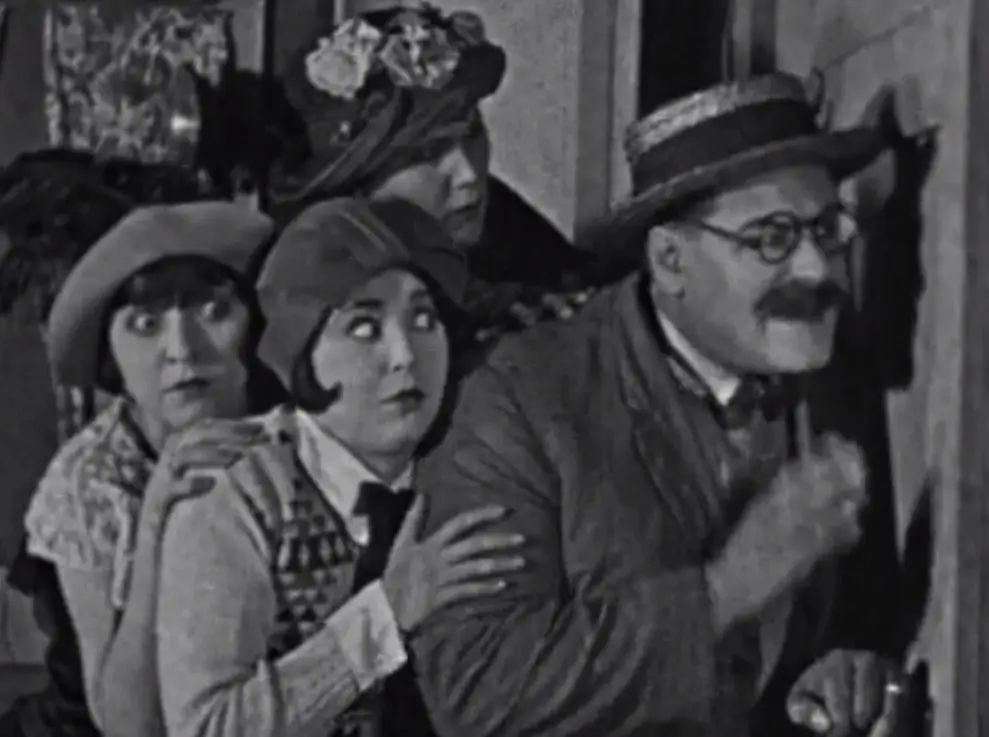
Scene from Hoboken to Hollywood
Cinematic perspective: Exploring the visual vocabulary of Hoboken to Hollywood (1926) through its definitive frames.
You should watch it if you are a film historian, a silent film enthusiast, or someone curious about the roots of American road trip narratives and slapstick.
The Cross-Country Odyssey: A Plot Reimagined
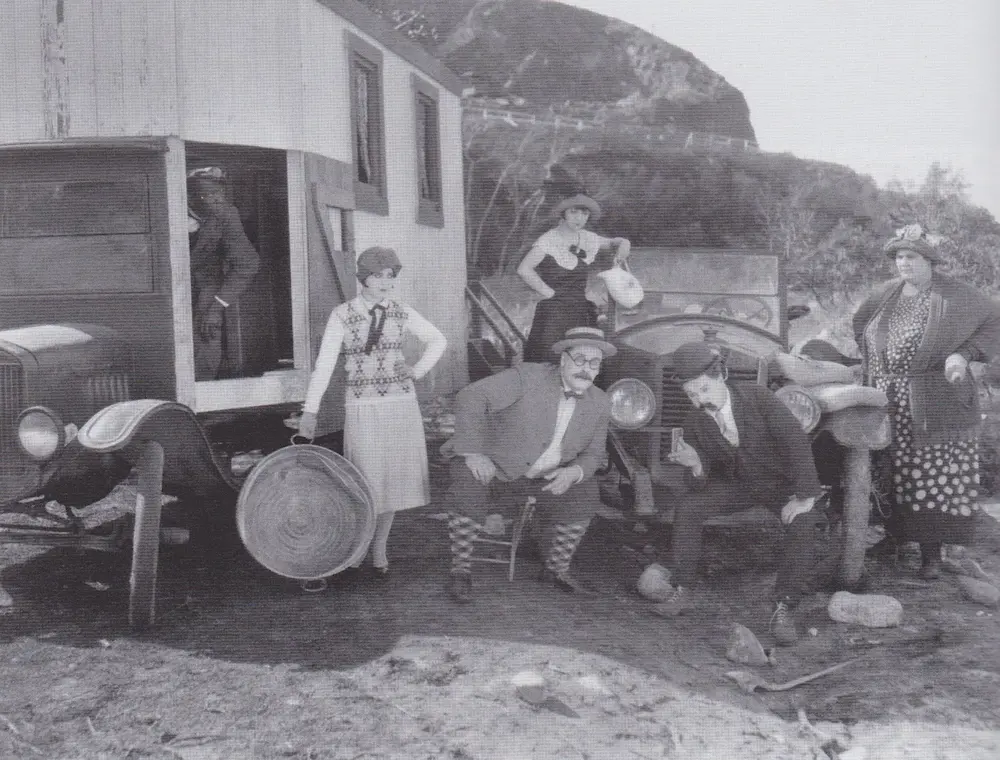
At its core, Hoboken to Hollywood chronicles the reluctant westward migration of Billy, played with an endearing everyman exasperation by Billy Bevan. His corporate transfer from the industrial grit of Hoboken to the sun-drenched promise of California isn't just a career move; it's an upheaval of his entire domestic sphere. He’s not merely relocating himself, but his wife and, crucially, his formidable mother, who seems to embody the very essence of East Coast matriarchal stubbornness. Their chosen mode of transport—a sputtering, temperamental jalopy—becomes less a vehicle and more a character unto itself, a metallic harbinger of the chaos to come.
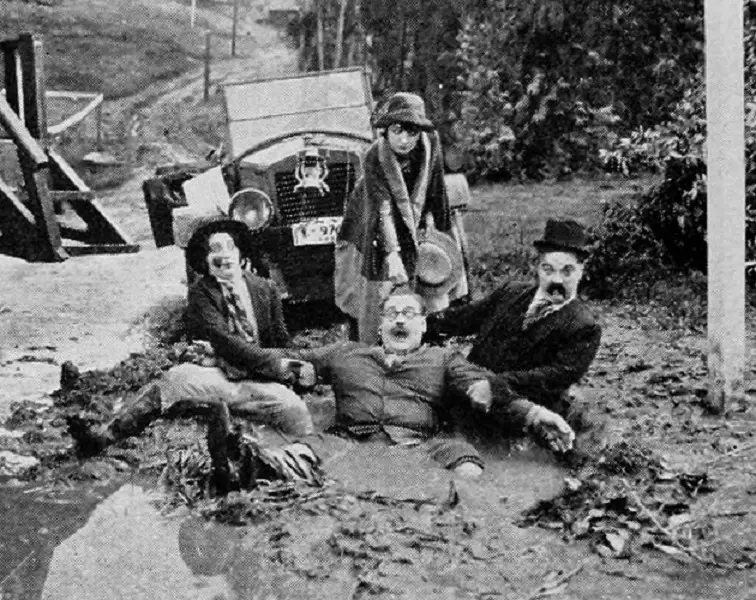
The journey itself is less about reaching a destination and more about the relentless string of comical misadventures that punctuate every mile. From sputtering engines in the middle of nowhere to inadvertent run-ins with unsuspecting travelers, the film revels in the kind of broad, physical humor that defined the silent era. The plot is less a tightly woven tapestry and more a series of loosely connected vignettes, each designed to elicit a guffaw through exaggerated situations and visual gags. It’s a testament to the early days of cinematic storytelling, where narrative sophistication often took a backseat to the sheer joy of seeing people tumble, chase, and react with melodramatic flair.
The film’s particular brand of humor often comes at the “expense” of their road companions. This isn't malicious villainy, but rather the accidental, often exasperating, consequences of the family's own ineptitude or the general chaos that seems to follow them. One can imagine a scene where their jalopy, after a particularly violent sputter, sends a cascade of luggage from a perfectly innocent passing car tumbling into a ditch, leading to a frantic, silent pantomime of apologies and accusations. It's a snapshot of a simpler time, when the open road was a wild, unpredictable frontier, and every fellow traveler was a potential catalyst for either camaraderie or calamity.
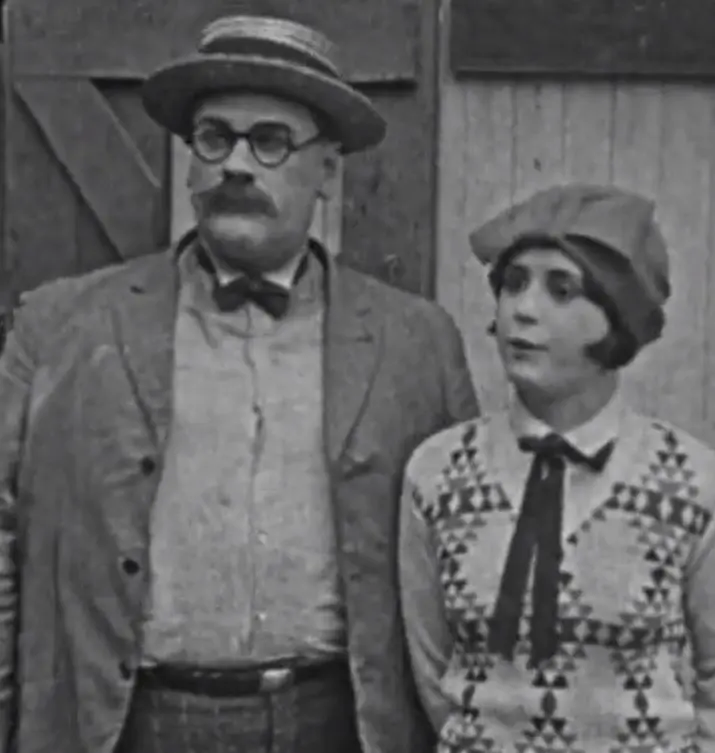
Scene from Hoboken to Hollywood
Cinematic perspective: Exploring the visual vocabulary of Hoboken to Hollywood (1926) through its definitive frames.
Performances: Silent-Era Exaggeration and Charm
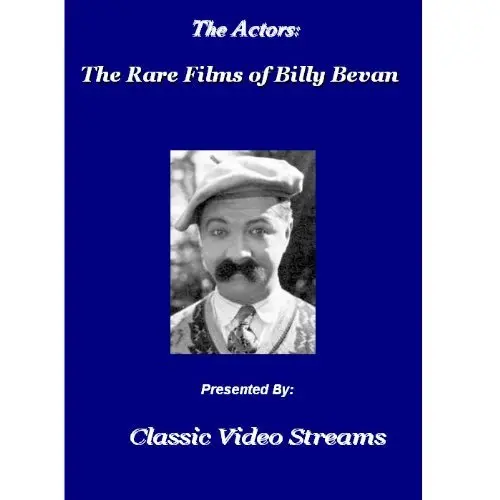
The performances in Hoboken to Hollywood are, as expected for the era, broad and demonstrative. Nuance is not the goal; immediate, visual communication of emotion and intent is paramount. Billy Bevan, a prolific silent comedian, anchors the film with his perpetually flustered everyman persona. He’s the straight man to the chaos around him, his wide-eyed expressions and frantic gestures perfectly conveying a man perpetually on the verge of a breakdown. His comedic timing, even without dialogue, is often impeccable, relying on the universal language of exasperation.
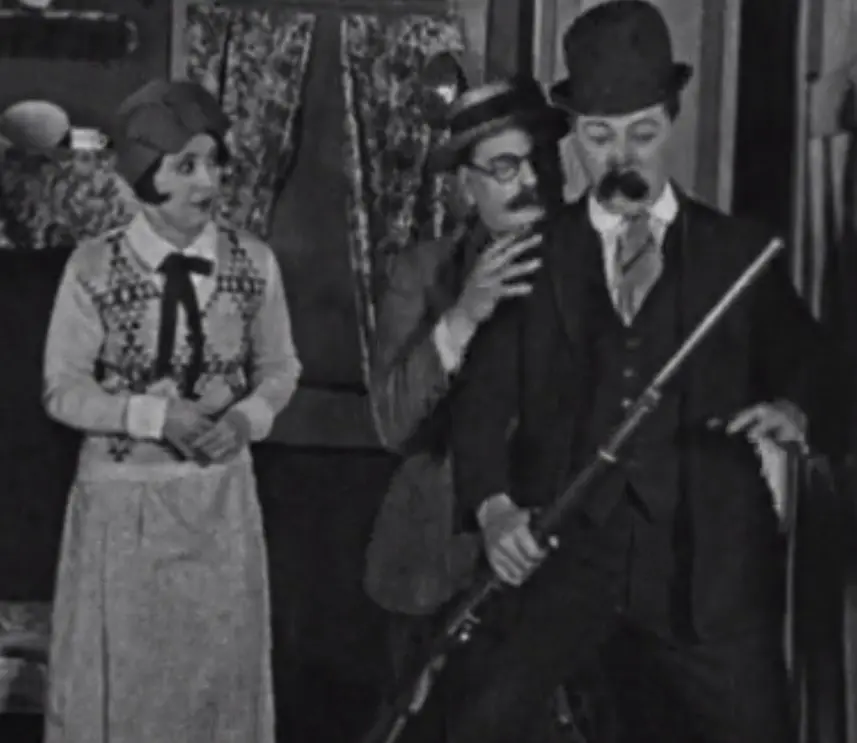
The supporting cast, including Alice Belcher as his long-suffering wife and Anna Magruder as the formidable mother, play their archetypal roles with gusto. Magruder, in particular, often steals scenes with a stern gaze or a dismissive wave of the hand, embodying the comedic potential of an unyielding matriarch. Her interactions with Bevan are a highlight, a silent battle of wills played out through raised eyebrows and exasperated sighs. It’s a dynamic that transcends the silent era, echoing through countless family comedies even today.
Other notable players like Vernon Dent and Leo Sulky contribute to the film’s ensemble energy, often appearing as the aforementioned “road companions” who unwittingly become targets of the family’s comedic mishaps. Dent, known for his work in many two-reelers, brings a certain hapless dignity to his roles, often the recipient of a pie in the face or a sudden splash of water. These actors were masters of physical expression, their faces and bodies telling stories that words couldn’t, or wouldn't, articulate.
Direction, Pacing, and Tone: A Jumpy Ride
The directorial duties, shared by George Green, Phil Whitman, Clarence Hennecke, and Joseph Quillan, suggest a collaborative, perhaps assembly-line, approach common in early studio systems. This multi-director credit isn't necessarily a detriment for a silent comedy; it often meant a focus on efficient gag delivery rather than a singular auteur's vision. The pacing is, for the most part, brisk and episodic. Scenes rarely overstay their welcome, moving quickly from one comedic setup to the next, a necessity for holding audience attention without spoken dialogue.
Scene from Hoboken to Hollywood
Cinematic perspective: Exploring the visual vocabulary of Hoboken to Hollywood (1926) through its definitive frames.
However, this rapid-fire approach can also lead to a certain narrative disjointedness. The film feels less like a cohesive journey with rising action and more like a collection of sketches strung together by the thinnest of plot threads. One moment, the family is stranded; the next, they are inadvertently causing a pile-up; then, they are bickering over a picnic basket. This can be jarring for modern viewers accustomed to more fluid storytelling.
The tone is overwhelmingly lighthearted and farcical. There's no real sense of danger or genuine peril, even when the characters face seemingly insurmountable obstacles. The stakes are low, the humor is broad, and the underlying message, if there is one, seems to be a celebration of resilience in the face of absurdity. It's a purely escapist experience, designed to provide simple, unchallenging laughs. This makes it a pleasant, if not profound, viewing experience.
Cinematography and Visual Storytelling: A Glimpse of the Past
The cinematography of Hoboken to Hollywood is functional and straightforward, typical of the period. There are no groundbreaking visual effects or elaborate camera movements to speak of. The focus is on clearly capturing the action and the exaggerated expressions of the actors. Wide shots are frequently used to establish the setting and allow the physical comedy to unfold within the frame, ensuring that the audience can fully appreciate the antics of the jalopy or the sprawling chaos of a road incident.
Close-ups are reserved for punchlines, emphasizing a character's shocked face or a particularly funny reaction. The use of intertitles is, of course, crucial, bridging narrative gaps and delivering punchlines that cannot be conveyed through action alone. These intertitles are often witty and concise, reflecting the prevalent humor of the time. They serve not just as dialogue, but as a narrator, guiding the audience through the episodic structure.
Scene from Hoboken to Hollywood
Cinematic perspective: Exploring the visual vocabulary of Hoboken to Hollywood (1926) through its definitive frames.
What the film lacks in technical innovation, it makes up for in its accidental value as a historical document. The landscapes, the early automobiles, the attire of the characters – all offer a fascinating, unvarnished look at 1920s America. The very act of a cross-country road trip was, at the time, an adventure in itself, fraught with challenges that modern travelers can barely imagine. The film subtly captures this pioneering spirit, even amidst the slapstick. It offers a visual time capsule, showing us what the world looked like when the journey from Hoboken to Hollywood was a genuine odyssey.
Is This Film Worth Watching Today?
Yes, Hoboken to Hollywood is absolutely worth watching today, but only if you approach it with the right mindset. It’s not a film that will resonate with everyone, nor should it be expected to. Its primary value lies in its historical context and its pure, unadulterated silent-era charm. For those who appreciate the foundational elements of cinematic comedy, it’s an educational and often amusing experience.
This film is a delightful curio for anyone interested in the evolution of film. It shows the roots of the road trip genre. The physical comedy is a masterclass in non-verbal storytelling. It’s a piece of history, alive on screen. Don't expect modern humor. Appreciate it for what it is: a window to the past.
If you enjoy other silent-era comedies like those of Charlie Chaplin (though this is far less sophisticated) or Buster Keaton, or even early Hal Roach productions, you'll find something to enjoy here. It also provides an interesting contrast to more dramatic silent epics like Greed or the suspense of Les Vampires, showcasing the breadth of silent cinema. It’s a film that demands patience and an understanding of its temporal context, rewarding those who give it a chance with genuine laughs and a nostalgic trip.
Scene from Hoboken to Hollywood
Cinematic perspective: Exploring the visual vocabulary of Hoboken to Hollywood (1926) through its definitive frames.
Key Takeaways
Best for: Silent film enthusiasts, film historians, and fans of classic slapstick comedy.
Not for: Viewers seeking modern pacing, complex narratives, or subtle humor.
Standout element: Billy Bevan’s consistently exasperated performance and the sheer, unbridled physical comedy.
Biggest flaw: An overly episodic structure that can feel repetitive and a humor style that hasn't universally aged well.
Pros and Cons
Like many films of its vintage, Hoboken to Hollywood presents a mixed bag of strengths and weaknesses when viewed through a contemporary lens. It works. But it’s flawed.
Pros:
Authentic Silent Comedy: It’s a prime example of the genre, showcasing the exaggerated acting, physical gags, and intertitle humor that defined the era. For students of film, it's a valuable text.
Endearing Performances: Billy Bevan, Alice Belcher, and Anna Magruder deliver charming, if broad, performances that anchor the comedic proceedings. Bevan's everyman struggles are surprisingly relatable.
Historical Snapshot: The film unintentionally serves as a fascinating time capsule, offering glimpses into early 20th-century American life, landscapes, and the nascent culture of automobile travel. It’s a unique look at the country before its interstate highways.
Pioneering Road Trip Narrative: While rudimentary, it's an early example of the road trip genre, laying groundwork for countless films to follow. One can see echoes of its episodic nature in later works like Ruler of the Road.
Pure Escapism: With no heavy themes or complex morality, it offers a simple, lighthearted escape into a world of harmless fun. Sometimes, you just need a good laugh without thinking too hard.
Cons:
Dated Humor: Much of the slapstick and situational comedy relies on tropes that have either become clichés or simply don't land with the same impact today. The humor feels very much a product of its time.
Repetitive Gags: The film occasionally falls into the trap of repeating similar comedic scenarios, which can lead to a sense of predictability and fatigue. How many times can the jalopy break down?
Lack of Narrative Depth: The episodic nature, while characteristic of the time, means there’s little in the way of character arcs or a compelling overarching story. It's a series of events, not a journey of transformation.
Pacing Challenges for Modern Viewers: Despite its briskness, the absence of spoken dialogue and the reliance on visual storytelling can test the patience of viewers accustomed to faster, more information-dense narratives.
Technical Limitations: The straightforward cinematography and production values, while typical, don't offer much in the way of visual spectacle compared to some of the era's grander productions like The Great Leap: Until Death Do Us Part.
Verdict
Hoboken to Hollywood is not a hidden masterpiece waiting to be rediscovered by the masses. It is, however, an invaluable piece of cinematic history, a delightful, if somewhat dusty, curio that offers genuine insight into the origins of American comedy and the burgeoning road trip genre. Its humor, while often dated, possesses a certain naive charm that is difficult to replicate.
For the dedicated film historian or the adventurous silent film enthusiast, this journey is well worth the investment of time. It’s a chance to witness the raw, unfiltered energy of early filmmaking, to appreciate the craft of physical comedy, and to smile at the simple joys of a bygone era. For everyone else, it’s a curiosity, a brief detour into a world that feels both familiar and utterly alien.
Ultimately, Hoboken to Hollywood doesn't aim for profundity; it aims for laughs, and in its own quaint way, it largely succeeds. It’s a testament to the enduring appeal of a good, old-fashioned, slapstick road trip, even when the road is a little bumpy and the jokes are a little creaky. Give it a shot, but set your expectations to 'historical delight' rather than 'modern blockbuster'.