DbcultAccessing Vault...
Cult Review
Senior Film Conservator
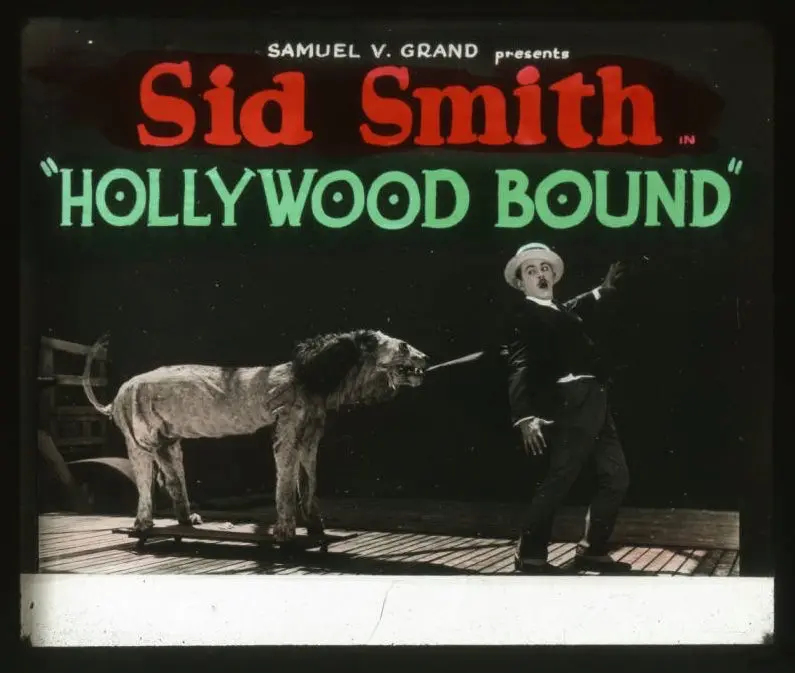
In the annals of silent‑era cinema, Hollywood Bound occupies a curious niche: a modest comedy that doubles as a meta‑commentary on the very industry that birthed it.
Sidney Smith, portrayed by the affable Sidney Smith himself, embodies the archetype of the provincial dreamer thrust into an urban maelstrom. The film opens with a bustling fairground where Sid triumphs in a popularity contest—a scene rendered with kinetic camera work that captures both the exuberance of the crowd and the intimate close‑ups of Sid’s bewildered grin. This victory functions as a narrative catalyst, propelling him onto a train whose rattling wheels echo the tremors of his own ambition.
Upon disembarking in Los Angeles, the mise‑en‑scene shifts dramatically: towering studio facades, endless rows of palm‑lined avenues, and the omnipresent hum of machinery. The cinematographer employs a chiaroscuro palette, juxtaposing the bright optimism of Sid’s expectations with the shadowed corridors of the studio lot. This visual dichotomy underscores the thematic tension between illusion and reality—a motif that recurs throughout the film’s 70‑minute runtime.
The studio itself assumes a quasi‑personality, its gates guarded by a stern porter whose dismissive wave becomes a recurring gag. Sid’s repeated attempts to gain entry are thwarted not merely by bureaucratic red tape but by an almost anthropomorphic resistance emanating from the very walls of the lot. This personification aligns Hollywood Bound with contemporaneous works such as The Woman Under Cover, where institutional structures act as narrative antagonists.
The film’s secondary cast, notably Duane Thompson as the studio’s rising starlet, provides a foil to Sid’s earnestness. Thompson’s performance oscillates between coquettish confidence and palpable vulnerability, reflecting the precarious position of women in early Hollywood. Her interactions with Sid are laced with subtext: a dance of mutual ambition, unspoken rivalry, and the ever‑present specter of studio manipulation.
Sid’s misadventures are staged with a slapstick sensibility reminiscent of Chaplin’s oeuvre, yet they also serve a deeper purpose. In one memorable sequence, Sid mistakes a prop set for an actual location, leading to a chaotic chase involving a bewildered director, a runaway horse, and a cascade of set pieces. This tableau functions as a satire of Hollywood’s propensity for artifice, suggesting that the line between performance and reality is perilously thin.
Another standout moment occurs when Sid inadvertently becomes the subject of a behind‑the‑scenes documentary—a meta‑narrative layer that prefigures modern mock‑umentary formats. The camera within the camera captures Sid’s raw, unscripted reactions, offering the audience a glimpse into the constructed nature of cinematic storytelling.
Beyond its comedic veneer, Hollywood Bound interrogates the mythos of the American Dream. Sid’s trajectory mirrors the experiences of countless aspirants who flocked to Los Angeles in the 1920s, seeking fame amidst a rapidly industrializing entertainment sector. The film does not shy away from exposing the exploitative undercurrents of the studio system: contract negotiations are depicted as power plays, and the fleeting nature of stardom is highlighted through the rapid turnover of extras and the disposability of talent.
When placed alongside other period pieces such as Kean and Darwin, Hollywood Bound stands out for its self‑reflexive critique. While Kean dramatizes the life of a theatrical legend and Darwin explores scientific discovery, Sid’s story is rooted in the quotidian struggle of a newcomer navigating a commodified dream.
Sidney Smith delivers a performance that oscillates between earnest naiveté and calculated charm. His physical comedy—precise timing of pratfalls, expressive gesturing, and nuanced facial micro‑expressions—demonstrates a mastery of silent‑film acting that rivals the era’s luminaries. Duane Thompson, meanwhile, balances coquettish allure with a grounded realism, embodying the duality of a starlet who must both enchant the audience and negotiate the studio’s demands.
Supporting actors contribute layers of texture: the gruff studio porter, whose terse bark is a recurring source of comic tension; the melodramatic director, a caricature of auteur excess; and the troupe of seasoned extras, whose weary eyes convey a silent history of unfulfilled aspirations.
The film’s visual language is marked by a deft use of contrast. The opening fairground scenes are bathed in warm, golden light, evoking nostalgia and optimism. In stark contrast, the studio interiors are rendered in muted greys and deep shadows, punctuated by the occasional splash of the film’s signature dark orange (#C2410C) on set signage and costume accents. This palette not only reinforces narrative mood but also serves as a visual metaphor for Sid’s internal oscillation between hope and disillusionment.
Camera movements are deliberate: tracking shots follow Sid through the labyrinthine corridors, while static close‑ups capture his moments of introspection. The occasional use of a sea‑blue (#0E7490) filter during night‑time sequences adds a cool, almost melancholic tone, underscoring the loneliness that pervades the studio’s backlot after the lights dim.
Although a silent film, the original score—reconstructed from period cue sheets—features a blend of ragtime motifs and orchestral swells. The ragtime pieces accompany Sid’s light‑hearted attempts to break into the studio, while the orchestral underscoring intensifies during moments of tension, such as the climactic audition where Sid finally secures a speaking part.
When juxtaposed with other silent comedies like An Amateur Devil and the adventure‑drama The Loves of Pharaoh, Hollywood Bound distinguishes itself through its meta‑narrative focus. While the former revels in slapstick absurdity and the latter in epic spectacle, Sid’s journey offers a nuanced commentary on the mechanics of fame, making it a valuable artifact for scholars of early Hollywood.
The film’s legacy persists in contemporary discussions about the exploitative nature of the entertainment industry. Its portrayal of a hopeful outsider confronting institutional gatekeeping resonates with modern narratives found in series like Hollywood and films such as La La Land. Moreover, the film’s self‑aware humor prefigures the meta‑cinematic techniques employed by directors like Wes Anderson and the Coen brothers.
In the digital age, where streaming platforms democratize content creation, Sid’s perseverance can be read as an early testament to the enduring spirit of artistic ambition. The film reminds viewers that behind every polished production lies a constellation of untold stories—each aspiring individual navigating the delicate balance between personal authenticity and the commercial demands of an ever‑hungry audience.
Hollywood Bound may lack the grandiosity of a blockbuster, but its incisive satire, compelling character work, and visual finesse render it a seminal piece within the silent‑era canon. It offers both entertainment and critical insight, inviting audiences to reflect on the timeless allure—and inherent perils—of chasing stardom.
IMDb 6.5
1926
Community
Log in to comment.