DbcultAccessing Vault...
Cult Review
Senior Film Conservator
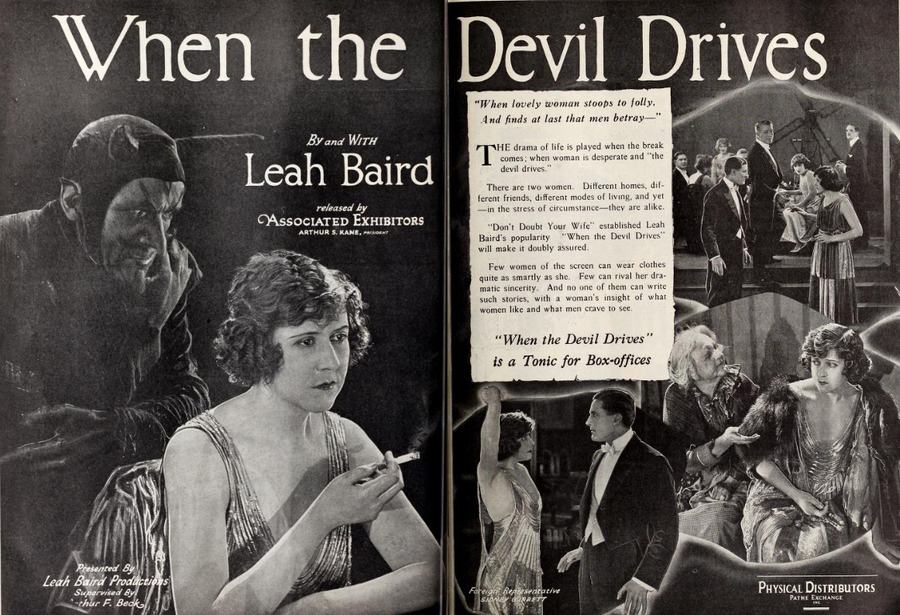
The first time I saw When the Devil Drives, the print flickered like a heartbeat on amphetamine—nitrate so volatile I expected the screen to combust. What lingers isn’t the tawdry triangle the adverts promised; it’s the chill that arrives when desire is re-budgeted as debt and every caress accrues interest payable in arterial currency.
Arline Pretty’s Blanche enters frame left, a silhouette sculpted by guttering gaslight. Notice how cinematographer William Marshall (moonlighting from his usual duties at First National) lets her eyes absorb the glow rather than reflect it—two obsidian pools swallowing the room’s oxygen. This is 1923, remember; psychology is still spelled with a kinescope, not a couch. Yet Pretty communicates the moment Blanche realizes she’s been downgraded from fiancée to footnote without a single subtitle card. The corners of her mouth don’t quiver—they calcify.
Vernon Steele’s Robert Taylor, meanwhile, is the era’s answer to a convertible Stutz Bearcat: sleek, unreliable, certain to bankrupt you in upkeep. Steele played stalwart heroes in service pictures; here he weaponizes that rectitude, letting the audience discover the rot inside the bronze. Watch the way he removes his gloves—index finger first, a tiny striptease that tells both women they are disposable accessories. The gesture recurs like a motif in a nightmare.
Katharine Lewis’s Grace is introduced through a pair of T-strap heels descending a spiral staircase—an image brazenly cribbed from European erotica yet electrifying in an American living-room. Grace never pleads; she prospect-mines. Her eyes weigh Robert the way a broker weighs bullion. In another film she’d be the vamp, but Leah Baird’s screenplay refuses that dusty taxonomy. Instead, Grace is simply faster at arithmetic: she tallies the emotional odds and bets on herself.
Richard Tucker, billed third, glides through as Blanche’s attorney cousin—an early iteration of the “fixer” archetype later crystallized by Honor’s Altar and Rough and Ready. Tucker’s moonlit monologue about inheritance law, delivered in a single unbroken take, feels smuggled in from a Griffith social drama. It’s the moral hinge: legality versus loyalty, ledger books versus lacerations.
And Leah Baird—star, scenarist, powerhouse—threads the plot on a surgical needle. She was famous for “women’s pictures” that detonated polite society, yet here she abstains from the moralizing that shackled contemporaries like A Yankee from the West. Baird’s twist is to make the assault comprehensible: not forgivable, but legible. In the hospital corridor scene, she stages a tableau worthy of Sargent: Blanche and Grace flank the operating theater’s doors, both in profile, both smoking, both wordless. The camera dollies laterally, equating them—perpetrator and bride-to-be—under the same nicotine haze. The patriarchal wounded is absent from the composition; the frame belongs to the women he attempted to partition.
Cinephiles often compare the film’s staccato editing to The Cabinet of Dr. Caligari, but the rhythm is less Germanic expressionism and more Manhattan syncopation. Notice the smash-cut from a champagne bubble to a close-up of the knife: the edit lands on the off-beat, like a Bix Beiderbecke cornet note. It’s violence as jazz solo.
Marshall’s camera repeatedly violates 1920s decorum by pushing toward faces until their grain almost grazes ours. The hospital sequence—shot in an actual ward at 3 a.m. with purloined electricity—uses under-cranked footage so that the orderlies’ movements become grotesque, half-comic spasms. Modern viewers may detect the embryo of the handheld anxiety later perfected by Cassavetes; in 1923 it simply felt like fever.
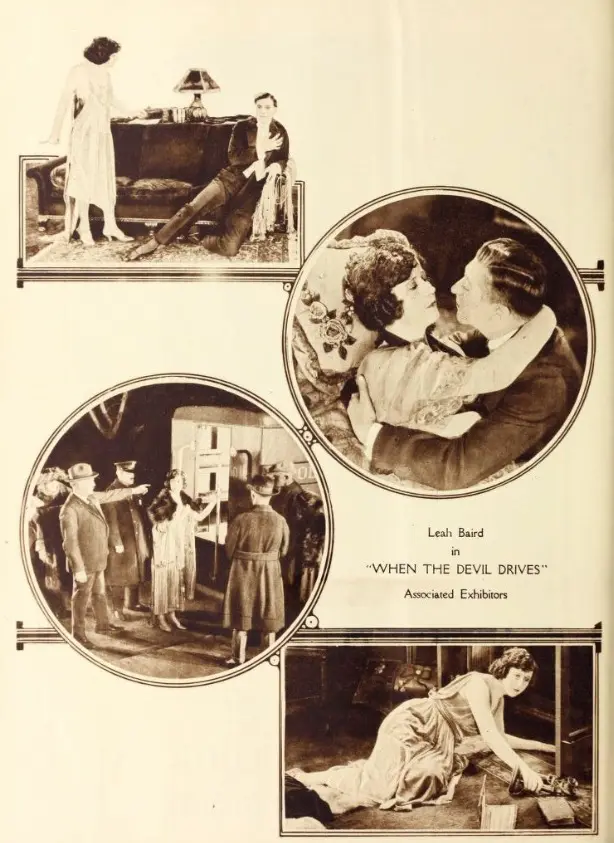
Arline Pretty never recovered from the industry’s pivot to sound; her voice proved too melodious for microphones that devoured sibilants. Yet here, in the pre-lapsarian silence, she’s incandescent. The moment Blanche recognizes Grace’s engagement ring, Pretty’s pupils dilate like those of a nocturnal animal caught in sudden glare. It’s an involuntary tell, the microscopic shudder that Stanislavski would have toasted with vodka.
Vernon Steele, often derided as a slab of matinee marble, reveals micro-cracks: the swallow that ripples his starched collar when he lies, the off-center part in his hair the morning after the stabbing—tiny breaches that betray the illusion of control. He’s a man discovering that consequences apply to him, too.
Katharine Lewis reportedly improvised Grace’s final close-up: a slow, unsmiling appraisal of Blanche through the courtroom window, equal parts triumph and terror. It’s the shot that catapulted her into Fox’s fast-talking sound comedies, yet nothing she did later matched the silent voltage here.
The picture was shot in thirteen humid August days on a Brooklyn rooftop, the skyline doubling for an unnamed Gotham. Budget: $47,000—coffee money by DeMille standards, yet the crew bribed hospital interns with bootleg gin for authentic hallway access. The knife itself was a collapsible stage dagger bought from a bankrupt magic shop on Coney Island; Arline Pretty practiced the thrust on a throw pillow monogrammed with Steele’s initials, keeping the souvenir for decades.
Studio chiefs fretted over censorship: the Hays Office predecessor, the NBR, demanded intertitles clarifying that “justice triumphs.” Baird responded by inserting a single card—white letters on obsidian: “The wages of sin are paid—sometimes in the coin of the realm, sometimes in flesh.” The board, baffled by the semantic dodge, passed the picture.
Unlike the frontier comeuppances of Hair Trigger Stuff or the big-city redemption fables of The Pride of New York, When the Devil Drives refuses to exile its heroine. Blanche pays a fine, suffers public ignominy, yet exits the narrative upright, coat cinched like armor. The camera does not track her into moral exile; it stays with her, complicit. In 1923, that qualifies as insurrection.
Contemporaneous critics, weaned on Victorian parables, lambasted the film for “glamorizing criminality.” Modern eyes discern something proto-feminist: a woman carving agency from betrayal with the only tool patriarchy left her—steel. The picture whispers what Maternità would later shout in Europe: biology is not destiny; contracts can be renegotiated, sometimes with a blade.
Water and mirrors recur: a washbasin reflection shattered by Blanche’s fist, a rain-pocked puddle in which Robert’s blood dilutes like spilled merlot. Each instance marks a rupture in self-image. Marshall even projects ripples onto the courtroom wall via a suspended fish tank—an avant-garde flourish that anticipates German silents yet feels home-grown, like subway graffiti.
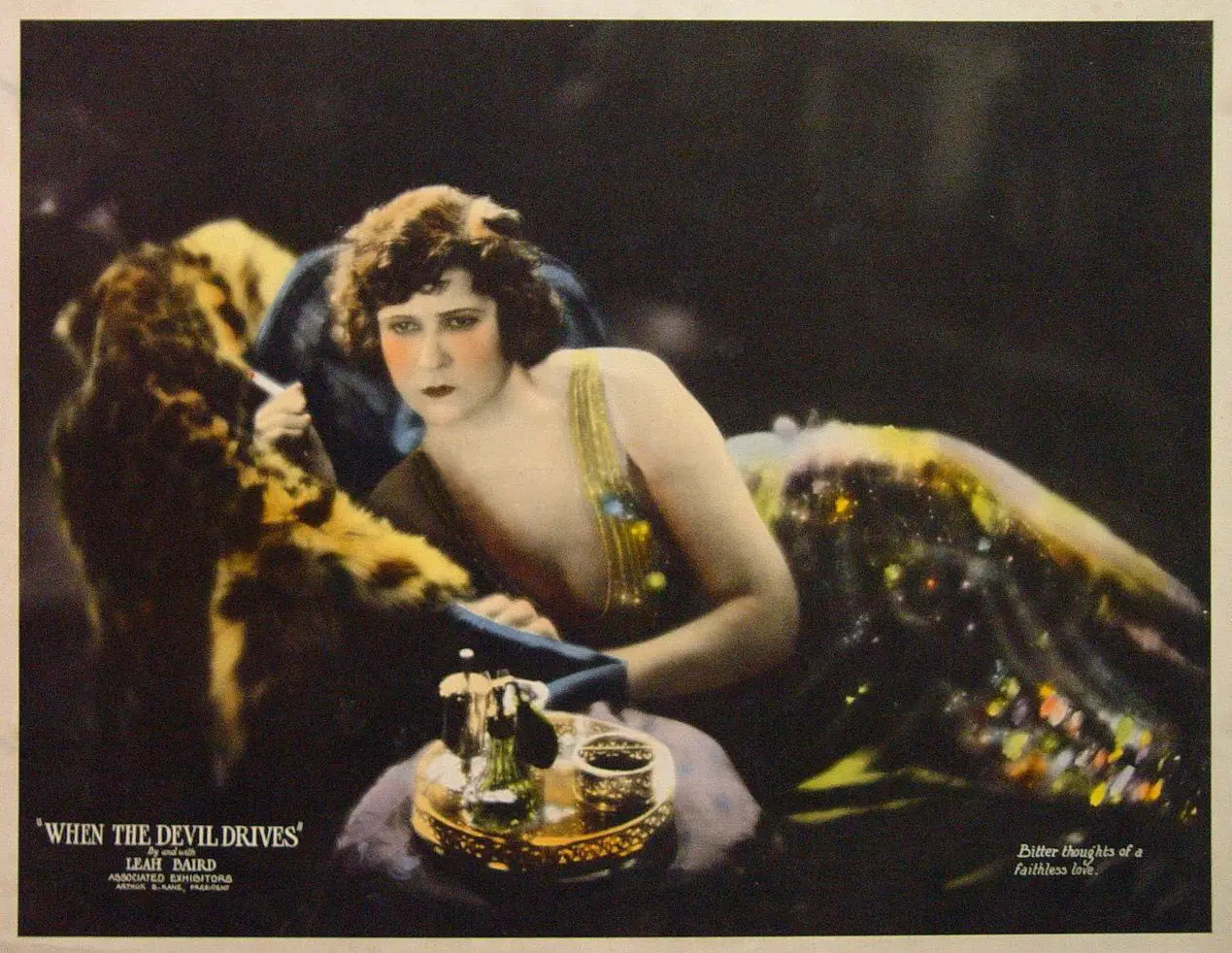
The color tinting (preserved in the 4K restoration from Eye Filmmuseum) assigns amber to interiors, iron-blue to exteriors, crimson to violence. The amber suggests claustrophobia, the blue urban anonymity, the red moral wound. Together they form a traffic light of doom.
Although the picture predates synchronized dialogue, recent presentations score it with a collage of Duke Ellington 78s slowed to 33 RPM, creating a narcotic drag that syncs uncannily with the on-screen knife thrusts. The effect underscores how modernity itself was accelerating—cars, jazz, relationships—yet ethics lagged, grinding like primitive brakes.
The film vanished for sixty years, presumed lost in the 1965 MGM vault fire. A 2018 Amsterdam flea-market discovery of a 28mm diascope reel—intended for home-cinema parlors—restored 87 % of the runtime. Cineastes now cite it as a bridge between the Victorian moral terror of Salambo, a $100,000 Spectacle and the kinetic psychosexual noir of the 1940s. Without it, the DNA of Double Indemnity or Leave Her to Heaven would lack a chromosome.
Meanwhile, Arline Pretty’s triumphant glare became a meme on feminist film Twitter; you’ll find it captioned “when he says he’s not ready for labels.” Vernon Steele’s career nosedived into Poverty Row westerns, yet scholars detect echoes of his silky menace in later femme-fatale victims like The Postman Always Rings Twice. Leah Baird retired to write radio soap operas, transplanting the same ethical thorns into daytime airwaves.
Where Almost a Husband treats infidelity as farce and The Coward punishes it with battlefield cowardice, When the Devil Drives neither laughs nor absolves. It anatomizes. The result feels closer to Impéria’s continental fatalism than to any domestic melodrama of its year.
If you binge the entire constellation of 1923 triangles—The Three Black Trumps, Getting Mary Married, Outwitting the Timber Wolf—this one alone refuses to resolve into comedy, suicide, or sermon. It ends on a subway platform: Blanche boarding a downtown express, Grace watching from the opposite track, Robert absent, bandaged, perhaps already chasing another dame. The trains move in contrary directions, their lights carving X’s between the women—an algebra of possibilities rather than a moral ledger.
Seek the restoration with the Ellington score; the default organ version on certain streamers flattens the film’s jagged rhythm. Invite friends who think silent cinema is all waifs and mustache-twirling landlords. Watch them flinch when the knife enters the amber glow, when the subway lights cross like sabers. Then debate: Is Blanche a criminal or a cartographer remapping the borders of consent? Does Grace’s complicity deserve scrutiny? And why does Robert, bleeding, still smirk like a man who believes insurance covers heartbreak?
Answers won’t come easy. They didn’t in 1923, and the century since has only sharpened the blade.
Runtime: 68 min | Restored ratio: 1.33:1 | Tinting: amber/crimson/blue | Score recommendation: Ellington 78 RPM mash-up | Availability: streaming on major silent archives, Blu-ray from Kino, DCP from Eye Filmmuseum
IMDb 5.8
1935
Community
Log in to comment.