DbcultAccessing Vault...
Cult Review
Senior Film Conservator
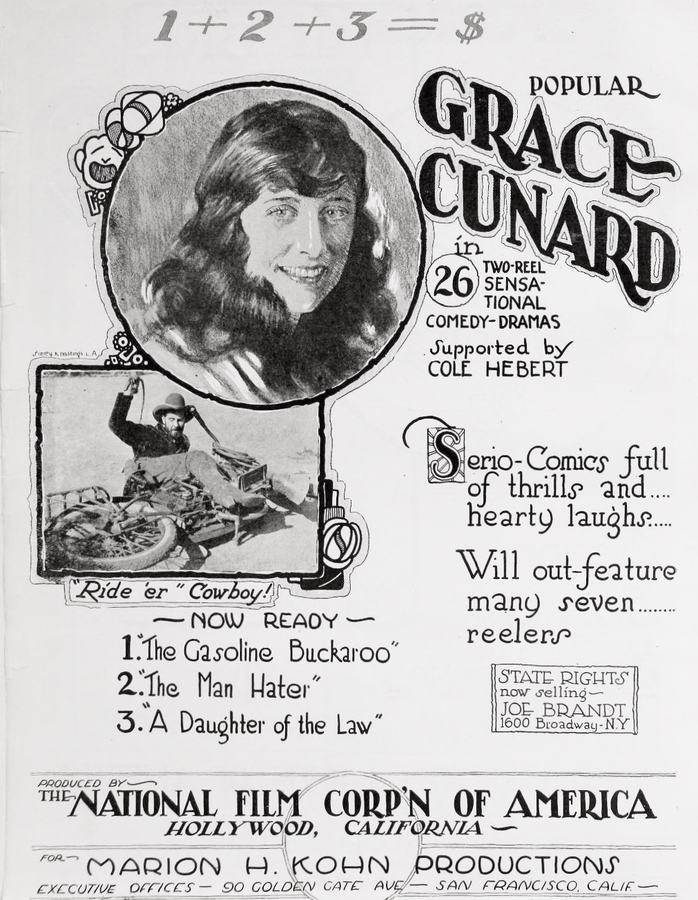
The annals of early cinema are replete with forgotten treasures, flickering specters of a bygone era that occasionally resurface to remind us of the boundless creativity and audacious experimentation that defined the medium's nascent years. Among these, 'The Gasoline Buckaroo' stands as a particularly fascinating artifact, a film that, even a century after its initial exhibition, feels remarkably prescient in its thematic explorations and narrative ingenuity. Penned by the insightful Marion H. Kohn, this silent Western isn't merely a tale of good versus evil on the dusty plains; it's a vibrant tapestry woven with threads of technological advancement, female empowerment, and the relentless march of progress.
At its heart, the film is an exhilarating showcase for the formidable talents of Grace Cunard, whose portrayal of Clementine 'Clem' Bell is nothing short of iconic. Cunard, a true pioneer of early cinema, imbues Clem with a fiery spirit and an unwavering resolve that transcends the limitations of silent acting. Her physical presence, combined with nuanced facial expressions and gestures, conveys a depth of character often lacking in the more melodramatic performances of the period. Clem is not merely a damsel in distress awaiting rescue; she is the architect of her own destiny, a woman who meets the encroaching modernity of the 20th century not with apprehension, but with an embrace that redefines the very essence of the Western hero. Her 'gasoline buckaroo' – an early motor-tricycle – becomes an extension of her pioneering spirit, a symbol of her refusal to be confined by traditional gender roles or the antiquated technologies of the past. One might draw a parallel to the spirit of independence seen in films like The Girl from Nowhere, but Cunard’s Clem elevates this autonomy with a distinct, almost rebellious, technological edge.
The narrative, a testament to Marion H. Kohn's clever scripting, revolves around the classic Western trope of land dispute, yet injects it with a distinctly modern twist. Silas Kincaid, portrayed with chilling efficacy by Cole Hebert, embodies the grasping avarice of industrial expansion threatening the agrarian ideal. Hebert's villainy is not over-the-top caricature but a more subtle, insidious portrayal of greed, conveyed through sharp glances and manipulative body language. His performance provides a compelling counterpoint to Cunard's dynamic heroism, creating a palpable tension that propels the plot forward with an insistent rhythm. The struggle for Clem's ranch, initially framed as a battle over acreage, quickly morphs into a symbolic clash between the old ways and the new, between organic growth and exploitative extraction. Kohn’s screenplay manages to ground these broader themes within a compelling personal struggle, making the stakes feel intimately real.
The film's visual language is another area where it truly shines. Despite the inherent technical constraints of early filmmaking, the cinematography is surprisingly dynamic. The wide-open spaces of the Western frontier are captured with an expansive scope, providing a breathtaking backdrop for the thrilling chase sequences that are the film's undeniable highlight. The camera often feels liberated, moving with the 'gasoline buckaroo' as it tears across the landscape, immersing the viewer in the exhilarating speed and danger. The juxtaposition of the raw, untamed wilderness with the gleaming, albeit rudimentary, machine creates a powerful visual metaphor for the era's dramatic shifts. The director, whose name unfortunately remains elusive in many contemporary records, demonstrated a keen understanding of visual storytelling, utilizing depth of field and inventive editing techniques to heighten suspense and convey emotion without relying on intertitles for every beat. This mastery of visual narrative places it in league with the more sophisticated silent works, perhaps even hinting at the burgeoning artistry seen in European contemporaries like Der Sultan von Johore, though with a distinctly American flavor.
Beyond its technical merits and gripping action, 'The Gasoline Buckaroo' offers a fascinating glimpse into the nascent discourse surrounding women's roles in society. Clem Bell is a proto-feminist icon, a woman who defies expectations and carves out her own path in a world largely dominated by men. She's resourceful, intelligent, and fiercely independent, qualities that resonate profoundly even today. Her mastery of the 'gasoline buckaroo' is not just a plot device; it's a statement about competence and agency, challenging the prevailing notion that women were ill-suited for mechanical pursuits or physical challenges. This portrayal is a stark contrast to some more traditional female roles in silent melodramas such as For Better, for Worse or The Valentine Girl, where heroines often found themselves in more passive predicaments. Cunard's performance makes Clem a compelling role model, demonstrating strength and ingenuity in equal measure.
The film's exploration of technology as both a liberator and a potential harbinger of conflict is another compelling aspect of Marion H. Kohn's script. The 'gasoline buckaroo' is initially presented as an oddity, a curious contraption in a world of horses. Yet, it quickly proves its practical superiority, allowing Clem to cover vast distances, outrun her pursuers, and even transport vital resources more efficiently. This early cinematic embrace of the automobile as a symbol of progress and individual freedom predates many similar portrayals in later decades. It's a testament to Kohn's foresight that the film doesn't shy away from the societal implications of such an invention, subtly hinting at the ways technology would irrevocably alter the landscape, both literally and figuratively. This theme of progress versus tradition, or new vs. old, is a perennial one, but here it is handled with a fresh perspective, tied directly to the evolving American frontier.
The performances, particularly from Grace Cunard and Cole Hebert, are exemplary for the period. Cunard's expressions are precise, conveying resolve, fear, determination, and triumph with remarkable clarity. Her physical acting, especially during the strenuous chase sequences, is genuinely impressive, suggesting a commitment to the role that went beyond mere pantomime. Hebert, on the other hand, masterfully portrays a villain whose menace is understated but ever-present. He avoids the broad gestures often associated with silent film antagonists, opting instead for a more chilling, calculating demeanor that makes his character all the more effective. The supporting cast, though less prominent, contributes effectively to the overall atmosphere, populating the frontier town with believable characters who react to the unfolding drama with a range of emotions.
One cannot discuss 'The Gasoline Buckaroo' without acknowledging its significant contribution to the Western genre. It takes the established conventions – the lone hero, the unjust villain, the fight for land – and injects them with a shot of adrenaline and innovation. It challenges the very definition of a 'buckaroo,' expanding it beyond the horse-riding cowboy to encompass the modern, mechanized individual. This blending of traditional Western motifs with contemporary technology was groundbreaking at the time and undoubtedly influenced later films that explored similar themes. While other Westerns like The Blinding Trail focused on more conventional narratives of justice and revenge, 'The Gasoline Buckaroo' dared to introduce a futuristic element, propelling the genre forward.
The film's pacing is another strong suit. It moves with a brisk efficiency, never lingering unnecessarily, but allowing moments of quiet tension to breathe before erupting into exhilarating action. The editing is sharp, particularly during the aforementioned chase scenes, creating a sense of urgency and excitement that holds the viewer captive. This propulsive rhythm is crucial for a silent film, as it keeps the audience engaged without the benefit of dialogue or an elaborate musical score (though live accompaniment would have, of course, enhanced the experience). The narrative arcs of both Clem and Kincaid are well-developed, ensuring that the audience is invested in their respective fates. Marion H. Kohn's script provides a robust framework upon which the visual narrative could build, ensuring that even without spoken words, the story's emotional beats and plot intricacies are crystal clear.
In an era where many films were ephemeral entertainment, often lost to the ravages of time or neglect, the preservation and rediscovery of 'The Gasoline Buckaroo' is a cause for celebration. It offers not just a window into the past, but a vibrant, engaging piece of storytelling that continues to captivate. It reminds us that innovation in cinema is not a recent phenomenon, but a foundational element of its very existence. The film's audacious spirit, its technological optimism, and its portrayal of a strong, independent woman make it a timeless piece of art that speaks to enduring themes of progress, resilience, and the relentless human drive to overcome adversity. Like Beatrice Fairfax, which featured a strong female protagonist in a serialized adventure, 'The Gasoline Buckaroo' carved out a unique space for its heroine, but with the added layer of mechanical prowess.
Ultimately, 'The Gasoline Buckaroo' is more than just a historical curiosity; it is a vital piece of cinematic heritage that deserves renewed attention. Its blend of Western grit, technological marvel, and compelling character work makes it a standout achievement of the silent era. Grace Cunard's performance is a masterclass in silent acting, Cole Hebert's villainy is perfectly pitched, and Marion H. Kohn's screenplay is a testament to the power of inventive storytelling. For anyone interested in the evolution of film, the history of the Western genre, or simply a rip-roaring good adventure, this film is an absolute must-see. It's a testament to the enduring power of cinema to reflect and shape our understanding of a world in constant flux, where the roar of a gasoline engine could indeed signal the dawn of a new kind of buckaroo.
The lasting impact of 'The Gasoline Buckaroo' lies not only in its immediate entertainment value but also in its forward-thinking approach to genre and character. It’s a film that, in retrospect, feels remarkably modern, challenging conventions at a time when cinema itself was still finding its voice. The portrayal of Clem Bell by Grace Cunard is particularly significant, creating a template for strong, capable female protagonists that would inspire countless characters in the decades to come. Her proficiency with the 'gasoline buckaroo' is a metaphor for women breaking free from societal constraints and mastering new domains, a theme that remains profoundly relevant. This narrative choice by Marion H. Kohn was bold and progressive, setting the film apart from many of its contemporaries that often relegated female characters to more passive roles. Even in films like Marrying Molly, where a woman's agency might be central to the plot, it often revolved around domestic or romantic choices rather than a direct challenge to technological and societal norms.
The film's technical audacity, especially in its use of real locations and thrilling stunt work, further cements its place as an innovative masterpiece. The sense of speed and peril during the chase sequences is palpable, a testament to the filmmakers' ingenuity in an era without sophisticated special effects. These scenes are masterfully choreographed, demonstrating an understanding of kinetic energy and visual rhythm that belies the rudimentary equipment of the time. The contrast between the dusty trails and the mechanical marvel of the 'buckaroo' is always visually striking, emphasizing the clash of eras that the film so deftly explores. This commitment to practical effects and authentic locales gives the film a raw, visceral quality that still resonates, making it feel less like a historical document and more like a living, breathing adventure. While other films like The Lurking Peril focused on suspense through more confined settings, 'The Gasoline Buckaroo' expanded its canvas to the vast American West, using the expansive landscape to its full advantage.
The thematic richness of Marion H. Kohn's script is another aspect that elevates 'The Gasoline Buckaroo' beyond simple genre fare. It delves into the complex relationship between humanity and progress, questioning whether new technologies are inherently good or if their impact depends on the hands that wield them. Silas Kincaid's desire for oil, fueled by industrial ambition, represents the darker side of progress, while Clem's use of her 'gasoline buckaroo' for justice and preservation embodies its potential for good. This nuanced exploration of modernity sets the film apart, imbuing it with a philosophical depth that belies its action-packed exterior. The film doesn't offer simplistic answers but rather presents a dynamic interplay of forces, inviting the audience to ponder the implications of a rapidly changing world. It's this intellectual curiosity, woven into an entertaining narrative, that marks Marion H. Kohn as a writer ahead of their time, crafting stories that were both thrilling and thought-provoking.
In conclusion, 'The Gasoline Buckaroo' is a film that demands to be seen and appreciated for its myriad contributions to cinematic history. It's a vibrant, action-packed Western that defies expectations, offering a compelling narrative, groundbreaking performances by Grace Cunard and Cole Hebert, and a script by Marion H. Kohn that is both innovative and timeless. Its exploration of technology, gender roles, and the evolving American frontier makes it a remarkably relevant piece of cinema, even today. This is not merely a relic; it is a pulsating, vital work that continues to inspire and entertain, proving that true artistry transcends the limitations of its era.
IMDb 7.1
1923
Community
Log in to comment.