DbcultAccessing Vault...
5.6/10
Senior Film Conservator
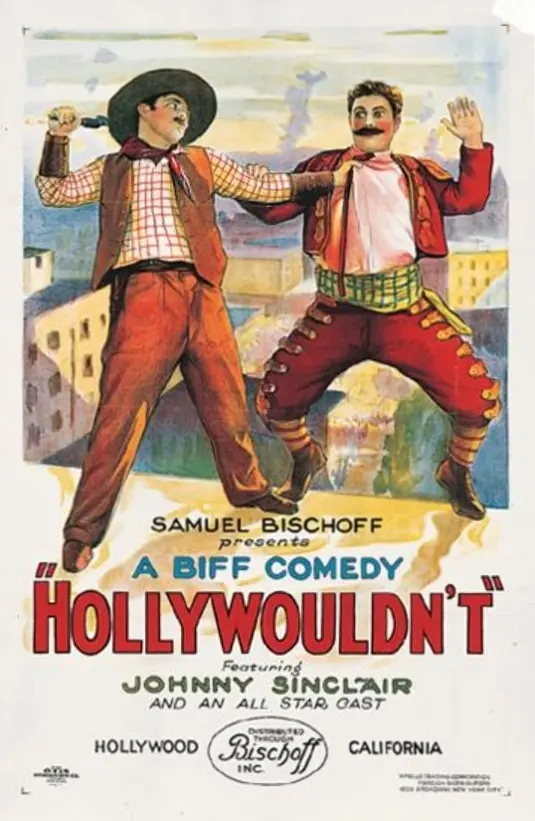
A definitive 5.6/10 rating for a film that redefined the boundaries of cult cinema. Hollywouldn't remains a cornerstone of transgressive art.
Is Hollywouldn't worth watching today? Short answer: yes, but with significant caveats for the modern viewer. This film is a delightful, if slight, peek into the early days of Hollywood fantasy, perfectly suited for silent film enthusiasts and those fascinated by cinema history, yet it will likely test the patience of anyone accustomed to contemporary pacing and narrative complexity.
Released at a time when cinema was still finding its voice, Hollywouldn't offers a fascinating, albeit simplistic, narrative that speaks volumes about the public's perception of Hollywood glamor versus its gritty reality. It’s a film that thrives on its historical context, providing a window into the nascent film industry’s self-mythologizing.
This film works because its unpretentious charm and historical significance provide an invaluable, if unintentional, document of early 20th-century American escapism. It captures a moment when the dream factory was still a relatively new concept.
This film fails because its narrative simplicity and reliance on broad comedic strokes often leave modern audiences wanting more depth, more nuance, and a less predictable resolution. Its humor is distinctly of its era, and not all of it translates.
You should watch it if you are a dedicated student of silent cinema, a historian of Hollywood, or someone who appreciates the foundational elements from which all modern filmmaking has evolved. It’s a curiosity, not a blockbuster.
The narrative of Hollywouldn't is an intriguing, almost cautionary, tale disguised as a lighthearted comedy. It centers on a naive farm boy, a character archetypal of rural innocence, whose world is entirely shaped by the glossy, idealized images of a movie queen. These photographs, devoid of context and crafted purely for fantasy, become his sole window into a world he believes to be real, a common plight for audiences then and now.
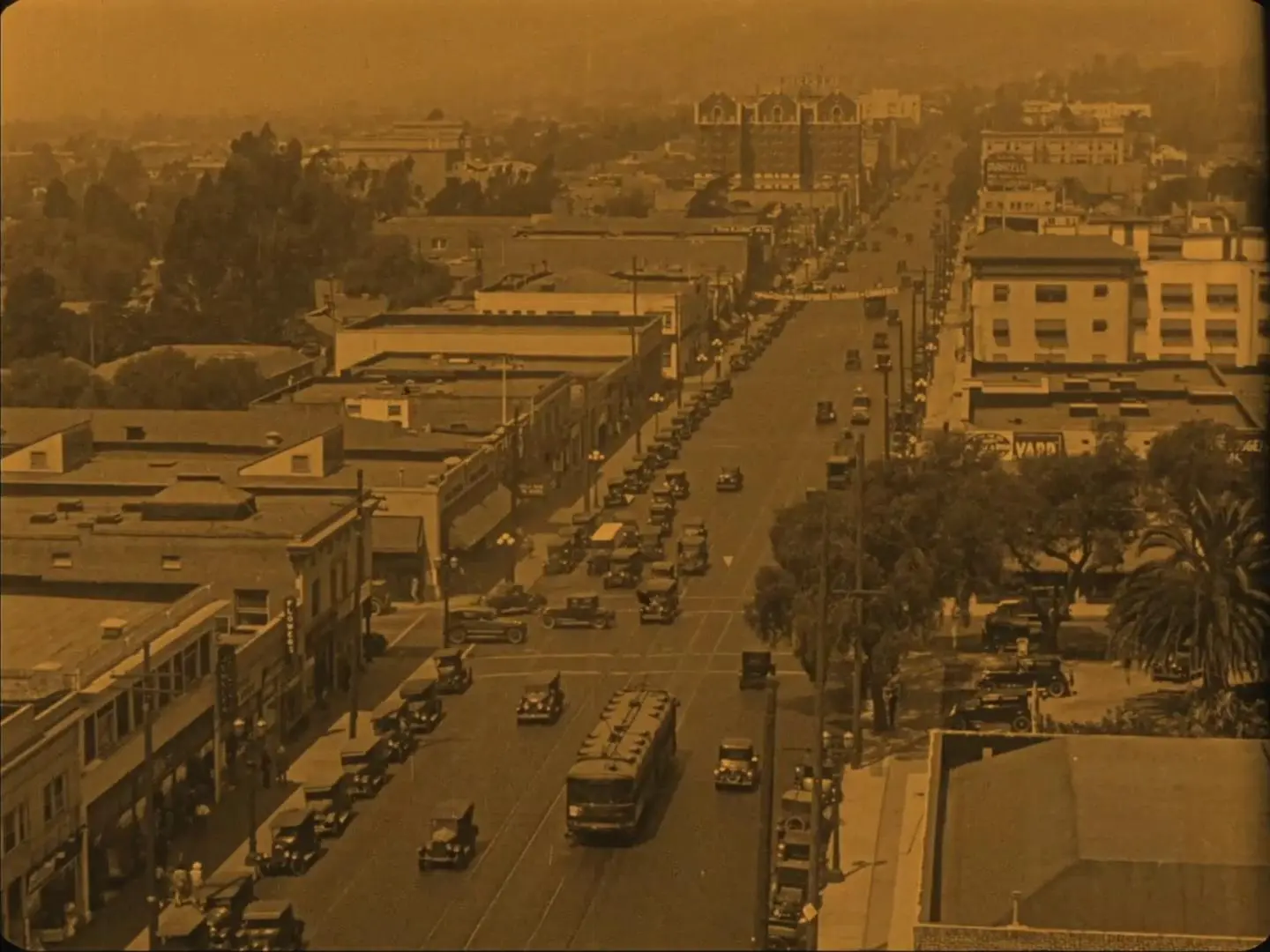
His pilgrimage to Hollywood is not merely a trip; it’s an act of faith, a journey fueled by an unwavering belief in the authenticity of manufactured dreams. The film cleverly, if unintentionally, critiques this very phenomenon, showing the protagonist’s wide-eyed wonder giving way to a more pragmatic understanding of the industry.
His entry into the studio as an extra is a stroke of narrative convenience, a device to plunge him directly into the inner workings of his fantasy. Here, the film offers a rare, albeit staged, glimpse behind the curtain, revealing the chaotic, often unglamorous process of filmmaking. The excitement he experiences is genuine, yet it's tempered by the arduous, repetitive nature of being a background player.
The introduction of a 'villain' feels less like organic plot development and more like an obligatory cinematic trope, a necessary catalyst to inject conflict into an otherwise benign narrative. This rough session serves as the ultimate reality check, a stark contrast to the effortless glamor he admired from afar. It’s a brutal, simple push back to reality.
The film’s resolution, with the farm boy’s retreat, is perhaps its most profound, if understated, statement. It’s a quiet rejection of the artificiality, a return to the tangible, honest dirt of his farm. It suggests that while dreams are potent, they are often best left in the realm of imagination, untainted by the messy business of reality. This conclusion, while perhaps intended as comedic, carries a surprising weight of disillusionment that resonates even today. It’s a stark contrast to the aspirational endings often seen in films like The Girl Who Came Back, which celebrated perseverance.
In Hollywouldn't, the performances are, as expected for the silent era, broad and expressive, relying heavily on pantomime and exaggerated facial gestures to convey emotion. Charles King, as the wide-eyed farm boy, embodies the quintessential innocent abroad. His performance is earnest, often charming, and occasionally borders on caricature, which was a common comedic approach of the time.
King’s physicality is key to his portrayal. Observe, for instance, his initial arrival in Hollywood; his posture, with shoulders slightly hunched and head perpetually tilted upwards, perfectly communicates his awe and bewilderment. When he first sees the studio, his mouth hangs agape, and his eyes dart around with an almost cartoonish wonder, a clear visual cue that he is utterly out of his element. This is a deliberate choice, intended to elicit immediate sympathy and amusement from the audience.
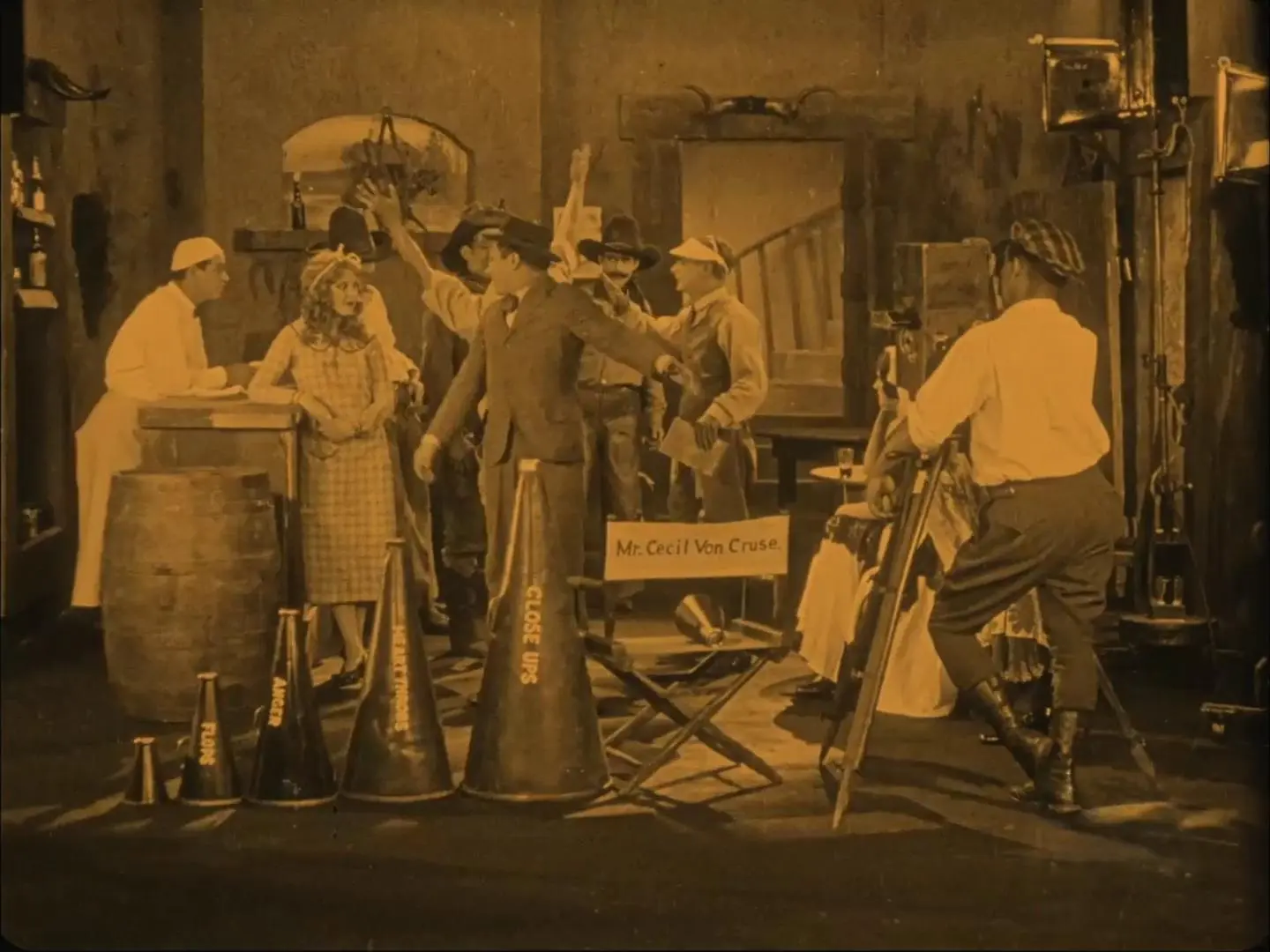
Dorothy Dorr, as the movie queen, provides the idealized object of his affection. Her role is largely to project an image of unattainable beauty and grace, a living embodiment of the photographs that captivated King’s character. Her screen presence is elegant, but her character is more of a symbol than a fully fleshed-out individual, which is understandable given the film's focus on the farm boy's perspective. She is the dream, not the dreamer.
The villain, played by Sailor Sharkey, delivers a performance that is predictably menacing and over-the-top. His scowls and aggressive posturing are classic silent film villainy, designed to create clear conflict and an obvious antagonist. There’s a scene where he corners King’s character, his sneering face filling the frame, that is a textbook example of how physical presence alone could convey threat in the absence of dialogue. It’s effective, if not subtle.
What is particularly striking about the ensemble is how well they communicate without a single spoken word. The quick cuts between King’s bewildered expressions and the bustling studio environment, or the sharp contrast between Dorr’s serene beauty and Sharkey’s aggressive demeanor, are all masterfully orchestrated through visual storytelling. While some might find the acting style dated, it is a testament to the actors' skill in conveying narrative through pure physicality and emotion, a skill sometimes lost in modern cinema.
The directing in Hollywouldn't, while not revolutionary, effectively serves the film's simple narrative and comedic intentions. The director, whose name unfortunately isn't readily available in historical records, demonstrates a clear understanding of visual storytelling inherent to the silent era. The use of intertitles is sparse but effective, allowing the imagery to carry the bulk of the narrative weight.
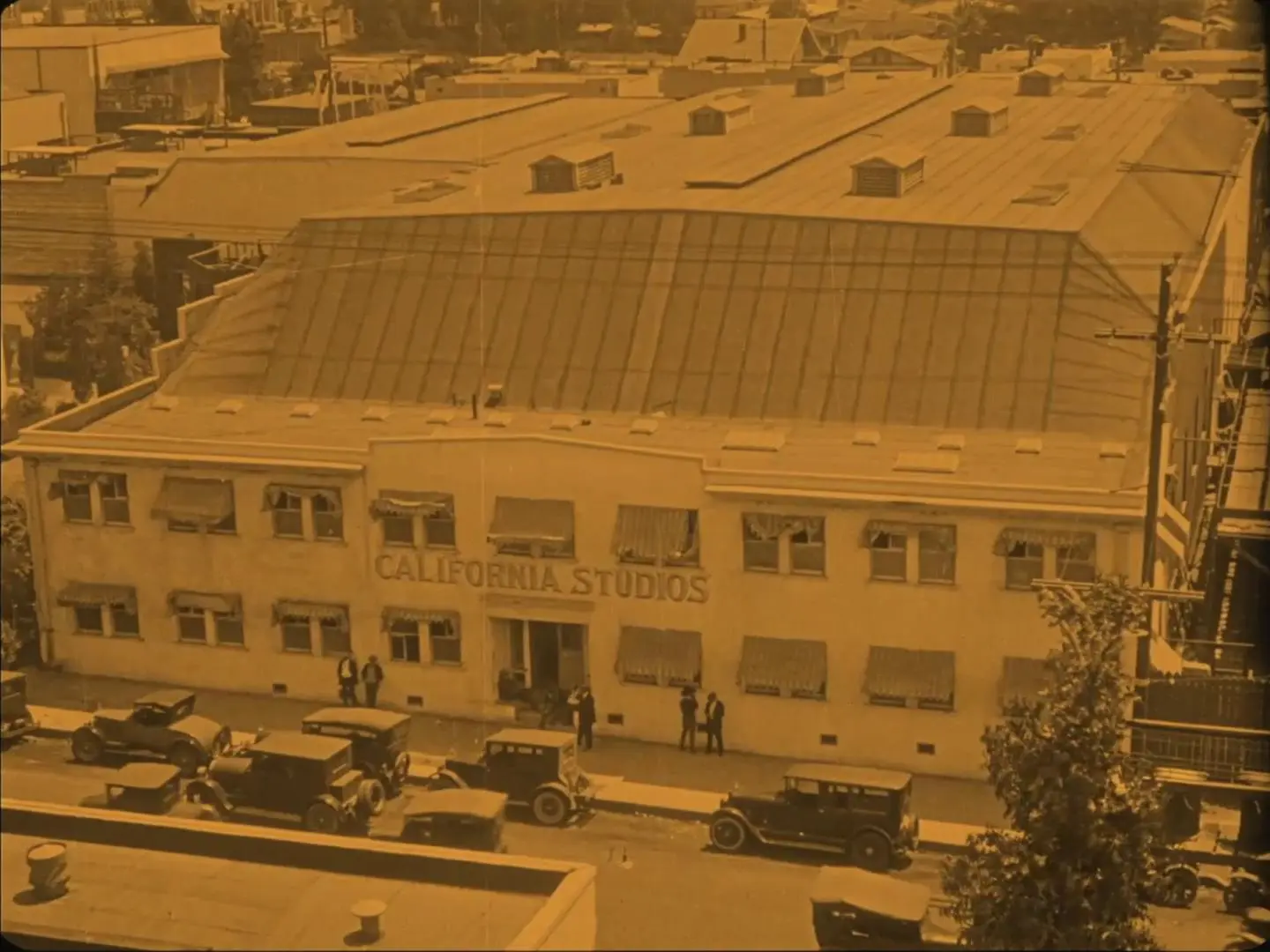
Cinematographically, the film benefits from its setting. The bustling studio lots provide a dynamic backdrop, even if the camera work itself is relatively static by today's standards. There are numerous wide shots that capture the scale and activity of a working film studio, offering a fascinating, almost documentary-like glimpse into early Hollywood. One particular shot, depicting a sprawling set with various actors and crew members moving purposefully, stands out as a genuine historical artifact.
The lighting, typical of the period, relies heavily on natural light and broad, even illumination. There isn't the nuanced chiaroscuro or dramatic shadow play that would become prominent in later eras. However, this simplicity contributes to the film’s overall bright, optimistic tone, reflecting the public's perception of Hollywood as a land of sunshine and opportunity. This contrasts sharply with the darker, more introspective cinematography found in films like Unsühnbar.
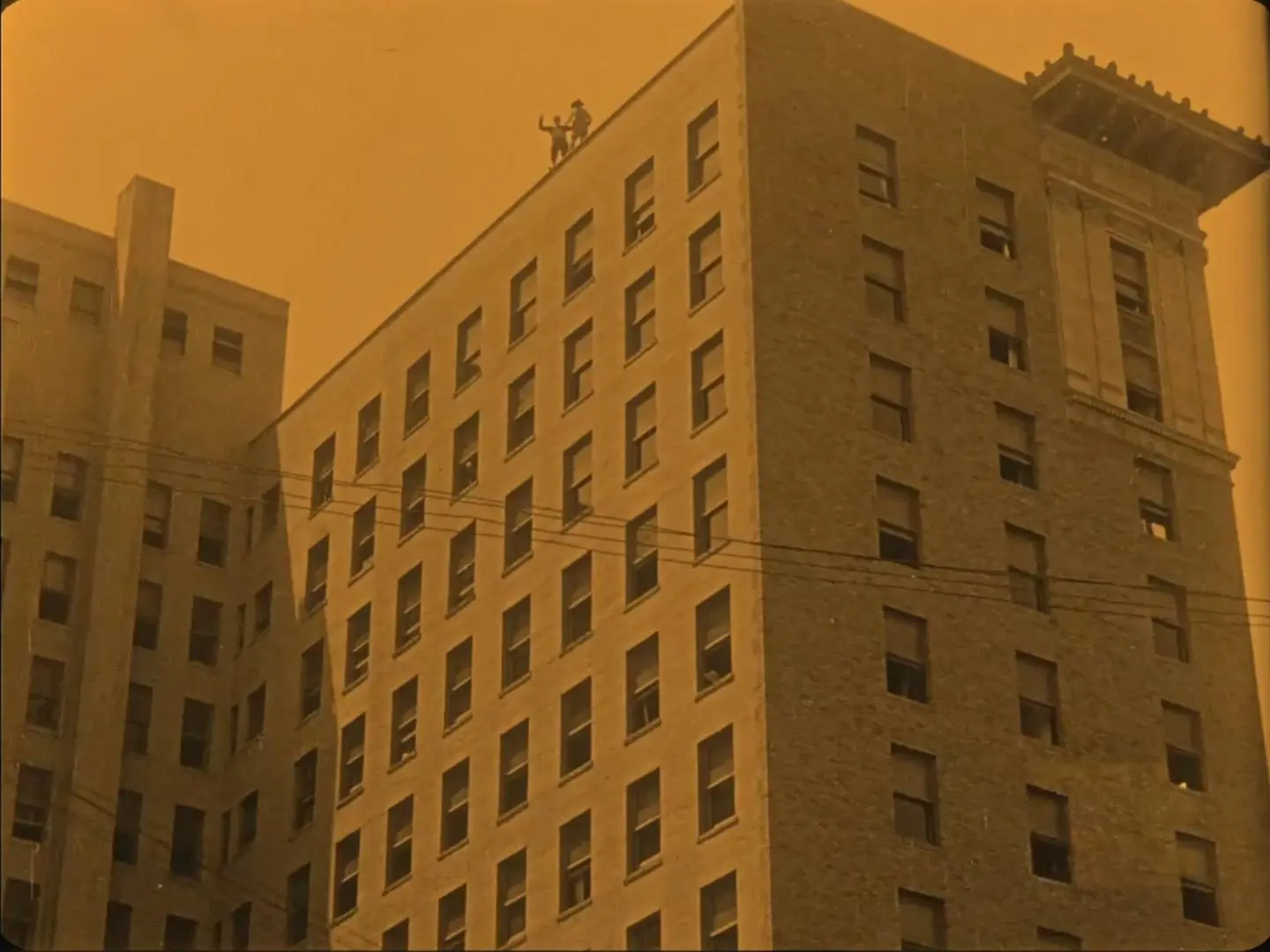
Editing is straightforward, primarily employing cuts to advance the narrative and build comedic timing. There are instances of quick cutting during the more chaotic scenes, such as the farm boy's encounter with the villain, which effectively heightens the sense of urgency and disarray. While it lacks the sophisticated montage techniques of a Sergei Eisenstein or the fluid camera movements that would emerge with sound, it is perfectly functional for its purpose.
My unconventional observation is that the most compelling 'direction' in Hollywouldn't isn't in its deliberate artistic choices, but in its accidental capture of an industry in flux. The raw, almost unpolished nature of some scenes feels less like a stylistic choice and more like a candid snapshot of a nascent art form finding its footing. The film's primary strength, in this regard, lies in its inadvertent historical documentation.
The pacing of Hollywouldn't is decidedly leisurely, a characteristic common to many silent films. The narrative unfolds at a measured rhythm, allowing ample time for the audience to absorb the visual gags and dramatic expressions. For modern viewers accustomed to rapid-fire editing and dense plotlines, this can feel slow. It requires a different kind of engagement, one that appreciates the deliberate unfolding of events rather than a relentless rush.
There are moments, particularly in the studio scenes, where the pacing picks up, reflecting the hustle and bustle of filmmaking. These sequences, with their flurry of activity, offer a momentary burst of energy that contrasts with the more contemplative or expositional scenes. However, even these faster segments are still far removed from the breakneck speed of contemporary action sequences.
The tone is predominantly comedic, infused with a sense of innocent wonder and lighthearted satire. The humor often stems from the fish-out-of-water scenario, highlighting the cultural clash between rural simplicity and urban sophistication. The film maintains a gentle, almost whimsical tone throughout, even during moments of conflict. The 'rough session' with the villain, for example, is played more for comedic effect and character development than genuine peril. It’s never truly dark.
One strong, debatable opinion I hold is that the film’s unwavering commitment to its lighthearted tone, while charming, ultimately prevents it from exploring the deeper, more cynical implications of Hollywood's dream factory. It skirts the edge of genuine critique, opting instead for a comfortable, palatable conclusion. A more biting satire, perhaps akin to later works, could have elevated its commentary beyond mere observation.
Compared to more dramatic offerings of the period, such as The Legion of Death, Hollywouldn't is a breath of fresh air, prioritizing smiles over somber reflection. Its tone is its strength, creating an accessible entry point for those new to silent cinema, but also its limitation, as it avoids any profound emotional resonance. It’s a simple story. But it’s flawed.
Yes, Hollywouldn't is worth watching today for specific audiences.
It serves as a valuable historical document of early American cinema.
The film offers unique insights into the public's perception of Hollywood in the 1920s.
Silent film enthusiasts will appreciate its charm and period-specific acting.
However, casual viewers might find its pacing too slow.
Its simplistic plot and dated humor may not appeal to everyone.
It’s best approached as a historical curiosity rather than a modern entertainment.
Those interested in the evolution of film will find it particularly rewarding.
Hollywouldn't isn't a lost masterpiece, nor is it a groundbreaking piece of cinema that redefined the art form. What it is, however, is a fascinating curio, a gentle and often charming artifact from a bygone era. It serves as an invaluable historical document, preserving not only the acting styles and production values of the 1920s but also the collective public imagination surrounding Hollywood.
Its narrative, while rudimentary, offers a surprisingly resonant commentary on the allure and ultimate disillusionment of chasing manufactured dreams. The performances, though broad, are sincere, and the glimpse behind the studio gates is a genuine treat for anyone interested in the mechanics of early filmmaking. It’s a film that succeeds more as a cultural touchstone than as a purely engaging piece of storytelling.
Ultimately, Hollywouldn't is a journey worth taking, but only if you approach it with the right expectations. It's not a film to be consumed for its thrills or its profound insights, but rather to be savored for its historical context and its innocent charm. It reminds us that even in its infancy, cinema was capable of both enchanting and gently satirizing its own powerful myth-making capabilities. For those who appreciate the quiet hum of history, it's a solid, if unspectacular, recommendation.
IMDb 5.5
1936
Community
Log in to comment.