DbcultAccessing Vault...
5.4/10
Senior Film Conservator
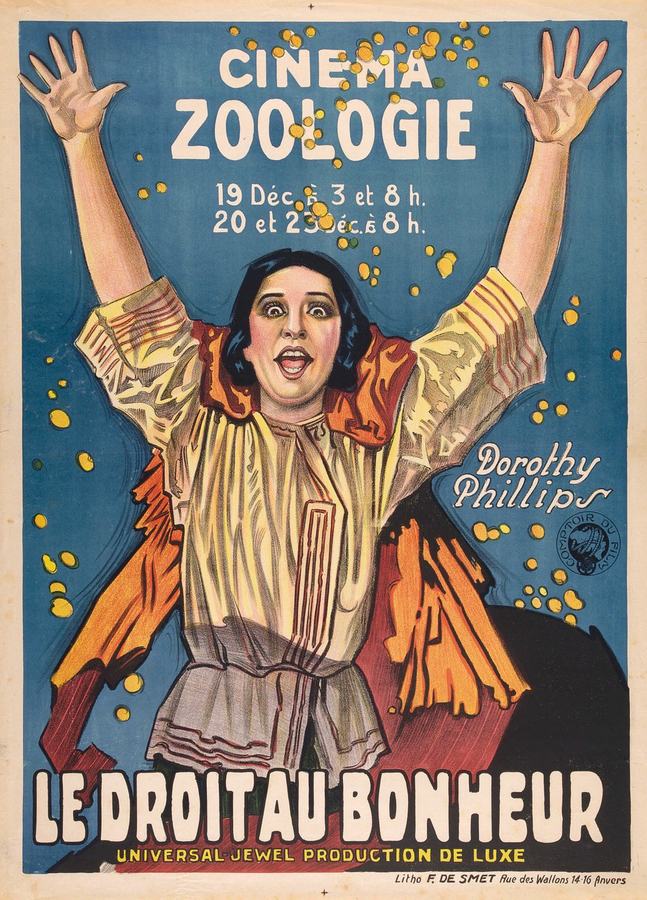
A definitive 5.4/10 rating for a film that redefined the boundaries of cult cinema. The Right to Happiness remains a cornerstone of transgressive art.
In the pantheon of early American cinema, few works attempt to grapple with the seismic shifts of the global sociopolitical landscape with as much audacity as Allen Holubar’s 1919 masterwork, The Right to Happiness. At a time when the film industry was still oscillating between the theatricality of the stage and the unique visual vernacular of the screen, Holubar delivered a narrative of staggering ambition. The film operates as a dualistic character study, utilizing the trope of separated twins to explore the profound chasm between the American Dream and the burgeoning socialist movements of Europe. Unlike the more whimsical explorations of identity found in contemporaries like The Rainbow Girl, this film plunges headlong into the darkness of class warfare and the trauma of displacement.
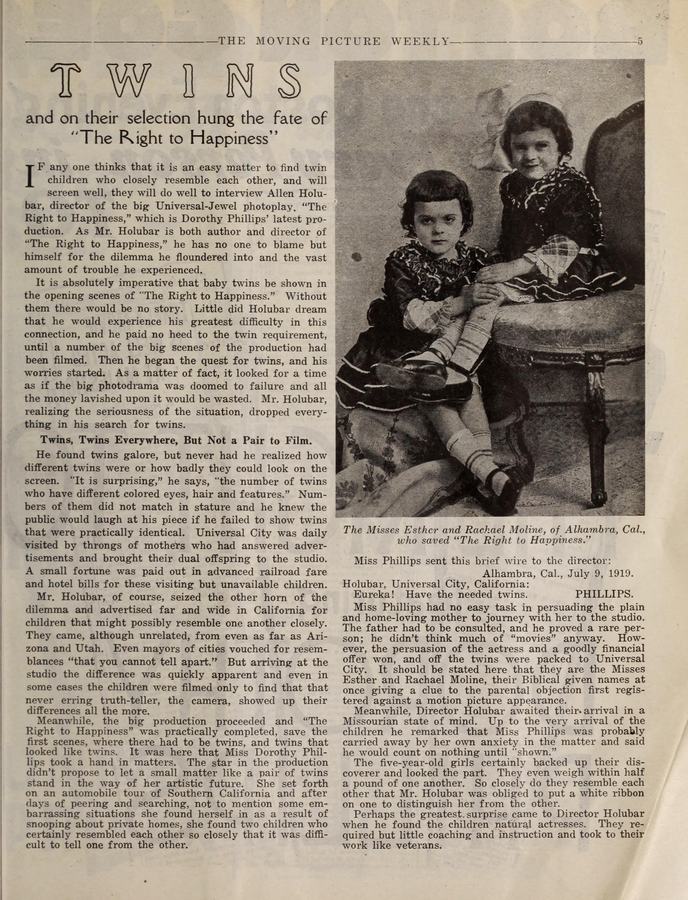
Central to the film's enduring power is the tour de force performance by Dorothy Phillips. Playing both Sonia and Sasha, Phillips achieves a level of psychological nuance that was rare for the period. As Sasha, she embodies the delicate, perhaps even vapid, grace of the American upper class—a woman whose biggest concerns are the nuances of social etiquette. Conversely, as Sonia, she is a revelation of raw, unbridled fury. Her eyes, captured in haunting close-ups that rival the intensity of Ahasver, 1. Teil, reflect the soot and sorrow of the Russian streets. The technical achievement of having both characters appear on screen simultaneously—a feat of double exposure—is handled with a seamlessness that enhances the thematic weight of their eventual meeting. It is a visual metaphor for the internal conflict of the human condition: the struggle between the life we are given and the life we choose to fight for.
Holubar’s direction excels in the juxtaposition of settings. The early scenes in Russia are steeped in a cinematic chiaroscuro, where the shadows seem to swallow the characters whole. This isn't the romanticized Russia of later Hollywood epics; it is a claustrophobic, dangerous environment that birthed the radicalization of the masses. In contrast, the American sequences are flooded with light, yet there is an underlying coldness to the marble halls and manicured gardens. This visual language suggests that while America offers safety, it also offers a certain spiritual sterility. This thematic depth elevates the film beyond the standard melodrama found in The Grouch or the more straightforward narratives of Arizona.
The crux of the film arrives when Sonia, now a hardened revolutionary, travels to America. Her arrival is not a joyful reunion but a violent intrusion of reality into a world of privilege. The script, penned by Olga Linek Scholl and Holubar himself, does not shy away from the complexities of labor relations. The factory strike sequences are staged with a visceral energy that predates the Soviet montage movement, echoing the gritty realism of The Triumph of the Weak. Here, the "Right to Happiness" is framed not as a personal pursuit, but as a collective demand. The film asks a haunting question: Can happiness truly exist for the individual if it is built upon the suffering of the collective?
The supporting cast provides a sturdy framework for Phillips’ dual role. Robert Anderson and William Stowell deliver performances that avoid the exaggerated pantomime often associated with silent cinema. Stowell, in particular, captures the internal conflict of a man caught between his duty to his class and his burgeoning empathy for the workers. This nuanced approach to characterization is far more sophisticated than the archetypes seen in The Fox Woman or the procedural focus of The Reed Case.
Technically, The Right to Happiness is a marvel of its era. The cinematography utilizes depth of field to create a sense of scale, making the factory interiors feel like cavernous cathedrals of industry. The editing is equally impressive, maintaining a rhythmic tension during the film’s more chaotic sequences. While it lacks the avant-garde subversion of I Don't Want to Be a Man, it possesses a gravitational pull that is entirely its own. Holubar’s vision is one of grand tragedy, where the personal and the political are inextricably linked. The film’s climax, involving a confrontation between the two sisters amidst a burgeoning riot, is a masterclass in suspense and emotional payoff.
Looking back from a modern perspective, the film’s treatment of the Russian Revolution is understandably filtered through a Western lens, yet it remains surprisingly sympathetic to the plight of the worker. It avoids the simplistic moralizing found in The Seventh Sin or the sensationalism of The Scarlet Woman. Instead, it presents a world in flux, where the old certainties are crumbling and a new, uncertain future is being forged in the streets. The film’s title becomes an ironic refrain; the "right" to happiness is revealed to be a fragile, contested thing, easily shattered by the winds of history.
The film also serves as a fascinating companion piece to The Cycle of Fate, as both films grapple with the idea of predestination. Are Sonia and Sasha destined to be enemies because of their upbringing, or does their shared blood offer a path to reconciliation? Holubar doesn't offer easy answers. The resolution of the film is bittersweet, acknowledging that while the sisters may find a personal peace, the larger societal conflicts remain unresolved. This lack of a tidy, Hollywood ending is what gives the film its lasting bite.
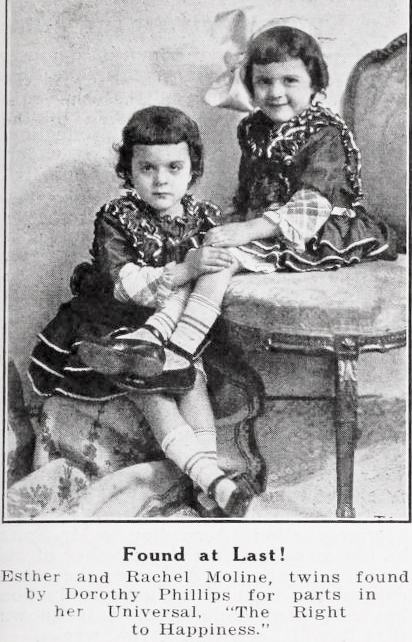
One cannot discuss this film without acknowledging the meticulous production design. The contrast between the squalid tenements and the sprawling estates is rendered with a tactile quality that makes the social divide feel physical. The costumes, too, play a vital role. Sonia’s rugged, utilitarian attire stands in stark contrast to Sasha’s silk and lace, serving as a constant visual reminder of their different worlds. This attention to detail is reminiscent of the atmospheric work in Det døde Skib, though Holubar applies it to a much more grounded, realistic narrative.
Furthermore, the film’s pacing is remarkably modern. While many silent films suffer from a certain staginess, The Right to Happiness moves with a restless energy. The scenes of Sonia’s revolutionary activities are intercut with Sasha’s social engagements, creating a sense of impending doom. We know these two worlds must eventually collide, and the film builds toward that collision with expert precision. It shares this sense of narrative momentum with The Frame-Up, though the stakes here are significantly higher.
In the century since its release, The Right to Happiness has unfortunately slipped into the shadows of film history, overshadowed by the works of Griffith or DeMille. However, a modern viewing reveals a film that was far ahead of its time in terms of social consciousness and technical execution. It is a film that demands to be seen, not just as a historical curiosity, but as a vibrant, breathing piece of art that still has much to say about the world we live in. The themes of immigration, class disparity, and the search for identity are as relevant today as they were in 1919.
Whether you are drawn to the film for Dorothy Phillips’ incredible dual performance, Holubar’s masterful direction, or the searing political commentary, The Right to Happiness offers a rich, rewarding experience. It is a stark reminder that even in the earliest days of cinema, filmmakers were using the medium to ask the big questions, to challenge the status quo, and to explore the complexities of the human heart. It stands as a testament to the power of the moving image to bridge the gap between disparate worlds and to find the common humanity that lies beneath the surface of our ideological differences. Much like the haunting imagery in Moora Neya, or The Message of the Spear, the impact of this film lingers long after the final frame has faded to black.
In conclusion, The Right to Happiness is a vital piece of cinematic history that deserves a prominent place in the conversation about the development of narrative film. It is a work of profound empathy and fierce intelligence, a film that refuses to look away from the harsh realities of the world while still holding onto a glimmer of hope for the future. It is, quite simply, a masterpiece of the silent era, and a poignant exploration of what it truly means to have the right to be happy in a world that is often anything but. To miss it is to miss one of the most compelling stories ever captured on celluloid—a story that, despite its age, feels startlingly contemporary in its urgency and its heart.
IMDb 6.2
1929
Community
Log in to comment.