DbcultAccessing Vault...
Cult Review
Senior Film Conservator
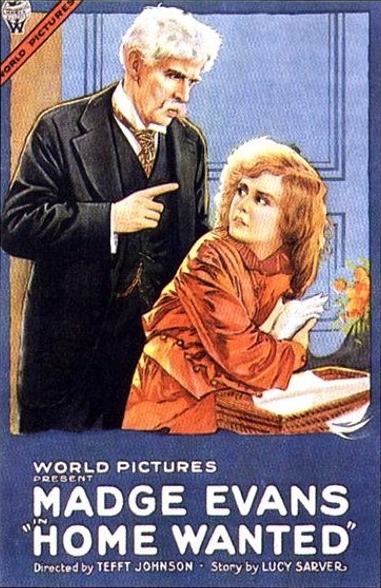
In the annals of early cinema, certain films, despite their vintage, possess an uncanny ability to transcend their era, speaking to universal human experiences with a clarity that belies their silent nature. Such is the case with Home Wanted, a cinematic gem that, rather than merely presenting a straightforward narrative, delves into the intricate tapestry of longing, isolation, and the redemptive power of unexpected connection. It’s a film that, even a century later, still tugs at the heartstrings, reminding us that the search for belonging is a timeless human endeavor.
At its core, Home Wanted is a profound exploration of an orphan's yearning, personified by the poignant figure of Madge Dow. Confined within the austere walls of the Middleport Orphanage, Madge's world is one of stark contrasts. By day, the regimented routine of institutional life; by night, a vivid, almost hallucinatory, escape. Her ritualistic gaze across the way, fixed on a solitary illuminated window, becomes a portal to an imagined reality – a cozy room, a gentle mother, the tender ritual of being tucked into bed. This isn't mere childish fantasy; it's a deep-seated ache for the warmth and security of a family, a desire so potent it fuels her every quiet moment. This portrayal of childhood longing echoes the thematic resonance found in other early cinematic explorations of orphaned protagonists, such as the heartbreaking resilience depicted in The Sparrow, where the vulnerability and strength of a child in dire circumstances are similarly brought to the fore.
The narrative truly ignites when Madge, accompanied by her spirited compatriot Spotty, makes a daring escape, seeking refuge and perhaps answers from the compassionate settlement worker, Letty Thompson. Letty, a beacon of empathy in a world often indifferent, doesn't merely offer solace; she offers a catalyst for change. Her gentle encouragement for the children to investigate the mysterious house across from the orphanage isn't just a plot device; it's an invitation to confront the unknown, to bridge the gap between imagination and reality. This pivotal moment sets in motion a chain of events that will irrevocably alter the lives of everyone involved, demonstrating how a single act of kindness can ripple outwards with unforeseen consequences.
The house, initially a symbol of Madge’s idealized domesticity, reveals itself to be a veritable fortress of bitterness, presided over by a cantankerous, gout-ridden Major. William T. Carleton's portrayal of the Major is a masterclass in embodying curmudgeonly isolation. His physical ailment, the persistent gout, serves as a potent metaphor for his emotional paralysis – a man trapped not just by pain, but by decades of festering resentment. The root of his acrimony lies in his daughter’s marriage, years prior, contracted without his blessing. This unforgiven transgression has calcified his heart, turning his grand home into a lonely mausoleum of regret. His explosive reaction to Spotty's innocent raid on the jam jars isn't just about the preserves; it's the outburst of a man whose carefully constructed defenses are momentarily breached by the chaotic innocence of childhood. This character, steeped in his own stubborn pride, brings to mind the intricate psychological studies of characters found in narratives like Barnaby Rudge, where familial discord and deeply entrenched personal flaws drive much of the drama.
Yet, it is Madge, the small, seemingly insignificant orphan, who dares to chip away at this formidable exterior. Her audacious attempt to mollify the Major by taking him for a wheelchair ride is a testament to her innocent courage and burgeoning empathy. The ensuing chaos – a runaway wheelchair, a precipitous hill, and a sudden, soaking storm – is a beautifully choreographed sequence of slapstick and genuine peril. Madge’s panicked flight, leaving the Major drenched and vulnerable, is a moment of raw, childlike fear, but it also opens the door for salvation. This dramatic turn of events, where misfortune unexpectedly leads to fortune, is a classic narrative trope, masterfully employed here to advance the plot and deepen character development.
Enter Dick Washburn, a physician whose timely intervention not only rescues the Major from the storm's fury but also, through his medical expertise, cures his debilitating gout. Charles Sutton (or perhaps Hugh Thompson, given the cast list's ambiguity) imbues Dick with an admirable blend of professional competence and inherent decency. Dick's arrival signifies not just physical healing, but the first genuine crack in the Major's emotional armor. He represents the possibility of a different kind of life, one not consumed by bitterness. However, Dick's path to happiness with Letty is fraught with its own challenges. Letty's mother, a formidable gatekeeper of social propriety, vehemently opposes their union due to Dick's unknown parentage. This societal prejudice, a common theme in early 20th-century narratives, serves as a potent reminder of the era's rigid class structures and the anxieties surrounding lineage and social standing. It’s a thematic thread that resonates with the critiques of societal hypocrisy found in films like Hypocrites, albeit with a more intimate, familial focus here.
The true heart of Home Wanted, however, lies in Madge’s unwavering spirit and her remarkable ability to disarm the Major. Madge Evans, in a performance that resonates with genuine emotion, crafts a character whose guileless affection and persistent kindness slowly but surely melt the Major’s hardened exterior. It’s not through grand gestures or elaborate schemes, but through simple, consistent acts of empathy that she penetrates his defenses. This relationship, initially adversarial, blossoms into a profound bond, demonstrating the transformative power of innocent love. Her presence acts as a balm, soothing old wounds and making the Major receptive to the possibility of a different future. This quiet, persistent influence of a child on an adult’s rigid world finds parallels in other narratives where juvenile innocence serves as a catalyst for change, such as in A Modern Mother Goose, which often explores the world through a child's unvarnished perspective.
It is in this burgeoning connection between Madge and the Major that the film delivers its most significant revelation. The Major, finally softened by Madge’s enduring charm, unburdens himself of a long-held secret: Dick Washburn is, in fact, his grandson. This dramatic disclosure is a masterful stroke of narrative economy, instantly resolving the central conflict regarding Dick’s parentage and simultaneously providing a path to reconciliation for the estranged family. The revelation is not merely a plot twist; it’s an emotional release, a moment where years of bitterness are swept away by the tide of truth and rediscovered kinship. The film beautifully illustrates how a single secret, once exposed, can shatter old prejudices and forge new bonds, a theme that also subtly underpins the romantic entanglements and societal expectations explored in films like The Marriage Speculation.
With this revelation, the path is cleared for Dick and Letty’s joyous nuptials, a union now sanctioned by both love and lineage. The film culminates in a heartwarming denouement where Madge, the catalyst for so much change, finds her longed-for sanctuary not in an imagined room, but in the Major’s now-transformed home. This isn't just a happy ending; it's a profound statement on the nature of family. It underscores the idea that home is not merely a structure, but a feeling, a network of love and acceptance that transcends biological ties and societal expectations. The Major's house, once a symbol of his isolation, becomes a vibrant hub of rediscovered affection, a testament to the power of forgiveness and the unexpected ways in which families are formed and reformed.
Beyond its engaging plot, Home Wanted offers a rich tapestry of thematic insights. The central theme of found family is explored with remarkable depth. Madge’s journey isn't just about finding a place to live; it's about finding people who truly care, people who see beyond her orphan status. The film deftly argues that love, rather than blood, is the true cement of kinship. Furthermore, the narrative is a powerful testament to redemption and forgiveness. The Major's transformation from a bitter recluse to a loving patriarch is gradual and believable, driven by the persistent, uncalculating affection of a child. His journey reminds us that even the most hardened hearts can be softened, and that it's never too late to heal old wounds. This idea of a character's journey from a state of emotional avarice to one of generosity, albeit of spirit rather than material wealth, subtly connects with themes present in films such as L'avarizia, though that film focuses more on literal greed.
The film also subtly critiques societal prejudices, particularly through Letty’s mother’s initial disapproval of Dick based solely on his unknown parentage. This highlights the superficiality of judging individuals based on external factors rather than their inherent character. Dick's eventual revelation as the Major's grandson validates his worth in the eyes of society, but the film implicitly suggests that his worth was always evident to those who truly knew him. The enduring power of innocence as a catalyst for change is perhaps the most heartwarming message. Madge, a child with no power or status, orchestrates the reconciliation of an estranged family and finds her own belonging through sheer force of her loving spirit. Her unwavering belief in the possibility of kindness ultimately reshapes the world around her, proving that the smallest among us can often wield the greatest influence.
From a technical perspective, for a film of its era, Home Wanted demonstrates a sophisticated understanding of visual storytelling. The contrast between the starkness of the orphanage and the eventual warmth of the Major's home is conveyed not just through set design but through the subtle use of lighting and framing. The dramatic sequence of the runaway wheelchair and the storm is executed with a dynamism that builds genuine tension and effectively conveys Madge’s fear and the Major’s vulnerability. The performances, particularly Madge Evans as the titular Madge Dow and William T. Carleton as the Major, are nuanced and emotionally resonant. Evans captures the fragility and resilience of a child longing for love, while Carleton masterfully portrays the Major’s transformation, allowing glimpses of the man beneath the gruff exterior to shine through. Their chemistry, initially born of conflict, evolves into a tender, believable bond that anchors the film’s emotional core.
Ultimately, Home Wanted transcends being merely a historical curiosity; it stands as a timeless narrative exploring the profound human need for connection and the serendipitous pathways to belonging. This beautifully crafted story serves as a potent reminder that true homes are forged not from bricks and mortar, but from the intricate bonds of love, the grace of forgiveness, and the courage to open one's heart. Its enduring appeal resides in its compassionate portrayal of individuals striving for genuine connection in a world frequently determined to keep them isolated. For those in search of a poignant and ultimately uplifting cinematic experience, Home Wanted remains a powerful testament to the resilient human spirit and the universal quest for a place one can unequivocally call home.

IMDb 7.6
1929
Community
Log in to comment.