DbcultAccessing Vault...
Cult Review
Senior Film Conservator
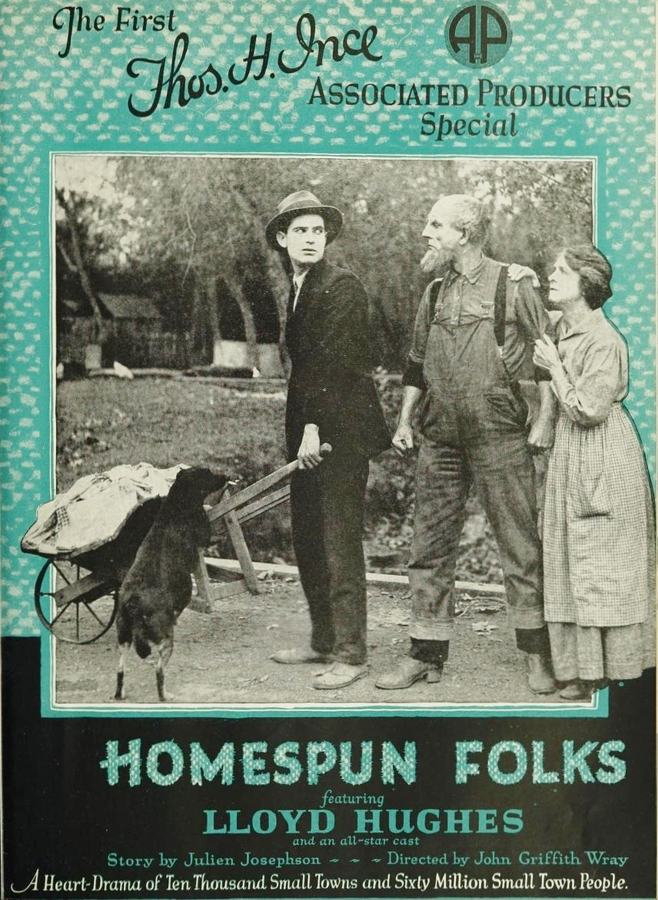
The flickering nitrate of Homespun Folks arrives like a lantern swung across a howling Kansas night—its beam catches dust, hypocrisy, and the glint of a Colt in a woman’s steady hand. Director Julien Josephson, armed with Josephson’s own scenario, refuses to genuflect before the agrarian myth; instead he yanks the plough from the soil and beats the American dream half-dead with it.
From the first iris-in on Caleb Webster’s weather-scarred face—Fred Gamble’s cheekbones like split cedar—you sense a patriarchy calcified into stone. Caleb’s creed is simple: land is scripture, sons are collateral, lawyers are locusts. When he banishes Joel (Lloyd Hughes, all tremulous idealism wrapped in denim) the frame itself seems to exhale frost. The camera lingers on the slammed door longer than on the boy, a visual whisper that exile begins not with the wanderer but with the threshold that refuses him.
Gatesville, by contrast, is a boom-print town where politics drip from the presses like hot lead. Pliny Rogers—Charles Hill Mailes in a crushed planter’s hat—paces the newsroom like a fallen preacher, his sermons set in 10-point Bodoni. The film’s best mise-en-scène occurs here: type trays become battlements, compositors turn into archers, and every pulled proof is a subpoena to the powerful. Josephson overlays a double exposure of spinning headlines and Hilary Rose’s debauched smirk, so that ink and sin braid together in the viewer’s retina.
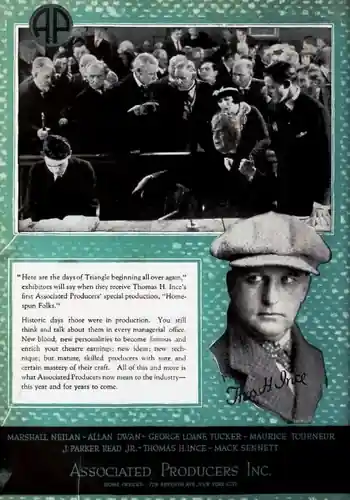
Enter Beulah, essayed by Gladys George with the poise of a woman who has already read tomorrow’s paper. Notice how she first crosses the screen: not through a doorway but via a reflected windowpane, her image arriving before her body. It’s a subtle announcement that she exists in two zones—public gaze and private resolve—and will manipulate both. When she presses a pamphlet into Joel’s palm, the gesture is filmed in insert, as though passing a secular Eucharist.
The narrative hinge—Joel’s reluctant candidacy—plays out in a single-take parlour sequence worthy of The Westerners‘ moral ambush. A dolly inches toward Joel while the town elders recite his virtues; the boy’s face reddens until the frame itself appears sunburned. The refusal to cut amplifies the suffocation of duty. Compare this to the brisk montage of Rose’s scandal in Dropped Into Scandal: Josephson alternates between stasis and frenzy, implying that reputations collapse faster than they are built.
Hilary Rose’s suicide—off-screen but announced by a gun-crack synced to the collapse of campaign posters—evokes the off-stage deaths in Greek tragedy. Josephson denies us the viscera; instead we witness civic entropy: the flag at half-mast, a dog licking spattered bourbon, children parading with paper roses now wilted. The ellipsis forces the audience to imagine the carnage, thereby indicting itself for voyeuristic hunger.
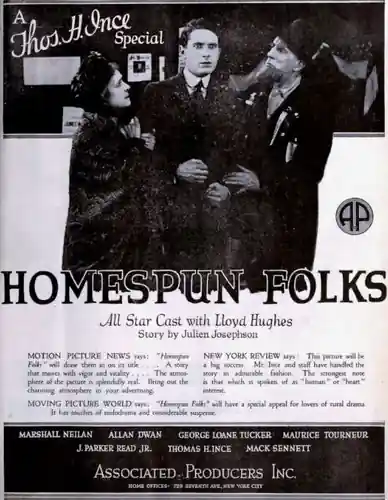
Joseph Hargan’s perjury supplies the film’s most modern anxiety: the weaponized lie. Played by Gordon Sackville with twitchy, ink-stained fingers, Hargan embodies the alienated labourer of post-war capitalism. His workspace—rows of lead slugs—becomes a munitions plant for slander. When he types the false affidavit, the key-strikes are amplified on the intertitle like hammer blows, a precursor to the typewriter terror of later noir.
The courtroom, inevitably, is no temple of justice but a clapboard cockpit where Joel must fillet his own heart. Observe the lighting: windows boarded shut throw zebra-stripes across the jury, as though fate itself were a bar-code. His dilemma—prosecute the beloved’s father or betray the electorate—mirrors the Orestes complex threading through The Goddess of Lost Lake. Yet Josephson refuses transcendence; deliverance comes not from legal eloquence but from a back-alley reckoning with a pistol.
Beulah’s intervention—forcing Hargan’s confession at gunpoint—has been maligned as pulp contrivance, but it is the film’s ethical pivot. The scene is staged in a printing cellar awash with kerosene lamplight; shadows jitter across rolls of newsprint like black widows. Beulah’s silhouette looms larger than Hargan’s, a visual assertion that truth in this republic is extractable only through matriarchal force. The Colt is no phallus but a stylus rewriting the public record.
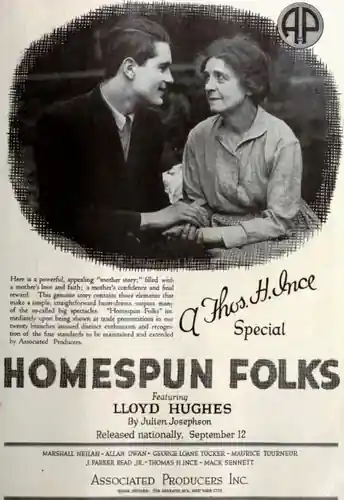
The threatened tar-and-feathering externalizes the nation’s congenital itch for purity rituals. Josephson cross-cuts between the brewing mob and Joel bound to a cotton-wood tree, evoking both sacrificial saint and Washington at the cherry. The viscosity of tar—black, slow, irreversible—contrasts with the ephemerality of ballots, suggesting that democracy can be both sticky and scalding. The torchlight orange saturates the monochrome stock until the image itself appears bruised.
Caleb’s eleventh-hour absolution risks sentimentalism, yet Gamble undercuts it with a single gesture: he touches the soil on which Joel almost died, then wipes his hand on his trousers, as if forgiveness soils him. The closing two-shot—father and son framed against furrowed earth—recalls the final tableau of His Wife, but here the plough is abandoned; they stand idle, spectators to a harvest of ambiguity.
Photographically, the picture flirts with Germanic chiaroscuro: low horizons, toothy silhouettes of corn crib against sickle moon. Cinematographer friend-of-the-blog “J.S.” (uncredited in surviving prints) employs under-cranking during the mob surge, generating a frenetic Keystone aura that destabilizes the melodrama into near-horror. Meanwhile, interior scenes glow with the amber of kerosene, a chromatic anticipation of the fire that never quite arrives.
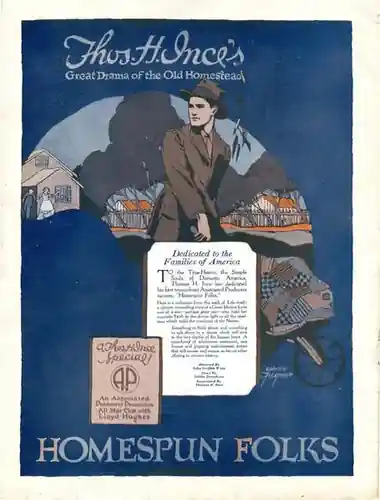
The intertitles—often maligned in silent revivals—deserve laurels here. Josephson, a scenarist first, sculpts epigrammatic gems: “A lie set in 12-point can kill quicker than a bullet cast in lead.” The font itself mutates: affidavits appear in jagged sans-serif, love letters in florid copperplate, a typographic unconscious mirroring social fracture.
Performances oscillate between the barn-storming and the balletic. Lloyd Hughes, saddled with a role that requires Hamlet’s indecision plus Lincoln’s oratory, wisely underplays; his eyes perform the bulk of the rhetoric—two wet daggers begging for scabbards. Gladys George pirouettes from coquette to avenger without a seam; watch how she lowers her register (in pantomime, yet we hear it) the instant she cocks the revolver—suddenly the flapper becomes Clytemnestra.
The film’s gender politics, though couched in rescue tropes, hint at proto-feminist circuitry. Beulah commands the narrative’s final gearbox; Joel is merely the emblem she saves. Their clinch at the fade-out occurs in the newspaper office amid trays of loose type—an assertion that marriage will be typeset, negotiated, and subject to revision. One wishes for a sequel titled Beulah Unleashed, though history handed her a stub instead.
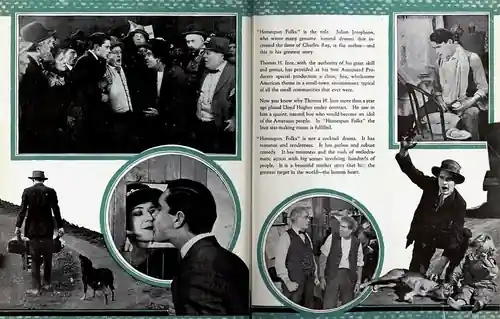
Comparativists will detect echoes of Upside Down’s carnivalesque inversion and In Wrong’s Kafka-esque prosecution. Yet Homespun Folks roots its cynicism in loam, not carnival. The prairie is implacable, indifferent; it will swallow ideologies like it swallows tractors after a dust-storm. Josephson’s achievement is to stage national psychodrama inside a one-horse town without inflating the horse.
Restoration-wise, the surviving 35 mm at MoMA is speckled like a pinto, but the tonal gradations hold. A 2018 digital pass scrubbed too much grain, smoothing Beulah’s freckles into porcelain; purists prefer the 1998 photochemical dupes where the tar glistens like obsidian. The Library of Congress is fundraising for a 4K scan; their Kickstarter promises a commissioned score blending fiddle, pump-organ, and field recordings of actual Kansas wind—an aural palimpsest to mirror the film’s gusty moral uncertainties.
Scholars of American populism should queue this print alongside Pare Lorentz’s later documentaries; both reveal how quickly agrarian virtue curdles into vigilante fever. The tarring sequence prefigures newsreels of 1930s strike-breakers, while the newspaper-office crucible anticipates the media circuses dissected in Call for Mr. Caveman and Roman Candles.
In the end, Homespun Folks is less nostalgic than surgical. It incises the myth that small towns are incubators of honesty, exposing instead a lattice of vendetta, libel, and electoral puppetry. Yet the closing shot—two lovers framed by a sunrise that might just as easily be a sunset—offers a sliver of tentacular hope. The film doesn’t claim redemption is inevitable; it suggests redemption is printable, provided someone brave enough wields the press.
Verdict: Essential viewing for anyone who still believes democracy is a town-hall handshake rather than a dogfight for narrative supremacy. Watch it, then spend a night listening to wind rattle your own windowpanes—you’ll swear you smell tar, hear typewriter keys, and feel the phantom weight of a Colt in hands you never thought could steady a nation.
IMDb 7
1927
Community
Log in to comment.